Loading article…

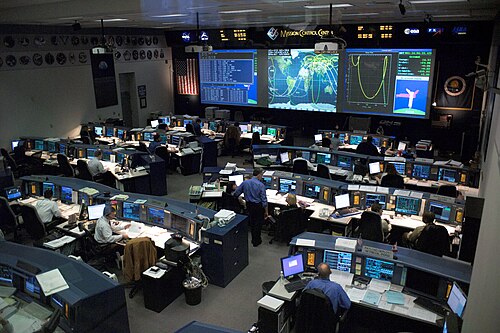
制御室または運用室とは、発電所などの大規模な施設、あるいは無人運転の鉄道網などの物理的に分散したサービスを監視・制御するための中心的な空間です。多くの場合、より大規模な指令センターの一部となっています。
コントロールルームの目的は生産管理であり、大規模な物理的施設や物理的に分散したサービスを監視および制御できる中央スペースとして機能します。中央コントロールルームは1920年代に工場で一般的に使用されるようになりました。[ 1 ]
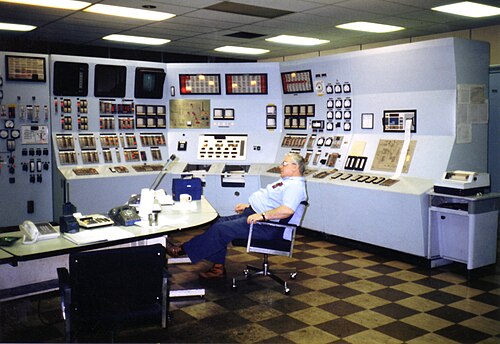
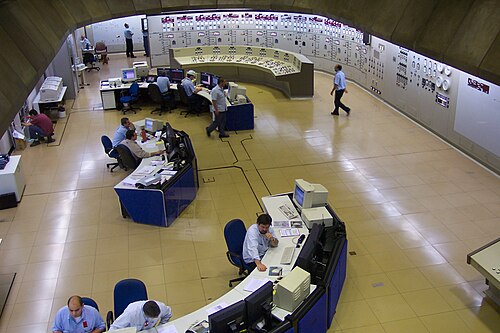
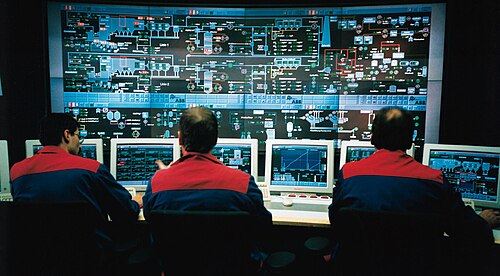
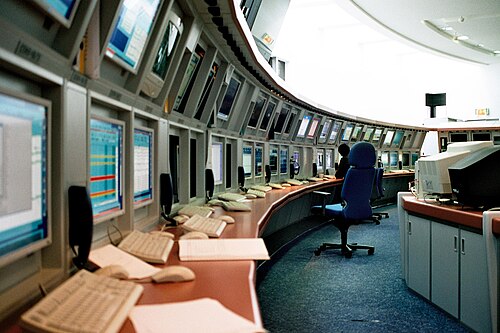
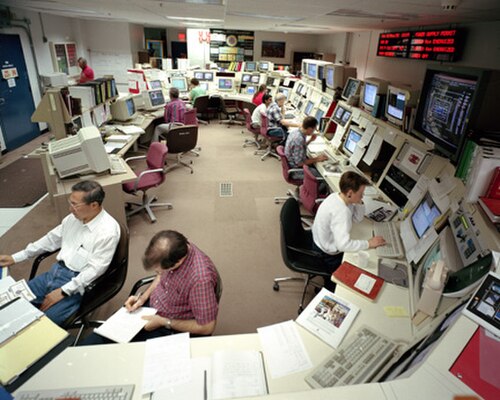
重要施設の制御室は通常、厳重に警備されており、一般の人は立ち入ることができません。複数の電子ディスプレイや制御盤が設置されているのが一般的で、室内のあらゆる場所から見える壁一面の大型ディスプレイエリアが設けられている場合もあります。セキュリティと人員管理のため、制御室自体が常時ビデオ監視・録画されている場合もあります。多くの制御室は24時間365日体制で稼働しており、常時監視体制を確保するため、常に複数の担当者が勤務している場合もあります(例えば、「 2人体制」の導入など)。
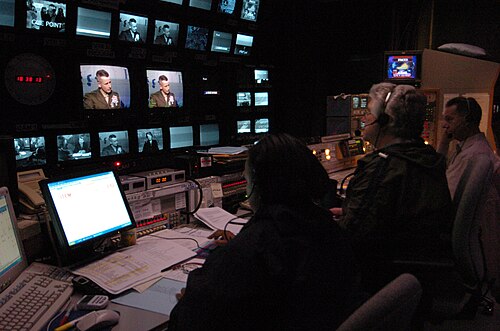
その他の特殊用途の制御室スペースは、特別なプロジェクト(海洋探査ミッションなど)のために一時的に設置され、プロジェクトが終了すると閉鎖または解体される場合がある。

制御室は通常、以下のような施設に設置されています。
制御室には通常、内部の設備や利用者の安全を確保し、緊急時にも業務を継続できるよう、高度な消火設備やセキュリティシステムが備えられています。危険な環境下では、現場に閉じ込められた人員の避難場所となる場合もあります。制御室には、更新を容易にするため、多機能ラックマウントキャビネットに機器が多数設置されています。機器が集中しているため、多くの場合、専用の無停電電源装置(UPS)や空調設備が必要となります。
制御機器は周辺施設内の他の機器を制御することを目的としているため、これらの耐火性能を備えたサービスルームには、ケーブルを通すための貫通部が多数必要となる。機器の定期的な更新に伴い、これらの貫通部は頻繁に変更されるため、法令遵守のために、防火措置の徹底した管理を含む保守プログラムが必要となる。
Due to the sensitive equipment in control room cabinets, it is useful to ensure the use of "T-rated" firestops that are massive and thick enough to resist heat transmission to the inside of the control room. It is also common to place control rooms under positive pressure ventilation to prevent smoke or toxic gases from entering. If used, gaseous fire suppressants must occupy the space that is to be protected for a minimum period of time to be sure a fire can be completely extinguished. Openings in such spaces must therefore be kept to a minimum to prevent the escape of the suppression gas.
A mobile control room is designated as particularly in high risk facilities, such as a nuclear power station or a petrochemical facility. It can provided a guaranteed life support for the anticipated safety control.
The design of a control room incorporates ergonomic and aesthetic features including optimum traffic flow, acoustics, illumination, and health and safety of the workers.[2] Ergonomic considerations determine the placement of humans and equipment to ensure that operators can easily move into, out of, and around the control room, and can interact with each other without any hindrances during emergency situations; and to keep noise and other distractions to a minimum.
Ergonomic control room design, through early assessment, optimized layout, well-managed alarms and acoustics, enhances performance, situational awareness, and operator well-being.[3]
International standards like ISO 11064 provide guidelines for ergonomic control room design and are used worldwide across many industries.
Control room scenes dealing with crisis situations appear frequently in thriller novels and action films. In addition, a few documentaries have been filmed with scenes in real-life control room settings.