Loading article…
ディオン(ギリシャ語: Δίον、[注1 ]古代ギリシャ語: Δῖον、[注2 ]ラテン語: Dium )は、ギリシャのピエリア県ディオン・オリンポス自治体にある村であり、自治体単位である。[注3 ]オリンポス山の麓に位置し、首都カテリニから17kmの距離にある。自治体単位の中心地はコンダリオティッサであった。
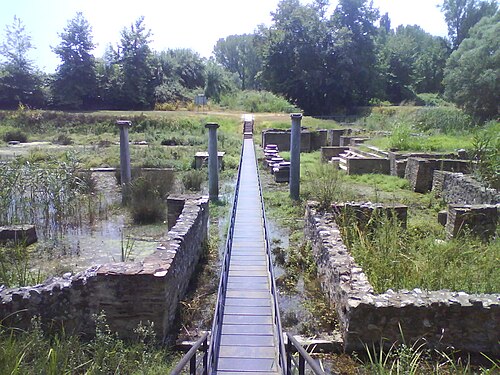
ディオンは、古代マケドニアの偉大なゼウスの聖域と古代都市で最もよく知られており、その多くはディオン考古学公園[ 2 ]とディオン考古学博物館で見ることができます。


古代都市の名前は、オリンポス山に住む神々の長であるゼウス(ディオス、「ゼウスの」)に捧げられたマケドニアで最も重要な聖域に由来しています。ヘシオドスの『女性名鑑』に記録されているように 、デウカリオンの娘テュイアはゼウスとの間にマグネスとマケドンという二人の息子を産み、彼らはマグネテスとマケドネスの語源となり、オリンポス山の麓のピエリアに住んでいました。 [ 3 ]そのため、非常に古い時代から、豊かな植生、そびえ立つ木々、無数の泉、航行可能な川が特徴的な独特の環境の中に、オリンポスのゼウスとその娘であるムーサを崇拝するための大きな祭壇が設けられていました。このため、ディオンは古代マケドニア人にとって「聖地」でした。そこは、9月末にマケドニア暦の新年を祝うために、王たちが盛大な供物を捧げた場所だった。春には、軍隊の浄化儀式や勝利の祝宴が催された。
ディオンが歴史に初めて登場するのはトゥキディデスによるもので、紀元前424年にスパルタの将軍ブラシダスが、同盟国ペルディッカス2世の領土を通ってテッサリアからマケドニアに入った際に最初に到達した都市がディオンだったと報告している。[ 4 ]ディオドロス・シクルスによれば、紀元前5世紀末にマケドニア国家が強大な力を獲得し歴史の舞台に登場した際、アルケラオス1世がゼウスとムーサを称える運動競技や演劇競技を含む9日間の祭典を制定し、その運営をマケドニア王自身が監督することで、この都市とその聖域にその後の重要性を与えたという。
フィリップ2世とアレクサンドロス大王はここで勝利を祝い、アレクサンドロスは紀元前334年のアジア遠征の前夜にここで軍隊を集め、壮大な犠牲を捧げた。[ 5 ]
多くの古代の著述家は、グラニコス川の戦いで戦死し、後にメテッルスによってローマに運ばれた25人の騎乗した仲間を描いた、リュシッポスによるアレクサンドロスのための彫刻の傑作である青銅像について述べている。
聖地のすぐ隣に都市が建設され、アレクサンドロス大王の後継者たちの治世中に壮大な姿へと発展した。カッサンドロスはこの都市に強い関心を持ち、堅固な城壁や公共建築物を建設したため、ヘレニズム時代にはディオンはその要塞と壮麗な建造物で広く知られるようになった。紀元前219年の同盟市戦争中にアイトリア人の侵略者によってディオンとその聖域は破壊されたが、フィリップ5世によってすぐに再建された。破壊された聖域からの奉納品の多くは、王室の碑文や条約を含め、穴に埋められており、これらは最近になって発見された。

It fell to the Romans in 169 BC[6] and the city was given a new lease of life in 32/31 BC when Octavian founded the Colony of COLONIA JULIA AUGUSTA DIENSIS here.[7][8] Coins of colonial Dion survive.[9] It experienced its second heyday during the reigns of 2nd- and 3rd-century AD Roman emperors who were fond of Alexander the Great. Dion's final important period was in the 4th and 5th centuries AD when it became the seat of a bishopric. It was abandoned following major earthquakes and floods.
The modern village at the site was called Malathria until 1961, when it was renamed to Dion.[10]

The site of ancient Dion was first identified by the English traveler William Martin Leake on December 2, 1806, in the ruins adjoining the village of Malathria. He published his discovery in the third volume of his Travels in Northern Greece in 1835. Léon Heuzey visited the site during his famous Macedonian archaeological mission of 1855 and again in 1861 when he also detected the ancient Leivithra. Later, the epigraphist G. Oikonomos published the first series of inscriptions. Nevertheless, systematic archaeological exploration did not begin until 1928. From then until 1931, G. Sotiriadis carried out a series of surveys, uncovering a 4th-century BC Macedonian tomb and an early Christian basilica. Excavations were not resumed until 1960 under the direction of G. Bakalakis in the area of the theatre and the wall. Since 1973, Professor Dimitrios Pandermalis of the Aristotle University of Thessaloniki has conducted archaeological research in the city.
Dion is the site of a large temple dedicated to Zeus, as well as a series of temples to Demeter and to Isis (the Egyptian goddess was a favorite of Alexander).
Excavation of the magnificent House of Dionysos revealed a mosaic of exceptionally fine quality.

A rare and unusual find in the museum is a bronze "hydraulis" or hydraulic musical pipe organ found in a former workshop.

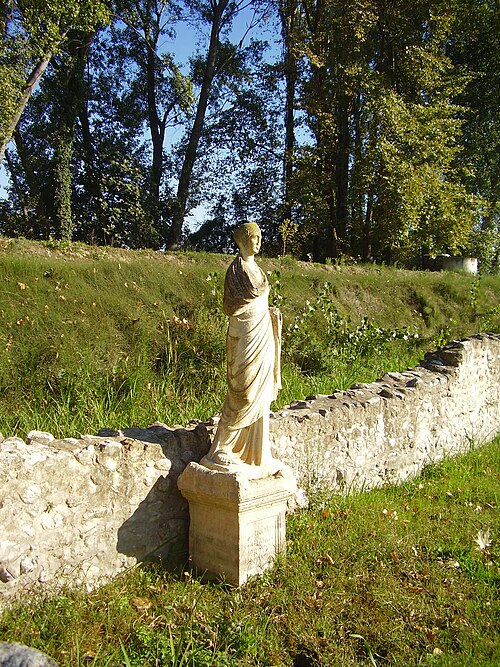
In 2006, a statue of Hera was found built into the walls of the city. The statue, 2200 years old, had been used by the early Christians of Dion as filling for the city's defensive wall.[11]
1992 年 10 月にディオン市 ( Δήμος Δίου、Dimos Diou ) が設立されました。1997 年のカポディストリアス改革により、旧アギオス・スピリドナス、カリツァ、コンダリオティッサ、ネア・エフェソス、ヴロントゥの各コミュニティが加わり、市が拡大されました。[ 12 ]行政の中心はコンダリオティッサ村にありました。2011年のギリシャの地方自治体改革の一環として、ディオンは旧イースト・オリンポス市とリトホロ市と合併し、新しいディオン・オリンポス市が設立されました。ディオンは新設された市の自治体単位となり、旧自治体地区はコミュニティとなりました。[ 13 ]ディオンのコミュニティは、同名の村とプラタナキアで構成されています。[ 14 ]自治体の面積は172.74 km 2 (67平方マイル)、コミュニティの面積は 31.38 km 2 (12平方マイル)です。[ 15 ]




![ディオン考古学博物館の碑文「ΒΑΣΣΙΛΕΩΣ ΦΙΛΙΠΠΟΥ」[フィリップ王]](https://img-server.japedia.wiki/wikipedia/commons/thumb/3/36/Inscription_from_Dion.jpg/500px-Inscription_from_Dion.jpg)