
Loading article…
コロラド州憲法は、アメリカ合衆国コロラド州の法律と政府の基盤です。コロラド州憲法は1876年3月14日に起草され、1876年7月1日にコロラド州の有権者によって承認され、1876年8月1日にコロラド州が州となったときに発効しました。2020年現在、憲法は少なくとも166回改正されています。コロラド州憲法は人民主権から権限を得ています。[ 3 ]そのため、コロラド州の人々はコロラド州を直接統治するための特定の権限を留保しました。コロラド州では、知事、州議会議員、裁判官の選挙権に加え、[ 4 ]州議会が制定した法律の住民発議権と住民投票権を州民に留保し、 [ 5 ]公職者のリコールを規定し、 [ 6 ]明示的な有権者の承認なしには一定額を超える増税を制限し(納税者の権利章典による)、[ 7 ]憲法のいかなる変更も明示的な承認が必要であり、多くの場合、55%の多数決が必要となる。[ 8 ]コロラド州憲法は、米国で最も長い憲法の1つである。[ 9 ]
1858年6月、グリーン・ラッセルはカンザス準州西部のサウスプラット川沿いで砂金を発見し、パイクスピーク・ゴールドラッシュを引き起こした。金鉱地帯での最初の選挙は、 3月3日にカンザス準州アラパホ郡の役員選挙として行われた。残念ながら、当時の有権者は、カンザス準州議会が4週間前の2月7日にアラパホ郡を6つの新しい郡に分割していたことを知らなかった。 [ 10 ]翌月、デンバー市で憲法制定会議が開かれ、金鉱地帯を統治する新しい「ジェファーソン州」が提案された。[ 11 ]
The first Jefferson Constitutional Convention meeting in Denver City adopted a proposed "Constitution of the State of Jefferson" on August 1, 1859. This proposed state constitution was a modified version of the second Constitution of the State of Iowa that was drafted two years earlier. The next month (September 5), voters of the gold fields reject statehood as premature. On October 3, the second Jefferson Constitutional Convention in Denver City adopted a proposed Constitution of the Territory of Jefferson. This proposed territorial constitution was a modified version of the rejected state constitution that was drafted two months earlier.
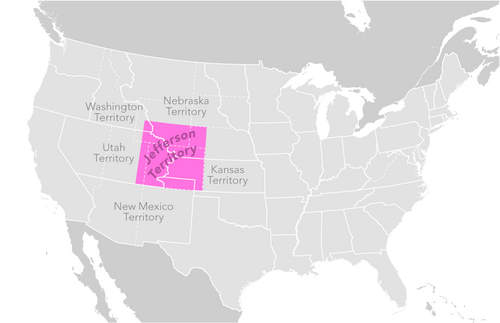
By a vote of 2163 to 280, the voters of the gold fields approved the creation of the free Territory of Jefferson on October 24, 1859. The new territory included portions of the Territory of Kansas, the Territory of Nebraska, the Territory of New Mexico, the Territory of Utah, and the Territory of Washington. The United States Congress refused to recognize this new citizen-initiated territory because of the precarious balance of power between the free states and the slave states in the US. However, the Jefferson Territorial government effectively governed the region until 1861 with little interference from the federal government. The next year, on October 10, 1860, Denver City voters approved the Constitution of the "People's Government of Denver", which operated as an independent municipal government.
On January 29, 1861, "An Act Admitting the State of Kansas to the Union" was signed into law by President James Buchanan. The act included only the eastern two-thirds of the Territory of Kansas in the boundaries of the new state, which left the western portion of the Kansas Territory (claimed by the Territory of Jefferson) formally unorganized. The next month, Buchanan signed the Organic Act for the Territory of Colorado.[2] This new territory occupied most of the extralegal territory of Jefferson, but was 41% less extensive. The Jefferson Territory formally disbanded on June 6, 1861, in favor of the government of the Territory of Colorado.
アメリカ南北戦争は、エイブラハム・リンカーンが3月にアメリカ合衆国大統領に就任した直後の1861年4月に始まった。戦争中、コロラド準州の住民は概ね連邦を支持していた。リンカーンは1864年3月21日に「コロラド州設立法」に署名し、準州の住民が連邦議会の承認を条件として州を組織することを認めた。その3か月後の1864年7月11日、デンバー市で開催された第1回コロラド憲法制定会議で、最初の「コロラド州憲法」案が採択された。この憲法案は、 1859年に起草されたカンザス州のワイアンドット憲法に触発されたものであった。しかし、10月11日、コロラド州の有権者は、州および連邦の役職候補者があらかじめ選定されていたことを主な理由として、この憲法案を1520対4672の投票で否決した。
1865 年 4 月にエイブラハム・リンカーンが暗殺され、同年 5 月に南北戦争が終結した。第 2 回コロラド州憲法制定会議は、同年 8 月 12 日に提案された「コロラド州憲法」を採択した。コロラド州の有権者は 9 月 1 日にこの憲法を承認した。しかし、アンドリュー・ジョンソン大統領は、コロラド州の州昇格を宣言することを拒否した。その理由の一つは、それが米国議会で共和党の多数派につながることを恐れたためである。この行動は議会を苛立たせ、その後、議会は新たな「コロラド州昇格法案」を可決したが、ジョンソン大統領は 1866 年 5 月 15 日にこれに拒否権を行使した。その後、議会は 2 回目のコロラド州昇格法案を可決したが、これも 1867 年 1 月に拒否権を行使された。
ユリシーズ・S・グラントは1869年3月にアメリカ合衆国大統領に就任した。グラントの在任中、議会は1869年、1871年、1873年にそれぞれ3度目、4度目、5度目のコロラド州昇格法案を可決しようと試みたが、いずれも失敗に終わった。その後、1873年12月、グラントは議会演説の中でコロラド州の州昇格のための2度目の権限付与法を支持した。2度目の「コロラド州昇格法」は、1875年3月3日にグラントによって制定され、法律として署名された。[ 12 ]

Colorado voters elected delegates to the third Colorado Constitutional Convention on October 10, 1875. This convention in Denver adopted their third proposed "Constitution of the State of Colorado" on March 14, 1876. This proposed state constitution was inspired by the third Constitution of the State of Illinois (1870), the fourth Constitution of the Commonwealth of Pennsylvania (1873), and the third Constitution of the State of Missouri (1875). This constitution was at the time (and remains to this day) one of the lengthiest of the state constitutions in the United States.[9][13] Colorado voters approved this constitution on July 1, 1876, three days before the Centennial of the United States. President Grant then proclaimed that the Territory of Colorado had been accepted into the US as the State of Colorado on August 1, with its 1876 constitution.[14] The state was immediately nicknamed the "Centennial State".
When it was adopted in 1876, the constitution included a "Schedule" at the end, which laid out specific provisions for the transition of Colorado from its territorial government to its statehood.
From 1876 to 2007, the Constitution of the State of Colorado had been amended 152 times. In 2012, voters approved recreational use of marijuana via constitutional amendment. In 2018, voters approved a new set of amendments related to congressional apportionment at state and federal levels intended to reduce gerrymandering.
There are presently three ways to amend the Colorado state constitution. First, an initiative may be proposed directly by the people of Colorado, achieve a required number of signatures on a petition, and then be voted on in a state-wide referendum, in which must achieve a 55% majority in order to be adopted. Second, the state assembly may draft an amendment, approve it by a two-thirds majority vote in each house, and then send it to the voters, who must again approve it with a 55% majority in a state-wide referendum. In either of these methods, if the amendment is limited only to repealing a part of the constitution, it only needs a simple majority approval in state-wide referendum. Third, the state assembly may call a constitutional convention (political meeting) by a two-thirds majority vote in each house and simple majority approval of voters in a state-wide referendum, with members then determined by state-wide election using state senate districts, who would submit alterations to the voters to approve as a slate via simple majority.[1][15]
憲法改正案の可決には比較的高いハードルがあるにもかかわらず、1876年の制定以来、少なくとも166の憲法改正案が可決されている。 [ 1 ] 2016年以前は、憲法改正案は州全体の住民投票で50%の賛成を得るだけでよかった。[ 16 ]
憲法第2条「権利章典」には、性的指向に関する修正条項として追加された2つの規定が含まれており、これらは米国憲法に違反すると判断された。1つ目の第30b条は1992年に可決され、コロラド州の立法機関または行政機関が性的指向を保護対象とすることを禁じていたが、Romer v. Evans事件で違憲と判断され、現在は効力を持たない。2つ目の第31条は2006年のコロラド州修正第43条として可決され、事実上同性婚を禁止していた。この規定は、Kitchen v. Herbert事件(2014年)、Bishop v. Smith事件(2014年)、Obergefell v. Hodges事件(2015年)という3つの連邦裁判で影響を受けた。最後の裁判では、米国のすべての州で同性婚の権利が保障され、事実上この条項は無効となった。しかし、第30b条は現在のコロラド州憲法の条文に残っており、廃止されていない。修正第43条は、2024年11月5日にコロラド州の有権者によって廃止された。
1992年、有権者は憲法修正案を承認し、第10条第20項が制定され、納税者の権利章典(TABOR)が確立されました。この法律は、毎年の増税を意図的に制限する憲法上の規定であり、コロラド州議会やその他の機関が、住民投票による明確な承認なしに、定められた年間増税額を超えてコロラド州の税金を引き上げることを不可能にしています。
連邦議会議員の任期制限に関連する修正条項は少なくとも2つあります。これらの修正条項のうち最初のもの(第18条第12項、「修正第12条」)は1996年12月に発効し、コロラド州の連邦議会議員に対し、連邦議会議員の任期制限を支持する米国憲法修正案を提案し、投票するよう指示しようとしました。この修正条項は、1998年のコロラド州最高裁判所のモリッシー対州事件で違憲と判断されました。その理由は、州の有権者が、州議会で特定の投票や行動を強制することはできないというものでした。これは、そうすることが米国憲法の保証条項によって保証されている共和制政府に反するからです。[ 17 ]修正第12条は、発効から4年経っていなかったにもかかわらず、その後2002年に廃止されました。 2番目の連邦議会議員任期制限修正条項(憲法第18条第12a項、「修正第18条」)は、その範囲が大幅に縮小され、代わりに、連邦議会議員候補者が下院議員を3期、上院議員を2期までとするという任期制限を遵守することを誓約する署名を行うことを認め、候補者の誓約状況に関する情報が投票用紙に氏名の横に表示されることになった。この修正条項は1998年12月30日に発効した。
2006年、医療用マリファナの使用と規制を認める憲法改正が行われた(「修正第20条」)。8年後、マリファナの所持と使用全般を合法化する別の修正条項が制定された(「修正第64条」)。これらの修正条項は現在、憲法第19条「雑則」に規定されている。また、2006年には、贈答品やロビー活動を規制する目的で、州職員のための独立した倫理委員会を設置する「修正第41条」も可決された。