
Loading article…
Chao Cuo (simplified Chinese:晁错; traditional Chinese:晁錯, c.200–154 BC[1]) was a Chinese philosopher, politician, and writer. He was a political advisor and official of the Han dynasty (202 BC – 220 AD), renowned for his intellectual capabilities and foresight in martial and political matters. He was an early advocate of revoking the heqin treaty with the Xiongnu nomads of the north. He compared the relative strengths and weaknesses of both Han Chinese and Xiongnu military tactics. In a written work of 169 BC, he advocated a systematic policy to populate and defend frontier zones. He proposed that civilian migrants supported by the government could simultaneously train as militia units while developing and cultivating remote regions which were under frequent attack by nomadic forces. He fell victim to execution when political rivalries at the imperial court convinced Emperor Jing that Chao's death would curtail or at least mitigate the Rebellion of the Seven States.
Chao took part in reviving from oblivion the Classic of History, one of the early canons of Confucian philosophy. Despite this, and despite being well aware of the failings of the Qin dynasty (221–206 BC), he was described by later Eastern Han scholars as a Legalist. Chao's intellectual background was steeped in the writings of Legalist philosophers such as Shang Yang (d. 338 BC) and Shen Buhai (d. 337 BC). The essays written by Chao which are preserved in the 1st century AD Book of Han do not reveal any influence of Confucian social or ethical ideas.[2][3]
趙錯は河南省禹州に生まれ、漢の文帝(在位紀元前180年~ 157年)と荊帝(在位紀元前157年~ 141年)の宮廷に仕えた。儀礼部の官僚として仕えていた頃、文帝に高官として招かれ、秦王朝(在位紀元前211年~ 206年)に仕えた学者(博士)である老傅(ふしょう)のもとで学ぶことになった。傅は秦王朝による反体制文学の粛清の際に『史経』の写本を隠匿し、一部を回収した人物である。[ 4 ]しかし、傅は高齢で講義ができなかったため、教養のある娘に趙を教えることになった。[ 5 ]
長安の都における趙の政治キャリアの頂点は、紀元前155年に中央政府の3つの最高位の役職の1つである宰相(別名:宰相、宰相)に任命されたことである。 [ 6 ]彼は政治、戦争、農業、経済、国境防衛、辺境管理に関する知識でよく知られていた。[ 6 ]

趙は、漢軍が依然として歩兵が主体で、騎兵と戦車は補助的な役割しか果たしていなかったため、北方の遊牧民である匈奴に対抗するために騎兵中心の軍隊を持つべきだと文帝に提言した最初の大臣の一人として知られている。 [ 7 ]彼は「蛮族を使って蛮族を攻撃する」政策、つまり降伏した匈奴の騎兵を漢軍に組み込むことを提唱し、この提案は最終的に採用され、特に漢の国境に住むさまざまな遊牧民の従属国家が設立されたことで実現した。[ 8 ]賈頤(紀元前201年- 168年)と同様に、彼は匈奴との和琴婚姻同盟と朝貢条約を破棄することを初期から提唱したが、賈頤のように優れた定住中国文化が北方の遊牧民を支配すべきだという強固なイデオロギー的立場ではなく、実際的な理由から反対した。[ 9 ]和琴協定は漢と匈奴の間の平和と安定を保証するはずだった。趙は、匈奴の部族や氏族の指導者による漢の国境沿いでの絶え間ない襲撃と略奪によって、和琴協定が何度も破られ無視されたため、条約は目的を達成できず、実用性を完全に失ったと考えていた。[ 9 ]和琴条約が最終的に廃止され、匈奴帝国を分裂させるための攻撃的な軍事戦略が採用されたのは、武帝の治世(紀元前141年~ 87年)の馬邑の戦い(紀元前133年)の後だった。
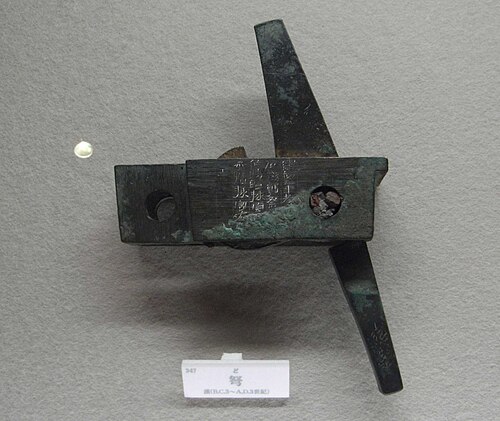
紀元前169年に王に提出した「国境を守り、国境を防衛せよ」と題する覚書の中で、趙は匈奴と漢の戦術の相対的な強みを比較した。[ 10 ]漢の軍隊に関して、趙は、より優れた種馬のおかげで、騎乗の速い匈奴の騎兵は険しい地形によく適応し、騎馬弓術に優れ、中国の兵士よりも自然や厳しい気候に耐えることができると考えた。 [ 11 ]しかし、彼は、平地で漢の歩兵や戦車と対峙した場合、匈奴の騎兵は劣っていると考えた。 [ 11 ]彼は、匈奴の革鎧や木製の盾よりも、漢の鉄製の鎧や武器の優位性を強調した。[ 11 ]彼は、匈奴の複合弓よりも、中国の複合弩や連弩の方が優れていると考えた。[ 11 ]馬から降りれば、歩兵戦術の訓練を受けていない匈奴は漢の歩兵によって壊滅させられるだろうと彼は信じていた。[ 11 ]
歴史家の張春樹は著書『中国帝国の興隆』の中で、紀元前169年の趙の「国境を守り国境を守る」という提案に体現された辺境開発の要点を概説している。以下は趙の覚書からの抜粋である(注:匈奴などの用語はウェード式で表記)。歴史記録から明らかなように、文帝は趙の提案を承認し、直ちに北方の辺境での任務に人々を動員した。[ 12 ]趙は次のように書いている。
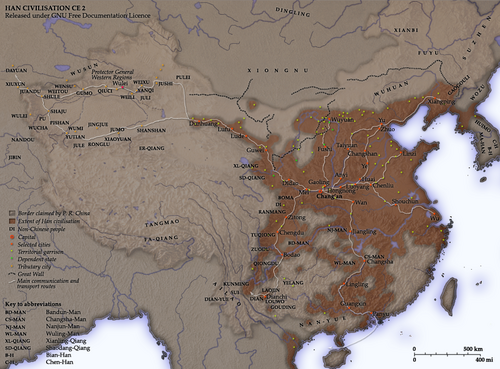

帝国各地から派遣される遠征兵は匈奴の気質や能力を理解していないため、国境地帯に定住者を移住させる必要がある。政府は移住者のために家屋と土地を提供する。
For the immigrants in such border areas, the government will construct walled cities, well protected by high walls, deep moats, catapults, and thorns. Each city, along strategic points and thoroughfares, will be designed to hold no fewer than one thousand households...Each walled city will have an inner wall and an outer wall 150 paces (about 209 meters) apart. Each residential area in the outer-wall area is to be surrounded by "sandy fields" (t'ien-t'ien, "heavenly fields") to detect the intrusion of enemies in the night (intruders will leave footprints in the fields).
The Government will construct houses and provide farming tools before the arrival of the migrants. It will also provide winter and summer clothing and food to the migrants until they become self-supporting...The government will buy mates for those migrants without husbands or wives, for without a mate a migrant will not remain contented on the frontier.
The government will reward anyone who stops a Hsiung-nu raid and will award him half of what he recovers from the enemy.
First enlist ordinary and pardoned convicts, then slaves given by their masters to purchase aristocratic ranks, and then all those commoners who desire to go. The government will reward them with ranks, and their families will be exempt from taxation and service requirements.
The government will build frontier communities that are rooted locally, tightly connected, mutually assisted, and militarily united against the "barbarians." This system will be much more efficacious than reliance on garrison soldiers from the interior.[13]
Chao made some later amendments to his proposal, which Emperor Wen adopted as well.[14] These included the following:
Frontier cities will be located close to water resources and an abundance of good arable land.
Houses will each have two bedrooms and one living room and be fully furnished with furniture and necessary appliances. Trees will be planted in the living area.
The government will hire doctors and shamans for each new frontier settlement to take care of the immigrants' medical and religious needs.
In organization, five families will comprise a wu, to be headed by a wu-chang (head of the five-family unit); ten wu will comprise a li (ward), to be headed by a chia-shih (ward head); four li comprise a lien (company), to be headed by a chia-wu-pai (head of five hundred); ten lien comprise an i (city), to be headed by a chia-hou (magistrate). Each leader will be selected from among the migrants who are most talented, able, and familiar with local conditions and who best understand the minds of the people.
All able men will receive military training in peacetime under their local unit leaders and will fight as groups under these leaders.
All migrants will be forbidden to leave their localities without government permission.[15]
Chao's memorial to the throne had a major influence on later court policy under Emperor Wu after his officer Huo Qubing (140–117 BC) decimated Xiongnu forces inhabiting the Hexi Corridor. The Han then colonized this region that stretched from Lanzhou to the Jade Gate, a region which provided access to the Western Regions of the Tarim Basin and Central Asia.

Like his fellow gentry, Chao Cuo viewed the peasants with concern and the merchant class with a certain level of contempt. In regards to the burden of heavy taxes and corvée duties imposed on farming peasants, Chao once pointed out that the average peasant family of five, including two adult males (old enough for labor service) would only be able to cultivate up to 100 mou (4.57 hectares or 11.3 acres) which produced roughly 100 shi (2,000 liters) of grain, yet during times of famine and drought the state's high taxes forced peasants to take high interest loans which led to debt, poverty, and new reliance on powerful landholding families.[17] The historian Sima Qian (145–86 BC) noted in his Records of the Grand Historian (compiled 109 to 91 BC), successful merchants who became wealthy in trade often invested their capital in land, thus joining the elite landholding class.[18] As Chao Cuo makes very clear, the government's anti-merchant policies of raising taxes hardly affected those with great wealth while excessive taxation of peasants drove them from their plot of land and allowed merchants to move in:[16]
現代の農家では、5人家族のうち少なくとも2人が労働に従事しなければならない。耕作地の面積は100ムー(11.3エーカー)以下で、収穫量は100シー(約2,000リットル)を超えない。農民は春に耕し、夏に除草し、秋に収穫し、冬に貯蔵する。下草や薪を燃料用に切り、政府に労働奉仕を行う。春には風と砂塵、夏には蒸し暑さ、秋には湿気と雨、冬には寒さと氷を避けることはできない。そのため、一年中、一日たりとも休む余裕はない。さらに、客人の到着時には出迎え、出発時には見送り、死者を悼み、病人の容態を尋ねなければならない。加えて、乳幼児の養育もしなければならない。このように懸命に働いているにもかかわらず、洪水や干ばつの災難にも耐えなければならない。時には、思いがけず税金が徴収されることもある。朝に注文が出されれば、夕方までに支払わなければならない。この需要を満たすために、農民は所有物を半額で売らざるを得ず、困窮している者は年利200%で借金をしなければならない。最終的には、借金を返済するために、畑や住居を売ったり、時には子供や孫を奴隷として売ったりしなければならない。一方、大商人は商品を大量に買い溜めすることで200%の利益を上げ、小商人は市場の屋台に並んで売買している。彼らは贅沢品を扱い、都市で楽な生活を送っている。政府の緊急の需要につけ込み、商品を2倍の値段で売る。彼らは農業に従事することはなく、女性も蚕の世話や機織りをしないが、常に刺繍の施された色とりどりの服を着て、常に上質な粟や肉を食べている。農民の苦しみを経験することなく、莫大な利益を上げている。その富を利用して、王侯貴族と交際している。彼らの権力は官僚の権力を凌駕し、互いに利益の使い道を競い合っている。彼らは千里もの距離をあてもなく彷徨い歩き、その数は非常に多く、道には長い列をなしている。彼らは立派な馬車に乗り、太った馬を鞭打ち、絹の靴を履き、白い絹の衣をまとっている。商人が農民を乗っ取り、農民が各地を放浪する浮浪者となるのも無理はない。[ 16 ]
この一節について、故・西嶋定生(1919年- 1999年、東京大学名誉教授)は次のように述べている。「この告発は、前漢時代の農民と商人の生活の著しい対照を明らかにし、厳しい課税が前者を貧しくし、後者を豊かにしただけであることを示している。」[ 18 ]
趙は、漢帝国の従属王国を縮小し弱体化させるための中央政府の取り組みを主導した。[ 2 ] 7つの異なる王国の不満を抱いた王たちが中央政府に対する反乱を企てたとき、宮廷内の趙の政敵(その中には袁昂もいた)はこれを口実に、趙を排除してこれらの王たちをなだめるよう荊帝を説得した。[ 2 ]そのため、荊帝は紀元前154年に趙を処刑した。[ 2 ]しかし、呉の王劉弼(浙江省北部と江蘇省南部の半自治王国を統治)とその君主同盟者が皇帝に対して公然と反乱を起こしたとき、趙の政敵の主張が虚偽であることを荊帝はすぐに悟った。[ 2 ]