
Loading article…
Sociedad Española de Importación y Distribución de Automóviles (S.E.I.D.A. or, more commonly, Seida) was a Spanish cars and trucks dealer and coachbuilder that later evolved into making integral chassisless motorcoaches. In 1998, it was subsumed into Evobus.
Seida was incorporated in 1925, and began as the dealer for Spain of all the brands of Chrysler Corporation. As such, it became very well known, and in the 1930s its main showroom in Madrid, located in downtown main avenue, Gran Vía, and known as Salón Chrysler, was noted by its luxury, serving even as sporadic art gallery for some avant-garde exhibitions. By the same years, Seida opened a new rationalist repair shop and gas station building in Espronceda Street, by the renowned architect José de Azpiroz, that became a hall-mark of the modern architectural trends in Madrid.
In April 1935 Seida sponsored the show in Madrid of an American hell driver named Miller on a Plymouth car.
That same year, 1935, Seida began to assemble Chrysler's Dodge trucks in a new plant built in Zorroza, Marino Archer Street, on the docks of Bilbao. Several hundreds of them were made both before and after the Spanish Civil War.
The links with Chrysler Corporation persisted until 1969, when Chrysler Europe disembarked in Spain through the acquisition of Barreiros.
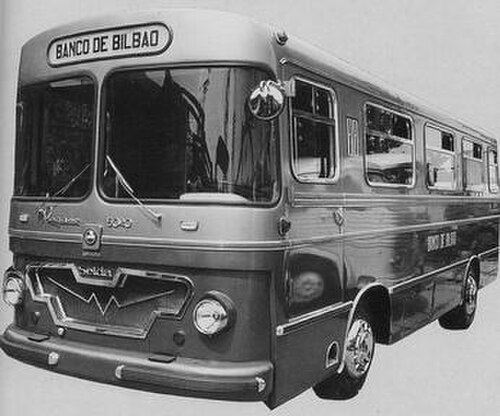
In the 1940s, after the Spanish Civil War, Seida extended the premises in Zorroza with a new building to a Chrysler design, and switched to coachbuilding, the first bus chassis bodied being a hundred of German Klöckner units released in 1942. In those years Seida expanded its business to become shipowner, purchasing the merchant steamer Sendeja.
1950年代までに、セイダは「メタルブロック」という名称でオールメタルボディ構造の特許を取得し、スペインのコーチボディ市場をリードする存在となった。当時、セイダはスペインで最も普及していたバス・コーチシャーシメーカーであるペガソの御用達ボディメーカーとなった。特に印象的だったのは、ペガソZ-404コーチ/シティバスシャーシ用のボディで、ツーリングがペガソZ-102スポーツカーのボディに採用したのと同じ十字型のラジエーターグリルを特徴とする、目を引くデザインが採用されていた。
同時期にセイダが手掛けたその他の重要な作品としては、サン・セバスチャン市向けのイスパノ・スイザ製トロリーバスの車体、イベリア航空向けのダッジ製2階建てコーチ、マドリード市向けのガイ製2階建てバスとペガソ製1階建てバス、アルサ向けのアクロ製およびペガソ製都市間路線コーチなどがある。マドリード市向けには、セイダが手掛けた最も印象的な車体も製作された。それは、 GEE(General Eléctrica Española)製の電気機器を搭載した3軸のヴェトラVA3B2トロリーバス4台である。
1950年代の数年間、セイダはスペインでイギリスのルーツ・グループの自動車ブランド、そして短命に終わったスペイン製のバブコック・トラックの販売代理店も務めていた。
1963年、セイダはドイツのケスボーラー社と、セトラのシャーシレスコーチのライセンス生産に関する契約を締結した。これらのコーチにはペガソのエンジンやその他の機械ユニットが搭載され、セトラ・セイダとペガソの2つのブランド名で同時に販売された。当初、セイダはセトラのS14とS10モデルを製造したが、全長12メートル、座席数55席のS14が圧倒的に人気を博した。数年後、セトラが新たに発売したS154がS14に取って代わり、S10は生産中止となった。
かなり高価ではあったものの、これらのバスはスペイン市場で大成功を収め、セイダ社はビーゴに第2工場を開設するに至った。1970年代には、ペガソ製エンジンに代わる動力源として、 MAN、メルセデス・ベンツ、またはカミンズ製のエンジンが提供され、セトラ・セイダとペガソのバッジは単にセトラに置き換えられた。
1981年、セイダはサマノ(カストロ・ウルディアレス)に最新鋭の工場を開設したが、すぐにケスボーラーとの激しい意見の対立など困難に直面し、80年代後半から90年代初頭にかけて、会社の登記名や所有権が幾度も変更されるなど、長く複雑な財務・法務上の問題に苦しんだ。一方、ビーゴの工場は、総合自動車修理工場のタジェレス・バレラ・バスに売却された。
1998年、カストロ・ウルディアレス工場はダイムラー・ベンツ傘下のエヴォバス社に買収され、後継会社であったセイダ社は消滅した。