
Loading article…
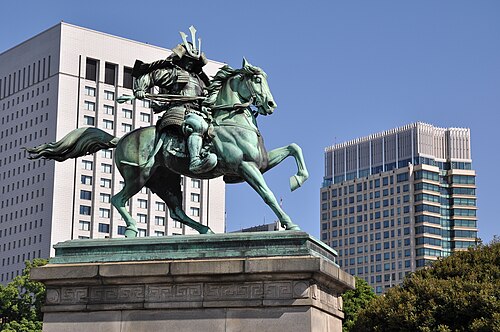

楠木 正成(くすのき まさしげ、日本語:くすのき まさしげ、旧字体:楠木 正成、日本語発音: [ kɯ̥.sɯꜜ.no.kʲi ]、[ 1 ] [ 2 ] 1294 年 - 1336 年 7 月 4 日)、または[ a ]大南公(大楠公[ 3 ] ; [ naꜜŋ.koː ] , [ 2 ] lit. '楠公' ) , [ 4 ]は、理想的な忠実な武士として記憶されている日本の武将であり、鎌倉時代の武士でした。
楠木は源光の戦いで後醍醐天皇のために戦い、鎌倉幕府を倒して日本の権力を朝廷に回復させた。楠木は1333年の建武の指導者であり、3年後の南北朝の戦いで足利尊氏が建武を覆し始めた後も、不人気な後醍醐天皇に忠誠を尽くした。楠木は天皇の命を受けて摂津で尊氏を攻撃したが、これは敗北を招くことは確実だった。楠木は1336年の湊川の戦いで切腹した[ 5 ]。
楠木楠雄は忠誠と徳を象徴する人物として日本で広く知られるようになり、「七生報國」という言葉と結びついた。楠木楠雄は没後500年以上経った1880年、明治政府から日本最高位の朝廷官位である昭一位を追贈された。彼は藤房出野小路、平重盛と並び「日本の三忠臣」の一人として高く評価された。
楠木正成の出自は確証されておらず、1331年の出征開始から1336年の死去までわずか6年しか経っていない。楠木は1294年に河内国で「裕福な地方有力者」として生まれ、 8世紀の「大貴族」である橘諸衛の子孫であると主張していた。彼の生誕地は千早赤坂村とされており、そこには「南光丹上地」と呼ばれる小さな記念碑がある。
楠木は「学者であり、敬虔な仏教徒」であり、幼少期の教育の多くは現在の大阪府南部の河内長野にある観心寺で行われた。[ 6 ]: 53後年、楠木は観心寺の大規模な改修を手配した。観心寺で学んでいた間、彼は定期的に河内長野の中心部へ行き、大江藤親という人物の指導の下で戦略を学んだ。
伝説によると、後醍醐天皇はクスノキの木の下で雨宿りをする夢を見て、その夢が彼を支える武士の姓を知ったという。 [ 7 ] [ 8 ]
優れた戦術家であり戦略家であった楠木は、赤坂の攻防戦(赤坂の攻防戦)と千早の攻防戦(千早の攻防戦)という忠臣の二つの重要な砦を巧みに守り抜き、後醍醐天皇が一時的に権力を取り戻すのに貢献した。[ 8 ]: 160、164、173、175、180鎌倉時代に生きた。
1333年、後醍醐天皇は正重に和泉国と河内国の長官の地位を与え、さらに五位に昇進させた。その後、彼は書院と入植委員会に任命された。[ 9 ]

彼は大阪南部、特に現在の河内長野市周辺に数多くの小規模な城を築いたと考えられている。エボシガタ城と石ボトケ城は、京都と高野山を結ぶ人気の巡礼路である高野街道沿いに建てられた。これらの城は、街道を盗賊から守るだけでなく、重要な収入源および情報源としても機能するように設計されていた。巡礼者は通行料を支払う義務があり、守備兵は日本各地からの噂やニュースを聞き取っていたからである。
忠臣の将軍、足利尊氏は後醍醐天皇を裏切り、楠木と残りの忠臣たちに対して軍を率いて攻撃した。[ 6 ]尊氏は京都を占領したが、新田義貞と政重によって一時的に追い払われ、西へ逃亡を余儀なくされた。しかし、1336年までに尊氏は再び京都の脅威となった。[ 9 ]: 130
楠木は天皇に対し、比叡山に避難し、尊氏に京都を占領させ、その後山から降りてきて比叡山の僧侶たちの助けを借りて尊氏を都に閉じ込めて滅ぼすという案を提示した。[ 8 ]: 181-182
しかし後醍醐天皇は都を離れることを拒み、楠木正成に高氏軍の優勢な軍勢と野戦で決着をつけるよう命じた。楠木は後に武士の忠誠心の極致と見なされる行為として、天皇の愚かな命令を忠実に受け入れ、ほぼ確実な死を覚悟して軍を進めた。[ 7 ]: 102-102 [ 6 ]: 126現在の神戸市中央区の港川で行われたこの戦いは、戦術的に大失敗に終わった。楠木正成が後醍醐天皇に提案した内容については、『太平記』と『倍正論』の2つの記述がある。一つは再編成して二方から攻撃するというもので、もう一つは高氏を味方につけて戦力を均衡させるというものである。どちらの提案も無視された。[ 8 ]: 181-183 [ 6 ]: 50-52
Kusunoki, his army completely surrounded, was down to only 73 of the original 700 horsemen. Kusunoki, Masasue, Governor of Kawachi Usami Masayasu, Jingūji no Tarō Masamoro, of the Middle Palace Guards, and Wada Gorō Masataka, and other principal members of the Kusunoki clan as well as sixty retainers withdrew to a house in a village north of the Minato River. There they sat in two rows praying a Buddhist prayer ten times in unison. The brothers stabbed each other and died.[10]
According to legend, his brother Masasue's last words were Shichishō Hōkoku! (七生報國; 'Would that I had seven lives to give for my country!') and Kusunoki Masashige agreed.[8]:185–187[9]:133 Upon his death, his head was removed and sent to Kanshin-ji where it was buried in a kubizuka.

His son, Kusunoki Masatsura, served the emperor's successor, the 12-year-old Go-Murakami, in a relationship of reciprocal trust and devotion mirroring the figure of his father Kusunoki and keeping the flame of loyalist resistance alive. Masatsura died alongside his brother Masatoki and cousin Wada Takahide in a battle that saw the end of the Kusunoki clan and there followed a less-than-ideal scramble for power and gain among the Courts.[7]:103
Kusunoki "stands in the history of his country as the ideal figure of a warrior, compact of civil and military virtues in a high degree."[6]:53
The parting of Masashige with his son "used to be included in all elementary school readers and was the subject of a patriotic song which was popular in Japanese schools before World War II."[9]:131
Masashige had a tachi called Little Dragon Kagemitsu (小龍景光, Koryū Kagemitsu). An elaborate Kurikara dragon was carved on the handle. Originally, the dragon's appearance was visible on the blade, but later, in the process of cutting off the handle and shortening the length, the dragon's body was hidden by the handle. The dragon is a manifestation of Acala.
After the full-scale introduction of Neo-Confucianism as a state philosophy by the Tokugawa shogunate, Kusunoki Masashige, once called a traitor by the Northern Court, was resurrected with Emperor Go-Daigo as a precursor of Sinocentric absolutists, based upon the Neo-Confucian theories. During the Edo period, scholars and samurai who were influenced by the Neo-Confucian theories popularized the legend of Kusunoki and enshrined him as a patriotic hero, called Nankō (楠公) or Dai Nankō (大楠公), who epitomized loyalty, courage, and devotion to the Emperor. In 1871 Minatogawa Shrine is established in order to enshrine the kami spirit of Kusunoki Masashige. Kusunoki later became a patron saint of sorts to World War IIkamikaze, who saw themselves as his spiritual heirs in sacrificing their lives for the Emperor.
Brother:
Children:
楠木は切腹した
{{cite book}}ISBN /日付の不一致(ヘルプ)