
Loading article…
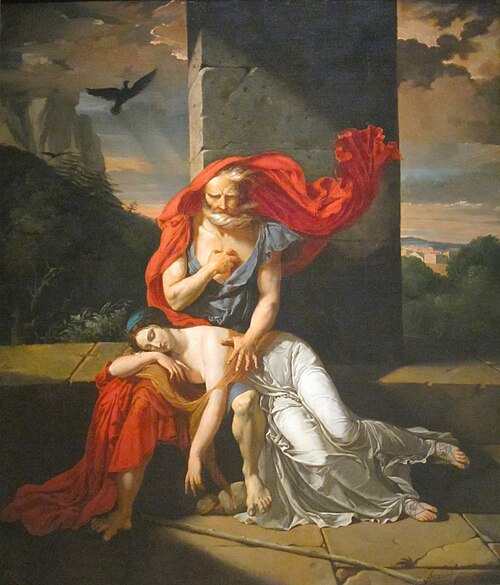
A tragic hero (or sometimes tragic heroine if they are female) is the protagonist of a tragedy. In his Poetics, Aristotle records the descriptions of the tragic hero to the playwright and strictly defines the place that the tragic hero must play and the kind of man he must be. Aristotle based his observations on previous dramas.[1] Many of the most famous instances of tragic heroes appear in Greek literature, most notably the works of Sophocles and Euripides.
In Poetics, Aristotle suggests that the hero of a tragedy must evoke a sense of pity and fear within the audience, stating that “the change of fortune presented must not be the spectacle of a virtuous man brought from prosperity to adversity."[2] In essence, the focus of the hero should not be the loss of his goodness. He establishes the concept that pity is an emotion that must be elicited when, through his actions, the character receives undeserved misfortune, while the emotion of fear must be felt by the audience when they contemplate that such misfortune could possibly befall themselves in similar situations. Aristotle explains such change of fortune "should be not from bad to good, but, reversely, from good to bad.” Such misfortune is visited upon the tragic hero "not through vice or depravity but by some error of judgment." This error, or hamartia, refers to a flaw in the character of the hero, or a mistake made by the character.
したがって、アリストテレスの英雄は徳が高いが「極めて善良」ではないと特徴づけられ、それは高潔で道徳的な傾向を持ちながらも人間の過ちに陥りやすい高貴な人物や重要な人物を示唆している。アリストテレスの悲劇の英雄は、悪意なく大きな過ちや傷害を犯し、最終的に不幸に陥る欠点のある人物であり、多くの場合、この運命に至った出来事の真の性質を悲劇的に悟ることになる。[ 3 ]これは、英雄が依然としてある程度道徳的に根付いていなければならないことを意味する。ギリシア悲劇の一般的な皮肉は、英雄が並外れた能力を持ち、かつ非常に道徳的である(ギリシアの名誉文化における道徳的期待に縛られているという意味で)ことであり、まさにこれらの非常に賞賛に値する資質が英雄を悲劇的な状況に導くのである。悲劇の主人公は、自身の偉大さ、すなわち並外れた能力、義務に対する正義感、そして(しばしば)偉大さに伴う傲慢さ(ヒュブリス)によって囚われてしまう。

アリストテレス的英雄の影響は、古典ギリシア文学批評にとどまらない。ギリシア演劇はローマ演劇に直接的かつ深い影響を与え、西洋演劇の基礎を形成した。他の悲劇の英雄には、ウィリアム・シェイクスピアの『マクベス』のマクベスや『オセロ』のオセロなどがいる。[ 4 ]エリアス・ロンロットによる19世紀のカレリアおよびフィンランドの叙事詩『カレワラ』の悲劇の英雄クッレルヴォは、森の獣に呪いをかけ、自分を苦しめる北の乙女を攻撃させる。J.R.R .トールキンは1914年にクッレルヴォの物語の解釈を書いた。この作品は最終的に未完成の形で『クッレルヴォの物語』として出版された。[ 5 ]
演劇は、文学、音楽、映画、テレビ、さらにはビデオゲームなど、さまざまなメディアを通じて世界中の幅広い芸術に深く影響を与えています。これらのジャンルに登場する多くの象徴的なキャラクターは、悲劇の英雄の原型に従っています。そのようなキャラクターの例としては、ジョージ・ルーカスのスター・ウォーズ映画のアナキン・スカイウォーカー、ロード・オブ・ザ・リング三部作のボロミア、グレート・ギャツビーのジェイ・ギャツビー、ジョージ・R・R・マーティンの小説シリーズ「氷と炎の歌」およびHBOテレビシリーズ「ゲーム・オブ・スローンズ」のエダード・スタークなどが挙げられます。映画史家の中には、ゴッドファーザーのマイケル・コルレオーネを悲劇の英雄とみなす人もいますが、伝統的な文学的慣習を用いると、このキャラクターはアンチヒーローの役割により近いものとなります。[ 6 ]