
Loading article…
左翼作家連盟(中国語:中國左翼作家聯盟、ピンイン: Zhōngguó Zuǒyì Zuòjiā Liánméng、中国語では左連と略される)は、 1930年3月2日に上海で設立され、その後、北京、天津、日本の東京に支部を設立した。[ 1 ] [ 2 ]設立当初、この団体には50人以上のメンバーがおり、その多くは中国共産党員でもあった。[ 3 ]連盟は最終的に400人以上のメンバーを擁するまでに成長したと推定されている。国民党からの危険と連盟内部からの裏切りの脅威のため、連盟は会員の記録を残さず、4人から5人のメンバーからなる細胞組織で運営されていた。細胞内では、メンバーは直属の上司とのみ連絡を取ることが許されていた。[ 4 ]
同連盟の正式発足に先立ち、中国共産党中央宣伝部によって12名からなる準備委員会が組織された。準備委員会のメンバーには、魯迅、柔石、馮雪峰、夏燕、姜光慈、洪凌飛、鄭伯奇、馮乃超、銭星村、そしておそらく戴平万と龐庚が含まれていた。魯迅を除いて、この委員会のメンバーは全員中国共産党員であった。[ 4 ]
準備委員会は、以下の4種類の行為を容認できないと判断した。
これらの容認できない行為に加え、委員会は執筆者に3つの役割を割り当てた。
同連盟の発足は1930年3月2日に中国芸術大学で行われた。魯迅は組織会議の開会演説で、三日月社に所属するブルジョワ作家たちを批判した。[ 5 ] [ 6 ]左翼作家たちは文学分野で活躍しただけでなく、他の文化団体でも重要な役割を果たした。
1930年3月に左翼作家連盟が設立された後、中国共産党中央委員会は社会科学者連盟、左翼劇作家連盟、左翼ジャーナリスト連盟、多数の映画・音楽団体など、他の左翼文化団体を次々と設立した。これらの団体や連盟はすべて、1930年10月に上海の文化委員会によって設立された親組織である全国左翼文化連合会(中国語:中国左翼文化総同盟、ピンイン:zhōngguó zuǒyì wénhuà zǒng tóngméng)に統合された。[ 7 ]
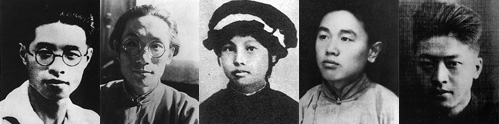
左翼同盟は中国共産党と強い繋がりがあったため、1930年9月に国民党によってすぐに禁止され、同盟のメンバーは逮捕された。[ 4 ] 1931年2月7日、国民党は、1927年の上海大虐殺に続く白色テロの時期に、同盟のメンバー5人、李偉森(中国語:李偉森;ピンイン: Lǐwěisēn)、胡葉斌、柔石、殷夫(中国語:殷夫;ピンイン: Yīn fū)、馮庚を処刑した。 [ 8 ]彼らは上海で会合中に逮捕された24人の共産党員と同調者の中に含まれていた。[ 9 ] : 17処刑された同盟メンバーは「左翼同盟の五殉教者」として知られるようになった。[ 9 ]: 19-20共産党内の他の者によって会議が裏切られたという説もある。おそらく権力闘争の結果だろう。[ 10 ]
同連盟は1936年に自主的に解散した。これは主に、作家たちが政治的な境界を越えて団結し、急速に増大する日本の脅威に立ち向かうことを促すためであった。
The purpose of the League was to promote socialist realism in support of the Communist Revolution, and it eventually became very influential in Chinese cultural circles. To accomplish this goal, the league launched new magazines, seminars, and study groups. The League articulated theories on the political role of literature that foreshadowed Mao's influential Yan'an Talks on Literature and Art, and engaged in running debates with the "art for art's sake" Crescent Moon Society.[11]
In June 1930, the Nationalist Literature Movement was founded with influence from the Kuomintang. [12] In June 1931, under the leadership of Qu Qiubai, the league began an attack on the Nationalist Literature Movement, where a series of articles were written by Qu Qiubai, Lu Xun, and Mao Dun.[4][12]
In 1931, the league's executive committee passed "The New Missions of Chinese Proletarian Revolutionary Literature" which placed greater importance on literature and set a clear political agenda for the league.[4]
During that period, New Culture writers established several literary groups, such as the Mangyuan Society (Chinese:莽原社; pinyin:mǎngyuán shè), Weiming Society (Chinese:未名社; pinyin:wèi míng shè), and Chaohua Society (Chinese:朝花社; pinyin:cháo huā shè), and published related literary magazines like Sprout Monthly, Pioneer, and Literary Journalism. These publications were founded with the purpose of uniting their efforts against the Crescent Moon Society writers like Hu Shi, Xu Zhimo, and Liang Shiqiu, whom they saw as representatives of the "oppressive class" in literature. These publications played a significant role in the Left-Wing Writers' League period, exerting considerable influence but eventually were all banned by the Kuomintang government.[13]
Other well known literary works produced by members of the league include Mao Dun's "Midnight" (Chinese:子夜; pinyin:zǐyè) and the league's magazine titled "The Dipper". (Chinese:北斗; pinyin:Běidǒu)
1932年、屈秋白は、作家たちが理解しやすく普遍的な中国語を見つけられなければ、革命文学運動は進展しないと主張した。その後まもなく、党内でこのテーマに関する議論が始まり、毛盾と魯迅は屈秋白に反対する議論を展開した。意見の相違はあったものの、最終的には屈秋白が提唱した提案への顕著な転換が定着した。[ 12 ]