
Loading article…

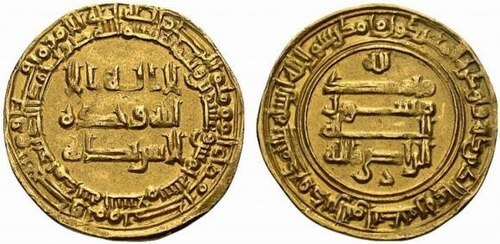


The gold dinar (Arabic: ﺩﻳﻨﺎﺭ ذهب) is an Islamic medieval gold coin first issued in AH 77 (696–697 CE) by CaliphAbd al-Malik ibn Marwan. The weight of the dinar is 1 mithqal (4.25 grams or 0.137 troy ounces).
The word dinar comes from the Latin word denarius, which was a silver coin. The name "dinar" is also used for Sasanid, Kushan, and Kidarite gold coins, though it is not known what the contemporary name was.
The first dinars were issued by the Umayyad Caliphate. Under the dynasties that followed the use of the dinar spread from Islamic Spain to Central Asia.
Although there was a dictum that the Byzantine solidus was not to be used outside of the Byzantine Empire, some of these coins became involved in distant trade; those then did not get re-minted by the imperial mints, and quickly became worn. Towards the end of the 7th century CE, Arabic copies of solidi – dinars issued by the caliphAbd al-Malik (685–705 CE), who had access to supplies of gold from the upper Nile – began to circulate in areas outside of the Byzantine empire. These corresponded in weight to only 20 carats (4.0 g) rather than the 24 carats of a recently minted solidus, but matched with the weight of the worn solidi that were circulating in those areas at the time. The two coins circulated together in these areas for a time.[1]
イスラム教徒に帰属する最初の年代が特定できる硬貨は、ウスマーン・カリフ時代に鋳造された、ササン朝のヤズデギルド3世の銀ディルハムの複製である。これらの硬貨は、表面の縁にアラビア語の銘文(通常は「アッラーの御名において」と記されている)が刻まれている点で、オリジナルとは異なる。その後のシリーズは、ホスロー2世のドラクマを基にしたタイプで発行され、ホスロー2世の硬貨はおそらく流通通貨のかなりの割合を占めていたと考えられる。
イスラムの正統カリフの下で最初に発行された後のホスロー型のアラブ・ササン朝のコインと並行して、ホスローの名前が地元のアラブ総督の名前、または2つのケースではカリフの名前に置き換えられた、より広範なシリーズが鋳造された。歴史的証拠は、これらのコインのほとんどがヒジュラ暦の日付を持っていることを明確にしている。最も初期のイスラムの銅貨は匿名で日付がないが、ウスマーンまたはアリーのカリフ時代に発行された可能性のあるシリーズが存在する。これらは、アレクサンドリアのヘラクレイオスのビザンツ12ヌムス貨の粗雑なコピーである。
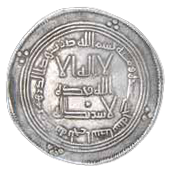
西暦695年(ヒジュラ暦75年)までに、アブド・アル=マリクは貨幣の変更を決定した。この時期から、ササン朝の原型に基づきながらも独特のアラビア語の裏面を持つ、模様入りの銀貨が散見される。ササン朝の重量基準である3.5~4.0グラムを維持したこの試みは実行されず、ヒジュラ暦 79年( 西暦698年)には、14の造幣所で、名目重量2.97グラムの全く新しいタイプの銀貨が鋳造された。同時代の金貨とは異なり、この数値は実際には達成されなかったようである。ヒジュラ暦 79~84年(西暦698~704年)の損傷のない60枚の標本の平均重量はわずか2.71グラムで、造幣所名のない(ダマスカスで製造された金ディナールの標準的な手順であった)698年(ヒジュラ暦79年)の唯一のコインの重量に非常に近い。 「ディルハム」の名を冠したこれらの新しい硬貨は、 直径25~28mmで、アラブ・ササン朝時代の硬貨の様式を踏襲した。デザインは、円と環状の装飾に囲まれたアラビア語の碑文で構成されている。

On each side there is a three- or four-line legend with a single circular inscription. Outside this are three line circles with, at first, five annulets surrounding them. The side normally taken as the obverse has as its central legend the Kalima or shahada: "There is no god except God alone, there is no partner with Him." Around it is the mint and date formula reading "In the Name of God: this Dirham was struck in [mint name e.g. Damascus] the year [e.g. 698, AH 79]". The reverse has a four line central inscription taken from the Surah 112 of the Quran; "Qul hu Allahu Ahad, Allahu-Samad, Lam yalid wa lam yulad wa lam yakul-lahu kufu-an ahad"'. The marginal legend states: "Muhammad is the Messenger of God, he was sent with guidance and the religion of truth to make it prevail over every other religion, averse though the idolaters may be" (Quran 9:33).

The gold coins were first struck to the contemporary standard of 4.4 grams and with one or more Arabic standing figures on the obverse and an Arabic legend on the reverse. Dated coins exist from 680 (AH 74) and are named as dinars. These experimental issues were replaced in 683 (AH 77), except in North Africa and Spain, by completely epigraphical designs very similar to the designs adopted for the silver pieces but with a shorter reverse legend and no annulets or inner circles. This type was used without appreciable change for the whole of the Umayyad period, the coins being struck to a new and carefully controlled standard of 4.25 grams. This weight was reputed to be based on the average of the Byzantine solidi circulating at the time, was called a Mithqal, a term used earlier for 1⁄72 of a ratl. Evidence of the importance attached to the close control of the new Dinars is provided by the existence of glass weights, mainly from Egypt. They usually show the governor's name, sometimes the date but all marked with coin denomination.[2]
初期の金ディナールは当時のビザンツ帝国やササン朝のコインを模倣していたが、時が経つにつれて、よりイスラム独自の様式を帯びるようになった。紀元692年頃と694年頃に鋳造された初期の2つの例は、似たようなデザインをしている。どちらも表面に人物像が描かれており、裏面にはピラミッド型の台座と、その上に円形の頭部が乗った杖が描かれている。これら2つの初期のコインは、同時期のビザンツ帝国のコインと非常によく似ており、ビザンツのデザインをほぼそのままコピーしたもので、唯一の変更点は、宗教上の理由からビザンツ十字の水平線が削除され、表面の人物像がイスラム風の服装に変更されたことである。[ 3 ]紀元692年には、シャハーダ(信仰告白)が表面に、694年には裏面に追加された。[ 3 ]西暦696~697年には、コインから画像がほぼ完全に削除され、碑文のみで装飾されたコインに置き換えられた。[ 4 ]
北アフリカの金貨は、ヘラクレイオスとその息子のコインの複製として始まった(ただし、シャハーダはラテン語で短縮されている)。裏面の「階段上の十字架」は、ほとんどの場合、十字架の部分が失われている。ディナール、ハーフ、サードが鋳造され、すべて新しい重量基準に準拠している。後のコインは、インディクションII(703年、ヒジュラ暦84-85年)からヒジュラ暦の日付がローマ数字 で表記されるようになり、713年(ヒジュラ暦 94年)からはアラビア語のフレーズが表面に現れるようになった(ヒジュラ暦 97年)。684年(ヒジュラ暦 100年)には、北アフリカは東方の発行物と一致するようになったが、造幣所はイフリーキヤと呼ばれている。銘文は短くなり、裏面には新しい中央の碑文「慈悲深く慈愛深き神の名において」が刻まれている。これはアル・アンダルスの硬貨や、半ディナール、三分の一ディナールにも使用されており、それらのほとんどには鋳造所を示す刻印はないものの、アル・アンダルスで鋳造された可能性が高い。