
Loading article…
コロンバス美術デザイン大学(CCAD)は、オハイオ州コロンバスにある私立の美術学校です。1879年にコロンバス美術学校として設立され、米国で最も歴史のある私立美術デザイン大学の一つです。コロンバスのダウンタウンに位置するCCADのキャンパスは、9エーカー(36,000平方メートル)の敷地に11棟の建物(学生寮2棟を含む)があり、コロンバス美術館に隣接しています。約900名のフルタイム学生が在籍しています。

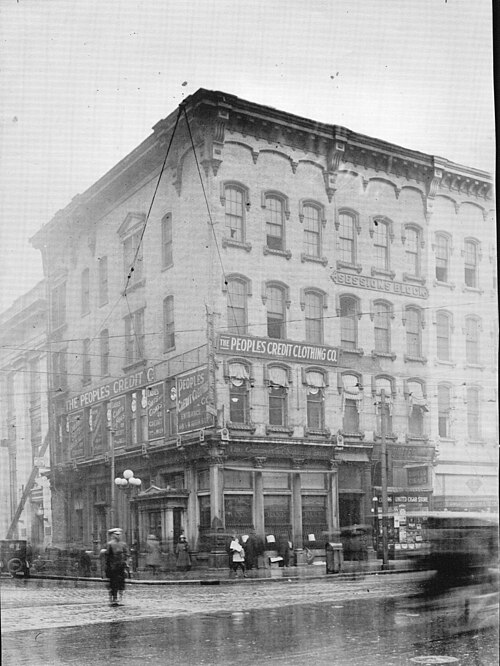
CCADは1879年にコロンバス美術学校として設立されました。学校の構想は1878年に始まり、女性グループがコロンバス美術協会を結成しました。彼女たちの主な目的は、コロンバスに美術学校を設立することでした。最初の授業は1879年1月6日、ロング通りとハイ通りの角にあるセッションズビルの最上階で行われました。この階の使用権は、芸術に造詣の深い銀行家であり起業家でもあったフランシス・セッションズ氏によって寄贈されたもので、彼はコロンバス美術館の最初の理事の一人でした。当時、生徒はわずか3人、教師は1人でした。学年末には生徒数は118人に増えました。当初の授業内容は、デッサン、水彩画、刺繍、油絵、粘土細工、陶磁器絵付け、製図などでした。開校後まもなく、コロンバスではヌードモデルはあまりにも際どいと考えられていたため、彫刻や服を着たモデルを使った人物デッサンなどの授業が追加されました。 1885年、学校はゲイ通りとフォース通りの角にあるチューラービルに移転した。これは、セッションズブロックの学校の下の階にあったトロイ蒸気洗濯場から立ち上る蒸気と換気の悪さが原因だった。

フランシス・セッションズは遺言で、自宅をギャラリーのスペースとして残し、さらにギャラリーのより良いスペースを建設し、コロンバス美術学校を継続するための多額の資金も残した。学校は1914年までにさらに2回移転し、セッションズ邸の隣にあるモニペニー邸に移った。1923年、コロンバス美術協会が運営し、ギャラリーが資金を提供していた学校は、1つの理事会に統合された。この統合により、コロンバス美術協会は消滅し、ギャラリーの理事たちが学校委員会を設立した。この時の教員の中には、画家のアリス・シレがいた。

1929年、美術館の理事であったラルフ・ビートンが、コロンバス美術学校の最初の新校舎建設のために3万ドルを寄付した。セッションズ・ハウスとモニペニー・マンションは取り壊され、ビートン・ホールと新しいコロンバス美術館の建物が建設された。ビートン・ホールは1930年に完成し、最初の授業が行われた。当時、1年次の必修科目は、デッサン、水彩画、色彩理論と実践、モデリング、解剖学、構図、遠近法、デザイン、レタリング、イラストレーション広告であった。1944年から1945年にかけて、第二次世界大戦のため昼間部は廃止されたが、夜間部は拡張された。

ジョセフ・カンザーニ[ 1 ]は1948年に同校の教師として働き始めた。1950年までに、昼間部の生徒はわずか13人となり、カンザーニは唯一の教員となった。カンザーニは美術館館長から学部長になるよう依頼された。学部長として、カンザーニはデッサン、色彩理論、デザイン原理の入門コースを編成した。カンザーニは基礎クラスの一部も担当した。

1959年、カンザニはコロンバス美術学校からコロンバス美術デザイン大学に名称を変更した。1960年代までに、同校はフルタイムの学生数が850人にまで増加した。大学はハットン・プレイスの6軒の家から始まり、学校周辺の家屋を購入した。1962年、学生たちは大学が学位授与機関となるよう、コロンバス美術館の前でピケを張った。当時、同校は専門資格の修了証書しか発行していなかった。理事会が認定を受けることを発表すると、学生たちは24時間のピケを終えた。1969年、CCADはオハイオ州教育委員会から美術学士号を授与する認可を受けた。1975年、キニー・ホール(当時はVホールと呼ばれていた)が完成した。これは同校のために特別に建設された2番目の建物で、建設費は250万ドルだった。これに続いて、1978年には旧キャデラック工場が改修され、バテル・ホールへと転用された。

1976年、CCADは全米美術学校協会から認定を受けた。1979年6月、カンザニはCCADの初代学長に就任した。1981年、コロンバス美術館が58年間運営してきたCCADは、CMAから独立した。カンザニはカンザスシティでの会議から戻ると、美術館の理事会がCCADとフランクリン大学の合併を目前に控えていることを知った。理事会は合併によってCCADの財政状況が改善されると考えていたが、カンザニは学校が破滅すると考えた。カンザニは教職員と学生を動員して理事会の行動に抗議した。理事会は合併計画を断念した。カンザニはCCADがCMAから独立することを要求し、1982年までに分離が完了した。

The Schottenstein Residence Hall was completed in 1985 as the first campus dorm. CCAD bought many of the houses on Cleveland Avenue between Long and Gay, converting them into classrooms and offices. In 1995, Canzani retired after 47 years. The Joseph V. Canzani Center, the last new building to be built during his presidency, was completed in 1991. The Canzani Center holds the CCAD Packard Library, an auditorium, and a 15,000-square-foot gallery.
In 1998, Dennison (Denny) W. Griffith was chosen as the college's president.
By 2001, the school had a 17-building, 9-acre campus. On June 23, 2001, the 100-foot-high, 101-foot-wide, 24,000-pound ART sign was erected, spanning Gay Street on campus. The sculpture was designed by Doris Schlayn of Artglo Company and donated to the school.
The Loann Crane Center for Design was built in 2005, replacing the old student center, and its adjacent quad replaced a parking lot.
In 2006, CCAD bought the Byers Building, a 1920s auto dealership at the corner of Broad Street and Cleveland Avenue, for $4.5 million. The building was converted into offices, classrooms, and studios and renamed the Design Studios on Broad (DSB). DSB also houses the MFA Program. The first MFA class graduated in 2012.
In 2009, the Design Square Apartments were completed. This new building replaced the older houses on Cleveland Avenue that had previously repurposed for use by CCAD. Design Square Apartments offers housing to 200 graduate students, upperclassmen, and some freshmen.
In 2013, Griffith announced that he would be retiring on June 30, 2014. Under his tenure, the college doubled the size of its campus. The school also debuted a new curricular model that splits the majors into two schools, the School of Design Arts and the School for Studio Arts. Its finalized form launched in the Fall of 2014. Griffith died in January 2016.[2]
The board of trustees named the Industrial designer and branding expert Tom White as Griffith's successor. He served as president between June 24, 2014, and March 3, 2015.
In December 2015,[3] CCAD's board of trustees named Dr. Melanie Corn as the school's new president.[4] She is the first woman to serve as president in the university's 140-year history, and is one of only six women serving as president among the AICAD member institutions.
CCAD awards a Bachelor of Fine Arts degree in 9 undergraduate majors. It also awards one graduate degree: a Master of Professional Studies in User Experience Design.
Through its Saturday Morning Art Classes, Evening Art Classes, Creative Summer Workshops, and College Preview program, the college offers a wide variety of community classes for all ages, including children and youth in grades 1–12 and adults.
CCAD is accredited by the National Association of Schools of Art and Design (NASAD) and the Higher Learning Commission.
CCAD has a diverse student body that comes from a variety of ethnic, national, and socioeconomic backgrounds. Its 17-acre urban campus is located in the heart of downtown Columbus and is within walking distance to the Columbus Museum of Art. Partly because of CCAD's renowned fashion design program, in 2012 Columbus was ranked by Bloomberg as the third most fashionable city in the United States.[5]
The annual Chroma: Best of CCAD exhibition showcases outstanding student work from across the college's academic programs. This faculty-juried show features select work from CCAD students of all years.
CCAD's annual Art Fair & Marketplace showcases one-of-a-kind work ranging from traditional fine arts pieces to modern goods and decor. All items are made by CCAD students and alumni, and all sales proceeds go to the artists and designers.
Senior Fashion Design students show their collections on the runway at one of their biggest annual events.
Botticelli Magazine is a literary and art journal produced and edited by students at Columbus College of Art and Design. It features fiction, poetry, creative nonfiction, reviews, art, and photography, as well as flash pieces and links to online work as long as the rights are available to the contributor. The magazine's review process involves an editorial staff of writers and artists consisting of students and faculty.
北緯39度57分54秒、西経82度59分24秒/北緯39.964895度、西経82.989983度/北緯39.964895度、西経82.989983度