
Loading article…
言語学において、A-not-A 疑問文またはA-neg-A疑問文は、主に中国語で使われる極性疑問文の一種で、何かについて肯定と否定の両方の可能性を提示して尋ねます。単純な「はい」または「いいえ」の答えを許容する代わりに、これらの疑問文では、回答者は元の疑問文の肯定部分または否定部分を繰り返す必要があります。たとえば、中国語では、「行きたいですか?」と尋ねて「はい」または「いいえ」を期待する代わりに、疑問文は「行きたいですか、行きたくないですか?(想不想去?)」[ 1 ]のように構成されることがあります。
A-not-A疑問文は、質問者が疑問視されている発言の真偽について意図的に憶測を避けるという、言語的な中立性を特徴としています。[ 2 ]この中立性は、命題の肯定形と否定形の両方を同時に提示する価値中立的な表現によって実現されます。「A-not-A疑問文」という用語は中国語で生まれましたが、その後、台湾語のkam疑問文やシンガポールの潮州語(ST)のka疑問文など、他の中国語の同様の疑問構造を説明するために拡張されました。しかし、これらの特定のバリエーションは単に同一のコピーではなく、中国語の形式とは大きく異なる場合がある独自の言語的特性を持っています。[ 3 ] [ 4 ]
A-not-A疑問文というより広いカテゴリーには、複数の異なる形式が含まれる。これらの形式は、否定要素の位置と、重複する要素の有無に基づいて区別される。
これは、A-not-A疑問文の最も基本的な形式であり、構成要素であるAが否定によって隔てられた2つの同一のインスタンスから構成されています。
これはより複雑な形式で、否定によって区切られた複合構成要素ABが2つ含まれています。ABは、埋め込み節、前置詞句と結合された主語、またはDPを含む動詞句を表す可能性があります。
この形式は、否定によって区切られた2つの固有の構成要素、AとABから構成されています。AとABは、ABがAの内容全体を含んでいるという点で類似していますが、ABにはAには存在しない構成要素も含まれています。
この形式はA-not-AB形式に似ていますが、より複雑な構成要素であるABが否定の前に現れます。
この形式は、Aが最初の音節がaである2音節の構成要素であり、かつ2つの構成要素が否定によって区切られている場合にのみ見られます。
この形式は、a が A の最初の音節を表し、2 つの音が否定によって区切られている a-not-A 形式に似ていますが、A が別の構成要素と結合して複合構成要素 AB を形成します。
英語の質問(1.a)「あなたは幸せですか、それとも悲しいですか?」に対する答えは、エコーアンサーでなければならず、「私は幸せです」または許容される代替案である「私は悲しいです」のいずれかを述べる必要があります。言い換えれば、この文は誘導質問であり、話し手は答えがどうなるかを予想しています。対照的に、(1.b)「あなたは幸せですか、それともそうではありませんか?」は中立的な質問であり、最初のより明確に述べられた選択肢に対して、答えは「はい」または「いいえ」のいずれかになります。 [ 5 ]
(1.a)Q:あなたは幸せですか、それとも悲しいですか? A:私は幸せです。 私は悲しいです。 (1.b)Q:あなたは幸せですか、それとも幸せではありませんか? A:はい。 いいえ。
英語では通常、A-not-A疑問文は使われませんが、次の例はA-not-A疑問文への回答方法を示しています。
(2)質問:ジョンは豆を食べましたか? A:(はい)ジョンは豆を食べました。 (いいえ、)ジョンは豆を食べませんでした。 *はい。 *No. [ 6 ]
この例で示されているように、「はい」または「いいえ」と答えるだけでは質問への回答として不十分です。この質問には「A」または「not A」の形式で答える必要があります。この質問がA-not-Aの形式で尋ねられた場合、直接的な形式は「ジョンは豆を食べましたか、食べませんでしたか?」となります。しかし、上記の例は、英語のA-not-Aタイプの質問には通常、中国語の形式には見られない「or」などの比較演算子が含まれていることも示しています。また、英語には2音節のA-not-A形式のいずれも顕著な証拠はありません。これらの要因により、A-not-Aタイプの質問を含む言語のセットに英語を含めることは複雑になり、場合によっては英語に近い近似形が存在するものの、A-not-Aタイプの質問は中国語の言語でより正確に例示されます。
以下は、A-not-A疑問文の英語での近似表現の例です。これらは、2つの可能性を提示し、応答を求めるという点で、中国語のA-not-A疑問文と似ています。ただし、文法的に正しく読めるようにするために、追加のセグメント(以下の例では「or」)が含まれており、これによりこれらの近似表現は代替疑問文(AltQ)タイプに変わります。この追加のセグメントは中国語のA-not-A疑問文には見られず、実際には中国語のセグメント「還是haishi 'or'」は、A-not-A形式の構文を対比させ、後者が島嶼に対して敏感であることを示すために使用されています。とはいえ、英語話者の視点からこの現象を理解しやすくするために、以下の例を文脈を示すために含めています。
(1)ジョンはパーティーにいましたか、それともいませんでしたか?
(2)ジョンは昨夜のパーティーにいましたか、それともいませんでしたか?
(4)ジョンは昨夜のパーティーにいましたか、それともいませんでしたか?
(3)ジョンは昨夜のパーティーにいましたか、それともいませんでしたか?
A-not-A シーケンスは、疑問形態素 (A-not-A の A で表される) の重複によって作成された形態素であると提案されている。[ 4 ]この形態素の具体的な統語的位置については合意が得られていないが、A-not-A シーケンスは、抽象的な疑問形態素とこの重複した述語の連結によって形成された単語であり、VP-前置詞に似ていると一般的に受け入れられている。この形態素は、否定と疑問の性質を表すために NQ と呼ばれている。
1985年に実施された広範囲にわたる方言横断調査では、台湾語の疑問詞kamが、仮説上の中国語NQと同じ文脈で出現することが結論付けられました。[ 3 ]このことから、kam型の疑問文とA-not-A疑問文は相補分布の関係にある、つまり、ある言語にはkam型の疑問文かA-not-A疑問文のどちらか一方しか存在しない、と結論付けられました。また、kamとNQは「同じ基底形態素の異なる形態論的表現」であると解釈されました。[ 4 ]
セグメント嗎/吗(ma) を用いて形成されるはい/いいえの疑問文とは異なり、A-not-A 疑問文は埋め込むことができ、自身の節を超えて範囲が広がる可能性があります。NQ の元の位置と意図された最終位置が島境界によって隔てられている場合、この範囲はブロックされる可能性があります。[ 7 ] NQ のこのような分布特性は、非名詞付加疑問詞weishenme 「なぜ」と類似しています。weishenme の移動に基づく分析は議論の余地がないため、NQ と weishenme の類似性は、NQも同様の移動分析の対象となる可能性があることを示唆しています。
A-not-A疑問文に関する支配的な見解は、NQがwh語に似ており、NQの移動によって関連付けられているというものである。[ 8 ] [ 7 ]この移動はhaishi 「または」を用いた選択型疑問文には見られないため、構造的にA-not-A疑問文と選択疑問文を区別する。この統語的差異により、A-not-A疑問文は、島嶼の感受性を明らかにする目的でhaishi疑問文と対比されることがある。
以下は、中国語族に属する言語におけるA-not-A疑問文の例です。
A-not-A疑問文を作る場合、Aは両側で同じでなければなりません。Aは基本的に変数であり、助動詞、副詞、形容詞、動詞、前置詞などの文法的な要素に置き換えることができます。
中国語には、A-not-A の 6 つのパターンが確認されています。A-not-A、AB-not-AB、A-not-AB、AB-not-A、a-not-A、a-not-AB で、ここで「A」は述語の完全な形、「B」は補語、「a」は 2 音節述語の最初の音節を表します。[ 9 ]
例(3)はA-not-Aパターンを示しており、Aは動詞qu「行く」で、qu bu quは「行く、行かない」です。
你
ニ
あなた
去る
qù
行く
ない
ブー
ない
去りますか?
qù
行く
你去不去?
nǐ qù bù qù
行く、行かない
行くの?[ 10 ]
例(4)はAB-not-ABパターンを示しており、ABは動詞rende「知る」をA、補語zhe ge ren「このCL人」をBとする構成要素で、これらが組み合わさって、AB構成要素rende zhe ge ren 「このCL人を知る」を形成します。これにより、 rende zhe ge bu rende zhe ge ren「このCL人を知るが、このCL人を知らない」が生成されます。
你
ニ
あなた
承認
ランデ
知る
這う
ジェ
これ
個
gè
CL
人
レン
男
ない
ブー
ない
承認
ランデ
知る
這う
ジェ
これ
個
gè
CL
人?
レン
男
你認得這個人 不認得這 個人?
再開発zhè gèrén bùrèndézhègèrén
このCL男を知ってる?このCL男を知らない?
この男性を知っていますか?[ 10 ]
例(5)はA-not-ABパターンを示しており、Aは動詞rende「知る」、ABは動詞rende「知る」と補語 zhe ge ren「このCL人」からなる構成要素で、これらが組み合わさってAB構成要素rende zhe ge ren 「このCL人を知っている」を形成します。これによりrende bu rende zhe ge ren「このCL人を知らない」が生成されます。
你
ニ
あなた
承認
ランデ
知る
ない
ブー
ない
承認
ランデ
知る
這う
ジェ
これ
個
gè
CL
人?
レン
男
你認得不認得這個人?
再開発、再開発、再開発
このCLの男を知らないのか
この男性を知っていますか?[ 10 ]
例(6)は、AB-not-A パターンを示しています。ここで、AB は、A としてrende 、「知る」、B として zhe ge ren、「この CL の男」からなる構成要素rende zhe ge ren、「この CL の男」です。A は同様に、構文の 2 番目の部分でrende 、「知る」です。これにより、 rende zhe ge ren bu rende、「この CL の男を知っているが知らない」が生成されます。
你
ニ
あなた
承認
ランデ
知る
這う
ジェ
これ
個
gè
CL
人
レン
男
ない
ブー
ない
認めますか?
ランデ
知る
你認得這個人不認得?
新しい人、人、人、人
このCLの男は知らない
この男性を知っていますか?[ 10 ]
例(7)は、a-not-A パターンを示しています。ここで、a は 2 音節述語fangbian 「都合の良い」の最初の音節fangであり、A は完全な述語fangbianであり、fang-bu-fangbianは「都合の良い-都合の悪い」です。
ない
ブー
ない
知道
志道
知る
你
ニ
あなた
方不
fāng -bù
(便利ではない)
方便?
方面
便利
不知道你{方不}方便?
bù zhīdào nƐ fāng -bù fāngbiàn
知らない(都合が悪い) -都合が悪い
それでよろしいですか?[ 9 ]
例(8)は、a-not-AB パターンを示しています。ここで、a は二音節述語heshi「適切な」の最初の音節heであり、AB はheshi「適切な」を A 、jiao quan「教えの拳」を B とする構成要素で、これらが組み合わさってheshi jia quan 「適切な教えの拳」を形成します。これによりhe-bu heshi jian quan「適切ではない教えの拳」が生成されます。
你
ニ
あなた
見る
カン
見る
這裡
zhèlǐ
ここ
合不
ヘ・ブ
適している(ではない)
合適
ヘシ
適切な
教
焦
教える
拳?
quán?
拳
你 看 這裡合不合適教拳?
看護師との関係は何ですか?
ここには適した(可能な) -適切な指導ではない最初の
これはあなたの武道クラブに適していますか?[ 9 ]
A-not-A は、動詞、形容詞、副詞[ 11 ]および助動詞[ 1 ]によって形成されることがあります。
疑問節では、A-not-A は動詞句の最初の部分を繰り返して (助動詞のオプション付きで)、その間に否定形の助詞を置くことによって発生します。ただし、この節は完了相を使用する場合には適用されません。代わりに、A-not-A 形式で使用された繰り返し動詞の代わりに、沒有; meiyouが使用されます。 [ 12 ]
ここでは、動詞qu「行く」は A であり、目的語はありません。
你
ニ
あなた
DP
去る
qù
行く
V
ない
ブー
ない
否定
去りますか?
qù
行く
V
你去不去?
nǐ qù bù qù
行く、行かない
DP V NEG V
あなたは行きますか?
A:
去る
qù
行く
V
/
/
/
/
ない
ブー
ない
否定
去る
qù
行く
V
A:去/不去
{} qù / bù qù
{}行く/行かない
{} V / NEG V
はい/いいえ
ここでは動詞kan「見る」が再び A であり、目的語は存在するが、その目的語は「A」に含まれていないため、重複していない。
你
ニ
あなた
N
見る
カン
時計
V
ない
ブー
ない
否定
見る
カン
時計
V
電影?
diànyǐng?
映画
N
你見不見电影?
nǐ kàn bù kàn diànyǐng?
映画を観るのではなく、観る
N V NEG V N
あなたは映画を見ますか?
A:
見る
カン
時計
V
/
/
/
/
ない
ブー
ない
否定
見る
カン
時計
V
A:見る/見ない
{} kàn / bù kàn
ウォッチ/非ウォッチ
{} V / NEG V
はい/いいえ。
ここで、動詞kan「見る」も同様に A であり、目的語は NEG の前に含まれていますが、A には含まれていないため重複していませんが、選択肢として残っています。
你
ニ
あなた
N
見る
カン
時計
V
電影
diànyǐng
映画
DP
ない?
ブー?
ない
否定
你看電影はありませんか?
nǐ kàn diànyǐng bù?
映画を観るのではなく
N V DP NEG
あなたは映画を見ますか?
A:
見る
カン
時計
V
/
/
/
/
ない
ブー
ない
否定
見る
カン
時計
V
A:見る/見ない
{} kàn / bù kàn
ウォッチ/非ウォッチ
{} V / NEG V
はい/いいえ
ここでは、動詞kan「見る」もAに用いられており、目的語はNEGの前に含まれていますが、Aには含まれていないため、重複していません。Aはここで重複しています。
你
ニ
あなた
DP
見る
カン
時計
V
電影
diànyǐng
映画
DP
ない
ブー
ない
否定
見る?
kàn ?
時計
V
你看電影見ませんか?
ニャン・ディアン・イン・ブ・カン?
あなたは映画を観るのではなく、観るのです
DP V DP NEG V
あなたは映画を見ますか?
A:
見る
カン
時計
V
/
/
/
/
ない
ブー
ない
否定
見る
カン
時計
V
A:見る/見ない
{} kàn / bù kàn
ウォッチ/非ウォッチ
{} V / NEG V
はい/いいえ
3.d.が文法的かどうかについては話者の間で議論があり、ガスデは文法的であると主張している。
ここでは、形容詞hao(良い)がAであり、重複しています。単語benは分類詞であり、名詞「本」の補語です。
これ
ジェ
これ
DP
本
ベン
CL
书
シュウ
本
いいですね
ハオ
良い
A
ない
ブー
ない
否定
いいですか?
は?
良い
A
これは本书好不好ですか?
zhè běn shō bù hào ?
このCLの本は良い、良くない
DP {} {} A NEG A
この本は良い本ですか?
A:
いいですね
ハオ
良い
A
/
/
/
/
ない
ブー
ない
否定
いいですね
ハオ
良い
A
A:好/不好
{} hǎo / bù hǎo
良い/良くない
{} A / NEG A
はい/いいえ
ここでは、形容詞hao「良い」は A ですが、重複していません。
これ
ジェ
これ
DP
本
ベン
CL
书
シュウ
本
いいですね
ハオ
良い
A
ない?
ブー?
ない
否定
これは本书好不ですか?
zhè běn shū hǎo bù?
このCLの本は良くない
DP {} { }否定
この本は面白いですか?
A:
いいですね
ハオ
良い
A
/
/
/
/
ない
ブー
ない
否定
いいですね
ハオ
良い
A
A:好/不好
{} hǎo / bù hǎo
良い/良くない
{} A / NEG A
はい/いいえ
ここでは、前置詞zai「~で」が A であり、重複しています。
张三
張三
張山
DP
在
ザイ
で
P
ない
ブー
ない
否定
在
ザイ
で
P
图书馆?
túshūguǎn?
図書館
DP
张三在图书馆?
長三ザイブザイトゥシュグアン?
張三は図書館にはいません
DP P NEG P DP
張三は図書館にいますか?
A:
在
ザイ
で
P
/
/
/
/
ない
ブー
ない
否定
在
ザイ
で
P
A:ある/ない
{} zài / bù zài
{}で/ でない
{} P / NEG P
はい/いいえ
ここでは、前置詞zai「~で」はAであり、重複していません。
张三
張三
張山
DP
在
ザイ
で
P
写真
トゥシュグアン
図書館
DP
ない?
ブー?
ない
否定
张三在图书馆不?
Zhāngsān zài túshuguƎn bù?
図書館の張三は
DP P DP NEG
張三は図書館にいますか?
A:
在
ザイ
で
P
/
/
/
/
ない
ブー
ない
否定
在
ザイ
で
P
A:ある/ない
{} zài / bù zài
{}で/ でない
{} P / NEG P
はい/いいえ
ここでは、法助動詞はAであり、それが重複している。
你
ニ
あなた
N
まあ
ガン
あえて
M
ない
ブー
ない
否定
まあ
ガン
あえて
M
杀
シャー
殺す
V
鸡?
え?
チキン
DP
你恐れ不恐れ杀鸡?
nǐ gǎn bù gǎn shā jī?
鶏を殺すなんて、とんでもないことだ
N M NEG M V DP
鶏を殺す勇気があるのか?
A:
まあ
ガン
あえて
M
/
/
/
/
ない
ブー
ない
否定
まあ
ガン
あえて
M
A:大丈夫/大丈夫
{} gǎn / bù gǎn
大胆/大胆ではない
{} M / NEG M
はい/いいえ
中国語と同じ否定マーカーがあるにもかかわらず、「不」bat1は定型表現または識字能力を示すためにのみ使用され、 [ 14 ] 「唔」m4だけが A-not-A 疑問文の否定マーカーとして使用されます。[ 9 ]
広東語と北京語の相違点の1つは、方言の違いにより、A-not-A疑問文の特定の形式が存在しないことである。[ 2 ]
北京語の対応形と同様に、この形式は広東語でも確認されており、(13)の文のペアで示されています。[ 9 ]例(13.a)では、Aは動詞lai「来る」で、lai m laiは「来るな、来ない」であり、(13.b)では、Aは動詞lai「来る」で、lai bu laiは「来るな、来ない」です。
佢哋
ケオイデイ
彼らは
嚟
ライ
来る
唔
m
ない
嚟?
ライ?
来る
佢哋嚟唔嚟?
keoidei lai m lai ?
彼らは来ない
彼らは来るのか?
他
タメン
彼らは
來
ライ
来る
ない
しかし
ない
來?
ライ?
来る
他們未来不來?
タメン・ライ・ブー・ライ?
彼らは来ない
彼らは来るのか?
(14.a)に示すように、これは広東語では確認されていない形式であり、(14.b)の北京語の対応形とは異なります。[ 2 ]
ここで(14.a)Aは動詞zungji「好き」、Bは名詞jamok「音楽」であり、AB形zungji jamok「音楽が好き」となります。これは文法的に誤りであるzungji jamok m zungji jamok 「好きではなく音楽が好き」という構造を生み出し、広東語では不適切な文となります。
(14.b)に示す整った文では、Aは動詞xihuan「好き」、Bは名詞yinyue「音楽」であり、AB形xihuan yinyue「音楽が好き」となります。これにより、xihuan yinyue bu xihuan yinue「音楽が好きではないが音楽が好き」という、中国語の文法的に正しい文ができます。
??/*你
??/*nei
??/*あなた
鐘意
忠済
のように
音樂
ジャモク
音楽
唔
m
ない
鐘意
忠済
のように
音樂?
ジャモク?
音楽
??/*你鐘意音樂唔鐘意音樂?
??/*ネイズンジジャモクmズンジジャモク?
??/*音楽が好きで はなく、音楽が好きです
あなたは音楽が好きですか?
你
ニ
あなた
喜歡
西環
のように
音樂
インユエ
音楽
ない
しかし
ない
喜歡
西環
のように
音樂?
インユエ?
音楽
你喜歡音 樂不喜歡音樂?
ni xihuan yinyue bu xihuan yinyue ?
あなたは音楽が好きで はなく、音楽が好きです
あなたは音楽が好きですか?
この形式は、(15.a)に示すように述語が単音節語である場合にのみ広東語で確認されており、Aは動詞faan「戻る」、ABは構成要素faan ukkei「家に帰る」です。これは、(15.b)の北京語の対応例と比較できます。北京語では、Aは動詞hui「戻る」、ABは構成要素hui jia「家に帰る」です。[ 9 ]
你
ネイ
あなた
戻る
ファン
戻る
唔
m
ない
戻る
ファン
戻る
屋企み?
ウッケイ?
家
你返唔屋企み?
nei faan m faan ukkei ?
家に帰らない
家に帰るのですか?
你
ニ
あなた
回
フイ
戻る
ない
しかし
ない
回
フイ
戻る
家?
ジア?
家
你回不回家?
ニ・フイ・ブ・フイ・ジア?
家に帰らない
家に帰るのですか?
述語が (16.a) に示すような 2 音節語の場合、広東語では A-not-AB は確認されていません。ここで A は動詞zungji '好き' で、AB は構成要素zungji jamok '好き音楽' です。これは、(16.b) の北京語の対応例とは対照的です。北京語では、A は動詞xihuan '好き' で、B は補語yinyuee '音楽' で、AB 形式xihuan yinyue '好き音楽' になります。[ 2 ]このような場合、広東語話者は通常 (8) のような a-not-AB 形式を使用します。[ 9 ]
??/*你
??/*nei
??/*あなた
鐘意唔鐘意
ズンジ-m-ズンジ
好き- 好きではない -好きではない
音樂?
ジャモク?
音楽
??/*你鐘意唔鐘意音樂?
??/*ネイズンジ-m-ズンジジャモク?
??/*音楽が好きではない -好きではない-
あなたは音楽が好きですか?
你
ニ
あなた
喜歡不喜歡
西環-bu-西環
好き- 好きではない -好きではない
音樂?
インユエ?
音楽
你喜歡不喜歡音樂?
ni xihuan -bu- xihuan yinyue ?
you like-not-likemusic
Do you like music?
This form is only attested in Cantonese if the predicate is a monosyllabic word A, exemplified in (17.a) with the verb faan, 'return', with an object B, exemplified in (17.a) with the noun ukkei, 'home'. (17.a) is shown below with its Mandarin counterpart in (17.b), where A is the verb hui, 'return', and B is the noun jia, 'home'.[9]
?你
?nei
you
返
faan
return
屋企
ukkei
home
唔
m
not
返?
faan?
return
?你 返屋企 唔 返?
?nei faanukkei m faan?
you returnhome not return
Are you going home?
你
ni
you
回
hui
return
家
jia
home
不
bu
not
回?
hui?
return
你 回家 不 回?
ni huijia bu hui?
you returnhome not return
Are you going home?
Such forms of AB-not-A in monosyllabic words are used by older generations.[15]
When the predicate is a bi-syllabic word, then AB-not-A form is not attested as shown in (18.a), unlike its Mandarin counterpart in (18.b).[9]
*你
*nei
you
鐘意
zungji
like
佢
keoi
she
唔
m
not
鐘意?
zungji?
like
*你 鐘意佢 唔 鐘意?
*nei zungjikeoi m zungji?
you likeshe not like
Do you like her?
你
ni
you
喜歡
xihuan
like
她
ta
she
不
bu
not
喜歡?
xihuan?
like
你 喜歡她 不 喜歡?
ni xihuanta bu xihuan?
you likeshe not like
Do you like her?
Amoy exhibits A-not-A forms, and differs from Mandarin and Cantonese in its frequent use of modals or auxiliaries in forming these constructions. Amoy forms also differ in that the morphemes for A do not match each other in a given sentence. In these constructions one of the morphemes may also be deleted, as can be seen in Examples (27), (28), and (29), though when this happens it may only be deleted from the negative predicate.
The following negative markers are used.[16] Alternate transliterations are shown in bold.
(19) a. m negative of volition (m-1) b. m negative simplex (m-2) c. bo negative possessive/existential/affirmative aspect bou d. bue negative potential/possibility e. be negative perfective aspect
While m-1 occurs as a free morpheme with its own semantic feature indicating volition, m-2 cannot function by itself as a verb and works only to express negation. It is attested only with a limited amount of verbs.
Shown below are A-not-A constructions in Amoy.[17]
The following is a list of A-not-A constructions in Amoy with auxiliary verbs which may function as the main verb of a sentence.
The auxiliary verb u here functions as an aspectual marker indicating that an action has been completed. In u — bou A-not-A constructions, u functions as the first A, corresponding with the auxiliary 'have', while bou functions as the second A of the A-not-A construction, corresponding with the negative counterpart 'not have'. Example (20) illustrates the use of this construction.
li
you
u
have
k'ua
see
hi
movie
bou?
not have
li u k'ua hi bou?
you have see movie {not have}
Did you see the movie?
The auxiliary verb bat functions as an aspectual marker indicating experience. In bat — m bat A-not-A constructions, bat functions as the first A, corresponding with an auxiliary expressing the sense of 'to have experienced', while m bat functions as the second A of the A-not-A constructions, corresponding with the negative counterpart 'not to have experienced'. Example (21) illustrates the use of this construction.
li
you
bat
have-ever
sie
write
p'ue
letter
ho
give
i
him
a
or
m bat
not have-ever
li bat sie p'ue ho i a {m bat}
you have-ever write letter give him or {not have-ever}
Have you ever written to him?
The auxiliary verb si works to express emphasis. In si — m si constructions A-not-A constructions, si functions as the first A, roughly corresponding with 'to be', and m si as the second A, indicating the negative counterpart 'not to be'. Example (22) illustrates the use of this construction.
i
he
si
be
tiouq
must
k'i
go
Tai-pak
Taipei
a
or
m si
not be
i si tiouq k'i Tai-pak a {m si}
he be must go Taipei or {not be}
Does he really have to go to Taipei?
The following is a list of A-not-A constructions in Amoy with auxiliary verbs which may never be used as the main verb of a sentence.
The use of a beq — m construction is used to express an intention or an expectation. In these constructions, beq functions as the first A, indicating 'to want to', and m as the second A, here working with beq to express its negative counterpart 'not want to.' Example (23) illustrates the use of this construction.
li
you
beq
want
tsiaq
eat
hun
cigarette
a
or
m
not
li beq tsiaq hun a m
you want eat cigarette or not
Do you want to smoke?
The use of a tiouq — m bian construction expresses a sense of obligation. In these constructions, tiouq functions as the first A, indicating 'must', and m bian as the second A, here indicating the negative counterpart 'must not'. Example (24) illustrates the use of this construction.
li
you
tiouq
must
k'i
go
ouq-tng
school
a
or
m bian
not must
li tiouq k'i ouq-tng a {m bian}
you must go school or {not must}
Do you have to go to school?
The use of a t'ang — m t'ang construction expresses a sense of permission. In these constructions, t'ang functions as the first A, indicating 'may', and m t'ang as the second A, here indicating the negative counterpart 'may not'. Example (25) illustrates the use of this construction.
gua
I
t'ang
may
ts'ut
out
k'i
go
a
or
m
not
t'ang
may
gua t'ang ts'ut k'i a mt'ang
I may out go or notmay
May I go out?
The use of an e — bue construction expresses a sense of possibility or probability. In these constructions, e functions as the first A, indicating 'could', and bue as the second A, here indicating the negative counterpart 'could not'. Example (26) illustrates the use of this construction.
li
you
e
could
k'i
go
Tai-uan
Taiwan
a
or
bue
not could
li e k'i Tai-uan a bue
you could go Taiwan or {not could}
Will you be going to Taiwan?
The use of an e tang — bue tang construction expresses a sense of the ability to do something. In these constructions, e tang functions as the first A, indicating 'can', and bue tang as the second A, here indicating the negative counterpart 'can't'. Example (27) illustrates the use of this construction as well as an instance of deletion from the negative predicate.
bin-ã-tsai
tomorrow
li
you
e tang
can
lai
come
a
or
bue
not
bin-ã-tsai li {e tang} lai a bue
tomorrow you can come or not
Can you come tomorrow?
The use of an e sai — bue sai construction expresses a sense of a potential ability to do something. In these constructions, e sai functions as the first A, indicating 'could', and bue sai as the second A, here indicating the counterpart 'couldn't'. Example (28) illustrates the use of this construction as well as an instance of deletion from the negative predicate.
li
you
e sai
could
ka
for
gua
I
kia
p'ue
letter
a
or
bue
not
li {e sai} ka gua kia p'ue a bue
you could for I mail letter or not
Could you mail a letter for me?
The use of an e hiau — bue hiau construction expresses a sense of one's knowledge. In these constructions, e hiau functions as the first A, indicating 'to know how', and bue hiau as the second A, here indicating the negative counterpart 'not to know how'. Example (29) illustrates the use of this construction as well as an instance of deletion from the negative predicate.
li
you
e hiau
know
kong
speak
Ing-bun
English
a
or
bue
not
li {e hiau} kong Ing-bun a bue
you know speak English or not
Do you know how to speak English?
The following are examples of A-not-A questions in Korean.[18]
There are three salient morphological varieties of A-not-A question in Korean.[18] Like all A-not-A questions, the questions can be answered with an affirmative, 네, ney, or negative 아니요, anyo.
Both an and mos can precede the predicate in A-not-A questions.
Example (26) illustrates the use of an, short form for ani-, which expresses simple negation. Here A is ca-ni, 'sleep-COMP', and ca-ni an ca-ni is 'sleep-COMP not sleep-COMP'.
Q:
지우-는
ciwu-nun
Jiwoo-TOP
자-니
ca-ni
sleep-COMP
안
an
not
자-니?
ca-ni?
sleep-COMP
Q: 지우-는 자-니 안 자-니?
{} ciwu-nun ca-ni an ca-ni?
{} Jiwoo-TOP sleep-COMP not sleep-COMP
Is Jiwoo sleeping or not?
A:
자-요
ca-yo
sleep-HON
/안
/an
/not
자-요
ca-yo
sleep-HON
A: 자-요 /안 자-요
{} ca-yo /an ca-yo
{} sleep-HON /not sleep-HON
(She) is sleeping/(She) isn't sleeping
Example (27) illustrates the use of mos, which expresses impossibility or inability. Here A is ka-ss-ni, 'go-PAST-COMP' and ka-ss-ni mos ka-ss-ni is 'go-PAST-COMP cannot go-PAST-COMP'.
Q:
민수 -는
Minsoo-nun
Minsoo-TOP
학교 -에
hakkuo-ey
School-LOC
갔-니
ka-ss-ni
go-PAST-COMP
못
mos
cannot
갔-니?
ka-ss-ni?
go-PAST-COMP
Q: {민수 -는} {학교 -에} 갔-니 못 갔-니?
{} Minsoo-nun hakkuo-ey ka-ss-ni mos ka-ss-ni?
{} Minsoo-TOP School-LOC go-PAST-COMP cannot go-PAST-COMP
Could Minsoo go to school or not?
Korean has three negative predicates that can form A-not-A question, molu-, eps-, and ani-.
Example (28) illustrates the use of molu-, which means 'don't know'.
너-는
ne-nun
you-TOP
저
ce
that
학생-을
haksayng-ul
student-ACC
아-니
a-ni
know-COMP
모르-니?
molu-ni?
not.know-COMP
너-는 저 학생-을 아-니모르-니?
ne-nun ce haksayng-ul a-nimolu-ni?
you-TOP that student-ACC know-COMPnot.know-COMP
Do you know that student or not?
Example (29) illustrates the use of esp-, which means 'do not have; do not exist'.
지우-는
ciwu-nun
Jiwoo-TOP
집-에
cip-e
home-LOC
있니
iss-ni
be-COMP
없니?
esp-ni?
not.be-COMP
지우-는 집-에 있니없니?
ciwu-nun cip-e iss-niesp-ni?
Jiwoo-TOP home-LOC be-COMPnot.be-COMP
Is Jiwoo at home or not?
Example (30) illustrates the use of ani-, which means 'is not'.
이게
ike
this
네
ne
you
책-이-니
chayk-i-ni
book-be-COMP
아니-니
ani-ni?
not.be-COMP
이게 네 책-이-니아니-니
ike ne chayk-i-niani-ni?
this you book-be-COMPnot.be-COMP
IS this your book or not?
Meaning 'desist from', mal follows an affirmative polar question, and will occur instead of a reduplicated full verb that has a post predicate negation, meaning that there is only one full verb in this type of A-not-A question.
우리-는
wili-nun
we-TOP
잘-까
ca-l-kka
sleep-PROP-COMP
말-까?
mal-kka?
not.PROP-COMP
우리-는 잘-까말-까?
wili-nun ca-l-kkamal-kka?
we-TOP sleep-PROP-COMPnot.PROP-COMP
Should or shouldn't we go to bed?
However, the modal auxiliary verbmal is restricted in that it does not co-occur in predicative adjectives or the factual complementizerni. Moreover, with mal being a bound form, it cannot be the echo negative answer. Instead, the full negative verb will be provided as the answer, taking an negation, as illustrated in (32).
너-는
ne-nun
you-TOP
콘서트-에
khonsethu-ey
concert-LOC
갈-래
ka-l-ay
go-DES-COMP
말-래?
mal-lay?
not.DES-COMP
너-는 콘서트-에 갈-래말-래?
ne-nun khonsethu-ey ka-l-aymal-lay?
you-TOP concert-LOC go-DES-COMPnot.DES-COMP
Are (you) going to the concert or not?
A:
*말-래
*mal-lay
not-DES-COMP
/
/
안
an
not
갈-래
ka-l-ay
go-DES-COMP
A: *말-래 {} 안 갈-래
{} *mal-lay / an ka-l-ay
{} not-DES-COMP / not go-DES-COMP
(I) am not going
One analysis of the formation of the A-not-A construction is the post-syntactic approach, through two stages of M-merger. First, the A-not-A operator targets the morphosyntactic word (MWd) which is the head that is closest to it and undergoes lowering. Then, reduplication occurs to yield the surface form of the A-not-A question.[13]
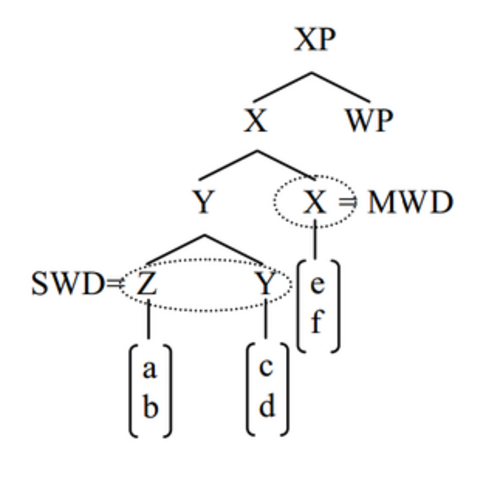
Tseng suggests that A-not-A occurs post-syntactically, at the morphological level. It is movement that occurs overtly at the phonetic form, after the syntactic movement has occurred. A-not-A is a feature of T that operates on the closest, c-commanded MWd, and not subwords (SWd). The elements that undergo post-syntactic movement are MWds. A node X is a MWd iff X is the highest segment and X is not contained in another X. A node X is a SWd if X is a terminal node and not an MWd.[13] The A-not-A operation is a MWd to MWd movement.
The A-not-A operator is defined as an MWd. The A-not-A operator can only lower to a MWd which is immediately dominated by the maximal projection that is also immediately dominated by the maximal projection of the A-not-A operator. An SWd cannot be the target for the A-not-A operator. In addition, if there is an intervening MWd or SWd between the A-not-A operator and its target, the A-not-A operation fails.[13]
A-not-A operator lowering must satisfy four conditions:


After lowering, the A-not-A operator triggers reduplication on the target node. The reduplication domain can be the first syllable of the targeted element, the targeted element itself, and the maximal projection that contains the targeted element. Reduplication is linear and the A-not-A operator cannot skip the adjacent constituent to copy the next constituent.[13]
In first syllable reduplication, the A-not-A operator copies the first syllable of the adjacent MWd and moves the reduplicant, i.e. copied syllable, to the left of the base MWd. Then the negation is inserted between the reduplicant and base to form a grammatical sentence. In (33.a), the A-not-A operator copies the first syllable tao of the MWd taoyan. The reduplicant tao is put at the left of the base taoyan and then the negative constituent bu is inserted in between. In figure (33.b) *Zhangsan taoyan Lisi-bu-tao is ungrammatical because tao cannot be put to the right of the maximal projection VP, taoyan Lisi.
张三
Zhangsan
Zhangsan
讨不讨厌
tao-bu-taoyan
hate-not-hate
李四
Lisi
Lisi
张三 讨不讨厌 李四
Zhangsan tao-bu-taoyan Lisi
Zhangsan hate-not-hate Lisi
Does Zhangsan hate Lisi or not?[13]
*
*
张三
Zhangsan
讨厌
taoyan
李四不讨
Lisi-bu-tao
* 张三 讨厌 李四不讨
* Zhangsan taoyan Lisi-bu-tao
Zhangsan hate Lisi-not-hate[13]
In MWd reduplication, the A-not-A operator copies the adjacent MWd and moves the reduplicant MWd overtly to the left of the base MWd or to right of the base maximal projection containing the MWd. Otherwise, the reduplicant can move covertly, i.e. in such a way that there is no overt surface evidence, to the right of the base maximal projection containing the MWd. The negation is then inserted between the reduplicant and base to form a grammatical sentence. In (34.a) the A-not-A operator copies the MWd taoyan. The reduplicant taoyan is overtly put at the left of the base taoyan and then the negative constituent bu is inserted in between. In (34.b) the A-not-A operator copies the MWd taoyan. The reduplicant taoyan is overtly put at the right of the base taoyan Lisi and then the negative constituent bu is inserted in between. In (34.c) the A-not-A operator copies the MWd taoyan. The reduplicant taoyan is covertly put at the right of the base taoyan Lisi after which the negative constituent bu is inserted.
张三
Zhangsan
Zhangsan
讨厌不讨厌
taoyan-bu-taoyan
hate-not-hate
李斯
Lisi
Lisi
张三 讨厌不讨厌 李斯
Zhangsan taoyan-bu-taoyan Lisi
Zhangsan hate-not-hate Lisi
Does Zhangsan hate Lisi or not?[13]
张三
Zhangsan
Zhangsan
讨厌
taoyan
hate
李斯
Lisi
Lisi
不
bu
not
讨厌
taoyan
hate
张三 讨厌 李斯 不 讨厌
Zhangsan taoyan Lisi bu taoyan
Zhangsan hate Lisi not hate
Does Zhangsan hate Lisi or not?[13]
张三
Zhangsan
Zhangsan
讨厌
taoyan
hate
李斯
Lisi
Lisi
不
bu
not
(讨厌)
(taoyan)
(hate)
张三 讨厌 李斯 不 (讨厌)
Zhangsan taoyan Lisi bu (taoyan)
Zhangsan hate Lisi not (hate)
Does Zhangsan hate Lisi or not?[13]
In maximal projection reduplication, the A-not-A operator copies the maximal projection that contains the adjacent MWd and moves the reduplicant either to the left or to the right of the base. The base may be just the MWd or the maximal projection containing the MWd. The maximal projection may be any XP (VP, AP, PP etc.). The negation is then inserted between the reduplicant and base to form a grammatical sentence. In (35) the A-not-A operator copies the maximal projection VP taoyan Lisi. The reduplicant taoyan Lisi is put at the left of the base taoyan Lisi and then the negative constituent bu is inserted in between.
张三
Zhangsan
Zhangsan
讨厌
taoyan
hate
李斯
Lisi
Lisi
不
bu
not
讨厌
taoyan
hate
李斯
Lisi
Lisi
张三 讨厌李斯 不 讨厌李斯
Zhangsan taoyanLisi bu taoyanLisi
Zhangsan hate Lisi not hate Lisi
Does Zhangsan hate Lisi or not?[13]
DP:determiner phrase NEG:negation V:verb A:adjective N:noun