
Loading article…


A portcullis (fromOld Frenchporte coleice "sliding gate"[1]) is a heavy, vertically closing gate typically found in medieval fortifications. It consists of a latticed grille made of wood and/or metal, which slides down grooves inset within each jamb of the gateway.
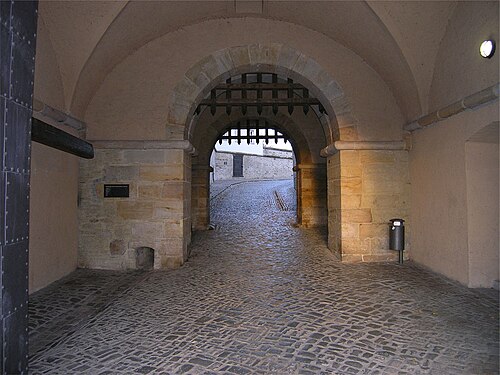
Portcullises fortified the entrances to many medievalcastles, securely closing them off during times of attack or siege. Every portcullis was mounted in vertical grooves in the walls of the castle and could be raised or lowered quickly by using chains or ropes attached to an internal winch. Portcullises had an advantage over standard gates in that they could be closed immediately at a time of crisis by a single guard.
Two portcullises to the main entrance were often used. The one closer to the inside would be closed first and then the one further away. This was used to trap enemies, and burning wood or fire-heated sand would usually be dropped onto them from murder holes or the roof. Hot oil, however, was not commonly used in this manner, contrary to popular belief, since oil was extremely expensive.[2]Arrowslits in the sides of the walls enabled archers and crossbowmen to kill the trapped group of attackers.
In England, working portcullises survive at the Tower of London, Monk Bar in York, Hever Castle in Kent, and the hotel conversion, Amberley Castle.[3][4] In Scotland, a working portcullis is at Edinburgh Castle.

落とし格子はボーフォート家の紋章であり、母系ボーフォート家の血を引く初代テューダー朝国王ヘンリー7世は、落とし格子とテューダー・ローズの両方をテューダー家の王室紋章に採用した。それ以来、落とし格子はイギリスの紋章、特にテューダー朝時代の紋章において、比較的よく見られるモチーフとなっている。ロンドンの紋章院における下級紋章官である「落とし格子官補佐官」という紋章官職も、この時代に由来する。
第5代ボーフォート公爵の息子であるチャールズ・サマセット卿を通じて、落とし格子は南アフリカのいくつかの紋章に取り入れられるようになりました。サマセット卿は、当時のケープ植民地の総督時代にいくつかの町を建設し、それらを自身の家族にちなんで名付けました。これらには、ウースター、サマセット・ウェスト、フォート・ボーフォート、ボーフォート・ウェストなどがあります。これらの紋章から落とし格子を取り入れた機関には、学校、商工会議所、ラグビークラブなどがあります。落とし格子を含むその他の(約30の)南アフリカの紋章は、必ずしもチャールズ・サマセット卿や、彼にちなんで名付けられた町と関連があるわけではありません。
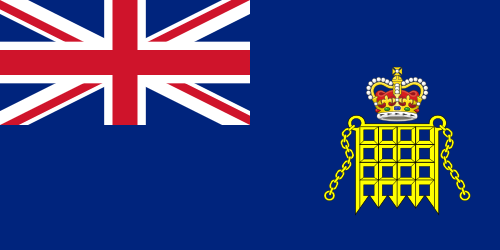
ウェストミンスター宮殿は1530年までヘンリー7世とヘンリー8世の公式の王室居城として使われていましたが、現在、宮殿と議会のシンボルとして跳ね上げ門が使われているのは、その時代に始まったものではありません。むしろ、このシンボルは、 1834年10月16日に元の宮殿が焼失した後、チャールズ・バリー卿が再建した宮殿の計画の一部として考案されました。彼は新しい宮殿を「立法の城」と構想し、城門のシンボル、つまり跳ね上げ門はその計画によく合っていました。[ 5 ] [ 6 ]
それ以来、跳ね上げ門は議会の主要なシンボルとなり、 2001年に開館した国会議員(MP)のオフィスビルは「跳ね上げ門ハウス」と名付けられました。20世紀には、跳ね上げ門を議会のシンボルとして使用する習慣はイギリス国外にも広がり、他の英連邦諸国にも普及しました。例えば、キャンベラの紋章には跳ね上げ門が描かれており、ウェストミンスターにあるイギリス議会と、キャンベラが所在するオーストラリア議会とのつながりを保っています。
カナダ国境サービス庁のバッジ、紋章、旗にはすべて跳ね上げ門が描かれており、これは同庁がカナダの国境サービスを担当する国王陛下の代理人としての役割を象徴している。[ 7 ]跳ね上げ門はかつてイギリスの1ペニー硬貨と10進法以前の3ペニー硬貨に描かれていたが、現在はイギリス王室紋章の一部に置き換えられている。また、現在は廃止されたイギリスの税関にも描かれており、オーストラリア国境警備隊のさまざまな階級の委員の階級章にもまだ描かれている。
跳ね上げ門は次のようなものかもしれません。
紋章記述に鎖に関する記述がない場合でも、鎖が取り付けられた状態で描かれることが多い。