Loading article…
タキフィラキシー(古代ギリシャ語のταχύς、tachys「急速な」とφύλαξις、phylaxis「保護」に由来)は、薬物投与後に薬物に対する反応が急激に低下する(すなわち、薬物耐性の急速かつ短期的な発現)ことを表す医学用語である。[ 1 ]初回投与後、または少量の投与を複数回行った後に発生する可能性がある。薬物の投与量を増やすことで、元の反応を回復できる場合がある。[ 2 ]
タキフィラキシーは、刺激の頻度に対する感受性によって特徴づけられます。つまり、システムの反応は刺激が提示される頻度に依存します。具体的には、高強度で長時間にわたる刺激、あるいは頻繁に繰り返される刺激は、反応の減弱、すなわち脱感作を引き起こす可能性があります。
生物科学において、分子間相互作用はシステムの動作の物理的基盤である。一般的に、動作の制御は、刺激分子が受容体/酵素サブシステムと相互作用することによって行われる。具体的には、刺激分子が高分子Aに結合し、高分子Bの活性型を形成することで、サブシステムの活性化または阻害を引き起こす。以下の模式図は、その活動を示している。
ここで、pは活性化速度係数です。pは速度定数と呼ばれるのが一般的ですが、pは活性化を引き起こす刺激の強度を表すため、pは可変(非定数)となる場合があります。
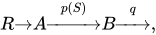
より完全なのはオープンシステムであり、最も単純な形では、
ここで、RはAの生成速度、p(S)は刺激強度Sへの依存性を明示的に表す活性化速度係数、qは状態Bからの除去速度係数を表す。この基本開放系では、 Bの定常状態は常にR/qに等しい。
上記のスキームは速度感受性現象の必要条件にすぎず、Bの不活性化の他の経路も考慮でき、その結果、受容体/酵素Aが不活性型に戻る。例[ 3 ] [ 4 ] [ 5 ]は、内分泌学、生理学、薬理学におけるこのような(数学的)モデルの具体的な使用法を示している。
Psychedelics such as LSD[6] and psilocybin (found in psilocybin-containing mushrooms) demonstrate very rapid tachyphylaxis.
In a patient fully withdrawn from opioids, going back to an intermittent schedule or maintenance dosing protocol, a fraction of the old tolerance level will rapidly develop, usually starting two days after therapy is resumed and, in general, leveling off after day 7. Whether this is caused directly by opioid receptors modified in the past or affecting a change in some metabolic set-point is unclear. Increasing the dose will usually restore efficacy; relatively rapid opioid rotation may also be of use if the increase in tolerance continues.
Inhalation of an agonist for the beta-2 adrenergic receptor, such as salbutamol (albuterol — USAN), is the most common treatment for asthma. Polymorphisms of the beta-2 receptor play a role in tachyphylaxis. Expression of the Gly-16 allele (glycine at position 16) results in greater receptor downregulation by endogenous catecholamines at baseline compared to Arg-16. This results in a greater single-use bronchodilator response in individuals homozygous for Arg-16 compared to Gly-16 homozygotes.[7] However, with regular beta-2 agonist use, asthmatic Arg-16 individuals experience a significant decline in bronchodilator response. This decline does not occur in Gly-16 individuals. It has been proposed that the tachyphylactic effect of regular exposure to exogenous beta-2 agonists is more apparent in Arg-16 individuals because their receptors have not been downregulated prior to agonist administration.[8]
Nicotine may also show tachyphylaxis over the course of a day, although the mechanism of this action is unclear.[9]
Acute tachyphylaxis which does not carry into the next day has been observed in children taking methylphenidate, and inspired the development of OROS methylphenidate.[10]
Use of nasal decongestants (e.g., oxymetazoline) for more than three days leads to tachyphylaxis of response and rebound congestion, caused by alpha-adrenergic receptor downregulation and desensitization. The mechanism may specifically include receptor internalisation and resistance to endogenous vasoconstrictors causing worsening in symptoms post use of medication. Oxymetazoline-induced tachyphylaxis and rebound congestion are reversed by intranasal fluticasone.[15]