
Loading article…
堆積学は、砂[ 1 ] 、シルト、粘土[ 2 ]などの現代の堆積物、およびそれらの形成(侵食と風化)、運搬、堆積、続成作用をもたらすプロセスを研究する学問である[ 3 ]。堆積学者は、堆積岩や堆積構造の観察を通して、現代のプロセスに関する理解を応用して地質史を解釈する[ 4 ]。堆積学は地質学の下位分野である[ 5 ]。
堆積岩は地球表面の最大75%を覆い、地球の歴史の多くを記録し、化石記録を蓄えています。堆積学は、岩石層間の物理的および時間的な関係を研究する層序学と密接に関連しています。
地球に現在影響を与えているプロセスは過去と同じであるという前提は、岩石記録に残る堆積地形がどのように形成されたかを解明する基礎となる。地質学者は、現代の類似地形と岩石記録に残る地形を比較することで、例えば現代の砂丘と古代の風成砂岩に保存されている砂丘を比較することで、過去の環境を復元する。
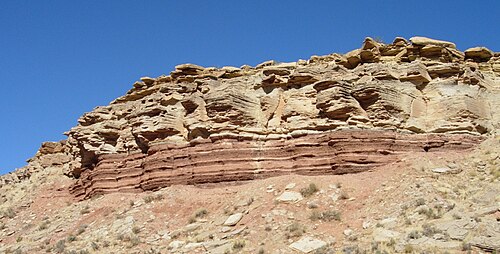
堆積岩には、砕屑岩、炭酸塩岩、蒸発岩、化学岩の4つの主要な種類があります。
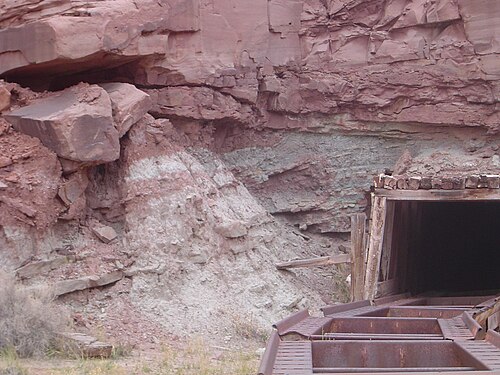
堆積岩は、現代社会と古代社会が利用してきた数多くの産物を提供してきた。

堆積学、すなわち堆積物を研究する学問の目的は、岩石ユニットを堆積させた堆積条件に関する情報、および盆地内の個々の岩石ユニットの関係性を明らかにし、堆積層や盆地の進化、ひいては地球の地質史全体を首尾一貫して理解することにある。
この科学的根拠は斉一説の原理であり、古代の堆積岩中の堆積物は、今日地球の表面に堆積している堆積物と同じ方法で堆積したと述べている。[ 7 ]
堆積学的条件は、堆積物が堆積する際に堆積物内に記録されます。現在の堆積物の形状は過去の出来事を反映しており、堆積物の起源から続成作用後に堆積物に加わるストレスに至るまで、堆積物に影響を与えるすべての出来事が研究対象となります。
地層重の原理は堆積層の解釈において極めて重要であり、堆積物が激しく褶曲または変形していることが多い古い変成岩地帯や褶曲衝上断層帯では、堆積層の若返り指標や級化層理を認識することが、堆積層断面、ひいてはその地域の変形構造や変成構造の解釈において極めて重要となる。
堆積物の褶曲は、原初水平性の原理に基づいて分析される。この原理によれば、堆積物は安息角で堆積し、ほとんどの種類の堆積物では、その安息角は基本的に水平である。したがって、堆積物の年代が分かれば、岩石を「展開」し、含まれる堆積情報に基づいて解釈することができる。
側方連続性の原理とは、堆積層は、物理的な物体や地形によって妨げられない限り、最初はあらゆる方向に側方に広がっていくという原理である。
交差関係の原理とは、地層を横切ったり、地層に侵入したりするものは、地層そのものよりも新しいという原理である。
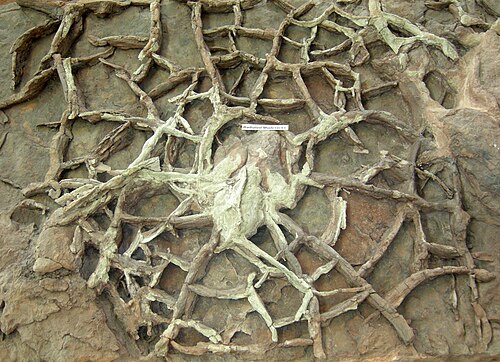
The methods employed by sedimentologists to gather data and evidence on the nature and depositional conditions of sedimentary rocks include;
The longstanding understanding of how some mudstones form has been challenged by geologists at Indiana University (Bloomington) and the Massachusetts Institute of Technology. The research, which appears in the December 14, 2007, edition of Science, counters the prevailing view of geologists that mud only settles when water is slow-moving or still, instead showing that "muds will accumulate even when currents move swiftly." The research shows that some mudstones may have formed in fast-moving waters: "Mudstones can be deposited under more energetic conditions than widely assumed, requiring a reappraisal of many geologic records."[8]
Macquaker and Bohacs, in reviewing the research of Schieber et al., state that "these results call for critical reappraisal of all mudstones previously interpreted as having been continuously deposited under still waters. Such rocks are widely used to infer past climates, ocean conditions, and orbital variations."[9]
Considerable recent research into mudstones has been driven by the recent effort to commercially produce hydrocarbons from them as unconventional reservoirs, in both the shale gas and tight oil (or Light Tight Oil) plays.[10]
Recent research by an Australian sedimentologist, Dutkiewicz, has described how geocirculation is related to global temperatures and climate change. The research described carbon and water circulation, and impacts of heat on current and future capacity of carbon capture by the ocean.[11]
 ウィキメディア・コモンズにある堆積学関連のメディア