
Loading article…
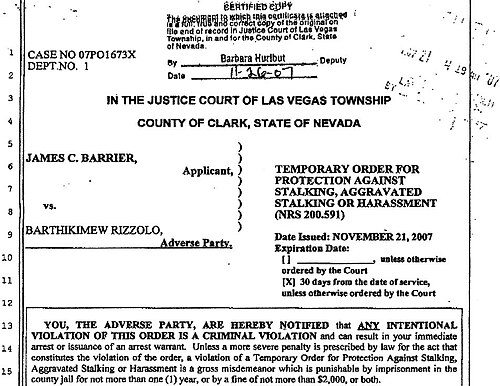
接近禁止命令または保護命令[ a ]は、家庭内暴力、児童虐待およびネグレクト、暴行、嫌がらせ、ストーカー行為、または性的暴行の疑いのある状況で人を保護するために裁判所が使用する命令です。
接近禁止命令および身の安全保護命令に関する法律は管轄区域によって異なりますが、いずれも、誰が命令を申し立てることができるか、命令によってどのような保護や救済を受けられるか、そして命令がどのように執行されるかを定めています。裁判所は、相手方に対し特定の行為を控えるよう命じたり、特定の条項を遵守するよう要求したりします。これに従わない場合は命令違反となり、違反者は逮捕・起訴される可能性があります。管轄区域によっては、違反行為が刑事または民事上の法廷侮辱罪に該当する場合もあります。
すべての保護命令法は、裁判所が加害者とされる人物に対し、自宅、職場、学校など一定の距離を保つこと(「接近禁止」条項)、および接触しないことを命じることを認めている。被害者とされる人物は一般的に、電話、メモ、郵便、ファックス、電子メール、テキストメッセージ、ソーシャルメディア、花、贈り物、飲み物の配達など、あらゆる接触を禁止するよう裁判所に命令を求めることもできる(「接触禁止」条項)。裁判所はまた、加害者とされる人物に対し、誰かを傷つけたり脅したりしないよう命じることもできる(「虐待停止」条項)。これは、暴力接触禁止命令として知られている。裁判所の暴力接触禁止命令法は、加害者とされる人物が被害者と現在の生活状況を維持したり、被害者と接触したりすることを許可する場合がある。[ 3 ]
州によっては、裁判所が加害者とされる人物に一時的な扶養料の支払いを命じたり、両者が所有する住宅の住宅ローンの支払いを継続させたり(「扶養」条項)、両者が所有する住宅や車の単独使用権を与えたり(「排他的使用」条項)、加害者とされる人物が引き起こした医療費や物的損害を賠償させたり(「賠償」条項)することを認めている場合もある。裁判所によっては、加害者とされる人物に所有する銃器や弾薬を引き渡すよう命じたり(「銃器放棄」条項)、加害者更生プログラムに参加させたり、定期的な薬物検査を受けさせたり、アルコールや薬物乱用カウンセリングを開始させたりすることもできる。その発行は「事実上の離婚」と呼ばれることもある。[ 4 ]
接近禁止命令を得るために必要な立証基準は管轄区域によって異なる場合があるが、一般的には刑事裁判で要求される合理的な疑いを超える基準よりも低い。オレゴン州やペンシルベニア州など、多くの米国の州は証拠の優越という基準を使用している。ウィスコンシン州など、接近禁止命令が「合理的な根拠」に基づかなければならないという基準を使用している州もある。 [ 5 ]
裁判官には、接近禁止命令を出す方向に傾く動機がいくつかある。裁判官が、命令を受けるに値しないかもしれない人物に対して接近禁止命令を出した場合、通常、唯一の影響は被告がその命令に対して控訴する可能性があることだけである。しかし、裁判官が接近禁止命令を却下し、原告が死亡または負傷した場合、悪い評判と激怒した地域社会の反応が裁判官のキャリアに悪影響を与える可能性がある。[ 4 ] [ 6 ]
コロラド州の法律は、通常の裁判手続きと適正手続きを逆転させ、裁判所が一方的な命令を発した後、被告は「特定の日時裁判所に出廷し、もしあれば、その一時的な民事保護命令を恒久的なものにすべきでない理由を示す」必要があると規定している。[ 7 ]つまり、コロラド州の裁判所は、告発者に訴訟の立証を求めるのではなく、被告に無罪を立証する責任を負わせている。ハワイ州も同様に、被告に自身の無罪を立証することを求めている。[ 8 ]
接近禁止命令の立証責任が低いことから、有名人のストーカーが標的に対して接近禁止命令を取得するという注目度の高い事件がいくつか発生している。例えば、2005年にニューメキシコ州の裁判官は、ニューヨーク市を拠点とするテレビ司会者デビッド・レターマンに対し、ある女性が虐待と嫌がらせを訴え、レターマンが自身のテレビ番組で暗号メッセージを使って話しかけてきたと主張したことを受け、接近禁止命令を出した。裁判官は後に、接近禁止命令は事件の本質に基づいてではなく、申立人が必要な書類をすべて記入していたためだと認めた。[ 9 ]
離婚当事者が正当な危害への恐怖からではなく、戦術的な優位性を得るために接近禁止命令を申し立てる可能性があるという理論に基づき、一部の弁護士は接近禁止命令の使用を批判している。家族法と婚姻法を専門とする弁護士のリズ・マンダラノは、接近禁止命令はすべてのコミュニケーションを当事者の弁護士経由で行わせ、法廷闘争を長引かせる可能性があるため、離婚弁護士は接近禁止命令を強く求めるインセンティブがあると推測している。[ 9 ]一部の弁護士は、そのような手続きで金銭的な譲歩と引き換えに接近禁止命令を取り下げることを申し出ている。
専門家の間では、接近禁止命令がさらなる嫌がらせの防止に効果的かどうかについて意見が分かれている。2010年に米国精神医学・法律アカデミー誌に掲載された分析では、接近禁止命令の有効性に関する米国の研究15件をレビューし、接近禁止命令は「脅威管理において有用な役割を果たすことができる」と結論付けた。[ 10 ]しかし、2002年に米国の研究32件を分析したところ、接近禁止命令は平均40%の確率で違反され、約21%の確率で「さらに悪い出来事が続く」と認識されていることがわかり、「(接近禁止命令の)相対的な有効性の証拠は不足している」と結論付け、ある程度のリスクを伴う可能性があるとしている。[ 11 ]他の研究では、接近禁止命令は将来の対人暴力に対する保証をほとんど、あるいは全く提供しないことがわかっている。[ 12 ] [ 13 ] [ 14 ] 1998年に実施されたアメリカ全土を対象とした大規模な電話調査では、接近禁止命令を得たストーカー被害者のうち、実際にストーカーを遠ざけることができたのはわずか30%だったことが判明した。
脅威管理の専門家は、接近禁止命令がストーカーを激怒させたり、エスカレートさせたりする可能性があるとして、接近禁止命令に懐疑的な場合が多い。アメリカのセキュリティ専門家ギャビン・デ・ベッカーは、1997年の著書『恐怖の贈り物』の中で、接近禁止命令を「警察が女性に課す宿題で、追跡者から本当に逃げようとしていることを証明させるもの」と特徴づけ、「明らかに警察と検察の役に立つ」が「必ずしも被害者の役に立つとは限らない」と述べている。独立女性フォーラムは、接近禁止命令を「女性を誤った安心感に陥れるもの」として非難し、アメリカ弁護士協会は、その家族法ガイドの中で「裁判所の命令は、加害者とされる人物の怒りをさらに増幅させる可能性さえある」と警告している。[ 15 ]
Castle Rock v. Gonzales, 545U.S.748(2005), is a United States Supreme Court case in which the Court ruled, 7–2, that a town and its police department could not be sued under for failing to enforce a restraining order, which had led to the murder of a woman's three children by her estranged husband.
Both parties must be informed of the restraining order for it to go into effect. Law enforcement may have trouble serving the order, making the petition unproductive. A study in the United States found that some counties had 91 percent of restraining orders non-served.[3] A temporary order of restraint ("ex parte" order) is in effect for two weeks before a court settles the terms of the order, but it is still not in effect until the alleged abuser is served.
Restraining orders most commonly protect a woman against a male alleged abuser. A California study found that 72% of restraining orders active in the state at the time protected a woman against an alleged male abuser.[16] Research suggests that these gender differences may reflect who is more likely to experience domestic violence and how they describe that violence.[17] For example, in an analysis of protection order petitions submitted to the courts, women described their abuse differently than men and were more likely to use words like "fear." Men were less likely to frame themselves as "victims" of domestic violence, and that may be why fewer men received orders.[18]
In English law, a non-molestation order may be granted under Section 42 of the Family Law Act 1996.[19] Non-molestation orders are a type of injunction used to protect an individual from intimidation or harassment. Breaching a non-molestation order is a criminal offence.[20] Under the Domestic Violence Crime and Victims Act 2004, cohabiting same-sex couples are able to seek a non-molestation order.[21] Non-molestation orders sought for protection from domestic violence qualify for legal aid regardless of the applicant's income.[22]
Federal law requires that all states give "full faith and credit" to every portion of a restraining order issued by any state provided that certain minimum due process requirements are met.[23] Thus a state with very lax standards for issuing a restraining order may enter such a protective order, and every state and federal territory would be required to adhere to every provision.[6] Federal law prohibits any person who is subject to a state protective order from possessing a firearm,[24] provided that the protected party is an intimate partner, meaning a spouse or former spouse, or a person with whom the protected party has had a child.[25] Violating a restraining order is a deportable offense.
Some states (e.g. Mississippi[26]) may also call a restraining order a peace bond and are similar to ASBO laws in the UK. Minnesota law provides for an order for protection (OFP) and a harassment restraining order (HRO).[27]
Many jurisdictions offer a simplified process for filing a civil complaint for unrepresented litigants. For example, in North Carolina, pro se litigants can file a 50B (also called a DVPO, for domestic violence protective order) complaint with the clerk of court.[28]
In the United States, every state has some form of domestic violence restraining order law,[29] and many states also have specific restraining order laws for stalking[30] and sexual assault.[31] In the US, each state has its own restraining order laws, but they tend to be divided into five main types. Not every state will have every type of restraining order on the books.
A domestic violence restraining order generally protects only parties deemed to be in some form of "domestic" relationship which may, depending on the statute, include a family, household, intimate, or sexual relationship.
A sexual assault restraining order specifically protects a victim of sexual assault regardless of what relationship may or may not exist between petitioner and respondent. If the state has no sexual assault restraining order statute, the victim may still qualify for a domestic violence restraining order if the sexual assault occurred in the context of a domestic relationship or if the statute is written sufficiently broad. In such cases, sexual assault survivors can sometimes qualify for domestic violence restraining orders because any act of sexual intercourse between petitioner and respondent, even during rape, legally establishes the required sexually intimate relationship.
Harassment and stalking restraining orders also generally do not require any specific relationship to exist or not exist between the parties, but also may not be available in all states. These types of restraining orders also generally require at least two instances of, respectively, harassment or stalking to qualify.[32]
In many cases, one statute may cover more than one type of restraining order. For example, what is called a harassment restraining order in Wisconsin also specifically includes cases of sexual assault and stalking.[33]
In Alabama, Delaware, Maine and Pennsylvania, a domestic violence restraining order is referred to as a Protection from Abuse order, or "PFA".[34]
In California, domestic violence restraining orders are issued under Family Code Section 6200, et. seq.[35] The California courts have designed domestic violence restraining orders to be accessible to the public so as not to require a lawyer to obtain or defend against one.
Finally, an extreme risk restraining order is a form of US restraining order, currently used in 13 states. Other forms of restraining order will sometimes order firearms restrictions as a part of a larger injunction intended to protect a specific individual. However, with an extreme risk restraining order, the sole focus is on the firearms restrictions. It is sought when household members or police believe a particular individual is at risk to use firearms to harm themselves or others. If a court agrees, the person can have their firearms taken away. This type of restraining order is not intended to protect a specific individual — but rather, the community at large — from someone believed to be a danger for gun violence. It has been cited as a possible tool to help prevent mass shootings such as the Orlando nightclub shooting.[36]
A domestic violence restraining order in the Czech Republic may be issued by a police officer or by a court.
Any police officer has authority under the Police Act to issue restraining order prohibiting a person from entering common dwelling and nearby areas and from contacting the threatened person. Such restraining order is valid for a period of ten days. In case that the threatened person files for court restraining order, the police restraining order remains valid until court renders decision.[37]
A court may issue a domestic violence or stalking restraining order based on application of threatened person for a period of up to one month. This may later be extended if the threatened person files for extension. Extension is possible for necessary period of time, but no more than six months in total.[37]
Breaching of restraining order is a separate crime punishable by up to two years of imprisonment.[37]
Davis, J.A. (2001, August). Stalking Crimes and Victim Protection, CRC Press, 568 pages.
 ウィキメディア・コモンズにある、接近禁止命令に関連するメディア