Loading article…
ヴルネ(オランダ語の発音: [ ˈvøːrnə ])ⓘ ;西フランドル語:ヴールン;フランス語:Furnes、発音[ fyʁn ] ) は、ベルギーの西フランドル州にある都市および自治体。この自治体は、フールヌ市の町とアヴェカペッレ、ブートシューケ、ブルスカンプ、デ・モーレン(ベルギー)、エッゲヴァールツカペレ、ハウテム、ステーンケルケ(西フランドル)、ヴィンケム、ヴルヴァリンゲム、ズウテナアイエ。
ラテン語でFurnaであるVeurneは、877年にサン=オメールのサン・ベルタン修道院の領地として初めて記録に登場します。890年頃には、ヴァイキングの襲撃に対する要塞として成功を収めたことが記録されています。間もなく、Veurneはフランドル伯に忠誠を誓う42の教区と約8つの半独立教区からなる広大な領地であるVeurne城領の中心地となりました。Veurneは12世紀に都市となりました。次の世紀には、イングランドとの貿易が盛んになりました。しかし、1270年にイングランドとの関係が停滞し、都市の経済は長期にわたる衰退に陥りました。そのため、Veurneは「眠れるVeurne」というあだ名で呼ばれるようになりました。1297年8月20日、フランドルの都市とフランス国王との間で続く争いの中で、Veurneの戦いが行われました。
ゴシック様式の聖ワルブルガ教会と聖ニコラス教会の塔は、その時代に建てられたものである。聖ワルブルガ教会には参事会が置かれていた。聖ニコラス教会と聖ドニ教会(18世紀に取り壊された)は、聖ニコラス・ノルベルト会修道院の他の2つの教区教会であり、修道院の所有物であった。

The 15th century saw the construction of a new city hall, which is known today as the Pavilion of the Spanish officers, from its use in the 17th century as military headquarters. As most of the "Westhoek" (the Western part of the County of Flanders), the city and the neighbourhood strongly recessed during the economic and religious turmoil around 1566–1583. However, when the town and the castellany officially united, the town flourished thanks to the region's expanding agriculture.
Most of the other historic buildings date from this time, the prosperous reign of the Archdukes Albert and Isabella around 1600.
In 1644, the Capucines organised a procession. From 1646, this procession was organised by the "Sodales", a religious confraternity that organised a crossway during Advent time, under the leadership of the Norbertine monk Jacob Clou. The hooded "Sodales" took a cross for penitence. This procession was expanded at the end of the 17th century with scenes from the Bible, and is the only one of its kind remaining in Flanders to this day.
The second half of the 17th century was marked by the miseries brought to the region by Louis XIV's wars. Vauban built heavy fortifications around the city, the outlines of which are still noticeable from the air today. Joseph II of Austria dismantled them and closed some of the religious institutions, putting a temporary end to the penitents' procession, until Leopold II of Austria allowed it again in 1790. Those few cloisters that were still operating were closed at the French Revolution.
From the Battle of Waterloo until World War I, Veurne enjoyed a century of peace and prosperity. In 1831, Veurne was the first city to welcome Belgium's new king, Leopold I.
During World War I, Veurne was located within the Yser pocket of Belgian resistance against the German troops. During the Battle of the Yser, the city hall became the headquarters of the Belgian troops under King Albert I and a military hospital was set up in the city. In 1920, the French President, Raymond Poincaré, came to Veurne to award the city the Croix de guerre with palm.
Veurne suffered some damage during World War II, mainly from Allied bombing but also from the strategic flooding that engulfed the whole area.
今日、この都市は地域の中核都市として、周辺地域に商業、医療、教育サービスを提供するとともに、観光客の注目度も高まっている。


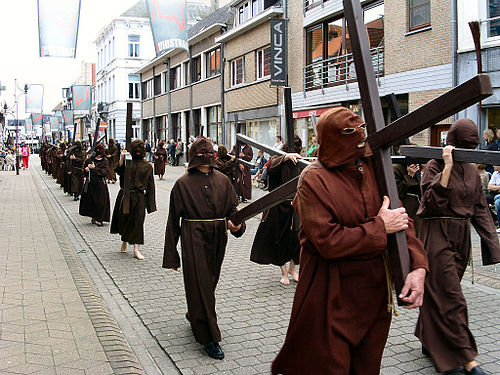
毎年7月の最終日曜日には、ボエテプロセツィエ(懺悔者の行列)が行われます。この独特な行事には、十字架を担ぎ頭のフードをかぶった懺悔者や、イエスの受難を再現するその他の参加者グループが登場します。
ヴールヌ市は 11 の「deelgemeentes」で構成されています。ヴールヌ本市は最大の中心地であり、人口も最大です。他の村は小さな田舎の村です:アヴェカペッレ、ブートシューケ、ブルスカンプ、 デ・モーレン 、エッゲヴァールツカペレ、ハウテム、ステーンケルケ、ヴィンケム、ウルヴァリンゲム、ズウテナアイエ。フールヌ市の総居住人口は 11,701 人です (2015 年 8 月 18 日)。