
Loading article…
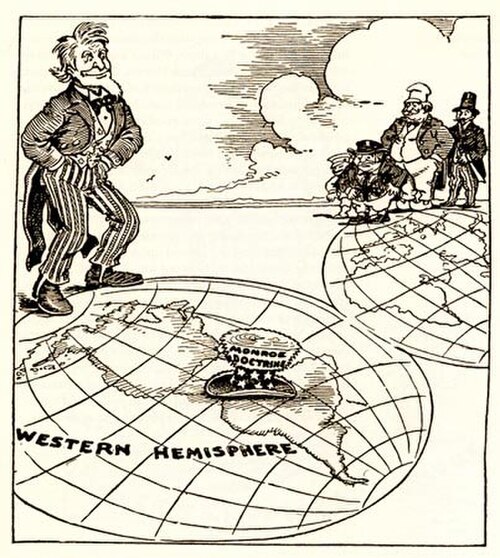
Americentrism, also known as American-centrism[1] or US-centrism, is a tendency to assume the culture of the United States is more important than those of other countries or to judge foreign cultures based on American cultural standards. It refers to the practice of viewing the world from an overly US-focused perspective, with an implied belief, either consciously or subconsciously, in the preeminence of American culture.[2]
The term is not to be confused with American exceptionalism, which is the assertion that the United States is qualitatively different from other nations and is often accompanied by the notion that the United States has superiority over every other nation.[3]
Scholarship of Americentrism traces the ideological system's origins, historically, to the late 1700s following the established independence of the United States. Americentrism is presented as a shift from Eurocentrism that idolizes the newly founded United States' ideals of freedom and democracy.[4]
Such scholarship itself was initially built on Jim Blaut's 1980s scholarship of Eurocentrism by Geographer Richard Peet whom coined the term in his 2005 journal, From Eurocentrism to Americanism. [4]
American television networks have been perceived to contain an Americentric bias in the selection of their material.[5]
Another instance of Americentrism is in the high focus companies have on US markets in relation to others. Often, products produced and developed outside the US are still marketed as typically American.[6]
According to the European Commission, internet governance (in particular that related to the NSA) is too Americentric. It criticized the major role of American company ICANN in its administration.[7]
The English Wikipedia has been criticized for having an Americentric systemic bias with regards to its occasional preference towards US English sources, language, and spelling.[8]
米国デフォルト主義とは、特に米国にいる人々が、さまざまな話題について議論する際に、米国がデフォルトまたは唯一関連する文脈であると想定する傾向を指します。たとえば、オンラインフォーラムでは、参照されている地域を特定せずに、米国にのみ適用される政策について議論することがあります。[ 9 ] [ 10 ]
米国デフォルト主義とは、グローバルな状況に対する認識や配慮の欠如であり、米国が暗黙のデフォルトとして扱われることを意味します。これは、インターネットで情報を探している非アメリカ人にとって、煩わしい、あるいは混乱を招く可能性があります。[ 11 ]
アメリカ中心主義の批判者たちは、このイデオロギーが人々や国家間の誤解を生み、場合によっては深刻な人種紛争や戦争にまで発展する恐れがあると主張している。彼らは、歪んだアメリカ中心主義は人種差別を助長し、混乱を引き起こし、武力紛争を勃発させる可能性があると主張している。[ 12 ]
アメリカの政策を批判する人々は、この用語を否定的な文脈で使用し、アメリカ政府が自らの欠点に対して意図的に国家主義的な無知を示していることを強調し、このイデオロギーの信奉者によって国際関係が歪められる可能性を警告している。[ 12 ]

教育者たちは、アメリカの教育政策や学術研究におけるアメリカ中心主義的な見解の使用に注目している。批評家たちは、特にアメリカの公立学校制度における世界史の教育政策において、アメリカ中心主義的な見解の使用が顕著であると指摘している。情報源によると、アメリカの学校は世界史のカリキュラムにおいて、ヨーロッパとアメリカの歴史を詳細に教えることを優先する傾向があり、アジア、アフリカ、ラテンアメリカの出来事については簡潔にしか扱わないことが多いという。[ 12 ]
学術的な観点から見ると、心理学研究の分野は主にアメリカ人の影響を受けていると、様々な観察者によって指摘されている。アメリカ人は心理学研究の生産者として最も大きな割合を占めており、アメリカ人自身を研究することに重点が置かれていると主張されている。そのため、そのような研究から導き出された理論や原則がすべての人間に普遍的に適用できるかどうかについて批判がある。クラーク大学の心理学教授であるジェフリー・アーネットは、学術的な著作の中で、人間の経験や状況の多様性を無視しているという批判を支持している。[ 13 ]
{{cite web}}: CS1 maint: 数値名: 著者リスト (リンク)