Loading article…


アメリカ合衆国テネシー州ナッシュビルのセンテニアルパークにあるパルテノン神殿は、ギリシャのアテネにあるオリジナルのパルテノン神殿の実物大レプリカです。建築家ウィリアム・クロフォード・スミス[ 4 ] [ 5 ]によって設計され、1897年にテネシー州百年祭の一部として建設されました。
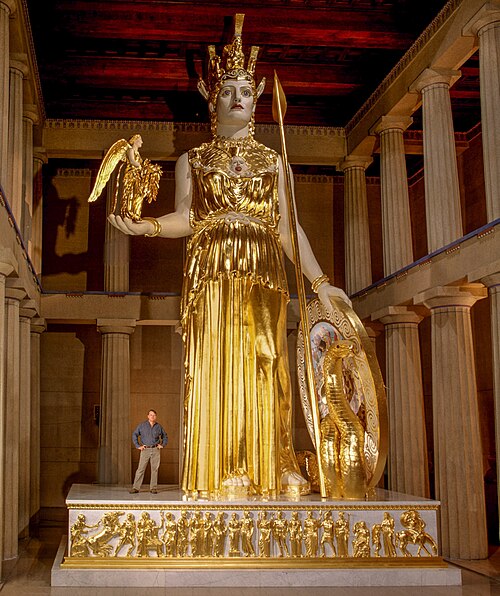
今日、美術館として機能しているパルテノン神殿は、ナッシュビルのダウンタウンのすぐ西にある公共公園、センテニアル公園の中心にそびえ立っています。アラン・レクワイアが1990年にナオス(メインホールの東側の部屋)で再現したアテナ・パルテノス像は、古代ギリシャと同様にパルテノン神殿の中心となっています。建物は完成しており、装飾は可能な限りオリジナルに近い色彩で彩色されているため、アテネのオリジナルのパルテノン神殿のこのレプリカは、古典建築の頂点と考えられているものの記念碑として機能しています。宝物室(メインホールの西側の部屋)で見つかったパルテノン大理石の石膏レプリカは、紀元前438年に遡るアテネのパルテノン神殿のペディメントを飾っていたオリジナルの彫刻の直接の鋳造です。現存するオリジナル作品は、ロンドンの大英博物館とアテネのアクロポリス博物館に所蔵されている。
ナッシュビルのニックネームである「南のアテネ」[ 4 ]は、1897年の百年祭博覧会の中心としてこの建物が選ばれた理由の一つである。博覧会の建物の多くは古代のオリジナルに基づいていたが、パルテノン神殿は完全に複製されたものだけであった。また、ピュティア騎士団パビリオンの建物は購入され、近くのテネシー州フランクリンに移築されたが、パルテノン神殿は市によって保存された唯一の建物でもあった。
Major Eugene Castner Lewis was the director of the Tennessee Centennial Exposition and it was his suggestion that a reproduction of the Parthenon be built in Nashville to serve as the centerpiece of Tennessee's Centennial Celebration. Lewis also served as the chief civil engineer for the Nashville, Chattanooga and St. Louis Railroad. Originally built of plaster, wood, and brick,[6] the Parthenon was not intended to be permanent, but the cost of demolishing the structure combined with its popularity with residents and visitors alike resulted in it being left standing after the Exposition.

In 1895, George Julian Zolnay was "employed to make models for the ornamentation" for the building.[5] Within the next 20 years, weather had caused deterioration of the landmark; it was then rebuilt on the same foundations, in concrete, in a project that started in 1920; the exterior was completed in 1925 and the interior in 1931.[7] Local architect Russell Hart was hired for the reconstruction.[7]
Some of the most elaborate events that occurred at the Parthenon were the Spring Pageants of 1913 and 1914. These extravaganzas were theatrical productions. With casts of up to 500, the pageants attracted audiences from surrounding states and rail prices were lowered to encourage attendance. The city of Nashville celebrated the "Athens of the South". The 1913 performance was entitled The Fire Regained, a play written by Sidney Mttron Hirsch, and featured a mythological story line enhanced by theatrical spectacle popular in that era.[8] The 1914 production, The Mystery at Thanatos, had a similarly mythological plot, but was shorter and better received. A copy of the script is on file at the Nashville Public Library. Both shows featured displays ranging from chariot races to large dance numbers to thousands of live birds to set pieces that shot flames, all set against the backdrop of the Nashville Parthenon.
As an art museum, the Parthenon's permanent collection on the lower level exhibits 63 paintings by 19th and 20th century American artists, donated by James M. Cowan in 1927–1929.[7] Additional gallery spaces provide a venue for temporary shows and exhibits. The main level contains a replica, completed in 1990,[7] of the Athena Parthenos statue that was in the original Parthenon in Athens.
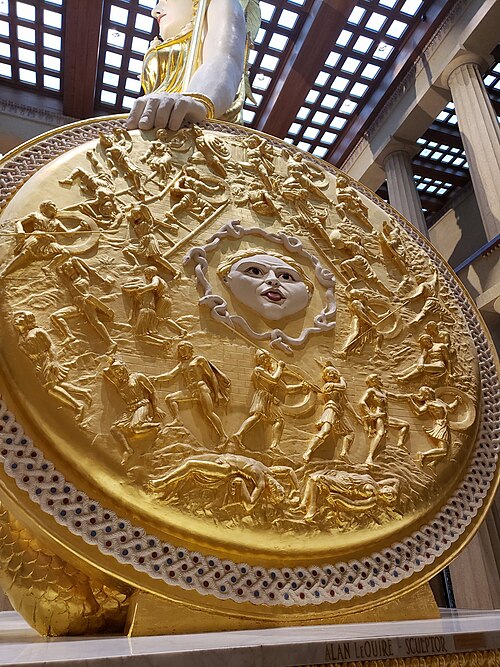
1982年、アラン・レクワイアは、長らく失われていたオリジナルを学術的な基準で復元したアテナ・パルテノス像[ 7 ]の制作を依頼されました。彼女は胸当てと兜を身に着け、左腕に盾を持ち、右手のひらに高さ6フィート(1.8メートル)のニケ(勝利の女神)像を持ち、高さ42フィート(13メートル)で、8ポンド(3.6キログラム)以上の金箔で覆われています(2002年時点) [ 7 ] 。彼女と盾の間には、同じくらい巨大な蛇が頭をもたげています。女神信仰の信者の中には、像の近くに儀式の供物を捧げる人もいます。[ 9 ]
夏の間、地元の劇団はパルテノン神殿を舞台に、エウリピデスの『メデイア』やソフォクレスの『アンティゴネ』といった古典ギリシャ劇を上演した(通常は無料)。一方、メアリー・ジマーマンの『メタモルフォーゼス』などの公演は、アテナ像の足元など、神殿内部で行われた。
2001年、ナッシュビルのパルテノン神殿は、待望されていた清掃と外装の修復を受けた。[ 7 ]外装照明がアップグレードされ、建物の柱を正面とは異なる色で照らすことができるようになった。
パルテノン神殿は、ロバート・アルトマン監督の1975年の映画『ナッシュビル』のクライマックスシーンにおける政治集会の舞台となった。[ 10 ]
2010年の映画『パーシー・ジャクソンとオリンポスの神々: ライトニング・シーフ』では、ヒュドラとの戦いの背景として使用されました。[ 11 ]
この曲は、Casiotone for the Painfully Aloneのアルバム『Etiquette』に収録されている「Nashville Parthenon」という曲のタイトルと歌詞に登場し、また、2011年にリリースされた続編「Goodbye Parthenon」にも登場する。
これは、2000年にPBSで放送されたシリーズ番組「ギリシャ人:文明のるつぼ」で使用された。
ヘザー・ロス・ミラー著『天体航海士:ランドール・ジャレルとの詩作』に収録されている「ガニュメデ」というタイトルの詩には、パルテノン神殿が登場する。
この構造は、クレイグ・マクドナルドによるヘクター・ラシターシリーズの小説『三つの和音と真実』のクライマックスに登場する。