
Loading article…
サンマルコス国立大学(スペイン語: Universidad Nacional Mayor de San Marcos、UNMSM)は、ペルーの首都リマにある公立の研究大学です。アメリカ大陸では、神聖ローマ皇帝カール5世の特権により最初に正式に設立され、最も長く継続的に運営されている大学です。[ 9 ] [ 10 ] [ 11 ]
大学は、1548 年 7 月 1 日にサント ドミンゴ修道会のロサリオ修道院(現在のサント ドミンゴ大聖堂および修道院)で提供されていた一般教養課程から始まりました。 [ 12 ]正式な設立は、1551 年 5 月 12 日にフライ トマス デ サン マルティンによって構想され、スペイン皇帝カルロス 1 世および神聖ローマ皇帝カルロス 5 世の勅令によって実現しました。1571 年に、教皇ピウス 5 世から教皇庁の称号を授与され、最終的に「リマ王都の王立教皇庁立大学」と命名されました。[ 13 ] [ 14 ]また、副王領全体で「リマ大学」とも呼ばれています。[ 15 ]
サンマルコス大学は、いくつかの場所を経て現在も存続しており、際立った存在となっています。その一つが「カソナ・デ・サンマルコス」で、リマ歴史地区にある建物の一つであり、1988年にユネスコの世界遺産に登録されました。[ 16 ] [ 17 ] [ 18 ]サンマルコス大学には66の専門学校があり、[ 19 ] 20の学部にグループ化され、[ 20 ]さらに5つの学術分野に分かれています。[ 21 ]大学は「ドミンゴ・アングロ」歴史アーカイブを通じて文書や著作を保存しています。2019年には、「サンマルコス国立大学の植民地基金と設立文書:1551~1852年」がユネスコの世界記憶遺産に登録されました。[ 22 ] [ 23 ]
同校は、国立高等教育監督庁(SUNEDU)から10年間の機関認可と国際的な機関認定を受けている。[ 24 ]現在までに、ペルー共和国の21人の大統領[ 25 ] 、物理学、文学、平和のノーベル賞に7人のペルー人候補者[ 26 ]、そして唯一のペルー人ノーベル賞受賞者[ 27 ] [ 28 ] [ 29 ]が同校の卒業生または教授である。

1548年7月1日、サント・ドミンゴ修道会ロザリオ修道院(現在のサント・ドミンゴ大聖堂および修道院)の回廊で行われた一般研究期間中、 [ 12 ]リマ市議会はトマス・デ・サン・マルティン神父とフアン・ヘロニモ・デ・アリアガ大尉をスペインに派遣し、彼らはスペイン王カルロス1世(神聖ローマ皇帝5世)とカスティーリャ女王フアナ1世から大学設立の命令を得た。王都の王立大学の設立が正式に行われた。[ 30 ] [ 31 ]大学は1553年1月2日に正式に機能し始めた。[ 32 ]

彼らは王室に1570年の王令に従うよう求めた。大学は、以前聖アウグスティヌス修道会の修道院が運営されていたサン・マルセロ郊外近くの2番目の場所に移転した。 [ 30 ] 1574年9月6日、「サン・マルコス王立教皇大学」が正式名称として選ばれ、福音記者マルコが大学の守護聖人となった。[ 31 ] 1575年、大学は再び場所を移し、旧プラサ・デル・エスタンケに移転した。[ 14 ] [ 32 ]
The officially named University of San Marcos began its work in the viceregal era with the faculties of Theology and Arts,[33] later the canons of Law and Medicine would be created. On November 27, 1579, the professors asked King Philip II for the institution of jurisdiction that governed the University of Salamanca. In 1581, Viceroy Francisco Álvarez de Toledo authorized clerics and laymen to be elected.[34]
The support for the secularization of the University of San Marcos was given by Viceroy Francisco Álvarez de Toledo. It was also exercised by the rector of the Royal Convictory of San Carlos.[15] Between 1792 and 1811, the amphitheater and medicine chairs began to develop in the Royal Hospital of San Andrés. Both the University of San Marcos and the College of Law and Letters of San Carlos and the College of Medicine of San Fernando began to be watched by the Viceroy because their house professors and students were suspected of envisioning.[35]

The University of San Marcos became part of the current Republic of Peru since its independence in 1821. The First Constituent Congress of Peru was initially chaired by the former rector of the University of San Marcos, Toribio Rodríguez de Mendoza; of the 64 constituent deputies, 54 were San Marcos's alumnus and Carolines's.[31][36] In 1822, the university handed over its collection of 50,000 books to form the National Library of Peru. In 1840, the Colleges of San Carlos and San Fernando are taken over by the University of San Marcos. San Marcos was empowered by the then President Ramón Castilla to approve new universities and control the newly created ones.[35]
1870年代、大学はサン・マルコスのカソナに移転した。太平洋戦争中、特にチリ軍によるリマ占領中、美術品や文化財、資産が大学から持ち出され、海路でチリに運ばれた。[ 31 ] 19世紀末、旧サンタ・アナ広場の建物にあったサン・フェルナンド医科大学は、現在のメスタス果樹園に移転した。[ 37 ]戦争終結後、1901年の法律により、ペルーの大学教育はサン・マルコス国立大学とトルヒーヨ、クスコ、アレキパの小大学に相当するとされ、後にリマ・カトリック大学と技術学校が加わった。[ 35 ]

20世紀初頭、大学活動家たちはサンマルコス大学内で改革を推進した。[ 32 ] 1909年、学生たちはペルーの独裁政権に対する抗議活動に参加した。1916年、主にサンマルコスの学生によって率いられたペルー学生連盟(FEP)が設立された。FEPの要求には、カリキュラムの更新、訓練を受けていない教員の排除、大学へのペルー政府の干渉の排除といった大学改革が含まれていた。その後、大学の教育制度は再編成され、大学の自治が認められた。[ 38 ]
1946年、大学名は正式にサンマルコス国立大学(Universidad Nacional Mayor de San Marcos)とされました。1951年、サンマルコス大学創立400周年を記念して、大学は新しい土地を取得し、新しい大学都市を建設しました。同年、サンマルコス大学スタジアムが落成しました。また、イベロアメリカの主要大学の学長が集まる式典も開催され、大学に「アメリカ大陸の学部長」の称号を与えることが決定されました。このため、大学はペルー大学およびアメリカ大陸の学部長という名称を保持しています。[ 7 ]
In 1958, then Vice President Richard Nixon had scheduled a conference at the University of San Marcos as part of his visit to Latin America; however, this did not take place due to the protest of San Marcos, who spoke out against US policy in the region with phrases such as "Nixon, Go Home!".[39][40][41] The conference was transferred to the Catholic University of Lima.[42]
In the mid-1960s, several faculties of the university began to move to the Ciudad Universitaria site, where 17 of the 20 faculties are currently located.[43] On September 22, 1984, the current statute of the university was promulgated. It had nearly 40,000 students and more than 4,000 faculty.[44][45] In 2010, a Nobel Prize was awarded to Mario Vargas Llosa, a students of the University of San Marcos.[46][47] As a tribute, on March 30, 2011, the university distinguished Vargas Llosa with its highest decoration: the San Marcos Medal of Honor in the degree of Grand Cross. The ceremony was held in the Casona de San Marcos.[48][49] In 2019, the university awards a doctoral degree based on a thesis written and defended entirely in Quechua.[50][51]

創立から1574年まで、最初の公式紋章には、ドミニコ会修道士の守護聖人とされるロザリオの聖母像、右側に太平洋、下部にリマ市を表すライムの果実が描かれていました。この紋章は1551年にスペイン国王カルロス1世によって承認されました。1570年末までに、ピウス5世の教皇勅書により紋章は変更され、ロザリオの聖母像は大学の新しい守護聖人である使徒聖マルコとライオンの像に置き換えられました。紋章に関する当時の文書は白黒でした。青が「海」、黒または茶色が聖人の像、水色が背景、銀が柱の色として使用されるようになったのは1929年になってからです。サン・マルコス像が描かれた2番目のオリジナルの盾は、大学の最も長く使われているシンボルである。1929年に、オリジナルの色が正式に導入された。海を表す青、聖人の像を表す黒または茶色、背景を表す水色、柱を表す銀色である。[ 52 ]
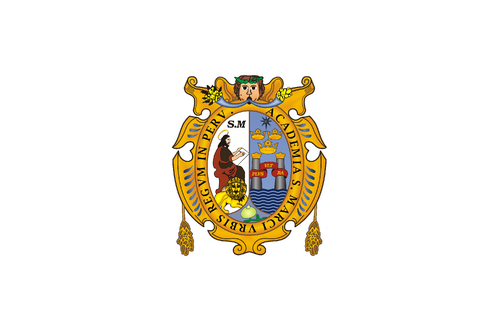
古代の写本には、大学の公式旗は白い背景の中央に大きな盾が配置されていると記されており、この記述がきっかけとなって、17世紀から19世紀にかけて、このパターンに倣った大学の旗やバナーが登場しました。大学の盾を中央に配置した白い旗の使用はすでに一般的になっていましたが、2010年6月14日の学長決議により、その使用が正式に定められました。[ 53 ]
サンマルコス大学の校歌は、主に大学合唱団によって、サンマルコス大学の特別な式典や記念日に定期的に演奏されます。校歌の歌詞はマヌエル・タラソナ・カマチョが、曲はルイス・クラフ・ゼバロスが作曲しました。[ 54 ]
サンマルコス国立大学は、大学に関する他の象徴的な文書についても言及している。その中には、1551年にスペイン国王カルロス1世が大学の設立を認可した王室証明書や、ワカ・サンマルコスで発見されたキープなどがある。[ 54 ]


サンマルコス大学はもともと修道会の聖職者によって運営されていましたが、啓蒙時代にブルボン改革によって世俗的な機関へと変貌しました。大学議会は大学の最高統治機関です。[ 56 ]議会は学長と2人の副学長、学部長、大学院長、教員代表、学生代表(議会メンバーの3分の1を占める)、卒業生代表、そして発言権はあるものの投票権を持たないサンマルコス大学学生連盟会長で構成されています。
最高レベルの行政職員は、投票権なしで顧問として必要とされる場合に限り、総会に出席することができる。[ 56 ]大学総会の主な権限は、大学の規約の変更(この場合、構成員の過半数が必要)、大学運営のための総合計画の承認とその評価の実施、学長および副学長の選出である。[ 56 ]
大学評議会は、大学の運営と実施を担う機関です。[ 57 ]卒業生代表と学生連盟会長は、投票権なしで発言する権利を有します。最高レベルの行政職員は、投票権なしで顧問として必要とされる場合に評議会に出席することができます。[ 57 ]評議会の権限は、大学の発展と運営に関する全体計画を策定し、大学の方針を確立することです。[ 57 ]
学長室は大学の統治機関であり、主に学長で構成されています。学長は大学の第一執行機関であり、法定代理人であり、大学の機関としての顔でもあります。サンマルコス大学は創立以来、216人の学長を輩出してきました。[ 55 ]副学長室は、学部教育担当と研究・大学院担当の2人の副学長で構成されています。[ 58 ] [ 59 ]学部と学校の運営と管理は、それぞれ学部長と学校長が担当しています。[ 60 ]さらに、各学部の大学院部門はそれぞれの責任者が担当し、大学院長が総責任者となります。[ 61 ]
サンマルコス大学には5つの学術分野に分けられた20の学部があり、65の学部課程、77の修士課程、27の博士課程が提供されています。

サン・フェルナンド医学部は、サン・マルコス大学の人間医学部です。また、「サン・フェルナンド」医学部とも呼ばれています。1811年にサン・フェルナンド王立医科外科大学が設立された後、1856年10月6日にカエタノ・エレディアによって学部として設置されました。[ 62 ]ペルーの全国医学試験では、「サン・フェルナンド」医学部は何度も1位を獲得しています。[ 63 ] [ 64 ]
薬学・生化学部は1931年に設立されました。薬学・生化学部の設立が法律で承認されたのは1943年10月29日のことでした。[ 62 ]この学部では、学部課程、専門課程、大学院課程を提供しています。[ 65 ]歯学部は1920年に設立されました。翌年、この研究所は法人化されました。[ 62 ]歯科診療所があります。[ 66 ]
国立農学校とチョリージョス軍事学校が合併し、国立獣医学校が設立され、1946年に現在の獣医学部となった。[ 62 ] 1956年、学部はサン・ボルハの現在の場所に移転した。[ 67 ]心理学部は1963年に設立された。[ 62 ] [ 68 ]

化学・化学工学部は1855年4月7日に設立されました。学部はアントニオ・ライモンディとホセ・エボリによって創設されました。1946年、当時の大統領ホセ・ルイス・ブスタマンテ・イ・リベロは、サンマルコス大学に化学部を設立する法律10555を公布しました。1964年4月24日、化学工学の研究が導入され、これにより学部は現在の化学・化学工学部という名称になりました。[ 69 ]
生物科学部は1866年3月15日に独立しました。20世紀には生物科学の研究プログラムが改革され、生物学者の専門称号の授与が確立されました。[ 69 ]物理科学部は1966年に正式に設立されました。[ 69 ]数学科学部は1850年に運営を開始しました。1862年には自然科学・数学学部と呼ばれ、1876年には理学部と名付けられました。シウダ・ウニベルシタリアにあります。[ 70 ]

1971年に冶金工学部が設立されました。鉱山工学部は1980年11月5日に設立されました。[ 71 ]地理工学部は翌日の1980年11月6日に設立されました。[ 72 ] 1983年、大学総会は地質学、鉱山学、冶金学、地理科学、流体力学学部の設立を承認しました。2009年と2014年には、それぞれ土木工学部と環境工学部が設立され、これが現在の地質学、鉱山学、冶金学、地理工学部の最終的な構成となりました。[ 69 ]
産業工学部は1969年に設立されました。しかし、このプログラムは1982年まで独立して機能していませんでした。[ 69 ]電子電気工学部は、物理科学部の電気および電子コースから分派しました。[ 73 ]
システム工学・情報学部の主な前身は、1969年にフランス政府と共に数学科学部に設立された計算機科学部である。1996年にシステム工学部が設立された。2000年10月30日、学長決議により、サンマルコス大学のシステム工学・情報学部が設立された。[ 69 ]

行政科学部、会計科学部、経済学部は、政治行政科学部の研究の一部として始まりました。1920年に学部が再編され、分割されました。1984年に、行政の研究のための独立した学部が設立され、それが現在の行政科学部です。[ 74 ] [ 75 ] [ 76 ]
文学部および人文科学部は、神学部と芸術学部から始まり、後に文学部へと発展しました。1854年、ラモン・カスティージャ政権下で、哲学部および人文科学部という名称を採用しました。20世紀には、学部は何度か名称を変更し、1965年に現在の名称となりました。現在は大学都市に位置しています。[ 77 ] [ 74 ] [ 78 ]学部は、美術館やサンマルコス大学言語センターなど、さまざまな研究機関や博物館を管轄しています。[ 79 ]
教育学部は、当時のペルー大統領マヌエル・パルド・イ・ラバジェの認可により、1876年3月18日に教育学部門で始まりました。1925年12月14日、文学部に教育学部門が設置されました。1946年4月24日、1946年大学規約の公布により、サンマルコス大学に教育学部が設置されました。主に大学都市に位置し、サンマルコス応用カレッジも併設されています。[ 77 ] [ 74 ] [ 80 ]

1770年、歴史あるレアル・コンビクトリオ・デ・サン・カルロスが設立されました。これは、既存のサン・フェリペ法科大学とサン・マルティン哲学法科大学が合併したものです。[ 77 ] 1935年6月28日、新しい大学規約が発行され、法学・政治学部と呼ばれるようになりました。[ 74 ]法務サービスのための無料の法律事務所があります。[ 81 ]
1969年、ペルー大学組織法の公布に伴い、歴史社会科学部が設立された。1984年9月24日、大学法に基づき、新たな管理学術組織として社会科学部が設立された。[ 77 ] [ 74 ]この学部は、大学の考古学・人類学博物館を担当している。[ 82 ]
学部課程への入学は主に入学試験によって行われます。ただし、編入生、外国人、高校の成績優秀者、障がい者などには特別な試験が設けられる場合もあります。最も一般的に実施される試験は、3月と9月の年2回行われます。
大学院課程の場合、入学は登録によって行われます。定員に限りがあるため、入学試験が実施され、その試験は、適用される研究分野に応じて特別審査員によって作成および採点されます。2020年、COVID-19パンデミックのため3月12日に最初の入学試験が中止され、6か月以上実施されなかった後、[ 83 ]大学評議会は、同年10月2日と3日に、大学史上初となるオンライン入学試験の実施を承認することを決定しました。[ 84 ]
サンマルコス大学は、様々な学術プログラム、研究協力、グローバルパートナーシップを通じて、国際協力と連携の促進に積極的に取り組んでいます。さらに、ペルーの主要3大学(UNMSM、 UNI、UNALM)とその他のペルーの大学との間で学部生および大学院生の交換留学を実現するための協定を結び、ペルー大学戦略アライアンスの主要メンバーとして名を連ねています。
2006年にユネスコの後援のもとペルー全国学長会議が作成したペルー初の全国大学ランキングでは、サンマルコス国立大学が国内1位にランクインした。[ 88 ]
カエタノ・エレディア大学とペルー・カトリック大学とともに、サンマルコス国立大学は、さまざまな主要な国際大学ランキングの特定の版で国内第1位にランクインすることに成功した、ペルーの3つの大学のうちの1つであり、唯一の公立大学である。[ 89 ] [ 90 ] [ 91 ]
2021年、スペイン国立研究評議会(CSIC)のWebometrics世界大学ランキングは、その年最初のランキングでサンマルコス国立大学を国内最高の大学としてランク付けした。[ 92 ] [ 93 ] [ 94 ] 2022年、同大学は、ペルー国立科学技術技術革新評議会(Concytec)とエルゼビア社から、ペルーの全大学における論文の抄録と引用の最大の書誌データベースであるScopusに、過去最高の科学論文数(6,907件)を掲載した機関として表彰された。 [ 95 ]
サンマルコス大学は創立以来、5つの異なる主要な場所を転々としてきました。[ 96 ] 16世紀から19世紀にかけて、最初の場所はドミニコ会のヌエストラ・セニョーラ・デル・ロサリオ修道院の敷地内にありました。2番目の場所はサンマルセロ郊外の近くで、サン・アグスティン修道会の修道院が機能する直前でした。3番目の場所は1575年以来、現在のペルー議会の場所である、原始的なプラサ・デル・エスタンケにありました。
19世紀後半、同大学は旧コンビクトリオ・デ・サン・カルロスの敷地に移転しました。19世紀末には、「サン・フェルナンド」医学部が現在のグラウ通りにある恒久的な場所に移転しました。1960年代半ば、マヌエル・プラド政権時代から、大学は現在のシウダ・ウニベルシタリア(大学通りとベネズエラ通りの間)にあるメインキャンパスを使用するようになりました。現在、学長室、中央図書館、そして大学の20学部中17学部がそこにあります。
Since 1966, the University City of the National University of San Marcos, generally known as "University City of Lima" or simply "University City", is the main campus of the National University of San Marcos. In it are located 17 of the 20 faculties of the University of San Marcos, the Central Library, the Stadium of the University of San Marcos, and one of the university residences. In addition, the City includes the archaeological complex of Huaca San Marcos.[97] The university has two residence halls for its two main campuses.[97][98][99]
Since 2007, road works have been carried out outside the University City. The works were imposed by the former mayor, Luis Castañeda, of the Metropolitan Municipality of Lima. In 2008, specialists from the National University of Engineering and the CDL-College of Engineers of Peru reformulated the municipal works. The works have been stopped by a precautionary measure from the National Institute of Culture (INC) after verifying that these works damaged part of the cultural heritage in the Huaca San Marcos. In January 2011, the new municipal management deemed that the operation was unnecessary.[100][101]
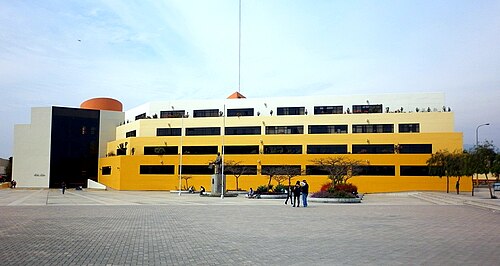
The "Pedro Zulen" Central Library of the university is a 19,800 m2 building. It has a multifunctional stage and 400 seats. The Central Library "Pedro Zulen", under the auspices of UNESCO, leads the initiative to develop digitalization of publications.[97][102] The library directs the main activity of SISBIB.[97][103] Each one of the faculties of the National University of San Marcos has its own library in the study areas of each faculty, these are connected to each other through the Library System (SISBIB) of the university.
The Stadium of the National University of San Marcos, officially known as the "Colossus of America", is located in the center of the University City. Its main accesses are through block 5 of Av. Amézaga and block 36 of Av. Venezuela. At the local level, it has been the official stadium of the university soccer team, Club Deportivo Universidad San Marcos, which played until 2011 in the Second Division of Peru.
サンマルコス・スタジアムは、サンマルコス大学創立400周年を記念して1951年に開場しました。当初、サンマルコス・スタジアムの収容人数は7万人でした。[ 104 ]現在は公式収容人数が3万2千人に調整されています。[ 105 ]改修後の会場は、2019年の南米U-17選手権と2019年のパンアメリカン競技大会に使用されました。
サンマルコス大学には 37 の学術研究ユニットがあります。[ 106 ] [ 107 ] [ 108 ]これらは主に、健康科学、基礎科学、工学、経済・経営科学、人文科学、法学・社会科学の分野に分類されます。研究センターには博物館と研究室があります。各研究所は独自の出版物も発行しています。[ 106 ] [ 109 ]大学には約 500 の研究グループがあります。[ 110 ] 2015 年以降、サンマルコス大学には技術・生物医学・環境研究センター (CITBM) もあります。これはサンマルコス大学が主導し、3 つの国内企業と 3 つの国際的な卓越センターで構成されています。[ 111 ]以下は、サンマルコス大学の主な研究機関のリストです。[ 109 ]
ペルーの国立科学技術技術イノベーション評議会(CONCYTEC)が作成した2009年の年次収支によると、ペルーの科学生産の20%はサンマルコス国立大学によって生み出された。[ 112 ]サンマルコス大学とその研究機関のいくつかの科学出版物は、Nature [ 113 ]とScience [ 114 ]に掲載された。サンマルコス大学の主な科学出版物は、学術誌Alma MáterとTheorema [ 115 ] 、および大学の各学部の20の公式雑誌に掲載されている。各専門学校も独自の学術誌を持っている。[ 116 ]
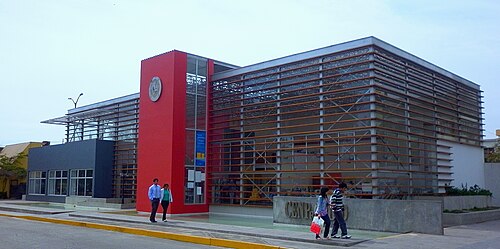
The Editorial Fund of the University of San Marcos is the division in charge of publishing books, magazines, and newspapers. The publications are made both in the traditional printed format and via the Internet.
Currently, the National University of San Marcos has two cultural centers in two of its historic buildings. The Casona de San Marcos—its main cultural center—and the Colegio Real de San Marcos.

The Cultural Center "La Casona" of San Marcos is one of the main tourist attractions of the Historic Center of Lima. The complex is part of the area and the list of buildings in the historic center of the capital that in 1988 was declared a World Heritage Site by UNESCO. In 1989, the National University of San Marcos, the Spanish Agency for International Cooperation (AECI) and the National Institute of Culture sign a Peru-Spain agreement to adapting its architectural complex for culture and artistic creation.[117][118]

The Royal College Cultural Center of Contemporary Peruvian Cultures, established in 2006, is located in the environment of the old "Royal College" of San Marcos, next to the Congress of the Republic of Peru. It is made up of three units of the university: the Institute of Applied Linguistics CILA, the "Domingo Angulo" Historical Archive of the University of San Marcos, and the Andean Rural History Seminar. Exhibitions and shows are regularly held.[119][120]
It was founded on the initiative of ViceroyFrancisco Álvarez de Toledo in 1592. After the Bourbon Reforms that led to the expulsion of the Jesuits, the campus was recast as the Convictorio de San Carlos. At the end of the 18th century, the War Inspector Gabriel de Avilés y del Fierro dedicated the premises to the headquarters of the Royal Regiment of Lima. Since the end of the 20th century, the University of San Marcos has given the Royal College the functions of a Cultural Center and Historical Archive.
The University of San Marcos has institutions that function exclusively as museums, these are the Museum of Natural History of Lima,[121] the Sacaco Paleontological Museum, the Museum of Art, the Museum of Archaeology, the Historical Museum of Physical Sciences, among others.[122][123] The university also has four other specialized libraries.[124]

The National University of San Marcos has researched various archaeological sites and historical collections, such as the Huaca de San Marcos and others of the Maranga archaeological complex. In it, various ceramics have been found, as well as spondylus and quipus. The Ministry of Culture of Peru first declared the Huaca San Marcos and then all the minor archaeological sites on the campus, as Cultural Heritage of the Nation.[125][126]
In 1966, Pablo Macera organized a trip to the Pacopampa archaeological site in Querocoto District; in 1970, he got Emilio Choy Ma to make a donation to San Marcos to acquire the Pacopampa Ceremonial Center.
Both formally and colloquially, the characters that have been part of the National University of San Marcos have received the title of sanmarquinos.[127][128] The word has been in common use by the Peruvian population to refer to the close and prominent figures of this house of studies, and even to the pets and animals adopted by the university community.[129][130][131]
On August 7, 1924, San Marcos students founded the University Sports Federation of Peru. Since 1936, this federation has organized the National University Sports Games, the Regional University Sports Games and the National University Championships. Since 1963, it has participated in the Universiade.[132] The basketball team had participated in the Lima Basketball League.[133][134][135]
The University of San Marcos has had various professional football teams, including the University Football Federation (Club Universitario de Deportes) that was founded in 1924 by students until it was separated from the university and became private due to problems with the authorities in 1932; and the Deportivo Universidad San Marcos that came to dispute the second division until 2012.[136]
The first university Games were held in 1936 in the city of Lima. Since then, four years between each Games was marked, though, recently, they have been taking place every 2 years. In 1951, the Stadium of the University of San Marcos was inaugurated in the center of the main campus.[137] For the celebration of the 2019 Pan American Games, the Organizing Committee of Lima 2019 chose various sports facilities located between the city of Lima, as well as in Callao, as Pan American venues. Among them, the National University of San Marcos had its stadium remodeled to host the event.[138][139] The Stadium of the National University of San Marcos was the sole venue of the 2019 South American U-17 Championship that took place in Peru.[140]
文学部の学生であるホセ・ルビオ・ガリンドと医学部の学生であるルイス・マラガ・アレナスは、プラシド・ガリンド、エドゥアルド・アステンゴ、ラファエル・キロス、マリオ・デ・ラス・カサス、アルベルト・デネグリ、ルイス・デ・ソウザ・フェレイラ( FIFAワールドカップでペルー人初ゴールを決めた)に加わることになる[ 141 ]アンドレス・ロッタ、カルロス・ガリンド、フランシスコ・サブロソ、ホルヘ・ゴンゴラ、パブロ・パチェコ、カルロス・ラッスス、カルロス・シリョニスなど。 1924年8月7日午後7時 。 (UTC-5)、大学生たちはフアン・デ・ラ・コバ通り106番地にあるペルー学生連盟の本部に集合した。[ 142 ] [ 143 ] [ 144 ]
当時ペルーのスポーツ界の最高機関であった国家スポーツ委員会は、フェデラシオン・ウニベルシタリアをリーグであるかのように認めた。そのため、ペルーサッカーリーグ、アマチュア協会、カヤオリーグ、チルコロ・スポルティーボ・イタリアーノ、リマ・クリケット・アンド・フットボールクラブとともに、サッカー連盟が結成された。[ 145 ] 1924年から1927年にかけて大学間トーナメントに参加した後、[ 143 ]ペルーサッカー連盟はフェデラシオン・ウニベルシタリアを1928年の選抜および競技選手権(第1部トーナメント)への参加に招待した。[ 143 ]

1929年の選手権では、サンマルコス大学のフェデラシオン・ウニベルシタリア・チーム(現在のクラブ・ウニベルシタリオ・デ・デポルテス)は、アリアンサ・リマが選手を代表チームに提供することを拒否したため出場停止処分を受け、わずか12チームしか参加できなかった。[ 146 ]フェデラシオン・ウニベルシタリア・チームはそれでも優勝した。[ 147 ]
1930年、最初のFIFAワールドカップがウルグアイのモンテビデオで開催された。ワールドカップ後、クラブは蒸気船で地方へ移動し、ホワイトスター協会と対戦し、1対0で勝利した[ 148 ]。その後、ワチョをツアーし、グビンズカップに参加した[ 145 ] 。翌年、学長のホセ・アントニオ・エンシナスは「Federación Universitaria de Fútbol」という名称の使用を禁止し、これがクラブ・ユニベルシタリオ・デ・デポルテスへの変更につながった[ 143 ]。
In 2001, the University of San Marcos created the Club Deportivo Universidad Nacional Mayor de San Marcos, where it played until 2011. Club San Marcos played at the San Marcos stadium. The team was baptized with the name "The Lions" because the animal is the symbol of Mark the Evangelist.[136] Later, the university created Deportivo San Marcos. The club has participated since 2013 in the first division of Cercado de Lima.
{{cite web}}: CS1 maint: numeric names: authors list (link){{cite web}}: CS1 maint: 数値名: 著者リスト (リンク){{cite web}}: CS1 maint: 数値名: 著者リスト (リンク){{cite book}}: CS1メンテナンス: パブリッシャーの場所 (リンク)