
Loading article…
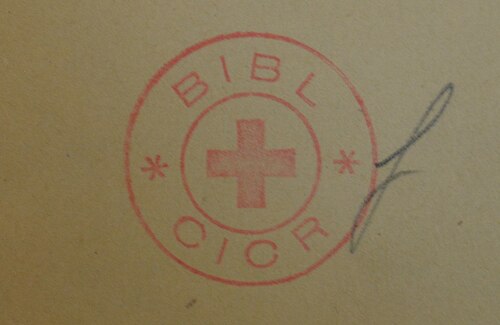
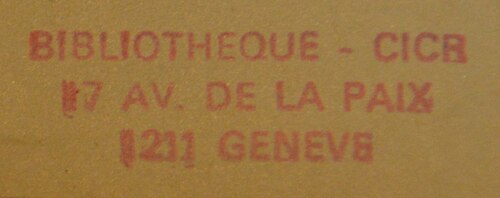
国際赤十字委員会(ICRC)の図書館(フランス語:la bibliothèque du Comité international de la Croix-Rouge (CICR))は、スイスのジュネーブにある国際赤十字委員会の本部に併設された公共図書館です。この図書館は、1863年のICRC設立当時頃に創設されたと考えられています。
同図書館は、自らの説明によれば、特に赤十字国際委員会(ICRC)および国際人道法(IHL)全般に関する「主要な文書資料」であり、ICRCアーカイブと並んで重要な役割を担っている。[ 1 ]同図書館は、ICRC規約第4条(g)に基づき、ICRCの任務遂行において中心的な役割を果たしている。

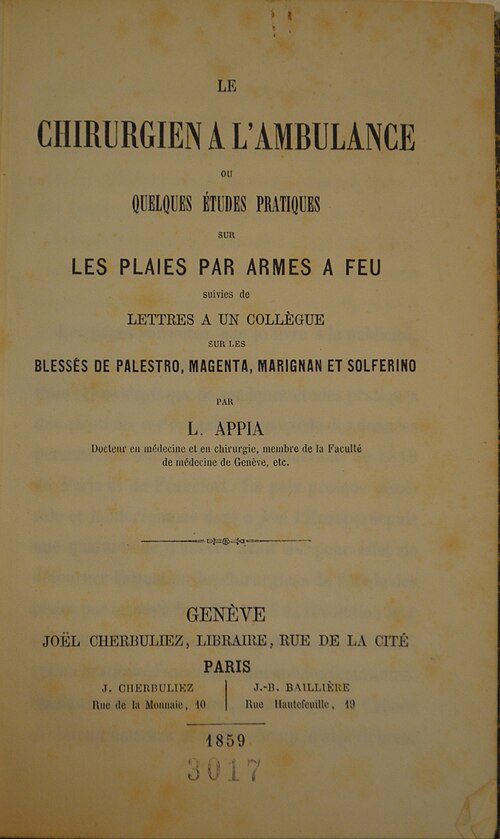
赤十字国際委員会(ICRC)――あるいはその前身である国際負傷者救援委員会――は、1863年2月にジュネーブで5人の人物によって設立された。実業家から活動家へと転身したアンリ・デュナン(彼は高く評価された著書『ソルフェリーノの思い出』でその基本理念を述べた) 、弁護士で慈善家のギュスターヴ・モワニエ、医師のルイ・アッピアとテオドール・モノワール、そしてギヨーム・アンリ・デュフール将軍である。[ 3 ]図書館の正確な設立日は不明である。1875年の記録に初めて登場するが、
「それは組織と同時に誕生したと推測でき、当初は委員会の創設者たちの作品集という形をとっていたのかもしれない。」[ 1 ]
新しく設立された赤十字の実際の所在地、つまり少なくともその設立間もない図書館の一部は、デュナンの私邸、旧市街のリュ・デュ・ピュイ・サン・ピエール4番地にある彼の家族の「メゾン・ディオダティ」の3階となった。しかし、アルジェリアでのデュナンの植民地事業が破綻すると、彼は1867年に破産を宣告し、翌年には赤十字国際委員会の委員長モワニエによって追放された。デュナンが図書館設立の原動力であったことは明らかであるため、赤十字国際委員会関連の出版物のデュナンのコレクションは、リュ・ド・ラテネ8番地にあるモワニエの素晴らしい市内の邸宅に移されたと推測される。[ 3 ] [ 1 ]


1871年、赤十字国際委員会(ICRC)は、モワニエの壮麗なタウンハウスであるアテネ通り8番地の向かいにあるアテネ通り3番地の建物のアパートに移転した。[ 1 ] [ 4 ] [ 5 ]非常に立派な住所ではあったが、オフィススペースはわずか3部屋とかなり質素だった。[ 6 ]そのうちの1部屋は図書館と博物館を兼ねていた。[ 7 ]
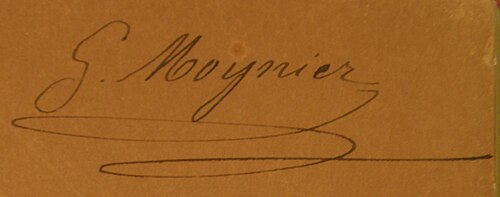
1878年、モイニエは図書館はすべての人に利用可能であるべきだと宣言した。[ 8 ]同年、彼は蔵書を完全に再編成し、自ら手書きで新しい目録を作成した。
「ヘリテージ・コレクションは、彼が確立した分類システムに従って今日まで整理されたままです。資料はまず出典、次に主題、著者、出版日順に棚に並べられています。この分類システムにより、赤十字の活動が世界中に広がり、まずヨーロッパ、そしてさらに遠くへと各国赤十字社のネットワークが構築されていく様子をたどることができます。ヘリテージ・コレクションの資料の大部分は、ドイツ、スイス、フランス、イタリア、イギリスからのものです。また、中国、キューバ、ブラジル、アメリカ合衆国、メキシコからの出版物、さらには短命に終わったミクロネーションであるクーナニ自由国からの出版物も含まれています。」[ 1 ]
赤十字運動とその図書館の蔵書が拡大するにつれ、高齢のモワニエは、甥で後継者となるギュスターヴ・アドールの推薦により、図書館の管理などの管理業務の一部を弁護士のポール・デ・グットに委任し、デ・グットは1898年に委員会の秘書に任命された。[ 1 ]デ・グットもまたモワニエの甥であった。[ 9 ]
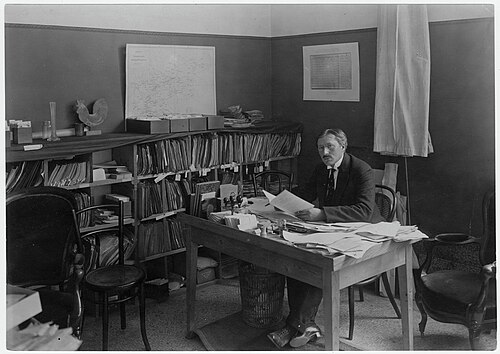
第一次世界大戦終結後まもなく、赤十字国際委員会(ICRC)は旧市街の端にあるプロムナード・デュ・パンに新本部を移転した。[ 10 ]図書館はそこに大きな玄関ホールの隣に設置された。[ 11 ]図書館の責任者は、古文書学者で、自由主義系の日刊紙『ジュルナル・ド・ジュネーブ』のコラムニストでもあったエティエンヌ・クルーゾーが引き継いだ。第一次世界大戦中、彼は数百万枚の索引カードの分類システムを設計した。1919年、彼はデ・グットの後任としてICRC事務局長に就任し[ 1 ]、その地位で図書館を大きく発展させた。特に、赤十字運動の各国赤十字社との体系的な出版物の交換を確立したことが功を奏した。[ 11 ]
1933 年 6 月、赤十字国際委員会 (ICRC) は本部を旧市街から移転し[ 11 ]、そして「歴史の奇妙な転換」により、セシュロン地区の壮麗なヴィラ モワニエに移った[ 3 ] 。この建物は 1848 年に銀行家のバルテルミー パカールのために建てられ、その後、彼の義理の息子であるギュスターヴ モワニエが所有し、1910 年に亡くなるまで 47 年間という記録的な期間、その事務所に留まった。レマン湖畔の広大なモワニエ公園の中央に位置するこのヴィラは、1926 年に国際連盟の本部として使用されていた[ 1 ]。その後、ジュネーブ市がこれを取得し、ICRC に貸し出した[ 3 ] 。1階の部屋は、博物館室と会議場の隣に図書館として確保されていた。しかし、この「風変わりな」場所とそこに割り当てられた職員の不足により、図書館は事実上休眠状態となった。[ 11 ]
In 1946 the ICRC moved its headquarters from the Villa Moynier to the former Carlton Hotel in the quarter of Pregny.[11] The neoclassical building on a hill above the Palace of Nations was provided to the organisation by the Canton of Geneva through a long-term lease.[12] The library was assigned a "modest" place. Two years later, in 1948, the new collection, which had been added to the Heritage Collection since 1919, was completely reorganised and catalogued.[5]
However, it was only a quarter of a century later, in 1972, that the governing body of the ICRC assigned a more prominent room to the library. At the same time, it raised its status and confirmed the mandate to not only preserve Red Cross publications, but also to comprehensively acquire IHL publications.[5] Ten years later, a thesaurus-based reference system was introduced which allowed users easier access to documents.[4]
In 1987, the library moved into the newly constructed building no. 3 (level −2) next to the Carlton. Two years later, a computerised catalogue system was established.
The first computer with internet access was introduced in the reading hall in 1995. Five years later, the library catalogue became accessible through the intranet.[5]
Since 2010, the ICRC Library, public archives and audiovisual archives have become part of the same unit, under the umbrella of the ICRC Archives and Information Management service. This administrative reform is part of the efforts to cope with the growing complexity of big data and at the same time the fragmentation of information due to the rapid evolution of digital technologies.[13]
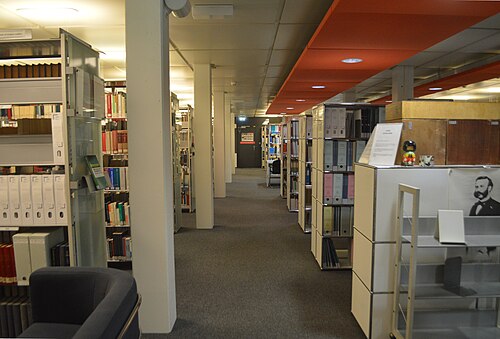
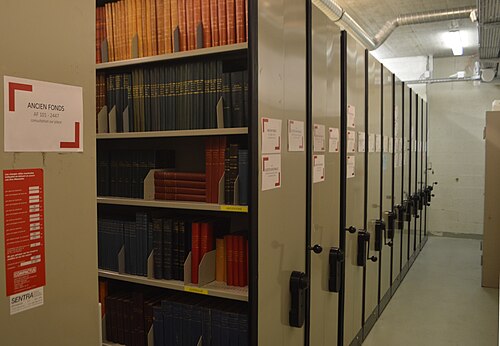
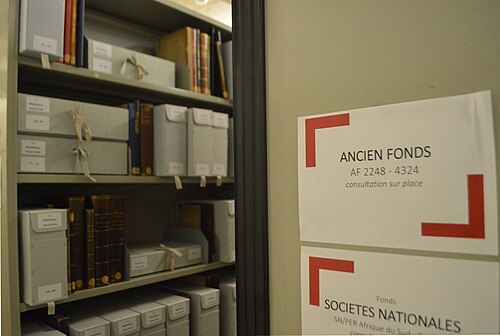
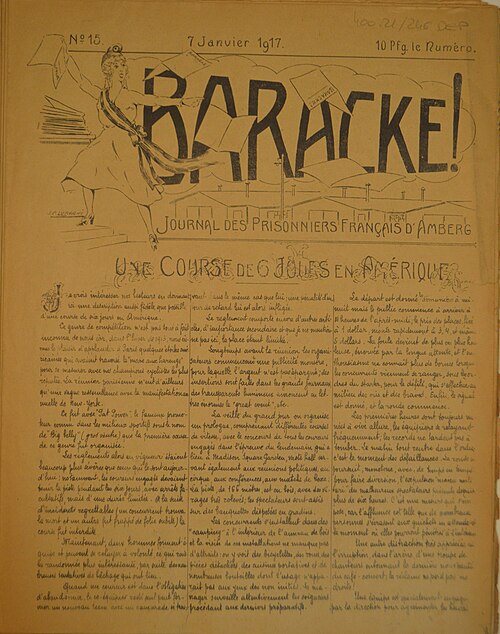
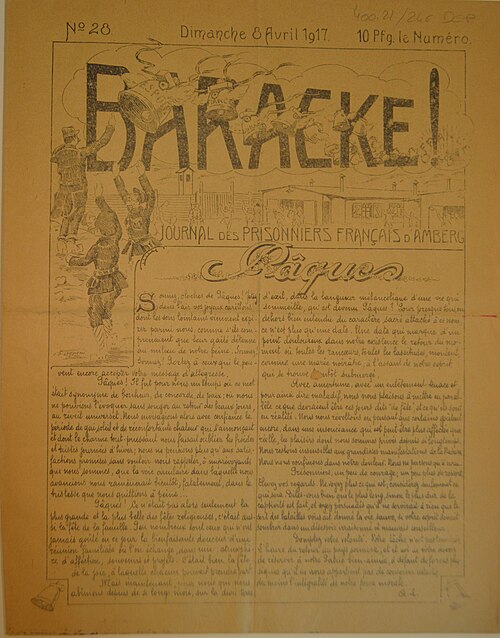
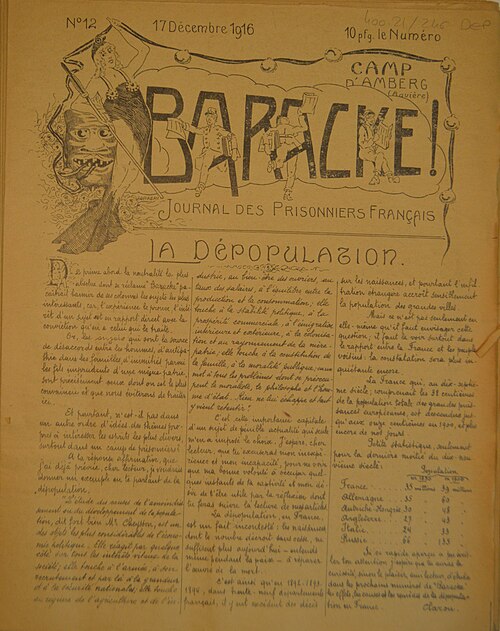
The heritage collection of the ancien fonds (Signature: AF) comprises almost 4,000 books, brochures, reports, manuals and press cuttings from over forty countries.[1]
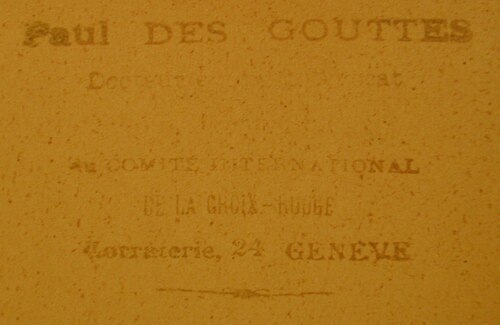
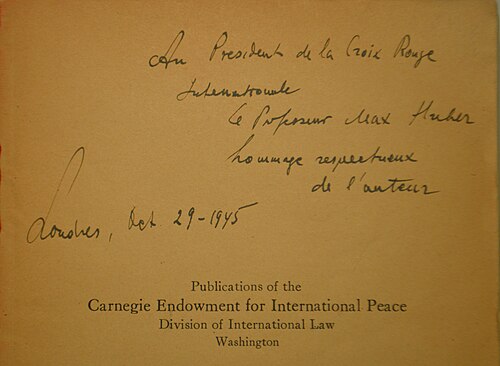
Some members of the ICRC, first and foremost Gustave Moynier, contributed books from their private holdings to the library. The collection of Paul Des Gouttes was donated after his death in 1943 by his widow, including a copy of Un souvenir de Solférino from the first edition, which Dunant had limited to a total of 100 copies.[11]
The library collections are constantly updated with new acquisitions covering IHL and the work of the organization.[1]
As of early 2020, the ICRC library counted some 41,000 references in its catalogue. They include:
"preparatory documents, reports, records and minutes of Diplomatic Conferences where the main IHL treaties were adopted; records of Red Cross and Red Crescent Movement conferences, during which many IHL matters are discussed; every issue of the International Review of the Red Cross since it was founded; all ICRC publications; rare documents published in the period between the founding of ICRC and the end of the First World War and charting the influence of Dunant's ideas; and a unique collection of legislation and case law implementing IHL at domestic level."[14]










{{cite book}}: CS1 maint: location missing publisher (link)