Banks, merchants, and recognized business establishments for use in their respective places of business,who shall first apply to and receive from the sheriff of the county in which said business is located, a permit to possess the said weapons for the purpose of defending the said business;
United States Army, when in discharge of their official duties;
Officers and soldiers of the militia when called into actual service;
Officers of the State, or of any county, city or town … when acting in the discharge of their official duties;
The manufacture, use or possession of such weapons for scientific or experimental purposes;
Resident of this State who now owns a machine gun used in former wars, as a relic or souvenir may retain and keep same as his or her property.
A person who lawfully possesses or owns a weapon in compliance with 26 U.S.C. Chapter 53, §§5801-5871.[9]
Any other possession or use of fully automatic weapons in North Carolina is unlawful.
Acquiring a handgun
To acquire a handgun in North Carolina an individual must complete ATF Form 4473 at an FFL licensed seller or through private sales. The seller is required to complete a background check using the National Instant Criminal System (NICS). Completing a NICS check is not required if one has a concealed handgun permit.[10][11] North Carolina previously had a Pistol Purchase Permit system that was a holdover from Jim Crow laws that were designed to prevent African-Americans and other minorities from easily obtaining handguns.[12] However, the pistol purchase permit law was repealed March 29, 2023.[13]
In accordance to North Carolina Law, no county or local government can require handgun registration.[12]
Instructors for these handgun safety classes must be certified by the North Carolina Department of Justice. The Concealed Carry Handgun Safety Class is regulated to be a minimum of eight hours long and must include a written test on state laws pertaining to the use of deadly force, and restrictions on the locations a handgun may be carried in a concealed fashion. In addition, the applicant must shoot a designated course of fire and obtain a passing score. A concealed handgun permit is valid for a period of five years.
Ineligibility requirements
The sheriff shall deny a permit to an applicant who:[14]
(1) Is ineligible to own, possess, or receive a firearm under the provisions of State or federal law. (2) Is under indictment or against whom a finding of probable cause exists for a felony. (3) Has been adjudicated guilty in any court of a felony, unless:
(i) the felony is an offense that pertains to antitrust violations, unfair trade practices, or restraints of trade, or
(ii) the person's firearms rights have been restored pursuant to G.S. 14–415.4.
(4)逃亡犯である。 (5)マリファナ、アルコール、鎮静剤、興奮剤、麻薬、または21 USC § 802で定義されるその他の規制物質の違法使用者または中毒者である。 (6)現在、または過去に裁判所により、もしくは司法審査の対象となる政府機関により行政的に、精神的能力を欠くか精神疾患であると認定されている。過去に相談サービスまたは外来治療を受けただけでは、この項に基づく申請者の資格を失わせるものではない。 (7)名誉除隊以外の条件で米国軍 から除隊している、または除隊したことがある。 (8)本条の(8a)、(8b)、または(8c)に規定する場合を除き、軽犯罪を構成する1つ以上の暴力犯罪について有罪判決を受けた、または判決の継続または執行猶予の申し立てを受けた者。これには、ノースカロライナ州法典第14章第8条に基づく軽犯罪の違反(ただし、GS 14-33(a)の違反を除く)、またはGS 14-226.1、4-258.1、14-269.2、14-269.3、14-269.4、14-269.6、14-277、14-277.1、14-277.2、14-283に基づく軽犯罪の違反(ただし、GS 14-414、14-288.2で免除される花火に関する違反を除く)が含まれるが、これらに限定されない。申請書の提出日から3年以内に、14-288.4(a)(1)、14-288.6、14-288.9、旧14-288.12、旧14-288.13、旧14-288.14、14-415.21(b)、または14-415.26(d) のいずれかの規定に違反していないこと。 (8a) GS 14–33(c)(1)、 14-33 ( c)(2)、14-33(c)(3)、14-33(d)、14-277.3A、14-318.2、14-134.3、50B-4.1、または旧GS 14–277.3に基づく軽犯罪を構成する1つ以上の暴力犯罪について有罪判決を受けた、または判決の継続または執行猶予の申し立てを受けたことがある。( 8b )家庭内暴力の軽犯罪で有罪判決を受けた結果、18 USC § 922(g) に従って銃器の所持が禁止されている。 (8c)法執行官、保護観察官または仮釈放官、州または地方の拘置施設の職員、消防士、救急救命士、医療対応者、または救急部門の職員に対する暴行または暴行の脅迫を含む1つ以上の犯罪で有罪判決を受けたか、判決の延期または執行猶予の申し立てを受けたことがある。(9 )隠し拳銃許可証を取得する資格を失う犯罪行為について、判決の延期の申し立てが記録されている。 (10) Is free on bond or personal recognizance pending trial, appeal, or sentencing for a crime which would disqualify him from obtaining a concealed handgun permit. (11) Has been convicted of an impaired driving offense under G.S. 20–138.1, 20-138.2, or 20-138.3 within three years prior to the date on which the application is submitted. (c) An applicant shall not be ineligible to receive a concealed carry permit under subdivision (6) of subsection (b) of this section because of an adjudication of mental incapacity or illness or an involuntary commitment to mental health services if the individual's rights have been restored under G.S. 14–409.42. (1995, c. 398, s. 1; c. 509, s. 135.3(d); 1997-441, s. 4; 2007-427, s. 5; 2008-210, s. 3(b); 2009–58, s. 1; 2010-108, s. 5; 2011-2, s. 1; 2011-183, s. 16; 2012-12, s. 2(bb); 2013-369, s. 11; 2015-195, ss. 7, 11(l), 17.)
It is a non-criminal violation of the law (infraction) for an individual to fail to disclose to a law enforcement officer that he has a concealed handgun on/about his person "when approached or addressed by the officer" or to provide the concealed handgun permit when required.[16]
Scope of concealed carry permit
The following restrictions and conditions for concealed carry are set out in the Chapter 14-415.11[14] of the NC General Statutes:
The person shall carry the permit together with valid identification whenever the person is carrying a concealed handgun
The person shall disclose to any law enforcement officer that the person holds a valid permit and is carrying a concealed handgun when approached or addressed by the officer, and shall display both the permit and the proper identification upon the request
Except as provided in G.S. 14-415.27[17] (expanded permit scope for certain persons), a permit does not authorize a person to carry a concealed handgun in any of the following:
Areas prohibited by G.S. 14-269.2 (various educational public or private property - unless person has a CHP & stored in vehicle), 14-269.3 (into any assembly where a fee has been charged for admission or any establishment where alcoholic beverages are sold & consumed - unless person has a CHP), and 14-277.2 (present or spectator at parade, funeral procession, picket line, or demonstration upon any private health care facility or upon any public place owned/controlled by the State or a city etc - unless person has a CHP)
This subsection shall not be construed to permit a person to carry a concealed handgun on any premises where the person in legal possession or control of the premises has posted a conspicuous notice prohibiting the carrying of a concealed handgun on the premises in accordance with G.S. 14–415.11(c)[20]
Furthermore, it is a Class I Felony for any person knowingly to possess or carry, whether openly or concealed, any gun, rifle, pistol, or other firearm of any kind on educational property or to a curricular or extracurricular activity sponsored by a school(G.S. 14–269.2).[21]
It is also unlawful for a person to arm himself or herself with a gun for the purpose of terrifying others[note 1] and go about so on public highways in a manner to cause terror.[10]
Law enforcement, military & other individuals - permit scope expansions
In addition to the requirement to complete a certified conceal carry handgun safety course, the following individuals are able to carry - a handgun in certain circumstances currently prohibited for a civilian CHP holder (unless otherwise prohibited by federal law).[22][23] The definitions of each are defined under NCGS Chapter 14 Article 54B.[14]
Officers and enlisted personnel of the Armed Forces of the US when in discharge of their official duties as such and acting under orders requiring them to carry arms and weapons
Civil & law enforcement officers of the United States
Officers and soldiers of the militia and the National Guard when called into actual service
A member of the North Carolina National Guard who has been designated by Adjutant General who has a CHP and acting in discharge of official duties, provided the member does not carry a concealed weapon while consuming alcohol or an unlawful controlled substance or while alcohol or an unlawful controlled substance remains in the member's body
Officers of the State, or of any county, city, town, or company police agency charged with the execution of the laws of the State, when acting in the discharge of their official duties
A district attorney, assistant district attorney or an investigator employed by the office of a district attorney and who has a CHP provided the person shall not carry a concealed weapon at any time while in a courtroom or while consuming alcohol or an unlawful controlled substance or while alcohol or an unlawful controlled substance remains in the person's body

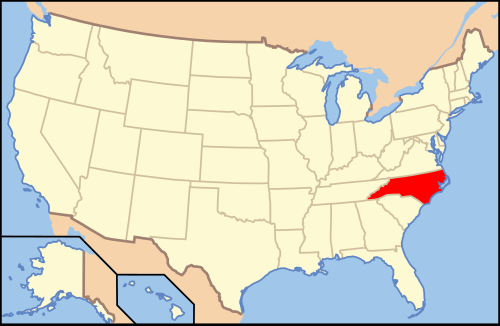
 この記事には、パブリックドメインにあるこの情報源からのテキストが含まれています。