Life expectancy in Montenegro since 1950Life expectancy in Montenegro since 1960 by gender
Nationality/Ethnicity
Ethnic population 1909–20231
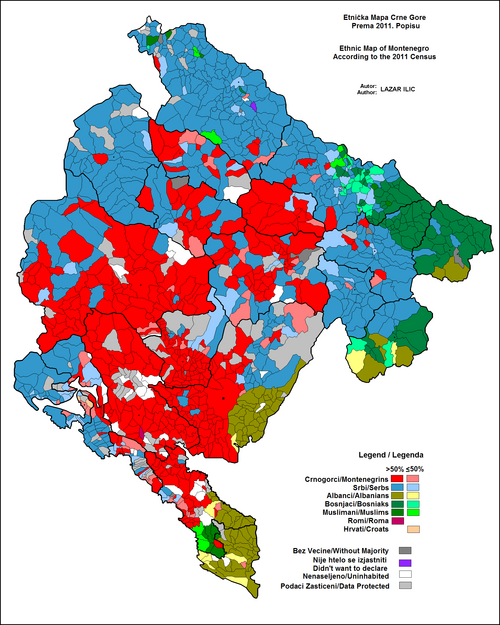
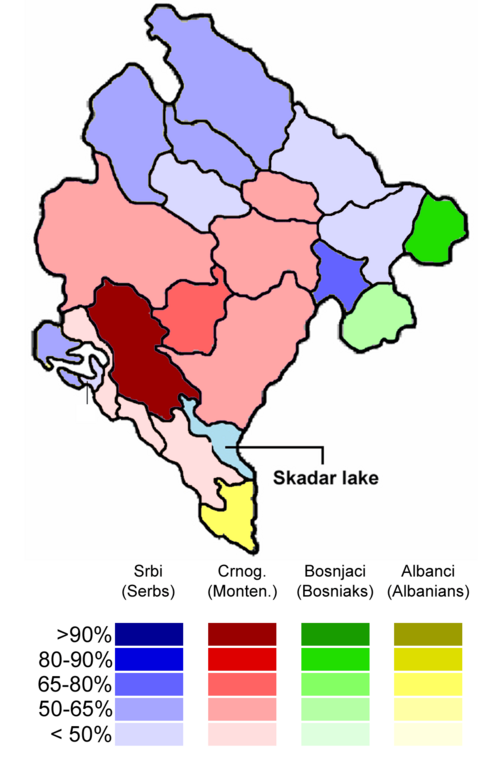
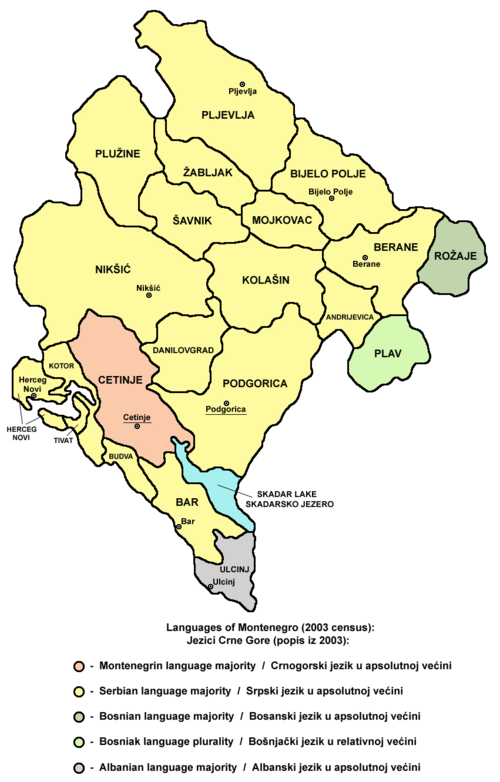
The vast majority (over 90%) of the population of Montenegro is of Slavic origin. Albanians make up 5 percent of the population (4.9% at the 2023 census), while there is also a small Romani minority (total 0.9% at the 2023 census). The Slavic population of Montenegro uses a large diversity in ethnic identities to describe their ethnicity. The 1909 official census of Principality of Montenegro - total 317.856 inhabitants During the first decades after WW II most Slavic people identified themselves as Montenegrins, with less than 2% Serbs and less than 2% Croats in 1948. During the last decades of the existence of Yugoslavia up to 5% of the population declared themselves Yugoslavs (South-Slavs). During and after the Yugoslav Wars the ethnic identity of the Serbs (and in general the political influence of Serbia) became increasingly important in Montenegro and at the 2003 census almost one third of the population identified themselves as Serbs. The Serbs live mostly along the borders with Bosnia and Serbia, while the Montenegrins live in the center of the country. The Slavic population are in majority Eastern Orthodox Christians, but there is also a large Muslim minority, unlike in Bosnia and Herzegovina, where the majority identify as Muslim.
Religion map of the Republic of Montenegro according to the 2003 census.Religious structure of Montenegro by municipalities 2003.Religious structure of Montenegro by municipalities 2003.