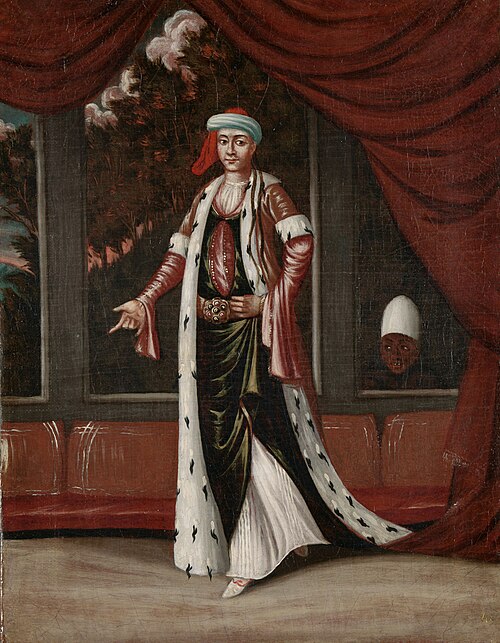
ヴァリデ・スルタン(オスマン語: والده سلطان 、直訳すると「スルタナ母」)は、オスマン帝国のスルタンの母が保持していた称号である。この称号は、15世紀にスレイマン大帝が母ハフサ・スルタンのために創設したとされ、それまでのメフド・イ・ウリヤ(「偉大なる者のゆりかご」)という称号に取って代わった。 [ 1 ] 通常、存命中のスルタンの母がこの称号を保持し、息子が即位する前に亡くなった母はこれを受け取らなかった。特別なケースでは、統治するスルタンの祖母、継母、養母、姉妹などが、正式にはその称号を保持していなかったものの、最も強力で影響力のあるオスマン帝国の王女であったミフリマー・スルタンやラヒメ・ペレストゥ・スルタンのように、ヴァリデ・スルタンの役割を担った。
学期
オスマン語のvalide ( والده ) は、アラビア語のwālidaから派生した文字通りの「母」を意味します。valideのトルコ語の発音は[ vaː.liˈde ]です。
Western tradition knows the Ottoman ruler as sultan, but the Ottomans themselves used padişah (emperor) or hünkar to refer to their ruler. The emperor's formal title consisted of sultan together with khan (for example, Sultan Suleiman Khan). In formal address, the sultan's children were also entitled sultan, with imperial princes (şehzade) carrying the title before their given name, with imperial princesses carrying it after. For example, Şehzade Sultan Mehmed and Mihrimah Sultan were the son and daughter of Suleiman the Magnificent. Like imperial princesses, the living mother and main consort of reigning sultans also carried the title after their given names, for example, Hafsa Sultan, Suleiman's mother and first valide sultan, and Hürrem Sultan, Suleiman's chief consort and first haseki sultan. The evolving usage of this title reflected power shifts among imperial women, especially between the Sultanate of Women, as the position of main consort eroded over the course of 17th century, the main consort lost the title sultan, which replaced by kadïn, a title related to the earlier khatun. Henceforth, the mother of the reigning sultan was the only person of non-imperial blood to carry the title sultan.[2]
Valide sultan was, in most cases, the most important position in the Ottoman Empire after the sultan himself. As the mother to the sultan, by Islamic tradition ("A mother's right is God's right"),[3] the valide sultan would often have a significant influence on the affairs of the empire. She had great power in the court and her own rooms (always adjacent to her son's) and state staff.[1] The valide sultan had quarters within the New Palace, where the Sultan himself resided, beginning in the 16th century.
↑サカオール、ネクデト[トルコ語] (2008)。Bu mülkün kadın sultanları: Vâlide sultanlar、hâtunlar、hasekiler、kadınefendiler、sultanefendiler。オーラック出版。 p. 148.ISBN978-9-753-29623-6。(彼女の名前はİ. H. ウズンチャルシュル著『キターベレル』の中で「ハフサ・ビント・イ・アブドゥル・ムイン」と記されている。これは彼女がトルコ系ではなく、後にイスラム教に改宗したことを示している。彼女がクリミア・ハン国のメヌリ1世ギライの娘であるという主張は、セリム1世の妻の一人であるアイシェ・ハトゥンがメヌリ1世ギライの実の娘であったにもかかわらず、証明されたことはない。)
↑ Börekçi, Günhan (2020). "A Queen-Mother at Work: On Handan Sultan and Her Regency During the Early Reign of Ahmed I" . The Journal of Southeastern European Studies (34): 45–92 . doi : 10.26650/gaad.20213403 . S2CID 236832964 .45ページおよび53~54ページ
↑ Y. イゼッティン・バリシュ (2002)。オスマンル・パディシャラル・ニーン・ヤシャムラル・インダン・ケシトラー、ハスタルクラル・ヴェ・オールム・セベプレリ。ビリムセル・ティップ・ヤユネヴィ。 p. 184.ISBN978-975-6986-17-2。セリムイン・アネシ・オラン・ミフリシャ、ギュルシスタン・ダン・ビル・パパズン・クズィドゥ
↑サカオール、ネクデット (2015)。Bu mülkün kadın sultanları : 有効なスルタンラー、ハトゥンラー、ハセキラー、カディネフェンディラー、スルタンフェンディラー。ISBN978-605-171-079-2OCLC 961810963