
Loading article…
In February 1918, shortly after the Bolsheviks seized power in the Russian Revolution, their Council of People's Commissars repudiated the sovereign debt and other financial obligations of Russia. This position shocked international finance and triggered unanimous condemnation by the governments of the great powers. The British, and especially the French, had lost millions of pounds of foreign investment in Russia.
Revolutionary Russia completely fell out of the world economy as a result of this development and sealed itself up in isolation, which would not be disturbed until large-scale hostilities broke out with other states during World War II.[1]
In the early 19th century, the Russian Empire turned to the public capital markets and, especially, foreign markets and foreign intermediaries, to regulate and stimulate the growth of its economy, financing its ambition and its development. The transformation from a feudal to a capitalist system proceeded little by little and required foreign investment. Until then, the Russian economy was mainly dominated by agricultural and local production and thus did not stimulate the creation of a national marketplace. Borrowing by the Russian government was important for both European and Russian domestic financial markets. It was the government's need to finance its budget deficit that stimulated the progress of the Russian financial system.
In 1913, foreign investors held 49.7% of Russian government debt and owned nearly 100% of all petroleum fields, 90% of mines, 50% of chemicals and 40% of metallurgical industries. This amounted to the largest foreign debt in the world at the time. France was the major lender to Russia and French investors financed the creation of iron and steel industries and mining operations. In 1914, 80% of the Russian government debt was held in France and 14% in Great Britain.[2]
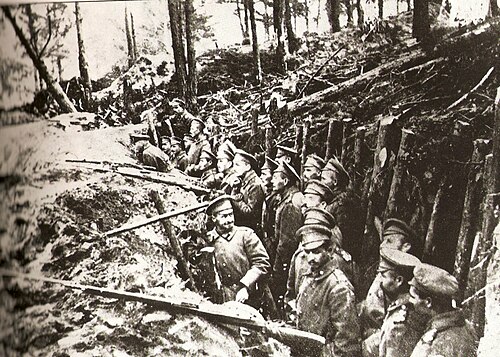
Russia entered World War I in July 1914. Germany, France, Great Britain and Tsarist Russia had been preparing for war for a long time. Military spending was enormous and financially catastrophic for the Russian government.
戦争勃発からボリシェヴィキの政権掌握までの間に、ロシアの債務は33億8500万ポンドにまで膨れ上がり、それまでの約3.5倍となった。さらに、第一次世界大戦は1914年から1917年2月までの間にロシアで330万人の死者を出した。内訳は兵士180万人、民間人150万人である。こうして、戦争の重圧は最終的に経済の完全な崩壊と政治体制の変革をもたらした。
1917年2月17日、ロシア最後の皇帝ニコライ2世は退位を余儀なくされ、ロシア帝国政府とロマノフ王朝は終焉を迎えた。新臨時政府は戦争継続を決定し、軍事費の増大を招いた。歳入を増やすため、砂糖、茶、マッチ、タバコなどの消費財の販売に国家独占が導入された。しかし、財政赤字を補填する主な財源は、依然として新紙幣の発行による通貨価値の低下であった。この時期はハイパーインフレの時代であった。
ボリシェヴィキ革命家は1917年10月24日に政府を打倒し、その後ソビエト政府を樹立した。債務不履行額は莫大であった。[ 3 ]第一次世界大戦終結時のロシアの対英債務だけでも5億3800万ポンドから5億6800万ポンドと推定された。フランスに対する債務額は35億7300万フランと推定され、日本に対するロシアの対外債務は1億4700万ドルであった。
1918年2月8日、ロシア・ソビエト連邦社会主義共和国人民委員会議がそれまでに発行されたロシア政府の債務をすべて帳消しにしたことにより、ソビエト政府は帝政ロシア政府が発行したすべての債券を否認した。ソビエト政府は1918年初頭に対外債務の支払いを停止し、ロシア帝国が負ったすべての債務、およびロシア臨時政府が負った債務をすべて帳消しにすると宣言した。これにより、戦争は1917年2月から11月まで継続することができた。
同時に、ソビエトはロシア国内にある外国のすべての資産を没収することを決定した。ソビエトはまた、銀行、土地、産業を国有化した。対外債務を否認することにより、ソビエト政府は1905年のペトログラード・ソビエトの決定を実行した。[ 4 ]
ソビエト連邦による対外債務の帳消しは国際金融界に衝撃を与え、連合国による全面的な非難を引き起こした。[ 5 ]西側諸国政府は、資本主義秩序を回復するために反ボリシェヴィキ勢力を公然と支援すべきだと確信していた。
一部の債務者は、ロシア内戦への連合国の介入強化を求めた。
1986年、ソ連政府は1917年に迫っていたスラブ諸国の国家債務不履行による英国との対外賠償債務を清算した。 [ 6 ]
1991年のソビエト連邦崩壊後、新たに成立したロシア連邦は、将来に向けた新たな財政戦略を策定するだけでなく、ソビエト連邦が海外から借り入れた数十億ドルの返済についても検討しなければならなかった。1996年、パリとモスクワは、フランス国内で流通しているとみられる400万枚の帝政ロシア債券1枚につき、80ドルから100ドルの名目額をロシアが返済するという協定に署名し、総額は約4億ドルとなった。[ 7 ]ロシアは返済したが、フランスの債券購入者の子孫が期待していたほど寛大ではなかった。[ 8 ]
2006年8月21日までに、ロシア連邦は西側諸国に対するソ連時代の債務をすべて返済したとみなされている。[ 9 ] 2017年8月21日以降、残っていたソ連の対外債務もすべて返済され、ロシア連邦によるソ連時代の債務の全額返済が完了した。[ 10 ]