
Loading article…
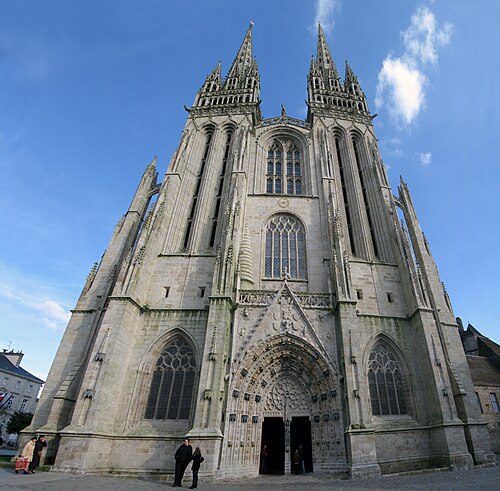
カンペール大聖堂(正式名称はサン・コランタン大聖堂、フランス語: Cathédrale Saint-Corentin de Quimper、ブルトン語: Iliz-veur Sant-Kaourintin)は、フランスのブルターニュ地方にあるローマ・カトリックの大聖堂であり、国の記念建造物である。カンペール市に位置し、カンペール・レオン司教区の司教座となっている。[ 1 ]サン・コランタンは初代司教であった。[ 2 ]
この大聖堂の特徴は、他のほとんどのゴシック様式の大聖堂とは異なり、中央部がわずかに湾曲している点にある。これは、建設当時湿地帯だった場所を避けるため、敷地の地形に合わせて設計されているためである。
伝説によると、グラドロン王はメネズ・オム山で聖コランタンに出会い、彼の信仰心の強さに感銘を受け、その隠者をカンペールの司教に招いたという。
The cathedral replaced an old Roman church which had a chapel attached to it called the "Chapelle de la Victoire" where Alain Canhiart was buried in 1058. It was in 1239 that the first part of the cathedral was built when Bishop Rainaud commissioned the building of the choir , but it was not until the coming of Duke Jean V at the beginning of the 15th century that momentum gathered and the choir was covered with crisscross vaulting. [ 2 ] Further work on the building was completed throughout the 15th and 16th centuries, but in 1620 the cathedral would be seriously damaged by a devastating fire; the bell tower was burned and the populace saw a green devil in the flames. [ 3 ]フランス革命とその後の恐怖政治により再建の進展は中断されたが、 1801年の政教協約の後、大聖堂の修復と追加の建設が続いた。19世紀を通じて、修復、ステンドグラスの作業、新しい祭壇の奉献など、数多くの修復プロジェクトが完了した。
When the cathedral was completed the choir was out of line with the nave, having a slight curve to the left, this to avoid disturbing the older chapel which contained the tomb of Alain Canhiart. Thus the cathedral has an odd shape, and rather imaginatively some have likened the top part of the cathedral's inclination to the left as suggesting Christ's head leaning to the left when he hung on the cross.
1886 saw the introduction of the relic of Saint Corentin's arm into the chapel.
Quimper cathedral is one of the seven cathedrals and basilicas covered by the Tro Breizh pilgrimage.
There are several portals to the cathedral: the three north portals, the south portal (known as the Porche de la Vierge) and the west portal.
There are three portals on the cathedral's north side. On the far right is the "Porche des Baptêmes", which leads to the north nave. The portal comprises a double door separated by a trumeau. The "Porche de la Chandeleur" is located at the northern end of the transept and was built between 1475 and 1479 by the mason Pierre Le Goaraguer and his son Guillaume. The single door is surmounted by a triangular pediment and the arch's external voussures are decorated with carvings of acanthus leaves. The third portal, situated between the "Porche des Baptêmes" and the "Porche de la Chandeleur", is small and in earlier times gave access to the ossuary and cemetery; it is no longer used.[4]

大聖堂の西正面は、2つの大きな尖塔と、アーチのヴォールト石を飾る一連の天使像で構成された壮麗な入口から成ります。トルモーには、地球儀を持ち、しかめっ面をした悪魔を踏みつけながら祝福を与えるキリスト像があります。 1793年以前は、トルモーの彫刻は花崗岩製のジャン5世の騎馬像でしたが、その年に破壊されました。[ 5 ] 2つの尖塔の間のアーチの頂上には、伝説のグラドロン王の像があります。[ 6 ]西正面の最初の石は、1424年7月26日にベルトラン・ド・ロスマデック司教によって、ブルターニュ公ジャン5世の代理人の立ち会いのもと置かれました。ヴォールト石の上にある三角形のペディメントの内側と外側には、多くの紋章とモットーがあり、その中には「Malo au riche duc!」(ブルターニュ公爵の戦いの叫び)という言葉が書かれた旗を持つモンフォールの兜をかぶったライオンの紋章、ブルターニュ公の3人の息子であるジャン5世の紋章、ジャンヌ・ド・フランス、ギヨーム・ド・ロスマデック、ベルトラン・ド・ロスマデック、モットー「Pérag?」「Pourquoi ?」を持つネヴェ男爵の紋章、そしてボディニョーとクロアール=フエナンの貴族のモットー「À l'aventure!」があり、右側には、垂れ幕で飾られた兜の近くに、ゲンガの貴族のモットー「Léal à ma Foy」とケレネックの貴族の紋章がある。[ 4 ] [ 7 ]

南側の入口は「ファサード・メリディオナーレ」または「南側正面」の一部で、「ポルシェ・ド・ラ・ヴィエルジュ」または「ポルシェ・ド・サント・カタリナ」として知られています。ティンパヌムには聖母子像があり、両側には天使が香炉を運んでいます。聖母は座っており、足元には翼を広げた天使の胸像があります。聖母が抱く子供は、手に持った鳥を優しく撫でています。控え壁の一つにある壁龕には、ケルサントンで彫られたアレクサンドリアのカタリナ像があります。[ 6 ]扉の上には三角形のペディメントがあり、3 つの ėcussons (「紋章または盾」) があり、その中にはブルターニュの紋章である「通り過ぎるオコジョ」を戴いたジャンヌ・ド・フランス公爵夫人の紋章と「A ma vie 」の銘文があります。また、ロスマデック卿とギヨーム・ド・ロスマデックの紋章とモットーも示されています。ペディメントのすぐ外側には、ボディニョー家とケレネック家の紋章があります。ポータルのアーチの上部のヴォールト石には、楽器を演奏する 8 人の天使が描かれています。下部のヴォールト石のニッチは空です。[ 4 ] [ 7 ]


大聖堂には、15 世紀から 19 世紀にかけて制作された多数の大きなステンドグラスの窓があります。これらの窓には、特にブルターニュ地方の人物、例えばポール・オーレリアン、イヴォ・ド・ケルマルタン、聖ロシュ、ロナン・ド・ロクロナン、そして大聖堂の守護聖人であるコランタン・ド・カンペールなど、さまざまな題材が描かれています。また、フランス王ルイ 9 世やカンタベリーのアンセルムスなどのフランスの聖人を描いた窓もあります。ブルターニュ地方やフランスの聖人の像の他に、他の有名な聖人、聖母マリア、イエスを描いた窓も多数あります。[ 8 ]

身廊には洗礼堂、勝利の聖母礼拝堂、聖心礼拝堂、ルルドの聖母礼拝堂、その他聖人やその他のカトリックの信心のための様々な小さな礼拝堂など、複数の側礼拝堂が並んでいます。 [ 6 ]

大聖堂には大理石の像が4体あります。彫刻家オーギュスト・オッタン作で1846年制作の「Vierge Mère dite Notre Dame d'Espérance」と呼ばれる像、ブオール作の聖アンナ像、聖テレーズ・ド・リジュー像、ジャンヌ・ダルク像です。花崗岩の像は1体で、西側入口のトゥルモーに彫られた「Christ Sauveur du Monde」です。木彫りの像もあります。彫刻家ミンガム作の彩色木彫りの聖クリストファー像、聖アンナと幼子を抱いた聖母マリアを含む16世紀の群像、17世紀制作の聖ジャン・ディスカルセアまたはサンティグ・デュ/サンティク・デュ(「小さな黒い聖人」)像です。最後に、洗礼堂にある洗礼者ヨハネの像や、剣と髑髏を持った聖カタリナ、竜を持った聖マルグリット、そして二人の修道院長を描いた祭壇画など、雪花石膏製の彫像があります。[ 4 ] [ 6 ]
説教壇は1680年のもので、大工のジャン・ミシュレと彫刻家のオリヴィエ・ダニエルの作品です。説教壇と説教壇への階段には、聖コランタンの生涯の場面を描いた一連のパネルが飾られています。[ 6 ]
大聖堂の壮麗さにふさわしい祭壇を強く求めたのはルネ・ニコラ・セルジャン司教であり、歴史的建造物局の主任建築家であったボエスウィルワド氏がそのプロジェクトの責任者に任命されました。彼は金細工師のプラシド・プシエルグ=ルサン氏に祭壇の制作を依頼しました。プシエルグ=ルサン氏は、サクレ・クール、サント・アンヌ、サン・ピエール礼拝堂の祭壇や、聖コランタンの腕が納められているとされる精巧な聖遺物箱の制作にも携わりました。プシエルグ=ルサン氏の祭壇は、1867年のパリ万国博覧会に出品され、ナポレオン3世によってカンペール市に寄贈されました。そのため、この祭壇は「黄金の祭壇」または「ナポレオン祭壇」として知られています。この主祭壇は1868年にルネ・ニコラ・セルジャン司教によって聖別されました。[ 4 ]
大聖堂にある墓のうち7つがリストに掲載されている。それらは以下の通りである。
記載されていない墓の中には、以下のようなものがある。
Part of the cloisters are preserved on the south side of the cathedral together with some old tombstones from an earlier burial ground. The nearby Breton Museum has also placed some pieces of sculpture in the space between the museum and the cloisters.[9] One of these sculptures is a "statue gėminėe" featuring John the Evangelist and Saint Peter taken from a calvary which had stood at Coat-Quėau in Scrignac. It is carved from granite and dates to the 16th century. Sculptors employed on calvaries at that time used the technique of the "statue gėminėe" when carving pieces for the crosspieces of crosses and would carve two back to back figures from one piece of stone. The figures from Scrignac show how the two figures are in fact carved from the one piece.


47°59′44″N4°6′8″W / 47.99556°N 4.10222°W / 47.99556; -4.10222