
Loading article…

奥の細道(おくのほそみち) [ a ]、日本語の発音:[ oꜜ.kɯ no | ho.soꜜ.mʲi.tɕi ] [ 1 ])は、日本の歌人、松尾芭蕉による俳文の代表作であり、江戸時代の日本文学の主要作品の一つとされている。 [ 2 ]初版は1702年に死後出版された。[ 3 ]
本書は散文と韻文で構成された旅行記の形式で書かれており、芭蕉が17世紀後半の江戸時代の日本を徒歩で旅した、壮大かつ危険な旅の途中で執筆されたものである。
この詩作品はそれ自体で重要な作品となったが、作中に描かれた詩人の旅は、その後多くの人々に彼の足跡をたどり、自らの旅を辿るよう促してきた。最も印象的な一節の一つで、芭蕉は「毎日が旅であり、旅そのものが家への道である」と述べている。[ 4 ]
この文章は芭蕉が深く尊敬していた杜甫の作品からも影響を受けている。[ 5 ]
芭蕉の『奥の細道』の冒頭の一文は、最もよく引用される部分である。
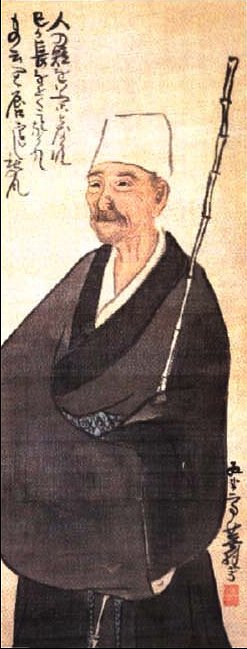

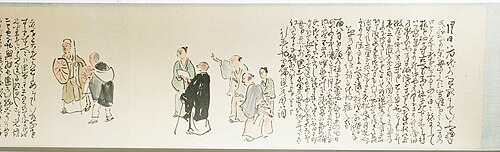
『奥の細道』は、芭蕉が1689年の晩春に行った旅に基づいて書かれた。芭蕉は旅の仲間である河合曾良とともに、江戸(現在の東京)を出発し、奥と呼ばれる北部の内陸地方へと向かった。その主な動機は、古の歌人たちが詠んだ場所を見て「自らの芸術を刷新する」ことであった。[ 9 ] [ 10 ]特に、芭蕉は西行を最高の和歌人として称賛し、西行の歌に言及した場所をすべて訪れることに努めた。[ 11 ] [ 12 ]当時の旅は非常に危険であったが、芭蕉は放浪という詩的な理想に身を捧げていた。彼は合計約156日間、約1,500マイル(2,400km )を、主に徒歩で旅した。[ 13 ]芭蕉の作品の中で、これが最もよく知られている作品である。
This poetic diary is in the form known as haibun, a combination of prose and haiku. It contains many references to Confucius, Saigyō, Du Fu, ancient Chinese poetry, and even The Tale of the Heike. It manages to strike a delicate balance between all the elements to produce a powerful account. It is primarily a travel account, and Bashō vividly relates the unique poetic essence of each stop in his travels. Stops on his journey include the Tokugawa shrine at Nikkō, the Shirakawa barrier, the islands of Matsushima, Hiraizumi, Sakata, Kisakata, and Etchū. He and Sora parted at Yamanaka, but at Ōgaki he briefly met up with a few of his other disciples before departing again to the Ise Shrine and closing the account.
After his journey, he spent five years working and reworking the poems and prose of Oku no Hosomichi before publishing it.[9] Based on differences between draft versions of the account, Sora's diary, and the final version, it is clear that Bashō took a number of artistic liberties in the writing.[14] An example of this is that in the Senjūshu ("Selection of Tales") attributed to Saigyō, the narrator is passing through Eguchi when he is driven by a storm to seek shelter in the nearby cottage of a prostitute; this leads to an exchange of poems, after which he spends the night there. Bashō similarly includes in Oku no Hosomichi a tale of him having an exchange with prostitutes staying in the same inn, but Sora mentions nothing.[15]

Nobuyuki Yuasa notes that Bashō studied Zenmeditation under the guidance of the Priest Buccho, though it is uncertain whether Bashō ever attained enlightenment.[16] The Japanese Zen scholar D. T. Suzuki has described Bashō's philosophy in writing poetry as one requiring that both "subject and object were entirely annihilated"[17]
in meditative experience. Yuasa likewise writes:[18]
「芭蕉は旅に出る前の数年間、世俗的な執着を一つずつ捨て去ってきた。そして今、彼には捨て去るべきものが、彼自身の中にも周囲にも存在する自己以外には何も残っていなかった。彼はこの自己を捨て去らなければならなかった。さもなければ、真の自己(彼が『永遠の自己、すなわち詩』と呼ぶもの)を取り戻すことができなかったからである。」
「『深北への狭道』は芭蕉による永遠への探求であり、彼がこの試みに成功した限りにおいて、それはまた、彼が時の流れに抗して築き上げた記念碑でもある。」
現代文学における参考文献
『北の奥地への狭い道』は、オーストラリアの作家リチャード・フラナガンが2013年に発表した小説のタイトルで、第二次世界大戦中にシャム・ビルマ鉄道建設に従事したオーストラリア人捕虜たちの生活を描いている。この小説は2014年のブッカー賞を受賞し、作中には芭蕉の俳文について語り合う二人の日本人将校が登場する。