
Loading article…
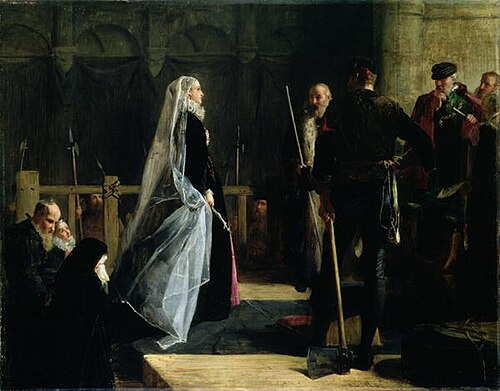
スコットランド女王メアリーの処刑は、 1587年2月8日にイングランド、ノーサンプトンシャーのフォザリンゲイ城で行われた。スコットランド王位を強制的に退位させられた後、19年間イングランドに幽閉されていたメアリーは、従姉妹のエリザベス1世の暗殺を企てた罪で有罪判決を受けた。この事件はバビントン陰謀事件として知られるようになった。メアリーの処刑は、聖別されたヨーロッパの君主に対する最初の合法的な処刑であった。[ 1 ]
息子ジェームズ6世に王位を譲ることを強いられ、王位を取り戻そうと試みたものの失敗に終わった後、メアリーは南へ逃れ、1568年5月16日に漁船でソルウェイ湾を渡ってイングランドに入国した。 [ 2 ]
当初、従姉妹のイングランド女王エリザベス1世が王位奪還の手助けをしてくれることを期待していたメアリーは、代わりにイングランド生まれの夫ヘンリー・スチュアート卿ダーンリー殺害の罪で投獄されたが、有罪にも無罪にもならなかった。約19年の間に、彼女はイングランドの城から城へと移され、エリザベスの顧問が彼女の家に配置したスパイによって自宅軟禁と厳重な監視下に置かれた。エリザベスは、メアリーがイングランド王ヘンリー7世の娘マーガレット・テューダーの子孫であり、イングランド王位継承者候補と見なされていたため、彼女を自身の統治に対する脅威とみなしていた。[ 3 ]

1586年8月11日、バビントン陰謀事件に関与したとして告発されたメアリーは、乗馬中に逮捕され、スタッフォードシャーのティクソール・ホールに連行された。[ 4 ]ウォルシンガムはメアリーを罠にかけることに成功し、メアリーの手紙をチャートリーから密かに持ち出すよう意図的に手配した。秘書のクロード・ノーとギルバート・カール、書記のジェローム・パスキエは尋問のためにロンドンに連行された。[ 5 ]メアリーは手紙が安全だと誤解させられていたが、実際にはウォルシンガムによって解読され読まれていた。[ 6 ]これらの手紙から、メアリーがエリザベスの暗殺未遂を承認していたことが明らかになった。[ 7 ]
メアリーは4日間の旅を経て9月25日にフォザリンゲイ城に移送された。10月、彼女は女王の安全法に基づき、36人の貴族からなる法廷で反逆罪の裁判にかけられた。[ 8 ]裁判は大広間で行われ、エリザベス女王を表す空の玉座にメアリーは従属的な立場で座らされた。[ 9 ]
メアリーは容疑を否認し、[ 10 ]裁判長たちに「良心に問いかけ、全世界という舞台はイングランド王国よりも広いことを忘れないでください」と述べた。[ 11 ]彼女は証拠を再検討する機会を与えられなかったこと、書類を取り上げられたこと、弁護士との面会を拒否されたこと、そして外国の聖別された女王としてイングランドの臣民であったことは一度もなく、したがって反逆罪で有罪判決を受けるはずがないと抗議した。[ 12 ]
彼女は10月25日に有罪判決を受け、死刑を宣告されたが、異議を唱えたのはズーシュ卿ただ一人であった。 [ 13 ]それにもかかわらず、エリザベスは、イングランド議会から判決を執行するよう圧力をかけられても、彼女の処刑を命じることをためらった。女王の殺害は不名誉な前例となることを懸念し、特に報復としてメアリーの息子ジェームズがカトリック勢力と同盟を結び、イングランドに侵攻した場合の結果を恐れていた。[ 14 ]
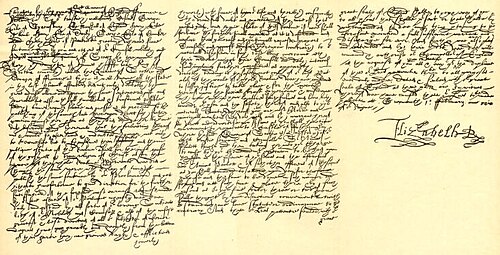
ジェームズ6世は外交官のウィリアム・キース・オブ・デルニー、グレイ卿、ロバート・メルヴィルに母の処刑を阻止するよう指示した。[ 15 ]フランス王アンリ3世とカトリーヌ・ド・メディシスはポンポンヌ・ド・ベリエーヴルを派遣し、母の命乞いをさせた。[ 16 ] [ 17 ]ついに1587年2月1日、エリザベスは死刑執行令状に署名し、枢密顧問官のウィリアム・デイヴィソンに委ねた。[ 18 ] 2月3日、[ 19 ]エリザベスの知らぬ間にセシルによって召集されたイングランド枢密院の10人のメンバーは、直ちに刑を執行することを決定した。[ 20 ]
In the days before the execution, Mary is said to have given Sir William Fitzwilliam of Milton a portrait of her son James VI which she had hanging on her bed head.[21]
On the evening of 7 February 1587, Mary was told she was to be executed the next morning.[22] She spent the last hours of her life in prayer and distributing her belongings to her household. She wrote her will, a note for her almoner Camille du Preau, and, two hours after midnight, a letter to Henry III of France.[23][24]
In her letter to King Henry, now kept by the National Library of Scotland, Mary complained that she had not been given access to the paperwork needed to complete her will. She hoped her physician Dominique Bourgoing would be able to tell her story. She asked Henry III to pay her servants and she sent him two precious stones that served as talismans against illness.[25][26] Mary wrote that she was condemned for her rights to the succession to the English crown and for her Catholic faith.[27] Bourgoing described the night and morning in his Journal.[28][29]
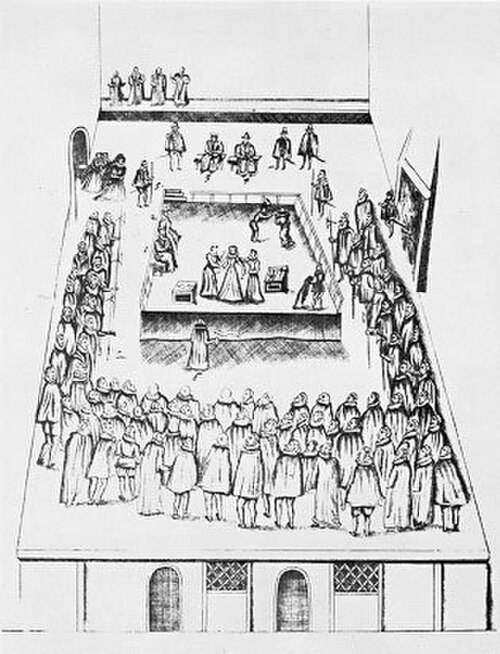
A scaffold was erected in the Great Hall of the Castle and draped in black cloth. It was reached by two or three steps, and furnished with the block, a cushion for her to kneel on, and three stools for her and the earls of Shrewsbury and Kent, who were there to witness the execution.[30] Mary was allowed only four attendants, her steward Andrew Melville, the physician Dominique Bourgoing, her surgeon Jacques Gervais, and her apothecary. In the morning, Mary asked for two of her ladies-in-waiting to accompany her on the scaffold.[31]
処刑人とその助手は彼女の前にひざまずき、許しを請いました。処刑人が処刑される人の許しを請うのは、当時の慣例でした。メアリーは「心からあなたを許します。これで、私のすべての苦しみが終わることを願っています」と答えました。[ 32 ]侍女のジェーン・ケネディとエリザベス・カーリー、そして処刑人たちは、メアリーがポマンダービーズを外し、上着を脱ぐのを手伝いました。[ 33 ]すると、ベルベットのペチコートと深紅色の袖、黒いサテンの胴着と黒い縁取りが現れました。[ 34 ]いくつかの記録では、彼女は「全身赤」で処刑されたとされています。 [ 35 ]赤はカトリック教会における殉教の典礼色です。 [ 36 ]
メアリーは服を脱ぎながら微笑み、「こんな花婿は今までいなかったし、こんな人たちの前で服を脱いだこともなかった」と言った。[ 37 ]ケネディは金糸で刺繍された白いベールでメアリーの目を覆い、台座の前にあるクッションの上にひざまずき、両腕を伸ばした。[ 38 ]彼女の最後の言葉は、 「主よ、御手に私の霊を委ねます」であった。[ 39 ]

メアリーは一撃で斬首されたわけではなかった。最初の斬撃は首を外れ、後頭部を打った。二度目の斬撃で首は切断されたが、わずかな腱が残っており、処刑人はそれを斧で切り裂いた。その後、処刑人は彼女の首を高く掲げ、「女王陛下万歳」と叫んだ。[ 40 ]その瞬間、処刑人の手に持っていた赤褐色の髪はかつらであることが判明し、首は地面に落ち、メアリーの髪が非常に短い灰色であることが明らかになった。[ 41 ] [ 42 ]
Cecil's nephew, who was present at the execution, reported to his uncle that after her death, "Her lips stirred up and down a quarter of an hour after her head was cut off".[38] Reports mention that Mary's small pet dog emerged from hiding among her skirts.[43][44][45] These details were not included in an abbreviated newsletter penned by a German Calvinist Emanuel Tomascon.[46] Items supposedly worn or carried by Mary at her execution are of doubtful provenance;[47] contemporary accounts state that all her clothing, the block, and everything touched by her blood was burnt in the fireplace of the Great Hall to obstruct relic hunters.[44][48]
When the news of the execution reached Elizabeth, she became indignant and asserted that William Davison had disobeyed her instructions not to part with the warrant and that the Privy Council had acted without her authority.[50] Elizabeth's vacillation and deliberately vague instructions gave her plausible deniability to attempt to avoid the direct stain of Mary's blood.[51] Davison was arrested, thrown into the Tower of London, and found guilty of misprision. He was released 19 months later, after William Cecil and Francis Walsingham interceded on his behalf.[52]
Roger Aston first broke the news to James VI and I, and Robert Carey was Elizabeth's official messenger.[53] James VI bought mourning clothes for his household.[54] Robert Carvyle, an English officer and message carrier based at Berwick-upon-Tweed was in Edinburgh in February 1587. He heard that James VI was sceptical that Elizabeth I was sorry for his mother's death. The townspeople of Edinburgh were angry and posted comments and poems called "libels" in the street, against James, his diplomats, and Elizabeth who was called a Jezebel.[55]
処刑の様子を描いたスケッチはロバート・ビールによって作成され、枢密院に送られた。その後数年間、処刑の様子を描いた版画やメアリーの肖像画がヨーロッパのカトリック支持者によって数多く制作され、出版された。[ 56 ]

メアリーはフランスに埋葬されることを希望したが、エリザベスはそれを拒否した。[ 57 ]検死後、[ 58 ]彼女の遺体は防腐処理され、 1587年7月下旬にピーターバラ大聖堂で行われたプロテスタントの葬儀で埋葬されるまで、安全な鉛の棺に納められた。[ 59 ]防腐処理の一環として取り除かれた彼女の内臓は、フォザリンゲイ城内に秘密裏に埋葬された。[ 60 ]
宮殿から教会への行列は、ジョン・フォーテスキューが提供した黒い布のガウンと白いオランダリネンの頭飾り(「カーチャー」と呼ばれる)を身に着けた100人から120人の貧しい女性たちに先導された。彼女たちの姿は伝統的、あるいは古風であった。[ 61 ]次に喪服と喪服を着た人々が続いた。アンドリュー・ノエルはスコットランドの旗を持っていた。[ 62 ]メアリーの家の10人の女性が、フランス風に前が黒いタフタ、後ろが白いベールのフードを身に着けて続いた。[ 63 ]メアリーの家からのスコットランドの弔問客のほとんどは、プロテスタントの礼拝に出席したくなかったため、礼拝が始まる前に大聖堂を後にした。ギリス・モウブレイかバーバラ・モウブレイはアンドリュー・メルヴィルと共に大聖堂に残った。[ 64 ]
リンカーン司教のウィリアム・ウィッカムが説教と祈りを捧げた。[ 65 ] [ 66 ] [ 67 ]霊柩車には旗が掲げられ、鎧、木製の剣、兜、王冠などの象徴的な品々が霊柩車から司教に届けられた。[ 68 ]ピーターバラ大聖堂の首席司祭リチャード・フレッチャーがメアリーが埋葬された葬儀の式典を読み上げ、その後、彼女の部下たちの折れた杖が墓に納められた。[ 69 ]

In August 1603, following the Union of the Crowns and his English coronation, Mary's son James VI and I sent William Dethick to Peterborough with an embroidered velvet pall for his mother's grave.[70]
In 1606, Cornelius Cure was commissioned to produce the monument to Mary in Westminster Abbey.[71] He was paid for supplying "touchstone and rauncestone", two kinds of alabaster.[72] The monument was finished by his son William Cure the Younger, and painted and gilded by James Manucci.[73]
By order of royal warrant, dated 28 September 1612, Mary's body was exhumed and brought to London and reinterred at Westminster Abbey on 11 October 1612.[74][75] The Earl of Northampton presided over a procession and the burial, held in the evening to avoid the "concourse" of people.[76][77] King James had a marble tomb commissioned for her in the south aisle of the Lady Chapel, opposite the tomb of Elizabeth I.[78]
 ウィキメディア・コモンズにある、スコットランド女王メアリーの処刑に関するメディア