Loading article…

リンパ管(またはリンパ管)は、血管に似た構造を持つ薄い壁の管で、リンパ液を運びます。リンパ系の一部として、リンパ管は循環器系を補完する役割を果たします。リンパ管は内皮細胞で覆われ、平滑筋の薄い層と、リンパ管を周囲の組織に結合させる外膜があります。リンパ管は、主に組織からの間質液の吸収を担うリンパ毛細血管からリンパ液を排出する役割を担っています。リンパ毛細血管は、血管系の毛細血管よりもわずかに太くなっています。リンパ液をリンパ節に運ぶリンパ管は輸入リンパ管と呼ばれ、リンパ節からリンパ液を運ぶリンパ管は輸出リンパ管と呼ばれ、そこからリンパ液は別のリンパ節へ移動したり、静脈に戻されたり、より大きなリンパ管へ移動したりします。リンパ管はリンパ液を鎖骨下静脈のいずれかに排出し、それによってリンパ液を全身循環に戻す。
組織からリンパ節へリンパを運ぶ血管は、輸入血管に分類されます。これらの輸入血管は、その後、被膜下洞に流れ込みます。[ 1 ]リンパ器官からリンパ節へリンパを運ぶ輸出血管は、 リンパを右リンパ管または胸管(体内で最大のリンパ管)に運びます。これらの血管は、それぞれ右鎖骨下静脈と左鎖骨下静脈に流れ込みます。リンパ球とマクロファージが免疫サポート機能を果たすことができるように、リンパを運び込む輸入血管の数は、リンパを運び出す輸出血管の数よりもはるかに多くなっています。リンパ管には弁があります。
リンパ管の一般的な構造は、血管の構造に基づいています。内側には、単層の扁平上皮細胞(単層扁平上皮)からなる内層があり、この上皮は内皮と呼ばれる種類の上皮で構成され、細胞は内皮細胞と呼ばれます。この層は機械的に体液を輸送する機能を持ち、その基底膜が不連続であるため、体液が漏れやすくなります。[ 2 ]次の層は平滑筋で、内皮の周囲に円形に配置されており、短縮(収縮)または弛緩によって内腔の直径(口径)が変化します。最も外側の層は外膜で、線維組織で構成されています。ここで説明した一般的な構造は、より大きなリンパ管にのみ見られ、より小さなリンパ管は層の数が少なくなっています。最も小さな血管(リンパ管またはリンパ毛細血管)には、筋層と外側の外膜の両方がありません。毛細血管は前進するにつれて、途中で他の毛細血管と合流し、大きくなり、まず外膜を形成し、次に平滑筋を形成する。
リンパ系は大きく分けて2種類の経路から構成される。1つは初期リンパ管、すなわち間質液からリンパ液を収集することに特化した前リンパ管またはリンパ毛細血管であり、もう1つはリンパ液を前方へ送り出すより大きなリンパ管である。
循環器系とは異なり、リンパ系は閉鎖されておらず、中心ポンプもありません。リンパ液の移動は、蠕動運動(平滑筋の収縮と弛緩の交互の繰り返しによるリンパ液の推進)、弁、隣接する骨格筋の収縮と動脈の拍動による圧迫によって、低圧にもかかわらず起こります。[ 3 ]
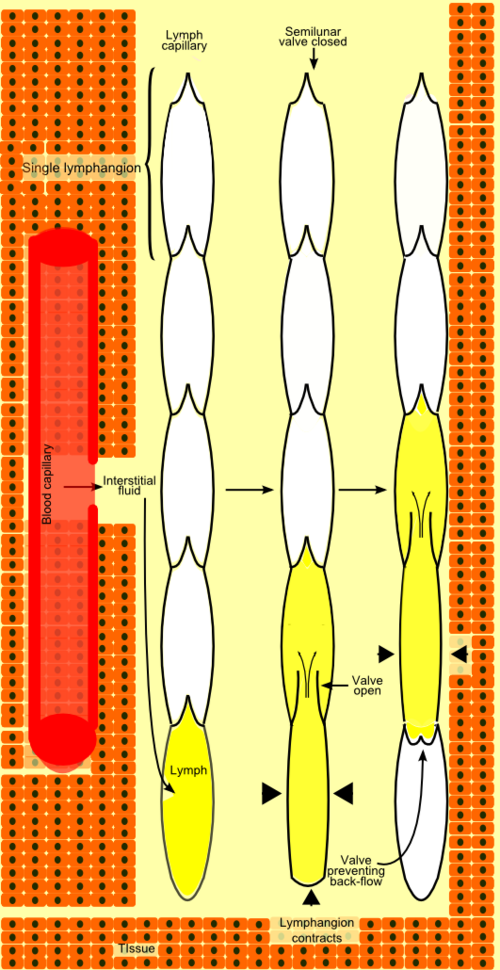
The lymphatic circulation begins with blind ending (closed at one end) highly permeable superficial lymph capillaries, formed by endothelial cells with button-like junctions between them that allow fluid to pass through them when the interstitial pressure is sufficiently high.[4] These button-like junctions consist of protein filaments like platelet endothelial cell adhesion molecule-1, or PECAM-1. A valve system in place here prevents the absorbed lymph from leaking back into the interstital fluid. This valve system involves collagen fibers attached to lymphatic endothelial cells that respond to increased interstitial fluid pressure by separating the endothelial cells and allowing the flow of lymph into the capillary for circulation.[5] There is another system of semilunar valves that prevents back-flow of lymph along the lumen of the vessel.[4] Lymph capillaries have many interconnections (anastomoses) between them and form a very fine network.[6]
Rhythmic contraction of the vessel walls through movements may also help draw fluid into the smallest lymphatic vessels, capillaries. If tissue fluid builds up the tissue will swell; this is called edema. As the circular path through the body's system continues, the fluid is then transported to progressively larger lymphatic vessels culminating in the right lymphatic duct (for lymph from the right upper body) and the thoracic duct (for the rest of the body); both ducts drain into the circulatory system at the right and left subclavian veins. The system collaborates with white blood cells in lymph nodes to protect the body from being infected by cancer cells, fungi, viruses or bacteria. This is known as a secondary circulatory system.
リンパ毛細血管はより大きな集合リンパ管に流れ込みます。これらは収縮性リンパ管であり、リンパの輸送を助けるために収縮する平滑筋壁と、リンパが逆流するのを防ぐ弁の組み合わせを使用してリンパを輸送します。[ 3 ]集合リンパ管は、その長さに沿ってますます多くのリンパ毛細血管からリンパを蓄積するにつれて大きくなり、最終的にリンパ節に入ると輸入リンパ管になります。リンパはリンパ節組織を浸透し、輸出リンパ管を通って出ていきます。輸出リンパ管は、(右または胸部の)リンパ管のいずれかに直接流れ込む場合もあれば、輸入リンパ管として別のリンパ節に排出される場合もあります。[ 6 ]両方のリンパ管は、鎖骨下静脈に排出することでリンパを血流に戻します。
リンパ管は、半月弁で隔てられたリンパ管節と呼ばれる機能単位から構成されています。これらの節は、長さと半径の比率に応じて、周囲の平滑筋の収縮によってリンパの流れを促進したり、抵抗したりします。[ 7 ]
リンパ管は、血漿や血管系から漏れ出した細胞などの物質を貯蔵する役割を担い、組織から循環系へリンパ液を輸送します。リンパ管が正常に機能しないと、リンパ液は効果的に排出されず、リンパ浮腫が発生するのが一般的です。
輸入リンパ管はリンパ節の周囲のあらゆる部分から入り込み、被膜内で分岐して密な神経叢を形成した後、皮質部のリンパ洞に開口する。そして濾過されていないリンパ液をリンパ節内に運ぶ。この過程で、輸入リンパ管は内皮以外のすべての被膜を失い、その内皮はリンパ管の内壁を覆う同様の細胞層と連続している。
輸出リンパ管は、リンパ節の髄質部のリンパ洞から始まり、リンパ節の門部から出て、静脈またはより大きなリンパ節へと流れ出る。この管は、濾過されたリンパ液をリンパ節の外へ運び出す。
Efferent lymphatic vessels are also found in association with the thymus and spleen. This is in contrast to afferent lymphatic vessels, which are found only in association with lymph nodes.
Lymphedema is the swelling of tissues due to insufficient fluid drainage by the lymphatic vessels. It can be the result from absent, underdeveloped or dysfunctional lymphatic vessels. In hereditary (or primary) lymphedema, the lymphatic vessels are absent, underdeveloped or dysfunctional due to genetic causes. In acquired (or secondary) lymphedema, the lymphatic vessels are damaged by injury or infection.[8][9]Lymphangiomatosis is a disease involving multiple cysts or lesions formed from lymphatic vessels.