
Loading article…
二名混合比例代表制(DMP)[ 1 ] [ 2 ] [ 3 ]投票方式は、各選挙区で2名の代表を選出するために地域ごとのリスト規則を使用する混合選挙制度です。[ 4 ]これは他の混合比例代表制の形式と似ていますが、すべての代表が大規模な地域または全国的な選挙区で個別のリスト議席を埋める必要がないため、小さな選挙区で地元で選出されるという点で、追加議員制とは異なります。最初のステップでは、各選挙区の1議席が、小選挙区制と同様に、最も多くの票を獲得した候補者または政党に割り当てられます。2番目のステップでは、最も多くの票を獲得した選挙区で、代表が少ない政党に二次議席が割り当てられ、全体的な比例結果が生まれます。
DMPは2013年にアルバータ大学の数学専攻の学生、ショーン・グラハムによって考案されました。[ 5 ]この制度は、カナダの国政選挙および州選挙における小選挙区制(SMP)の代替案として考案されました。混合比例代表制(MMP)または単記移譲式投票制(STV)の導入を目指す運動がカナダのいくつかの州で否決された後(2005年のブリティッシュコロンビア州住民投票、2005年のプリンスエドワードアイランド州住民投票、2007年のオンタリオ州住民投票、2009年のブリティッシュコロンビア州住民投票を参照)、DMPの背後にある意図は、SMPの主要な特徴を維持することでより幅広い支持を得ることでした。これらの特徴には、1票の投票、小規模な選挙区(STVとは異なり)、および地方代表のみで構成される単一の階層(他のMMP提案とは対照的)が含まれます。[ 6 ]

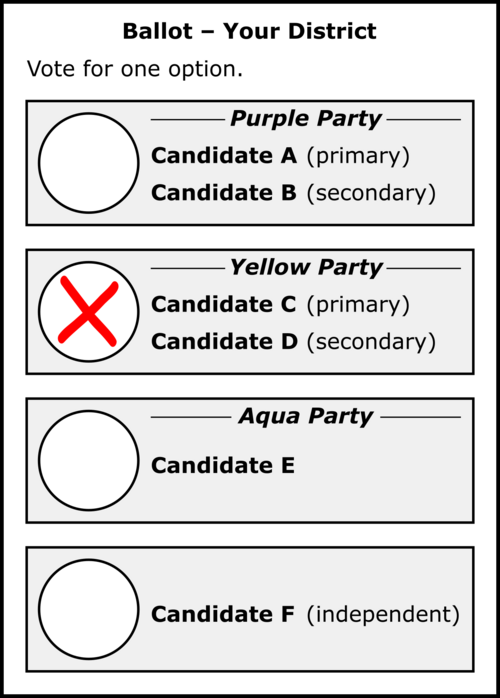
Voting under DMP is similar to the standard first-past-the-post voting. Each voter is given a ballot, where they mark their preferred candidate or pair of candidates.[1]:9 This is called a mixed single vote because voters cast a single vote to indicate both their preferred (local) candidate and their preferred party; vote totals for each party are determined by adding up votes for all candidates of that party. Independents can run as in a normal election, with an independent winning if they have the most votes in a given district.[1]:32
Each party is allocated a certain number of seats in proportion to their share of the popular vote in the region. The report on DMP suggests Hamilton's method for apportionment.[1]:23[a] The number of seats allocated must be adjusted if independents are elected (as this takes seats away from the parties), or if a party wins more than its proportional share of the seats based on plurality (see step 2).
At least half the seats in the region are awarded based on plurality, going to the candidate or party with the most votes.
If the winning primary candidate is from a party that has also listed a secondary candidate on the ballot, then the votes are transferred at half weight to the secondary candidate. For example, if a party has won a district with 48% of the votes, their primary candidate is elected and the secondary candidate is treated as having a 24% vote share. After the vote transfer, if the remaining candidate with the highest vote share in any district is an independent, he or she is elected. All other independent candidates are eliminated.
At this point, most (if not all) districts in the region will have one unassigned seat. Each of these unfilled seats must be awarded to one of the remaining party-affiliated candidates. Each party's remaining candidates in the region are sorted from most popular to least popular according to the percentage of votes they received in their districts. Seats are then tentatively assigned to the most popular candidates in each party. The number of seats assigned in this manner is the number of seats initially allocated to each party in step 1, minus the seats each party received in step 2.
議席が暫定的に割り当てられた後、競合を解決する必要が生じる場合があります。競合とは、ある選挙区の2議席に複数の候補者が割り当てられている状況を指します。このような場合、得票率が最も高い候補者が割り当てられた議席を維持し、他の候補者は落選します。候補者がこのようにして落選した場合、その候補者に暫定的に割り当てられていた議席は、まだ議席を待っている党内で最も人気のある候補者に再割り当てされます。再割り当てによって新たな競合が生じる可能性があり、その競合も解決する必要があります。このプロセスは、競合がなくなるまで続きます。競合がなくなると、割り当てられた議席を持つ候補者が当選します。競合が解決される順序は、最終的にどの候補者が議席を獲得するかには影響しません。
政党によっては、適格な候補者がいなくなることがあり、その場合、割り当てられた議席のうち1つ以上を失う可能性があります。このような状況は、政党が少なくとも1つの選挙区で2人未満の候補者しか指名しなかった場合、または候補者のうち1人以上が選挙区の得票率基準を満たさなかった場合にのみ発生します。失効した議席はすべて、ステップ1の計算を議席獲得資格のある政党に適用することにより、比例配分で再配分されます。再配分された議席は、ステップ3をもう一度実行することにより割り当てられます。
DMPアルゴリズムは、標準的な(全国的な)選挙閾値または政党が勝利するために一定数の票を獲得しなければならない地方閾値のいずれかを含めるようにわずかに修正することができます。[ 1 ]: 33これらの修正のいずれかは、DMPの比例メカニズムを破壊し、結果に不連続性を生み出し、あらゆる閾値と同様に(比例代表制のルールに関係なく)票を無駄にします。
DMP を検討する提案は、カナダ政府[ 2 ] [ 7 ]、アルバータ州[ 8 ] 、プリンスエドワードアイランド州(PEI) [ 9 ]、ブリティッシュコロンビア州(BC) [ 10 ]に提出された。2016年 4 月、PEI 民主的再生特別委員会は、DMP を2016 年 PEI 住民投票の 5 つの選択肢の 1 つとして正式に推奨し、勝利した投票システムは即時決選投票によって決定されるとした。[ 3 ] [ 11 ] [ 12 ] [ 13 ]住民投票は 2016 年 10 月 29 日から 11 月 7 日にかけて行われた。[ 14 ] [ 15 ] [ 16 ] DMP は第 3 ラウンドで敗退し、票が再分配された後、MMP が (FPTP を抑えて) 勝利したと宣言された。[ 17 ] [ 18 ]この住民投票は拘束力がなく、当時の政府はその結果を無視した。2018 年 5 月、DMP は2018 年 BC 住民投票に選ばれた 3 つの比例代表制の 1 つとなった。[ 19 ] [ 20 ] [ 21 ]この住民投票は、2 つの質問からなる郵送投票で、延長された期限である 2018 年 12 月 7 日までに返送する必要があった。 [ 22 ]最初の質問では、有権者の 61% が比例代表制に切り替える代わりに現在の FTP 投票制度を維持することを選択した。2 番目の質問では、具体的な比例代表制を決定することになっていたが、MMP が最も支持を集め、DMP は農村部と都市部の比例代表制よりもわずかに多くの第一希望の票を獲得した。[ 23 ]
二名制混合比例代表制は、混合比例代表制の一種です。[ 1 ] 1つの議席は多数決に基づいて割り当てられ、残りの議席は過小代表政党に補償的に割り当てられます。数学的な観点から見ると、MMPの補償議席はDMPの第2選挙区議席に相当します。DMPと従来のMMPはどちらも混合選挙制度とみなすことができ、これは2種類の計算方法が組み合わされていることを意味します。どちらも議席連結補償制度です(投票連結制度とは対照的です)。
Of the various forms of MMP, DMP has most in common with the "best near-winner" system (second mandate, Zweitmandat) used in the German state of Baden-Württemberg.[24] Whereas most implementations of MMP provide electors with two votes, both DMP and the Baden-Württemberg system employ a one-vote ballot. The number of votes candidates receive determines their eligibility for both the first set of seats (based on plurality) and the second set of seats (based in part on the popular vote).
Although MMP and DMP are both mixed systems, the main difference is that the original MMP features two tiers of representatives whereas DMP has only a single tier.[1]:3 Under conventional MMP, the first set of elected candidates serve a district whereas the other representatives serve the entire region. Under DMP, every elected candidate serves the district that they contested. Thus while the DMP calculation is comparable to that of conventional MMP, the resulting form of governance is similar to that of the single transferable vote and other systems based on multi-seat districts.
DMPの主な特徴の1つは、選挙区のサイズを均等にし、同時に選挙区内ではなく全議席で比例代表制を実現するように設計されている点です。これは、各地域に何議席が割り当てられるかを統一アルゴリズムで決定し、投票に基づいて全体として政党の比例性を実現する二比例配分の概念と関連しています。 [ 26 ]しかし、DMPは混合システムであり、投票に基づいて選挙区間で議席を配分しません(二比例配分では、各地域の議席の配分はその地域の総投票数に比例します)。[ 1 ]
二名混合比例代表制は、二名区制として知られる二名区制を用いた「比例」制度と混同してはならない。二名区制は、2名区で議席を「比例的に」分割する。[ 27 ]もう一つの違いは、二名区制はオープンリストを使用するのに対し、カナダのDMPの提案ではクローズドリスト制度の使用が提案されている点である。[ 24 ]
このシステムは、マルタのSTV(1995年)におけるアントン・ブハギアの提案した「優先キュー」[ 28 ]や、ウェストミンスター選挙(2010年、 [ 29 ] 、 2023年[ 30 ] )におけるロッド・ストリンガーの提案したPR-squaredのバージョンといくつかの類似点を共有している。