
Loading article…
第44医療旅団は、ノースカロライナ州フォートブラッグに拠点を置くアメリカ陸軍の部隊で、フォートブラッグの地域社会に医療サービスを提供するとともに、戦闘支援任務の訓練を継続している。アメリカ陸軍で2番目に編成された作戦医療旅団であり、1966年にベトナム共和国に派遣された際には、地上戦闘作戦を支援した最初の部隊となった。以来、アメリカ陸軍の主要な地上戦闘作戦すべてに参加している。
第44医療旅団本部および本部分遣隊は、1965年12月30日に正規軍に編成され、1966年1月1日にテキサス州フォートサムヒューストンでベトナムでの将来の任務のために活動を開始した。この部隊は編成装備表(TOE)8-112Eに基づいて編成され、定員は将校20名、下士官兵47名であった。[ 10 ]
医療部隊 (MSC) の士官であるバイロン・L・エバンス中尉は、フォート・サム・ヒューストンの第 44 部隊本部に最初に報告した士官であり、1966 年 1 月 7 日に指揮を引き継いだ。1 月 25 日には、MSC のジョン・W・ハメット中佐が指揮を引き継いだ。2 月 7 日には、MSC のトーマス・P・カイト大佐が後任となった。ベトナムでは、医療部隊 (MC) の士官であるジェームズ・A・ウィアー大佐 (後に准将) が 1 月 26 日に第 1 兵站司令部の医療部長に任命され、現地部隊に加わるため第 44 医療旅団の指揮官に指名された。[ 10 ]
旅団司令部をフォート・サム・ヒューストンから4月に移動させる命令は1月31日に発令された。部隊は上陸後、アメリカ陸軍太平洋軍に配属される予定だった。準備完了日は装備については4月1日、人員については4月21日に設定された。[ 10 ]
旅団司令部の職員は、1 月と 2 月を通してフォート サム ヒューストンに報告した。海外移動訓練の準備は、第 67 医療群およびフォート サム ヒューストンの米国陸軍医療訓練センターとの協力のもとで行われた。このセンターは、戦闘衛生兵の初期入隊訓練を担当する医療野戦勤務学校とは別個の組織である。フォート サム ヒューストン基地司令部は、装備の準備完了日に間に合うよう、第 44 旅団に兵站支援を提供した。フォート サム ヒューストンでのその他の活動には、標準作業手順書の作成、物資、装備、管理および専門的参考資料の組み立てと梱包、輸送の手配などがあった。[ 10 ]
3月18日、8名の将校と10名の下士官兵からなる第44医療旅団の先遣隊がベトナムに到着し、暫定医療旅団を設立した。この旅団は第1兵站司令部の医療局の作業部隊となった。カイト大佐は先遣隊の指揮を執り、獣医部隊(VC)のスタッフ獣医であるハーバート・R・ファウスト大佐はテキサスに留まり、主力部隊を指揮した。3月24日、ウィアー大佐が暫定医療旅団の指揮を引き継ぎ、カイト大佐が副司令官となった。[ 10 ]
第44医療旅団の主力部隊は1966年4月21日にタンソンニャット空港に着陸した。臨時医療旅団は直ちに解散され、第44医療旅団の本部と本部分遣隊はサイゴン郊外の賃貸ヴィラ群であるチュオンクオックズン24/8に事務所と宿舎を設置した。第1兵站司令部に配属された旅団本部は5月1日に活動を開始し、第1兵站司令部に配属されたすべての医療部隊の指揮および作戦統制を引き継いだ。[ 10 ]
第44師団の先遣隊が3月にベトナムに到着し、暫定医療旅団を設立した際、第1兵站司令部は、師団、独立旅団、または同様の部隊に所属していない国内の医療部隊の指揮統制権を有していた。第43医療群と第68医療群は、第1兵站司令部内の主要な従属医療部隊であった。[ 10 ]
第1兵站司令部の医療局は、医療計画と作戦、医療物資と維持管理の方針、医療統計と記録、専門的な医療と歯科活動、予防医学、医療規制活動の開発、調整、監督を行うために人員が配置されていた。[ 10 ]
暫定医療旅団は、医療支援部隊の直接指揮統制を第1兵站司令部から第44医療旅団に移管するための移行手段として機能した。ウィアー大佐は旅団長を務めながら、兵站司令部の医療局でスタッフの指揮も続けた。[ 10 ]
暫定医療旅団司令部の任務は、「第1兵站司令部医療サービスシステムの運用部隊の指揮統制を通じて、ベトナム駐留アメリカ陸軍(USARV)に医療サービスを提供する。作戦を開発、改良、実施する。必要に応じて、陸軍師団、独立旅団、および独自の医療支援を有するその他の部隊の医療サービスを強化する。配属および付属部隊の宗教活動に対するスタッフおよび技術監督を提供する。患者の避難、ケアおよび治療、医療物資および維持、歯科、獣医、予防医学および検査サービスを含む、医療サービス支援作戦全般を実行する。」[ 10 ]
旅団長は「第1兵站司令部の医療サービスを指揮し、第1兵站司令部の医療部長として、第1兵站司令部司令官に対し、医療サービス全体の任務の達成について責任を負う」ことになっていた。[ 10 ]
臨時旅団が活動していた期間中、兵站司令部の医療局の職員の一部は旅団本部へ異動し、その他は別の場所へ異動し、一部はローテーションしたため、第44旅団が作戦を開始した時点で、ウィアー大佐以外に医療局に残っていた職員は、野戦軍支援司令部(FASCOM)の参謀医療課のみで、計画担当官2名、補給・整備担当官1名、主任医療下士官1名、タイピスト1名、運転手1名で構成されていた。[ 10 ]
医療局は、この期間を通して第1兵站司令部本部に物理的に設置されていたが、1966年10月1日に同部のすべての機能が第44兵站司令部の幕僚部に吸収され、兵站司令部の事務所は連絡目的のみに残された。補給担当官は旅団S-4で勤務を続け、計画担当補佐官は第43医療群のS-3となり、計画担当官、医療下士官、タイピスト、運転手は連絡のために兵站司令部に残った。[ 10 ]
5月1日に第44医療旅団が運用を開始した後も、任務は基本的に医療旅団(暫定)と同じままであった。任務のより詳細な説明では、USARV部隊を支援する第44医療旅団の指揮官は、次のことを行うと述べられている。[ 10 ]
旅団長は、第1兵站司令部の医療部長という他の役割も引き続き担った。旅団の参謀組織は、活動と責任が拡大したものの、同様の路線で機能し続けた。[ 10 ]
ウィアー大佐は1966年6月10日にUSARV軍医に就任した。1966年6月13日、第44医療旅団の敷地内で指揮権交代式が行われ、ウィアー大佐は旅団の指揮権をレイ・L・ミラー大佐(MC)に引き継いだ。[ 10 ]
スチュアート・A・チャンブリン・ジュニア少佐(MC)は、臨時旅団の存続期間中、副司令官を務めた。彼は5月初旬に米国に異動し、その職は6月6日にルイス・ヴァンオスデル中佐(MC)が副司令官に就任するまで空席のままだった。彼が9月12日に異動した後、その職は1966年11月14日にロバート・E・ミラー中佐が就任するまで空席のままだった。[ 10 ]
1966年1月1日時点で第1兵站司令部には58の医療部隊があり、5月1日に第44医療旅団が活動を開始した時点では65部隊があった。1966年12月31日時点で、旅団は121部隊の指揮統制下にあった。獣医、歯科、医療検査、予防医学部隊、医療補給所、医療グループ本部は旅団司令部の直下に配置され、残りの部隊は地理的地域ごとに医療グループの下に配置されていた。旅団の総兵力は1966年5月1日時点で3,178名、12月31日時点で7,830名であった。[ 10 ]
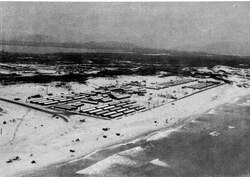
第61医療分遣隊(LB)は予防医学分遣隊であり、第61医療分遣隊(MB)は大規模な診療所であった。これらは同じ番号の指定を持つものの、部隊識別コード(UIC)が異なる、2つの独立した組織であった。
1966年12月31日時点の人員状況[ 10 ]
ベトナムの医療用航空救急ヘリコプターは戦闘作戦を支援し、国内の全部隊に地域医療支援を提供した。二次的な任務には、緊急全血や医療物資の輸送、主要な医療従事者(外科チームなど)の空輸が含まれていた。[ 10 ]
戦闘作戦は、1機以上の航空救急機と地上救急車による支援を戦闘部隊に直接配置することで支援された。航空機は負傷者を救護所ではなく、負傷地点で収容した。平均して、負傷者は30分以内に病院に搬送されるか、後送所で外科チームによる治療を受けた。戦闘で負傷した者は全員、国外へ空輸される前に少なくとも1回は空輸された。[ 10 ]
航空医療搬送統計 1966年[ 10 ]
これによりベトナムでは医療移動が治療施設ではなく避難部隊に委ねられるようになり、運用上の変化が生じた。これにより国内各地にほぼ固定された医療施設が設立され、より良い設備を導入し、ひいては患者により良いケアを提供できるようになることができた。[ 10 ]
1966 年を通して、第 44 医療旅団は 49 機の航空救急機を運用し、さらに 12 機は第 1 騎兵師団 (空挺) の第 15 医療大隊の航空救急小隊に所属していた。旅団の航空救急機は 2 個中隊に編成されていた。第 1 個 TOE 医療中隊 (航空救急)、第 498 中隊は 4 個飛行小隊に編成された 25 機の航空機を保有していた。第 2 個航空救急中隊は、第 436 医療分遣隊 (AC) を中隊本部として編成され、その下に 4 つの医療分遣隊 (RA) が活動しており、第 436 医療中隊 (航空救急) または航空救急中隊 (暫定) などと呼ばれていた。第 498 中隊は第 II 軍団戦術区域の航空救急支援を担当し、第 436 中隊は第 III 軍団および第 IV 軍団戦術区域の支援を担当していた。[ 10 ]
1966年9月、航空救急隊は国内で初めてヘリコプター用ホイストを受け取った。これらのホイストは、深い森やジャングル、山腹、水上、小型ボートなど、ヘリコプターが着陸できないアクセス困難な場所から患者を救出するために使用された。[ 10 ]
旅団が運用開始されて以来、前線地域から最終的な治療を提供できる病院へ患者を移送する任務(前線航空医療後送システム)は、初めて医療グループの責任となった。これにより、第44医療旅団の医療統制官(MRO)が国内全体の後送を担当することになった。この状況の特異な点は、ベトナム共和国(RVN)が前線地域全体を代表していたことである。医療グループは、戦術地域からグループ内の病院への患者の移動(地域内移動)を管理した。さらに、あるグループ地域から別のグループ地域への患者の移動は、医療グループのMROが旅団のMROと調整し、旅団のMROはすべての医療施設の適切な利用を確保するために全体的な管理を維持した。これらの移送中、患者は前線地域から出ることはなかったが、以前の紛争では、患者は前線地域から野戦軍の後方地域に移動していた。戦術航空医療後送システムは、戦闘地域(南ベトナム)から米国太平洋軍(PACOM)への患者の移送から始まり、戦略航空医療後送システムは、PACOMの病院施設から米国本土(CONUS)の病院への患者の移動から始まった。後者の2つの段階は、航空医療後送を担当する空軍によって直接管理された。三軍組織である極東合同医療規制事務所(FEJMRO)は、患者が適切な治療を受けられるPACOMとCONUSの病院を指定する責任を負っていた。広範囲の治療を必要とする患者(例えば、火傷、大切断、または対麻痺)のみがCONUSに送られた。[ 10 ]
1966年の入院統計[ 10 ]
1967年を通しての第44医療旅団の任務は、上級司令部の指示に従い、アメリカ陸軍、自由世界軍事援助部隊、その他のカテゴリーの人員に野戦軍レベルの医療支援を提供することであった。[ 11 ]
1967年8月10日、第44医療旅団は第1兵站司令部から分離され、ベトナム駐留アメリカ陸軍司令部に直接配属された。旅団任務の実際の機能と監督は明確化されたが、再配属によって本質的に変更はなかった。旅団任務の遂行は具体的に次のように述べられた。[ 11 ]
第44医療旅団は、次のことを行うだろう。[ 11 ]

サイゴン・チョロン・タンソンニャット地域からの部隊移動が重視されるようになったため、旅団司令部は郊外の邸宅であるチュオンクオックズン24/8からロンビン基地の8528-8532番ビルに移転した。2段階に分かれた移転は1967年9月下旬に完了した。USARV司令部およびUSARV軍医事務所に地理的に近接していたことは、時間の節約と通信問題の緩和に特に有益であった。[ 11 ]
グループ間およびグループ内の組織は、第3四半期まで基本的に安定していた。1967年10月23日、第67医療群が活動を開始し、サイゴン地域、第3軍団戦術区域の最西端、および第4軍団戦術区域全体の医療施設が第68医療群から分離され、第67医療群に割り当てられた。これにより、以前は広大だった地理的グループがより扱いやすい規模の2つのグループに分割され、より効果的な指揮統制が実現した。[ 11 ]
この表は1966年12月31日から1967年12月31日までの変化を反映しています[ 11 ]

222d人事サービス中隊(PSC)は、副官総監(AG)中隊であり、AG将校の代わりにMSC人事将校が配属され、2月に旅団に配属され、3月31日までに、以前はさまざまな地域支援コマンドが行っていた管理機能を含む旅団の人事機能を引き継いだ。222d PSCは、各グループ本部と旅団本部にそれぞれ独立したチームを編成し、各チームで人事記録を一元管理して地域の人事サービスを提供した。ほとんどの場合、これにより部隊指揮官は部隊の人事記録に容易にアクセスできなくなったが、手順、人事措置、人事管理機能の標準化が進んだことで、この不便さは大きく上回った。[ 11 ]
8月10日に旅団がUSARV本部の主要司令部となった際、S-1事務所に即座に影響したのは、表彰承認権限の拡大に伴い、処理される表彰件数が増加したことだった。このため、業務量を処理するために人員を増やす必要があり、1967年末には、3人の下士官と1人の将校が表彰プログラムに全力を注いでいた。[ 11 ]
9月に第67医療群が到着し、その後第III軍団戦術区域に所在する部隊が第67医療群と第68医療群に分割されたため、第222人事サービス中隊には、同群および付属部隊にサービスを提供する別の人事チームを提供するという追加要件が課せられた。これは、第68医療群にサービスを提供するチームを増強し、そのチームが両群にサービスを提供することで達成された。[ 11 ]
「プログラム5民間化」として知られる、一部の軍職を地元の民間人雇用に転換するプログラムが1967年第4四半期に開始され、1968年1月に実施される予定だった。このプログラムでは、医療部隊の低技能および基本的な入門MOSのポストが民間ポストに転換された。[ 11 ]
1967年末時点で、旅団の各部隊には合計872名の現地人民間職員が雇用されていた。これらの職員の大多数は旅団の避難病院に所属し、病棟係、厨房職員、事務職として働いていた。雇用された職員の90%以上が患者ケア任務の支援に従事していた。一部の職員は第9医療研究所で検査助手として働き、その他は旅団の歯科(KJ)分遣隊で歯科助手として働いていた。ベトナム共和国民間人人事局は、旅団の熟練職の要件を満たすために多数の訓練プログラムを実施していた。[ 11 ]
1967年12月31日時点の人事状況[ 11 ]

旅団は1967年中、ベトナム共和国における連合軍を支援するために陸軍レベルの医療サービスを提供し続け、医療資源は兵力増加に比例して増加した。医療サービスは、作戦地域に最も近い野戦病院、後送病院、外科病院によって、旅団部隊によって地域ごとに提供された。後送は、作戦地域内の待機航空救急車によって提供された。1967年にはベトナムでの戦闘作戦が急増した。そのため、旅団部隊は必要な陸軍レベルの医療サービスを提供するという新たな課題に直面した。[ 11 ]
これらの課題は、非常にうまく対処された。連合軍は、北部の第1軍団戦術区域から南部のデルタ地帯まで広がる多数の攻撃作戦を実施した。これらの作戦はそれぞれ旅団部隊によって支援された。流動的な戦術状況を支援するために、いくつかの旅団部隊が再配置された。1967年後半には、旅団に新たな任務が与えられた。これは、敵対行為の結果として負傷したベトナム民間人に、入院、医療、外科的ケアを提供することであった。この新たな要件を満たすために、ベトナム民間人用に300床の旅団ベッドが割り当てられた。[ 11 ]
1967年初頭、旅団は1個航空救急中隊に49機の航空救急機、4個医療分遣隊(RA)を擁し、米国および自由世界軍事援助軍(FWMAF)への主要な後送支援を提供していた。他の部隊には利用可能な範囲で支援が提供され、米国およびFWMAFが優先された。ベトナムにおける連合軍の増派に伴い、医療航空資源は増加せず、後送業務の増加により既存の航空医療後送資源に負担がかかった。そのため、米国および自由世界軍事援助軍の増加予測に基づき、ベトナムへの追加の医療航空部隊が要請された。これらの追加の医療航空部隊が到着するまで、医療後送能力を増強するためにUSARVが特別に支給した6機のヘリコプターによって、増加した後送要件が満たされた。特別支給された航空機は、実証された業務要件に従って「ダストオフ」部隊に割り当てられた。年末までに、旅団は2機の航空救急中隊と8機のヘリコプター救急分遣隊で航空医療後送任務を遂行しており、これは利用可能な航空救急機の数が倍増したことを意味する。航空救急機の追加により、配置の柔軟性が高まり、より迅速な支援が可能になった。広範囲に分散した部隊基地のヘリポートから、個々の航空救急機が野戦基地に配置され、作戦に従事する戦闘部隊への対応力が向上した。1967年中に「ダストオフ」部隊によって合計88,696人の患者が後送された。[ 11 ]
航空医療搬送統計 1967年[ 11 ]
航空機の稼働率が低いため、航空機の整備は指揮系統のあらゆるレベルで細心の注意を払う必要があった。稼働率を高めるため、航空救急中隊と同規模の非師団航空部隊に、直轄の直接支援レベルの整備能力が追加された。さらに、これらの部隊には、第34一般支援群の野戦軍レベルの直接支援部隊からバックアップ支援が提供された。医療部隊には、同規模の非医療後送部隊のように、直轄の直接支援レベルの整備能力は追加されなかった。医療部隊は、非医療部隊にバックアップ支援を提供しているのと同じ直接支援部隊から支援を受けていたため、医療部隊の航空機稼働率は低かった。医療任務と直轄の直接支援整備能力の欠如が相まって、航空機整備支援部隊は「ダストオフ」を最優先事項とした。陸軍省の目標である航空機稼働率80%を達成するためにあらゆる努力がなされたが、整備支援の制約により、稼働率70%でも許容範囲内とみなされた。[ 11 ]
密林の樹冠が厚いため、多くの避難任務はホイストの助けを借りなければ遂行できなかった。ホイスト任務は非常に危険であり、最後の手段としてのみ用いられたが、負傷者を避難させる唯一の機会となることが多かった。[ 11 ]
ベトナムには十分な数のホイストが導入されず、それに伴うメンテナンスの困難さから、「ダストオフ」に使用できる総数が減少した。必要に応じて運用中のホイストを部隊間で移動させることによってのみ、ホイスト任務の要件が適切に満たされた。[ 11 ]
1967年のベトナムでは、敵の攻撃による戦闘被害よりも、飛行条件が医療用航空機と乗組員の安全にとって大きな脅威であることが判明した。いくつかの事故は、パイロットが危機的状況に適切に対応できなかったことが原因で発生したが、重大事故の最も一般的な原因は天候と視界不良であった。医療パイロットのほとんどは、標準的な陸軍資格または戦術資格のいずれかで計器飛行資格を有していた。しかし、ベトナムに到着後、部隊は計器飛行の熟練度を重視しなかったため、平均的なパイロットは、突然課せられた実際の計器飛行条件に対処する最低限の能力しか持っていなかった。この状況を認識した第44医療旅団の司令官は是正措置を講じ、すべての医療パイロットに割り当てられた任務と併せて毎月計器飛行の訓練を行うよう義務付けた。[ 11 ]
1967年、ベトナムに航空部隊が追加配備された結果、航空乗組員用の防護装備が深刻な不足に陥った。防弾ヘルメットや胸部プロテクターの新規在庫はベトナムにも米国にもなかった。そのため、第44医療旅団は、装備をすべての乗組員が最大限に共有するという指示のもと、すべての医療航空部隊に装備を再配分した。[ 11 ]
ベトナムでの戦術作戦の性質上、安定化作戦を支援するには、航空救急中隊よりもヘリコプター救急分遣隊の方が適していることがわかった。中隊はベトナムでの集中作戦には大きすぎ、小隊は持続的な独立作戦を行う能力がほとんど、あるいは全くなかった。分遣隊は小規模で持続的な独立作戦が可能であり、戦術状況に応じて容易に場所を移動できるため、ベトナムにははるかに適していることがわかった。[ 11 ]
ベトナムにおける医療規制は、1966年に第44医療旅団がベトナムに到着して以来存在していた4つの明確な段階に分けられる。1967年には、医療規制への経験の適用と、より明確な国内航空医療後送システムの確立によって効率が向上したため、段階はより明確になった。[ 11 ]
フェーズIでは、負傷現場から最寄りの戦術師団レベル(エシュロン/ロールII)の医療施設へ患者を避難させた。[ 11 ]
フェーズ II はフェーズ I と重複しており、負傷現場または師団前方医療中隊から、必要な即時治療を提供できる最寄りの第 44 医療旅団の治療施設への患者の避難が含まれていました。古典的な避難の概念とは異なり、これは外科病院、野戦病院、避難病院 (すべて階層/役割 III)、または野戦軍レベルの掃討中隊 (階層/役割 II) であった可能性があります。グループ本部またはグループ前方指揮所に配置された医療グループの医療規制担当官 (MRO) がこのフェーズの管理の主な責任を負い、主な避難手段は通常「ダストオフ」でした。[ 11 ]
フェーズ III では、患者を国内の治療施設に移送して、さらなる確定的な治療、国内での回復、または患者の作業負荷の均等な分配を行うことが行われました。このカテゴリーの患者は通常、30 日未満の入院期間が予想されました。フェーズ III の最初の責任は医療グループの MRO から始まりました。他の医療グループの病院への避難が必要な場合は、旅団 MRO に要請が提出されました。その時点で、旅団 MRO がフェーズ III の責任を引き継ぎ、必要な治療を完了できる病院に患者の作業負荷を分配しました。避難の主な手段は米空軍の固定翼機で、一部は「ダストオフ」が支援しました。[ 11 ]
フェーズ IV には、米国太平洋軍 (PACOM) または米国本土 (CONUS) の治療施設への国外への避難が含まれ、30 日を超える長期の確定治療または回復が行われた。フェーズ IV は旅団 MRO の完全な責任であり、国外避難の手順の変更は 1967 年 11 月に開始された。この変更は「新しい」システムと呼ばれたが、「新しい」システムは既存の陸軍の教義であったため、新しい概念が開始されたわけではなかった。ただし、これはベトナムでの航空医療避難にはこれまで適用されていなかった。[ 11 ]
変更前は、医療担当官によって国外避難が必要と判断された患者は、病院から最寄りの米空軍負傷者収容施設に移送された。そこで、患者は極東合同医療規制事務所(FEJMRO)によって規制され、PACOMまたはCONUSの目的地病院が取得され記録された。旅団およびグループのMROは、国外に避難した患者数の事後報告を受け取った。[ 11 ]
主な欠点としては、次の点が挙げられる。[ 11 ]
11月初旬に「新しい」システムがテストされ、その後まもなく運用が開始された。このシステムでは、すべての病院が現行の規則で定められた形式と診断コードを使用してそれぞれのグループMROにリクエストを提出し、それを旅団MROに提出した。旅団MROはグループレポートを統合し、FEJMROに提出した。その時点で各患者の搬送先病院が提供された。この情報はグループを通じて病院に伝えられ、患者の記録が閉じられ、患者は負傷者待機施設への移動とそれに続く国外への避難の準備が整えられた。[ 11 ]
当初、このシステムでは管理上の要件を満たすのに過剰な時間がかかり、その結果、既に「効果的」なシステムがさらに停滞するのではないかという懸念があった。しかし、航空機の利用可能性に応じて、緊急避難要請は1時間以内に処理できることがすぐに明らかになった。通常の要請については、病院が臨床記録の準備やその他の管理上の要件を完了するために必要な時間を与えるため、36時間の時間枠が設定された。[ 11 ]
もう一つの問題点は、患者が完全な医療を提供できる施設に確実に搬送されるように、職員にシステムを周知させることでした。しかし、この問題はすぐに克服され、システムは非常に効果的であることが証明されました。[ 11 ]
主な利点は、旅団の医療救護隊による国外避難の直接的な管理と、病院が患者の搬送先を把握できるようになったことであると示された。予想外の利点の1つは、避難対象患者数に関する望ましい事前情報が、負傷者収容施設、軍事空輸司令部、および太平洋軍医療施設との調整のために、はるかに早く入手できるようになったことである。[ 11 ]
このシステムは、11月下旬のマッカーサー作戦中に最も厳しい試練を乗り越え、400人以上の患者を効果的にPACOMの治療施設へ避難させた。[ 11 ]
1967年の入院統計[ 11 ]
USARVの直轄下への旅団の再配置により、旅団は8,000人を超える人員のセキュリティクリアランスを処理および検証するための常勤の事務所を設置する必要が生じた。これらの業務は以前は第1兵站司令部によって行われていたため、旅団は記録管理、ファイリング、およびクリアランス処理手順の新しいシステムを確立する必要があった。S-3セクション内の主要部門への移行は、1967年9月下旬のロングビンポストへの旅団の移動と同時に完了した。1967年10月初旬、S-3は旅団司令官と参謀のために毎日のブリーフィングを確立した。その後、情報概要はブリーフィングの一部として定期的に提供され、作戦、航空、およびベッド状況の報告も毎日行われた。[ 11 ]
旅団歴史家がS-2の職に就いた結果、歴史に関する職務もその職に割り当てられた。一見相容れないように見えるこの2つの職務は、実際には互いに補完し合うものであった。[ 11 ]
USARV指令により、1967年7月に医療物資衛星プログラムが開始された。USARVまたはMACVに割り当てられた独立旅団、大隊、その他の部隊を含む非師団部隊の支援は、当初、後送および野戦病院レベルで確立された。部隊がRVN全体に広く分散していたため、この取り決めでは不十分であることが明らかになった。外科病院、診療所、医療施設を運営する後送中隊を支援活動に組み込む必要があった。[ 11 ]
当時有効だった部隊レベルの会計手順が限られていたため、プログラムの初期負担はほぼ圧倒的なものだった。限られた医療物資供給スタッフは、新しい顧客を支援するのに全く不十分な在庫によってさらに負担を強いられた。部隊レベルでは標準化された供給手順は存在せず、旅団スタッフは、自分たちの行動がなければ部隊は自分たち自身と衛星部隊を支援できないことが明らかになった。[ 11 ]
これらの問題を解決するために、旅団はいくつかの行動をとった。[ 11 ]
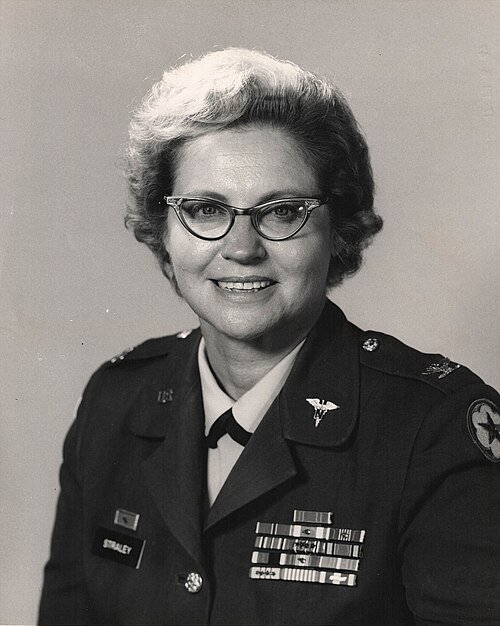
1967年3月12日、陸軍看護隊(ANC)のローズ・V・ストレイリー中佐が、第44医療旅団の初代看護部長として同旅団本部に配属された。旅団がUSARVの直轄下に再編された後、USARVの看護部長と旅団の看護部長の職が統合された。上級看護師のジェニー・L・ケイラー中佐が、1967年9月27日に旅団看護部長の職務を引き継いだ。[ 11 ]
1968年を通して、第44医療旅団の任務は、アメリカ陸軍の人員、自由世界軍事援助部隊の人員、および指示されたその他のカテゴリーの人員に医療サービス支援を提供し、敵対行為の結果として負傷したベトナム民間人に病院、医療および外科的ケアを提供することであった。[ 14 ]
旅団の29の指定された機能は1967年から変更されていない。[ 14 ]

1968年10月4日、第44医療旅団は本部を移転し、仮設の建物からロングビン基地のマッカーサーループ沿いにある恒久的な建物、5743号棟に移った。旅団のすべてのスタッフセクションは新しい建物に統合され、オフィススペースが大幅に増加した。旅団本部の分遣隊と下士官兵の宿舎は、新しい建物から約500メートル離れた旧旅団本部エリアの5523号棟から5525号棟に残った。[ 14 ]
1968年2月、第67医療群が第III軍団戦術区域(CTZ)のビエンホアからダナンに本部を移転し、第I CTZの医療を担当するようになったことで、医療グループの地理的な再編が行われた。1968年末には、第44医療旅団の部隊の大部分が、ダナンに本部を置く第I CTZの第67医療群、クイニョンに本部を置く第II CTZ北部の第55医療群、ニャチャンに本部を置く第II CTZ南部の第43医療群、ロンビンに本部を置く第IIIおよび第IV CTZの医療を担当する第68医療群という4つの医療グループの管理下にある地理的区域ごとに配置されていた。[ 14 ]
歯科、獣医、検査室、予防医学の各部隊と医療物資補給所は、第44医療旅団司令部の直接的な作戦指揮下に置かれた。1968年3月に第522医療分遣隊(チームAF)(獣医専門サービス)が到着したことで、旅団のすべての獣医部隊に対する指揮統制要素が1つになった。1968年6月に第172予防医学部隊が到着したことで、指揮系統が変更され、2つの予防医学部隊が旅団司令部の直接的な作戦指揮下に置かれるようになった。[ 14 ]
1968年に移転した他の主要な下部組織は、11月にサイゴンからロンビンに移転した第9医療研究所だけであった。[ 14 ]
1968年末時点で、第44医療旅団は169部隊で構成されていた。そのうち42部隊は1968年中に現地に到着した。[ 14 ]
1968年中に新部隊が到着したことを示す関連情報を含む時系列の概要は次のとおりです。[ 14 ]
新たに到着する部隊のためのスポンサーシッププログラムが開発され、旅団規則として公表された。このプログラムの目的は、到着した部隊が最小限の遅延で指揮系統に統合され、作戦遂行可能になるか、あるいは自給自足できるようになるまで必要な支援と援助が提供されることを保証することであった。スポンサー部隊は、先遣隊、主力部隊、部隊装備の到着を含む、到着する部隊への支援計画を作成する必要があった。詳細な事前計画と指揮系統の関心に重点が置かれたため、効果的な調整が達成され、現地に到着した部隊は最小限の遅延で旅団および進行中の作戦に完全に統合された。[ 14 ]
1968 年初頭、旅団の S-1 活動は、将校の配置、表彰および勲章、安全プログラムの監視、および USARV 本部との広報連絡に限定されていました。主要な人事措置機関はロングビン基地にある第 222 人事サービス中隊であり、同中隊は各医療群本部に人事サービス チームを配置していました。人事記録は、医療群本部の各チームによって管理されていました。医療部隊将校の配置承認は USARV が保持し、同本部に配置されている専門コンサルタントによって行われました。1968 年初頭、S-1 セクションは、S-1 将校と 3 つの部門長 (将校人事部、表彰部、および人員管理) で構成されていました。安全報告は表彰部の部長の責任であり、将校人事部長は広報担当官 (PIO) の活動を担当していました。すべての下士官兵の配置と要求は、第 222 人事サービス中隊によって行われました。[ 14 ]
その年中に数多くの変更が行われ、その結果、S-1 セクションの任務と機能、および物理的な組織が完全に刷新されました。1968 年 3 月、S-1 セクションは、FM 101-5「スタッフの組織と運用」に概説されている 7 つの基本機能を実行するために再編成されました。以下: [ 14 ]
上記の機能を完全に実装するために、下士官兵部門が組織され、MOS在庫の要件が導入され、配属、昇進、MOS進捗状況の監視、および補充などの分野における下士官兵のスタッフ管理が導入されました。さらに、独立したPIO部門が設立され、旅団の情報要件を満たすために情報専門家が要請されました。[ 14 ]
1968年にS-1の作戦に大きな影響を与えた注目すべき出来事は以下のとおりです。[ 14 ]
4月上旬、監察官の苦情により、下士官の昇進手続きの見直しが求められた。この見直しにより、昇進手続きと旅団の内部管理システムが完全に改訂された。[ 14 ]
1968 年中の人事部の主な活動は、陸軍省および USARV レベルで実施された一連の人員削減に関連していた。これらの削減の最初のものは、「プログラム 6」と呼ばれる民間化計画で、1968 年 1 月に開始された。この計画では、317 の軍人枠を削減し、476 名の現地採用および訓練を受けたベトナム人民間人を補充することが求められた。テト攻勢の期間中は一時的に延期されたが、5 月に計画は再開され、1969 年 5 月を予定完了日とした。[ 14 ]
変換するポジションを選択する際には、以下の基準が使用されました。[ 14 ]
4月にはフェーズIプログラムが開始され、200のスペースが削減され、11月にはフェーズIIでさらに200のスペースが削減されました。この分野における最終的な展開は、11月のMOS削減で493のスペースが失われたことです。[ 14 ]
1968年1月1日時点での部隊の規模は8,860名の配属人員であった。年末の配属人員は10,468名であった。[ 14 ]
1968年12月31日時点の人事状況[ 14 ]
1968 年、特に重点が置かれた分野の一つがベトナム人民間人の雇用であった。12 月 31 日時点で、旅団全体で 1,280 人の民間人が雇用されていた。彼らの仕事には、事務員、救急車の介助者、厨房警備員、整備士助手、倉庫作業員、予防医学助手、獣医助手などの職種が含まれていた。このプログラムを推進するため、1968 年 10 月 21 日、第 68 医療グループによって医療訓練クラスが設立された。フォート サム ヒューストン医療訓練センターの 91A プログラムを基にしたこの 8 週間の講義とそれに続く 2 週間の現場訓練により、ベトナム人労働者は、これまで比較的技能の低い米軍人だけが担っていた仕事に就く準備ができた。最初の 33 人の学生は 1968 年 12 月 21 日に卒業し、1969 年初頭には第 2 期のグループが続いた。[ 14 ]
1968年10月1日、医療部隊将校のための新しい制度が導入された。それまでは、すべての医療部隊将校はUSARV軍医局によって旅団部隊に直接配属されていた。旅団と軍医局の両方の承認がなければ、医療グループ内での異動はできなかった。この状況の欠点を是正するため、旅団長のニール将軍は、すべての医療部隊将校はグループレベルにのみ配属され、各グループ司令官が具体的な配属部隊を決定するよう指示した。グループ間の将校の再配置と最初のグループ配属の権限は、第44医療旅団司令官が保持した。この新しい方針により、変化する戦術状況に対応するために医療部隊将校のリソースを迅速に再配置することが可能になり、グループと旅団の両方の柔軟性が大幅に向上した。旧制度では異動が最長7日間遅れる可能性があったが、新制度では24時間以内に再配置が可能になった。これらの変更により、他の医療部門の部署の人員配置には影響がなかった。[ 14 ]
1968年12月1日、第222人事サービス中隊のコンピュータ機能を利用して、士官部は医療部隊士官の管理を改善するためにカードファイルを作成しました。ファイルには2組のカードが保管されていました。1組は各医療部隊のリソースを示すように整理され、もう1組はMOSごとに整理されていました。その結果、旅団司令部は部隊別およびMOS別に医療部隊のリソースの全体像を示すことができました。このシステムは、旅団長が旅団内の任意の医療部隊MOSの状況を即座に判断し、任意の病院で利用可能な専門分野を判断できるようにすることで、医療部隊士官のリソース管理を大幅に強化しました。ファイルは、任務、MOS、または割り当ての変更を示す入力の流れをシステムに維持することによって常に更新されました。[ 14 ]
1968年の最も重要な下士官人事の進展は、AR 600-200の変更21および23による下士官昇進制度の変更と、E-8およびE-9の集中昇進制度の開始に関するものであった。[ 14 ]
1968年に11の予備部隊が到着したことで、旅団にとって大きな人員補充の問題が生じた。しかし、年末までに人員補充は順調に進み、旅団全体としては十分な人員補充が行われた。個々の部隊は局所的な人員補充の問題に直面したかもしれないが、旅団全体としては人員補充の手段が利用可能であり、1969年には予定通り部隊の完全な補充が完了すると見込まれていた。[ 14 ]
士気・福祉部は、非歳出資金、安全、補助金、特別サービスの分野における手続きと方針を確立するために、1968年8月15日に組織された。[ 14 ]
独立した部門が組織されるまで、非予算資金の活動はS-1事務所の3人の将校が追加業務として分担していた。これらの分野、特に非予算資金において多くの問題が発生した。1968年8月、旅団には30の承認されていないその他の雑費があり、そのうちのいくつかは深刻な財政難に陥っていた。この状況を是正するための第一歩として、すべての部隊に指揮命令書が配布され、旅団本部による審査と承認のために資金を提出するか、確立された指令と規則に従って直ちに資金を解散するよう指示された。1968年8月28日、旅団で最初のその他の雑費が承認され、11月25日までに、第1軍団のフービから第4軍団のカントーまでの施設で25の承認されたその他の雑費が運用された。残りの承認されていない資金は清算された。[ 14 ]
旅団の安全プログラムは、1968 年 9 月 4 日から大幅な改訂が行われ、指揮官は事故の迅速な報告を強く強調し、適切な是正措置を講じて再発を防止するようにしました。USARV との連携により、多くの安全に関する配布資料やポスターが入手され、活発な安全プログラムの一環として旅団全体に配布されました。1968 年 11 月には、指揮官による検査の際にフォローアップ措置が講じられました。旅団の安全チェックリストを使用して、車両、火災、武器、および水上安全について特に注意が払われました。[ 14 ]
1967年8月にブロンズスターメダルまでの授与権限を与えられた旅団の表彰プログラムは、1968年にピークを迎えた。合理化されたファイリングと処理手順を使用することで、平均して週に200件の表彰が処理された。これらの表彰は、USARV功績証明書からパトリック・ヘンリー・ブレイディ少佐への名誉勲章推薦まで多岐に渡った。[ 14 ]
月ごとの勲章授与[ 14 ]
第222人事サービス中隊は、約165の医療部隊に人事支援を提供し、1968年中は毎月平均800~850人のベトナムへの出入国を処理した。年間を通じていつでも保管されていた記録の総数は10,000件弱であった。ロンビン基地の第222司令部は、ロンビン、ニャチャン、クイニョン、ダナンに所在する4つの独立したチームを統括していた。各チームは、医療グループと、医療グループの責任範囲内に位置し旅団司令部に直接報告する独立した部隊を支援した。ロンビンには、AGセクション、管理セクション、およびUnivac 1005コンピュータを含む機械部門も所在していた。部隊の規模は以下のとおりである。[ 14 ]
増員は任務と分散支援を提供するための部隊の分散によって決定された。[ 14 ]
第222中隊の指揮官は、第44医療旅団の副官長を務めた。第222中隊は、通常、副官長軍団(AGC)の将校のみで構成される他の人事サービス中隊とは対照的に、医療サービス軍団の将校と副官長軍団(AGC)の将校によって指揮および人員配置されていた。このシステムにより、若い医療サービス軍団の人事将校は人事分野で貴重な経験を積む機会を得ることができた。[ 14 ]
1968年初頭、旅団の通信システムがなかったため、配送システムは非常に遅く、時間がかかりました。たとえば、ダナンからロンビンへの配送には20日から25日かかりました。送信者に情報を返送するのにもさらに時間がかかりました。1968年8月に通信システムが導入され、ベトナム全土の医療部隊間の情報交換が迅速化されました。ダナンとロンビン間の情報交換にかかる時間は、場合によっては3日に短縮されました。この問題に関連して、全国各地に配置されたチームとの効果的かつ定期的な通信が不足していました。[ 14 ]
1968年は、3つの明確に区別できるものの、やや重複する段階に分けられる。年の前半は、医療部隊のI軍団戦術区域(CTZ)への大規模な移転が行われた。これに続いて、ベトナムへの医療部隊の大規模な展開が行われた。第3段階は、ベトナム共和国における野戦軍医療サービスの再編成と改善に指揮官と参謀の注意が向けられた年の後半に起こった。[ 14 ]
1968年に発生した最初の主要な作戦イベントは、米陸軍の主要な戦術部隊をI CTZに再配置することであった。この増強は、およそ2個師団と支援部隊から構成されていた。これらの部隊に医療支援を提供するために、旅団部隊が次のようにI CTZ内およびI CTZ内に再配置された。[ 14 ]
第2段階では、米国本土 (CONUS) からベトナム共和国 (RVN) への医療部隊の展開が行われた。3 月には、ベトナムに到着した 5 つの医療部隊が第 67 医療グループに配属された。これらの部隊は、ダナンに駐屯する第 95 後送病院と第 566 医療中隊 (救急車)、およびチューライに駐屯する第 27 外科病院、第 520 医療中隊 (掃討)、および第 238 医療分遣隊 (KA) であった。4 月末までに、第 I CTZ には 20 個旅団部隊が投入された。第 I CTZ の部隊数の増加に対する歯科支援を提供するため、第 56 医療分遣隊はキャンプ ラドクリフ (アンケー近郊) からフーバイに移動した。この増強期間中、第67医療群に所属する医療部隊は、ケサン包囲の救援作戦であるペガサス作戦と、アシャウ渓谷でのデラウェア作戦を支援した。支援を受けた主な陸軍部隊は、第1騎兵師団(空挺)、第101空挺師団、およびアメリカル師団であった。[ 14 ]
2つ目の主要な作戦上の出来事は、米軍の主要戦術部隊が第IV CTZのメコンデルタに展開した年に起こった。第IV CTZにおける第9歩兵師団の作戦に医療支援を提供するため、現地に到着した病院部隊がデルタに駐屯するよう指定された。この病院、第29後送病院は1968年8月にカントーで運用を開始し、すでにドンタムに所在していた第3外科病院とともに、メコンデルタで入院治療を提供した。12月に第247医療分遣隊(RA)がドンタムに到着し、1964年11月からソクチャンに駐屯していた第82医療分遣隊(RA)に加わったことで、この地域の航空医療能力は倍増した。1968年末までに、医療サービスの連携により、第IV CTZにおける米陸軍と南ベトナム軍の作戦に効率的かつ迅速な支援が提供されるようになった。[ 14 ]
第3段階では、ベトナム国内の医療サービスを改善し、再編成するための措置が講じられた。第1および第2CTZにおける避難病院と外科病院のよりバランスの取れた配置を確保するために、次の計画が実施された。[ 14 ]
計画は実行された。9月の第1週に、第2外科病院は移動の指示を受け、施設を明け渡して到着する予備避難病院に引き渡すよう指示された。第85避難病院はフーバイへ移動するよう指示を受けた。[ 14 ]
ライケーの第2外科病院の施設建設は当初の予定通りに進まなかったため、第2外科病院のライケーへの移転は延期され、第2外科病院の人員リソースを使用してフーバイに100床の臨時病院が設置された。1968年11月、第85後送病院がフーバイに移転した。12月には第2外科病院がライケーに移転し、フーバイの臨時病院は閉鎖された。[ 14 ]
この計画は次のような効果をもたらした:[ 14 ]
1968年に発生したその他の重要な部隊移転には以下が含まれる:[ 14 ]
2つの野戦病院(捕虜収容所)が1968年10月に南ベトナムに到着した。第74野戦病院(捕虜収容所)と第311野戦病院(捕虜収容所)の両部隊は、1968年5月に現役任務に召集された米陸軍予備役病院であった。短い順応期間の後、各部隊は250床の捕虜収容所で完全な医療および外科的ケアを提供する任務を引き継いだ。[ 14 ]
第74野戦病院はロンビンに位置し、第IIIおよび第IVCTZの捕虜の医療を担当した。第311野戦病院は2つの病院ユニットに分かれており、クイニョンにあるユニットは一次医療および外科治療を提供し、フータイン渓谷にあるユニットは療養センターとして機能した。これらのユニットは、フータイン渓谷に新しい病院施設が完成次第統合される予定であった。[ 14 ]
野戦病院が到着する前は、捕虜病院の任務は2つの後送中隊(TOE 8-128G)によって遂行されていた。捕虜病院施設の運営に後送中隊ではなく野戦病院を利用することで、いくつかの明確かつ固有の利点が得られた。最も明白な利点は、後送中隊(160床)と比較して野戦病院(250床)が運営するベッド数が増加したことである。さらに、野戦病院の組織的な専門能力により、これらの部隊は外科、X線、薬局、検査室サービスの分野で捕虜の任務を拡大することができた。また、病院に配属された陸軍看護隊の将校が、捕虜患者の回復時間の全体的な短縮に大きく貢献したことも認識された。この成果は主に、彼らの監督能力と個々の看護の才能によるものであった。[ 14 ]
44th医療旅団は、作戦計画や上級司令部の計画や命令を実行する命令を公表するだけでなく、戦術作戦を支援するために旅団が医療部隊を迅速に展開する必要が生じる緊急事態を支援するための計画も公表した。この計画では、旅団に所属する様々な種類の部隊の展開が規定されていた。[ 14 ]
実施計画は、各下位医療グループと獣医および歯科の指揮統制分遣隊によって公表された。特定の部隊は、旅団司令部の命令に短時間で対応できるように指定された。この計画活動の結果、最短時間で展開可能な医療部隊の多様な編成が確立された。[ 14 ]
1968年10月、ベトナム駐留アメリカ陸軍司令部(USARV)は、旅団に対し、すべての主要基地および戦術作戦基地の医療資源の調査を実施するよう指示した。ベトナム軍事援助司令部(MACV)は、ベトナム全土の米陸軍医療施設、および調査対象として指定された施設にある米空軍および米海軍の医療施設を調査するよう旅団に許可した。調査の主な目的は、USARV部隊が駐留する各地域に、医療資源の重複や重複なく、適切な医療が提供されることを確認することであった。追加の目的は、各主要兵站基地における医療サービスの機能の仕方をより明確に把握することであった。[ 14 ]
以下の19の基地は、旅団本部によって、それぞれの地域で医療を担当する医療グループによる調査のために選定されました。[ 14 ]
各グループは、調査の実施責任を下位部隊に委任することは認められていなかった。各グループが各調査の結果を文書化するために使用する詳細なフォーマットが作成された。このフォーマットと、グループ本部が調査を実施するという要件により、包括性と標準化の両方が保証された。予防医学、後送、入院、検査サービス、歯科サービス、獣医サービス、診療所サービスなど、特定の基地における医療支援のあらゆる側面が調査対象となった。1968年末までに、最初の2つの調査が完了し、USARV本部へ送付された。[ 14 ]
1968年中、医療規制局の任務は、ベトナム共和国内外における患者の避難管理を継続することであった。医療規制目的のための日々の医療統計の収集は、引き続き同局の機能であった。USARV軍医局の医療記録統計部は、医療記録および報告の主要機関として引き続き機能した。[ 14 ]
迅速に対応できる医療規制システムを持つことの重要性は、テト攻勢と5月攻勢の両方で劇的に実証された。[ 14 ]
2月と5月の間、負傷者搬送便の過負荷を防ぎ、追加の特別便を手配するために、米空軍航空医療搬送チームとの緊密な連携が必要でした。これらの特別便は、場合によっては通常国外搬送には使用されない代替飛行場から出発しました。米空軍の支援と協力は、第44医療旅団の医療規制システムの円滑な運用において極めて重要な役割を果たしました。[ 14 ]
1968年初頭には、国内および国外への定期便がほとんどなく、避難が制限され、不定期の特別便が必要となった。テト攻勢の直後、第903航空医療後送飛行隊による国内定期便の数は7便に増加した。これらの便はベトナムのすべての主要飛行場に立ち寄り、主要な旅団病院すべてに固定翼機による後送能力を提供した。軍事空輸司令部が運航する国外後送便は、ダナン、カムラン湾、タンソンニャットにある負傷者収容施設から出発し、日本、フィリピンのクラーク空軍基地、グアム、沖縄、ハワイへの後送を提供した。定期便の増加により、ベトナム全土で十分なカバー範囲が確保され、ほぼ途切れることのない医療後送が可能になった。[ 14 ]
5月の攻勢中、合計3,948人の患者が医療搬送され、そのうち3,789人は米陸軍兵士であった。これらの数字は旅団の歴史上最高であった。[ 14 ]
1968年の入院統計[ 14 ]
入院統計—テト攻勢[ 14 ] 1968年1月29日午前0時1分~1968年2月3日午後2時 直接入院総数 = 3261 敵対行為による負傷者総数 (IRHA) = 2171
処分総数 = 2342
1968年1月31日 - 病院は以下に示すように、入院患者数が最も多かった。[ 14 ] 直接入院患者総数 = 707人 IRHA(病院間直接入院)患者総数 = 541人
1968年1月28日24時時点の捕虜患者数 = 258人 1968年2月3日24時時点の捕虜患者数 = 386人 増加数 = 128人[ 14 ]
1968年1月28日24時時点の民間戦争負傷者プログラム患者数 = 129人 1968年2月3日24時時点の民間戦争負傷者プログラム患者数 = 505人 増加数 = 376人[ 14 ]
第44医療旅団日報―テト攻勢[ 14 ] 1968年1月29日0時01分~1968年2月3日24時00分
旅団参謀は、テト攻勢と5月攻勢の違いに注目するのが興味深いと感じた。テト攻勢では、敵は南ベトナム全土の多くの都市や町に侵入した。この行動により、軍人の死傷者に加えて、民間人の戦争による死傷者も多数発生した。しかし、5月攻勢では、敵は都市に大きく侵入することができなかった。その結果、軍人の死傷者と民間人の死傷者の比率が高くなり、国外への避難者数も増加した。[ 14 ]

旅団司令部の要請により、第7空軍軍医局は1968年7月11日にクイニョンにある第25負傷者搬送飛行隊(CSF)を解隊した。このCSFは、第67後送病院から国外へ患者を搬送するための拠点として利用されていた。クイニョンからの国外搬送は、すべてのフライトがクラーク空軍基地で終了するため、日本へ搬送される患者はそこで一泊する必要があったことから不利であった。その結果、患者は搬送前に少なくとも1日余計に時間を取られることになった。第25CSFが解隊された後、クイニョン地域からのすべての米軍患者は、カムラン湾の第26CSFに移送され、そこから定期軍事空輸司令部便を利用して直接日本へ搬送された。韓国人患者も第26CSFに移送され、クラーク空軍基地へ移動後、韓国へ搬送された。主な利点は、目的地病院への移動中の遅延の解消と、軍事空輸司令部のフライトが定期的に運航する負傷者待機施設での国外避難の集約であった。[ 14 ]
1968 年中、旅団の医療施設全体で MEDCAP 患者が占める 1 日あたりの平均ベッド数は、1 月の 61 床から 12 月の 285 床に増加した。旅団は、軍事活動が減少するにつれて MEDCAP 入院患者数が増加することを確認した。民間戦争負傷者は、旅団施設の全患者の約 27% を占めた。この数字は 1968 年 4 月以降、ほぼ安定していた。5 月の攻勢後、旅団全体で入院している捕虜の数は 1 日あたり約 400 床で一定であった。[ 14 ]
1968 年初頭の航空活動は 1967 年と同様であった。業務量はわずかに増加し続け、1 月には避難患者数が 12,520 人に達し、過去最高を記録した。2 月のテト攻勢により業務量は 16,885 人まで大幅に増加し、5 月には旅団の航空機によって過去最高の 21,915 人の患者が避難した。残りの年の業務量は、8 月と 9 月を除いて、毎月 14,000 人から 15,000 人の患者が避難するという範囲でほぼ横ばいであった。8 月と 9 月には避難患者数がそれぞれ約 17,000 人に達した。[ 14 ]
増大した業務量を支援するために利用可能な航空救急資源は、第 I CTZ のロンビンとクイニョンに所在する 2 個の医療中隊 (航空救急) と、第 II CTZ のプレイクとニャチャン、第 III CTZ のロンビンとクチ、第 IV CTZ のソクチャンに所在する 8 個の医療分遣隊 (RA) であった。これらの部隊により、第 44 医療旅団は、最低限の適切な避難支援を戦域に提供する 98 機の航空機の使用を許可された。この能力は何度も深刻な負担を強いられ、活動が増大した地域を支援するために、航空機と乗組員が頻繁に短期間で、ある戦術区域から別の戦術区域に移動された。これは特に第 I CTZ で顕著であり、航空救急のカバー範囲が限られていたため、追加の航空機と乗組員を提供するために第 II CTZ 北部の資産が繰り返し要請された。[ 14 ]
1968 年を通して航空機の整備は概ね良好であった。最低許容稼働率は 70% に設定され、いくつかの例外を除いてこの稼働率は維持された。2 月には敵の攻撃により損傷を受けた航空機の数が倍増し、稼働率は 63% に低下し、時には 50% を下回った。5 月の攻勢中にも同数の航空機が敵の攻撃により損傷を受けたが、航空機の稼働率は 74% に維持された。この高い稼働率は、野戦整備の対応力の向上と、支援整備部隊から航空救急部隊に支給された水上機の使用によるものであった。限られた資源と広大な地理的範囲という問題により、散在する場所での小規模部隊の交戦を特徴とする紛争を支援するために、航空機を野戦配置する必要が生じた。しばしば 26 機もの航空機が 20 か所に野戦配置された。整備施設から遠く離れた場所に航空機を野戦配置することは問題を引き起こしたが、従来の地域支援では保証できない戦術部隊への対応力を提供した。[ 14 ]
1968年7月1日、第101空挺師団は空挺機動師団に改編された。ジアレに所在する第50医療分遣隊(RA)は同師団に配属され、第326医療大隊の航空救急小隊の中核となった。第50医療分遣隊(RA)の喪失は、同部隊が以前からその資源の大部分を第101空挺師団の支援に振り向けていたため、旅団の航空医療後送能力に悪影響を及ぼさなかった。[ 14 ]
11月と12月に4つの追加の医療分遣隊(RA)が国内に到着したことで、旅団の能力が大幅に向上した。これらの部隊の追加により、次のような利点が得られた。[ 14 ]
新しいユニットは次のように配布されました: [ 14 ]
常勤の航空スタッフ将校の必要性は以前から認識されており、1968 年 2 月に提出された MTOE の変更でその職位が要求された。承認は、1968 年 12 月 9 日付けの USARPAC 一般命令第 812 号によって与えられた。航空スタッフ将校に加えて、中隊級の航空兵を 90 日間、航空スタッフ将校補佐として旅団に選抜して配属するプログラムが導入された。このプログラムは、航空スタッフ将校が不在の間、航空部門のカバーを確保し、中隊級将校に貴重なスタッフ経験を積む機会を与えた。将校の選抜は、旅団内のさまざまな航空救急部隊間で交代で行われた。[ 14 ]
1968 年 5 月、旅団にはU-1A オッター固定翼機が配備された。5 月にパイロットの訓練が行われた後、オッターは 6 月に運用可能となり、旅団の航空能力にとって貴重な追加となった。主に医療関係者や重要な物資および装備の長距離輸送に使用された。稼働率は非常に高く、利用率も高かった。オッターの平均月間飛行時間は 65 時間で、最も多かったのは 6 月の 96 時間だった。1968 年末、旅団は次回の旅団 MTOE 変更申請に固定翼機の要件を含めることを真剣に検討していた。[ 14 ]
航空医療搬送統計 1968年[ 14 ]
1968年の第44医療旅団の任務遂行の成功は、通信設備に直接関係していた。[ 14 ]
旅団内の主要な 2 つのネットワークは、シングルサイドバンド (SSB) とダストオフ (医療後送) 無線ネットワークでした。システムの説明は次のとおりです。[ 14 ]
1. 1968 年、陸軍省は 38 台の AN/FRC-93 コリンズ SSB 無線機の旅団からの要求を承認した。これらの無線機のうち 30 台が受領され、旅団ネットワークと 4 つの内部医療グループネットワークで使用された。SSB ネットワークは主に旅団内の患者の管理と指揮メッセージのやり取りに使用された。SSB 旅団ネットワークにより、旅団長は最も遠い部隊とも容易に通信することができた。[ 14 ]
2. ダストオフ無線網は、FM無線機とUHF無線機の両方を使用していた。主FM網は、ダストオフ管制局のVRC-46と機内のARC-54で構成されていた。主FM網は、ダストオフ任務の受信と中継、および機体の指揮統制に使用された。UHF網は、ダストオフ管制局のVRC-24と機内のVRC-15で構成されていた。UHF網は、主FM網のバックアップシステムとして機能した。代替FM網は、機内の負傷者の種類に関する情報を医療グループに中継するために使用され、医療グループはそれに基づいて機体を適切な目的地病院に誘導した。[ 14 ]
1968年を通して、S-2将校は第44医療旅団の人事セキュリティおよび情報プログラムを監督し、旅団の歴史プログラムを指揮し、活動および作戦報告書の作成を担当した。[ 14 ]
1968 年半ば、MACV の統合資材活用センター傘下の医療情報部隊である第 521 医療分遣隊 (QA) と第 44 医療旅団との協力関係を確立するための取り組みが行われた。12 月下旬、旅団司令部は、医療情報部隊のメンバー、ロンビン前哨基地の第 74 野戦病院とフータイン渓谷の第 311 野戦病院の旅団捕虜病院の指揮官、および旅団司令部職員を集めた会議を開催した。その結果、米軍医療施設で治療を受けた VC/NVA 捕虜の医療記録に関するオープンエンド調査を実施するための手順が確立された。この調査では、捕虜病院は選択された医療情報を第 521 医療分遣隊に送付し、第 521 医療分遣隊は、そのデータを使用して VC/NVA 部隊の非有効性に関する研究をまとめることになっていた。[ 14 ]
1968 年を通して、旅団 S-4 の任務は基本的に変更されず、次のとおりであった。旅団に配属または所属するすべての部隊の効果的な運用に関連する医療および一般物資、装備の維持、輸送およびサービスのあらゆる面において、旅団長の指示に従って助言および行動すること。旅団に配属されるすべての部隊が使用する、または必要とする医療施設の建設および維持のあらゆる面において、旅団長の指示に従って助言、支援および行動すること、および旅団の請求担当官を務めること。[ 14 ]
1968年7月5日、スタッフ栄養士の活動はS-4とは別のスタッフセクションとして設立された。12月2日、S-4セクションの組織が再び変更され、「MUST装備病院に関するすべての事項を調整する」目的で旅団MUST担当官が加わった。 [ 14 ]

旅団S-4セクション内の医療物資担当官の職は1968年3月に再確立された[ 14 ]。
医療物資部門は、1967年に開始されたプログラムの実施と改良を継続した。さらに、いくつかの新しいプログラムが開発された。その中には、次のものがあった。[ 14 ]
旅団部隊への一般的な補給と維持支援は年間を通して満足のいくものであった。慢性的に不足している品目や兵站サービスはなかったものの、特定の時期には一部の品目が不足していた。文房具や印刷用品、スパークプラグ、医療機器の非医療用修理部品はしばしば入手困難であった。支援部隊への対応や旅団資産の再配分に関する指揮官の支援により、不足によって引き起こされた問題は概ね解決された。[ 14 ]
その年、第1兵站司令部司令官は、自らの司令部が提供する支援に関連する重大な問題について他の司令官を支援するプログラムを確立した。この司令官間プログラムは優れた成果を上げた。[ 14 ]
都市部のホテルタイプの宿舎に人員を収容していた一部の部隊は、1月のテト攻勢中に食料と燃料の深刻な不足に見舞われた。そのため、これらの部隊はその後、これらの物資の基本積載量の一部を宿舎に配置せざるを得なかった。[ 14 ]
1968年8月に、精力的な指揮官整備プログラムが開始された。この取り組みの主な重点は、指揮官の重視と訓練に置かれていた。CMMIチームは指導活動として採用された。検査や特別な整備連絡訪問の際に、チームは指揮官と整備担当者に指導を行った。CMMIチームは10月に最初の検査を完了した。2回目の検査では、旅団全体の整備が大幅に改善されたことが明らかになった。[ 14 ]
部隊整備プログラムにおける主な問題の一つは、整備に対する指揮官の責任の意味について将校たちの知識が不足していたことであった。整備担当将校が現場監督者ではなく、オペレーターの整備を監督する責任があるという誤解が一般的であった。指揮官たちは、この認識を正すことに重点を置いた。[ 14 ]
1968年には、現在の要件を満たすとともに将来のニーズに対応するための行動計画を策定することを目的とした大規模な建設プログラムが実施された。毎年策定されるプログラムにはある程度の柔軟性が内在することが認識されていたが、このプログラムは旅団が差し迫ったニーズに対応するための意識的な努力であった。[ 14 ]
1968年に完了した主なプロジェクトには以下のようなものがあります。[ 14 ]
1969年に建設予定の医療施設の数は、ベトナムにおける過去のどの年よりも多かった。プロジェクトは、全く新しい病院の建設から、既存施設の改修やアップグレードまで多岐にわたる。以下に、1969年に計画された主要プロジェクトの概要を示す。[ 14 ]
MUST機器に代わる恒久的な施設は、様々な段階で完成に向かっていた。
1970年の建設計画は1968年末に策定され始めていた。主な重点は、新しい施設の建設よりも、アップグレードと改修に置かれる見込みだった。患者ケアに関する基本的かつ根本的な建設要件は満たされており、すべての建設プロジェクトの中で引き続き最優先事項とされていた。[ 14 ]
1968 年を通して、スタッフ栄養士の任務は「医療旅団内の食事サービスプログラムを担当すること。旅団のすべての要素の食事サービスと食事サービス担当者を監督し、スタッフの指示を与えること。旅団のすべての要素の食事サービスプログラムに対する監督と指導を行うこと」として変わらなかった。[ 14 ]
USARV軍医局における栄養士(MOS 3420)の配置認可は1968年8月5日に発効した。栄養士はUSARV栄養コンサルタントとして専門サービス部門に配属され、第44医療旅団のスタッフ栄養士としての追加任務も担った。[ 14 ]
第44医療旅団では栄養士は2名しか認められていなかったが、1968年には5名の栄養士が配属された。栄養士は4つの医療グループそれぞれにスタッフ栄養士として配属された。この栄養士の人数により、第44医療旅団の32の医療ユニットにおける給食業務の監督業務量が均等になった。第68医療グループには医療ユニットが多数あるため、同医療グループの給食業務の監督には2名の栄養士が配属された。[ 14 ]
1968年第1四半期中、医療部隊では給食アドバイザーまたは技術者が著しく不足していた。認可された14名の准尉のうち、配属されたのはわずか6名であった。1968年末には、認可された18名の准尉(MOS 941A)が配置された。准尉は病院給食の経験が不足していたため、これらの准尉のためのオリエンテーションおよび訓練プログラムを実施する必要があった。最初のオリエンテーションは、各給食アドバイザーまたは技術者がC国に到着した際に旅団の栄養士によって実施され、その後の訓練は病院に配属された医療グループのスタッフ栄養士によって継続された。この報告期間の終わりまでに、認可された55名の病院給食係(MOS 94F40)がベトナムの医療施設に配属された。[ 14 ]
1968年、旅団の栄養士は、既存の医療給食施設のアップグレードと将来の医療部隊のための新しい食堂施設の計画のために、スペース設計とレイアウトを検討、分析、評価した。建設技術者に勧告が行われた。栄養士はまた、さまざまな補給所で駐屯地(現在は駐屯地と呼ばれる)の食堂設備を探し、病院の野戦食糧食堂に設置する品目を確保するための通信を処理するプロジェクトも担当した。[ 14 ]
病院への連絡訪問で、スタッフの栄養士は、病院の食堂に配属された新兵の大多数が食事の準備と提供の経験がなく、病院での食事に慣れていないことを観察した。また、監督職員も病院の食事サービスに関する経験と知識が不足しており、そのため患者の食事提供の運営において適切な指導と監督を行うことができなかった。病院の食事サービス職員を認可するTO&Eの変更とこれらの職員の到着により、患者への修正食の準備と病棟での食事サービスが改善された。[ 14 ]
スタッフ栄養士は医療施設を1 37回訪問した。食堂の衛生、スペース設計とレイアウト、駐屯地食堂設備の調達、調理師の準備とサービスに関するトレーニング(特に病棟での患者への食事提供に重点)、ベトナム人現地職員(LVN)のトレーニング、食堂の管理と運営、標準的な病院食、患者への食事提供のための補助食品と飲料の調達、MOS 94F40職員を活用した食堂運営の組織化に重点が置かれた。[ 14 ]
駐屯地の食堂設備プログラムを支援するため、自由世界軍の食堂施設を5回訪問した。訪問した病院には、ブンタウとクイニョンにある韓国陸軍病院と、ブンタウにあるオーストラリア病院が含まれる。これらの病院が所在する地域の医療グループ司令官から、グループのスタッフ栄養士が、その地域での定期的な診察訪問の際に病院職員を支援することを許可した。[ 14 ]
第6療養センターの食堂の改修計画が完了し、承認された。工事は1969年の第1四半期に完了する予定だった。設備は駐屯地食堂の設備に交換された。[ 14 ]
1967年に第93後送病院に建設された食堂への設備の設置は1968年5月に完了した。[ 14 ]
サイゴンのJD野戦病院の食堂の改修と拡張のための空間設計とレイアウトは、1968年末に計画段階にあった。[ 14 ]
1968年、第44医療旅団内のすべての医療部隊において、第1軍団戦術区域内の野戦食糧食堂を除き、TO&E装備が駐屯地食糧食堂装備に置き換えられた。[ 14 ]
第1軍団戦術区域の医療部隊の装備のほとんどはサイゴン、カムラン、クイニョン支援司令部にあり、第32医療補給廠の職員の協力により、1968年末には装備がチューライとダナンに輸送される過程にあった。[ 14 ]
カントーの第29後送病院の野戦食糧食堂の改修またはアップグレードプロジェクトが2件完了した。ダナン支援司令部では駐屯地食堂の設備が利用できなかったため、チューライの第27外科病院とダナンの第95後送病院の食堂のアップグレードは1968年中に完了しなかった。[ 14 ]
フータインにある第311野戦病院(捕虜収容所)の食堂の設計と配置計画が完了し、1968年9月に建設が開始された。[ 14 ]
標準病院食:第44医療旅団パンフレット30-1は1968年9月8日に発行されました。このパンフレットには、利用可能な食事の種類と概要、およびおおよその栄養分析が含まれていました。[ 14 ]
28日間の病院食マスターメニュー:第44医療旅団パンフレット30-2には、陸軍補給公報SB10-261に基づく通常の病院食と、司令部内の病院で医療および歯科部隊の将校が最も頻繁に注文する14種類の修正食が掲載されています。[ 14 ]
USARVの医療施設は、RVNの全部隊に定められた野戦食糧メニューに基づいて運営されていた。補助的な食品と飲料は、第44医療旅団のパンフレット30-2に従って食事内容が変更された患者のために、クラスI施設を通じて支給された。戦闘部隊と病院の患者は、生鮮食品の支給において優先権を持っていた。第1兵站司令部による食料供給プログラム全体の支援と管理は、1968年を通して称賛に値するものであった。[ 14 ]
1968年5月6日付の28日間マスターメニューSB10-261は、1968年9月8日に病院を含むII、III、IV CTZの野戦食糧食堂に提供された。米海軍の支援により、I軍団戦術区域の病院への食料供給に問題があった。海軍が支援する病院にはマスターメニューが提供されなかったため、食料が部隊に到着した後、毎日メニューを計画する必要があった。さらに、年の最初の5か月間、米海軍を通じて米陸軍部隊にほとんどの生鮮果物と野菜が提供されなかった。それ以来、第1兵站司令部はダラットからI CTZの部隊に生鮮果物と野菜を輸送することでこの問題を解決した。[ 14 ]
炭酸飲料は、現地の売店施設を通じて術後患者に提供され、売店施設はベトナムの米国陸軍調達局に請求を行った。[ 14 ]
国際赤十字社によるベトナムの捕虜患者のためにヌクマム(魚醤)を購入するという勧告は、すべての病院のベトナム人患者にも拡大された。各病院でのソースの現地購入が承認され、1968年末には調達の過程にあった。[ 14 ]
医療旅団の各部隊は、その年に合計約400万食の配給を行った。そのうち170万食は患者食であった。患者食の約9%は特別食であった。[ 14 ]
USARV本部が、RVNの野戦食糧食堂で現地のベトナム人(LVN)職員を給食係として雇用するために用いた基準は、病院にとって困難をもたらした。最初の40人に対してLVN職員1人、その後40人ごとに職員1人という方式は、病院の食事提供の機能が著しく異なることを考慮せずに、戦域全体の食堂に適用された。避難病院や野戦病院の食堂のいくつかは、最大200人の患者を含む1日あたり650~700食を提供し、認可された軍人および民間人職員は合計38~40人であった。チャイナの代わりに仕切り付きトレイを使用していることを除けば、サービスの種類、メニュー(「A」食糧)、および給食設備は、少なくとも100%多く人員が配置されている米国本土の病院で見られるものと著しく異なっていなかった。病棟の患者への食事サービスに関して、現地の従業員の権限を拡大するための勧告、正当化、および職務記述書が提出され、報告期間終了時点では措置が保留中であった。[ 14 ]
ベトナム共和国では、病棟のベッド患者への食事の運搬と配膳が、給食担当者にとって引き続き問題となっていた。現在、医療供給システムで使用されている大型フードカートは、病棟への屋根付きスロープとセメントの通路がある病院でのみ、満足のいく食品運搬システムであった。MUSTユニットでは、入り口に2つの高い敷居があるため、大型フードカートを病棟に転がすことができなかった。さらに、これらの病院は通常、舗装された通路がない地形に位置しており、移動式フードカートの使用も不可能であった。1968年9月8日にベトナムの供給システムに「Aレーション」が導入されて以来、ベッド患者用の温かい食事と冷たい食事のための大型フードカートの十分なスペースがないという新たな問題が発生した。[ 14 ]
旅団看護部長の任務は、旅団長に対し、部隊内の看護サービスプログラムのあらゆる側面について助言すること、看護サービス活動全般を調整すること、部隊内のすべての部隊に対する看護サービスに関連する専門的事項についてスタッフを監督し指導することであった。[ 14 ]
1968年第1四半期には合計51回の職員訪問が行われ、第2四半期には103回、第3四半期には46回、第4四半期には70回行われた。職員のニーズ、キャリアガイダンス、患者ケアの基準に重点が置かれた。[ 14 ]
1968年第3四半期には、各医療グループで看護部長会議が開催され、ベトナムの海軍、空軍、オーストラリア、韓国の病院の看護部長がゲストとして出席した。[ 14 ]
1968年第3四半期から、I CTZの主任看護師による月例会議が、米陸軍、空軍、海軍の主任看護師が出席して開催された。会議は様々な施設で開催され、共通の問題が話し合われた。その結果、海軍看護隊と空軍看護隊の将校が外科病院と海軍病院船の間で2週間交換されることになった。[ 14 ]
第4四半期には、1980年10月20日と12月17日にサイゴンで看護会議が開催された。MACV軍医事務所に派遣された看護コンサルタント、ベトナム政府保健省の看護部長、米国国際開発庁看護部の看護コンサルタント、ベトナム駐留韓国軍の看護部長、空軍負傷者収容施設の看護部長、USARV/第44医療旅団の看護部長が出席した。ベトナムの看護専門職の向上に向けて、すべての機関のプログラムを調整するため、月例会議が計画されている。[ 14 ]
1968年中に合計7部隊がベトナムに到着した。そのうち3部隊は予備部隊で、合計10名の看護師がそれぞれの部隊とともに到着した。すべての部隊の専門要員は現役の補充要員で構成されていた。各部隊には少数の幹部が残され、将校の大部分はベトナム国内の他の部隊に再配置された。ベトナムの状況にすでに適応していた将校の配置により、新しい部隊はより迅速かつ効果的に任務を遂行することができた。[ 14 ]
第8野戦病院と第6療養センターのMTOE承認が得られた。これらの承認により、第8、第9、第523病院部隊が統合され、この施設の看護部長が承認された。第6療養センターは12人のANC将校で運営されていたが、承認は得られていなかった。[ 14 ]
陸軍看護隊将校の宿舎は、テントから熱帯地方の建物、別荘、トレーラーハウスまで様々だった。各部隊は、タンス、鏡、洗濯機、乾燥機などの家具の入手に大きな困難を抱えていたが、これらの不足の解消に向けて進展が見られた。[ 14 ]
ベトナムの医療施設に入院する患者の種類の変化と医療ユニットの増加により、麻酔看護師の需要が増加した。制服部隊全体で麻酔看護師が不足していることが懸念され、定着と訓練の要因を分析するための特別な努力がなされた。[ 14 ]
1969年を通して、第44医療旅団の任務は、指示に従ってアメリカ陸軍の人員、自由世界軍事援助軍の人員、その他のカテゴリーの人員に医療サービス支援を提供すること、および敵対行為の結果として負傷したベトナム民間人に病院、医療、外科的ケアを提供することであった。[ 15 ]
旅団の29の指定された機能は1967年と1968年から変更されなかった。[ 15 ]
1969年は、第44医療旅団の部隊にとって再編成、統合、再編の時期であった。1969年6月15日、第55医療群が人員と装備をゼロに削減されたことで、医療群の大規模な統合が行われた。第43医療群が第55医療群の全部隊の指揮統制を引き継いだ。1969年末には、第44医療旅団の部隊の大部分が、3つの医療群の統制下で地理的に展開された。第67医療群はダナンに本部を置き、第1軍団戦術区域(CTZ)に、第43医療群はニャチャンに本部を置き、第3および第4CTZの医療を担当し、ロンビンに本部を置く。[ 15 ]
1969年、第20予防医学部隊と第172予防医学部隊は旅団司令部の直接管理から外され、その隷下部隊とともに医療グループに再配置された。[ 15 ]
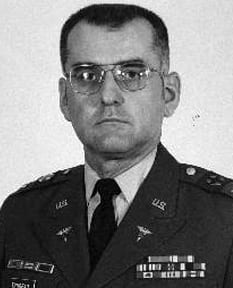
1969年1月1日、S-1セクションはS-1と5人の任官された部門長(将校人事、下士官兵人事、人事管理、士気と福祉、情報室)で構成されていた。10人の下士官兵も配属されていた。[ 15 ]
1月31日に副官総務部隊(AG)の再入隊担当官が着任したことで、再入隊支部が設立された。支部は再入隊担当官1名と、第222人事サービス中隊に配属され、同中隊を拠点として活動する2名のキャリアカウンセラーで構成されていた。[ 15 ]
1969年4月、同部署内からアシスタントS-1が任命された。アシスタントS-1は人事管理課長も兼任している。[ 15 ]
1969年4月、旅団本部および本部分遣隊と第658医療分遣隊(増援)(いずれも同一将校が指揮)はS-1の監督下に置かれた。それまでは旅団副司令官に直接責任を負っていた。[ 15 ]
1969年6月までに、下士官人事部の職務と責任が第222人事サービス中隊の職務と責任と重複していることが明らかになった。下士官人事部は廃止された。[ 15 ]
S-1とそのスタッフは、年間を通して定期的に週ごとの連絡訪問を従属部隊に対して継続した。これらの訪問は、特にその年の後半に最も効果的であることが証明され、1969年には11の部隊が再配置され、他の10の部隊が解散された。[ 15 ]
年初にはS-1は旅団の監察官代理も兼任していたが、1969年4月、USARV監察官と退任するS-1の推薦に基づき、S-1はこの責任から解かれた。[ 15 ]
旅団は7月に部隊撤退に関与した。旅団の部隊の再配置または非活動化に関わる人事および管理機能はこのセクションの責任であり、S-1によって綿密に監視された。[ 15 ]
7月から8月にかけて行われた最初の撤退には、1968年に活動を開始したすべての州兵および米陸軍予備役の医療部隊が含まれていました。これには、第312後送病院、第74および第311野戦病院、医療分遣隊や歯科KJチームなどの8つの小規模部隊が含まれていました。これらの特定の部隊の再配置に伴う多くの管理上の要件の1つは、すべての州兵および米陸軍予備役の人員を再配置部隊に戻すことでした。[ 15 ]
1969年上半期は軍人および民間人の両方の旅団の規模は拡大し続けていたが、7月に再配置が開始され、5月に課された現地人職員の採用凍結と相まって、減少傾向が始まった。[ 15 ]
1969年1月1日時点の部隊の規模は10,468名の配属人員であった。1969年12月31日時点の部隊の規模は9,901名であった。[ 15 ]
その年に特に重要だった人事上の状況は、予定されていた調達権限の開始であった。[ 15 ]
1969年の人事状況[ 15 ]
プログラム6は、1969年6月30日に定員465名のピークに達するまで継続されました。このプログラムは、軍人枠を1.5対1の比率で現地の民間人に置き換える民間化計画でした。一般的に、このプログラムは効果的ではありませんでした。USARV本部によって課せられた317名の軍人枠の削減は、MOSと職務記述書による代替を必要としましたが、十分な訓練を受けた現地の民間人の確保は、これらの要件を満たすには不十分でした。このプログラムの下で実際に割り当てられた人員と認可された人員の比率は、年間を通じて50~70パーセントの間で変動しました。[ 15 ]
地元住民向けの医療訓練クラスの実施責任は、ロンビンの民間訓練研究所に移管された。クラスは1969年3月と5月に卒業したが、採用凍結によりそれ以上のクラスは実施されなかった。[ 15 ]
1969年春、MOS 3506(野戦医療助手)の部隊級医療サービス隊士官の不足が生じた。3月、4月、5月の間、このMOSの士官は一人も到着しなかった。部隊の再配置と解散により、旅団には十分な数のMSC士官が配属され、場合によっては、特に野戦級士官の要請を取り消すことができた。[ 15 ]
陸軍看護隊(ANC)将校の不足は一年を通して続いた。1969年3月、旅団司令官は各グループ司令官に対し、主任看護官室との調整のみで各グループ内のANC将校の配置と再配置を行う権限を与えた。[ 15 ]
グループ司令官は医療部隊(MC)将校の配置権限を保持していたが、10月には人員不足が深刻化したため、医療、外科、神経精神科のコンサルタントに、新任のMC将校(MOS 3100—一般医官を除く)を病院に直接配置し、MC将校の再配置を監視および管理する権限が与えられた。MOS 3131(脳神経外科医)では年間を通して深刻な人員不足が続いた。[ 15 ]

1969年3月、情報部は部隊新聞「第44旅団」の発行を開始した。この新聞は第222人事サービス中隊によって印刷された。マルチリス形式で、ページ数は10~14ページであった。この新聞の主な目的は、DMZからデルタ地帯まで、南ベトナム全土に所在する旅団部隊に関する情報交換の手段を提供することであった。また、指揮情報を提供するという重要な機能も含まれていた。[ 15 ]
また、同年、情報部からは「情報担当官のための手引き」と「陸軍地元ニュースリリースプログラムのための手引き」という2冊の手引き書が発行された。これらの出版物の目的は、所属部隊内で情報機能を副次的な任務として遂行しているものの、情報分野での訓練をほとんど受けていない人々に必要な手引きを提供することであった。[ 15 ]
1969年の最後の2か月間、情報局はテレビニュース報道の分野でより広範な活動を開始した。AFVNはCHAMPUSプログラムに関する指揮情報番組を1つ制作した。その他、精神衛生相談サービス、狂犬病、事故防止の分野で番組が計画された。[ 15 ]
1969年12月24日、ユナイテッド・プレス・インターナショナルの代表者が、ベトナムのタンヘイプにある孤児院で開催されたクリスマスパーティーの映像を撮影した。このパーティーは第93後送病院のスタッフが主催したものであった。この映像はアメリカ全土で放映される予定だった。[ 15 ]
1969年中、士気と福祉部門は引き続き以下の旅団プログラムを監督および管理した。[ 15 ]
The awards program underwent considerable revision during 1969. In 1968 the average time elapsed from the date of receipt of a recommendation for a meritorious service award to the date the award element were forwarded to the individual concerned had been five to six weeks. By streamlining all phases of awards processing this time has been reduced to an average of ten to fourteen days, without sacrificing a high degree of evaluation and without additional personnel. Only those awards which had to be forwarded to Headquarters, USARV for approval required longer than two weeks for processing.[15]
During 1969, ten Meritorious Unit Commendations were awarded to brigade units. Twenty-one Meritorious Unit Commendation recommendations were submitted during the year and were still pending at the end of the year.[15]
Decorations awarded by month[15]
The 222d Personnel Services Company provided support to, approximately 150 separate medical units and processed an average of 700-750 individuals into and out of Vietnam each month during 1969. The total number of records maintained during the year averaged approximately 9,000. The 222d Personnel Services Company Headquarters at Long Binh Post controlled four separate personnel service teams which, until May 1969 were located at Long Binh, Nha Trang, Qui Nhon, and Da Nang. On 31 May 1969, the team at Qui Nhon was inactivated and the records maintained by this team were added to the team at Nha Trang. On 1 July 1969 an additional team was created and stationed at Cam Ranh Bay to support the 32d Medical Depot, and the 39th, 518th, 437th and the 176th Medical Detachments. Team A supported the 68th Medical Group and all non-group units in the III and IV Corps Tactical Zones, Team B supported the 43d Medical Group and the 934th Medical Detachment (KJ). Team C supported the 67th Medical Group and all non-group units in I Corps Tac tical Zone. The Adjutant General Office, Administrative Section, Data Processing Branch, and the Headquarters unit are stationed at Long Binh Post.[15]
Unit strength on 31 December 1969 was:[15]
The commander of the 222d Personnel Services Company served as adjutant general of the 44th Medical Brigade. The 222d Personnel Services Company was commanded and staffed by Medical Service Corps officers and Adjutant General Corps (AG) officers. This was in contrast to other personnel services companies which were staffed solely by AG officers. It was felt that this staffing provided the commanders of all supported units with staff personnel officers who better understood the medical mission and who were more capable of responding more efficiently and expeditiously to the needs of the command.[15]
During July 1969, the 222d Personnel Services Company assumed responsibility for preparation of morning reports of all units of the 44th Medical Brigade. This enabled the company to provide the commanders more reliable data and more accurate reports and records. Renewed emphasis on the accuracy of information obtained through the PERMACAP system and the use of the personnel information roster as an output of the 1002 computer were key points in improving the overall operations. As a result, the efforts of the 222d Personnel Services Company effected an error rate which was lower than any other major subordinate command of USARV util1zing the PERMACAP system. In June 1969, a brigade courier run, provided by the 222d Personnel Services Company, was expanded to include Nha Trang and Cam Ranh Bay. Through this system, the Commander and staff of the 44th Medical Brigade were capable of communicating with subordinate commanders within a matter of hours, with a more expeditious processing and distribution of all special orders. In November 1969, the 222d Personnel Services Company initiated a program of meeting all incoming Army Medical Department (AMEDD) officers at the 90th Replacement Battalion. This program involved reception of the officers by an enlisted representative of the 222d Personnel Services Company and escorting the officers to the USARV Surgeon's Office for interview and during their processing at the 90th Replacement Battalion. This procedure enabled most AMEDD officers to be on station at their unit of assignment within 24 hours after arrival at the 90th Replacement Battalion.[15]
The mission of the brigade S-3 section remained essentially unchanged throughout 1969. The four-part mission as stated in Medical Brigade Memo 10-1, dated 9 June 1969 was as follows:[15]
The S-3 section was divided into five major sub-sections: Plans, Operations, S-2, Medical Regulating, and. Aviation. 'The communications element, formerly the responsibility of the Aviation subsection, was transferred to Operations and is supervised by the Assistant Operations Officer who also served as the Brigade Communications Officer.[15]
The year 1969 could rightly be divided into four distinct periods. The first half of the year was a period of relative stability, some scaling down of medical activities but then an upswing in May as the result of the enemy's summer offensive. The second period of the year began with the first major troop reduction as the result of President Nixon's announcement. This exercise was designated Operation Keystone Eagle and the following 44th Medical Brigade units were redeployed to the Continental United States:[15]
The third period began with Operation Keystone Cardinal which was Phase II of the troop reduction program in Vietnam. Lessons learned from Keystone Eagle contributed to a more effective troop displacement during Phase II.[15]
Personnel turbulence and logistical implications, primarily involving the disposition of equipment, remained the major problems in redeployment activities.[15]
The following 44th Medical Brigade units were inactivated as a result of the Phase II troop reduction:[15]
The fourth period of the year began after Keystone Cardinal and essentially was a period of tranquility while the remaining units of the brigade prepared for the next announcement by President Nixon which would trigger Phase III in 1970.[15]
The year 1969 was a period of transition. In addition to units affected by the Keystone activities, other units were relocated in-country in order to balance the alignment of medical support in Vietnam. Most of the activity took place during the latter half of the year with the following major relocations being executed.[15]
In the area of training, during the period 16 – 21 October 1969, the 2d Surgical Hospital conducted a test of the mobility of MUST equipment under combat conditions. The test involved the temporary relocation of one air inflatable shelter, one expandable, one utility pack and other MUST peculiar equipment from Lai Khe to Di An. Upon completion of the test, the following observations were made:[15]
As the US effort in the Republic of Vietnam has shifted to improvement and modernization of Republic of Vietnam Armed Forces (RVNAF), brigade units have become involved in on-the-job training for RVNAF units. The purpose of this training is to teach new skills or upgrade existing ones. The programs conducted are ones that are not normally available or are beyond the capabilities of the RVNAF school system. The following is a list of OJT programs which have been conducted by brigade units and the type of training provided:[15]
The primary area of planning during 1969 was centered around Keystone Eagle and Keystone Cardinal Intensive planning conferences were held prior to implementation of both redeployment phases. A major working document was published by the brigade headquarters on 20 September 1969 as Operations Plan 183-69. This plan was designed for Keystone Cardinal but was written to allow changes for subsequent redeployment actions. The CG, USARV appointed a USARV Redeployment Assistance Team (URAT) to assist smaller units in the necessary roll-up activities for units redeploying from Vietnam. A member of the brigade headquarters accompanied the team when it visited medical units.[15]
Several contingency plans were updated during the year as the result of changes in the brigade force structure. One major plan involved the rapid deployment of two surgical hospitals (MUST). During the year several surgical hospitals turned in their MUST equipment to depot stocks. This action occurred when the hospitals relocated to fixed type facilities vacated by other redeploying hospitals.[15]
A comprehensive study was completed in early summer 1969 regarding several major command and control elements of the brigade. Of the four medical groups, two were located in II CTZ; the 43rd and 55th Medical Groups, respectively. It was felt as a result of this study that one group could adequately provide command and control over brigade units in II CTZ. The 55th Medical Group was brought to zero personnel and equipment status. The remaining group, the 43rd Medical Group was selected primarily because of its proximity to the major tactical command in II CTZ, namely I Field Force, Vietnam.[15]
At the beginning of 1969, two hospitals were functioning solely in the capacity of POW hospitals; the 74th Field Hospital in Long Binh for POWs generated in III and IV CTZ and the 311th Field Hospital in Qui Nhon for POWs generated in I and II CTZ. When these US Army Reserve units redeployed in Keystone Eagle, their missions were assumed by the 50th Medical Company (Clearing) and the 17th Field Hospital, respectively. The professional complement for the Long Binh POW hospital (50th Medical Company) was provided by the 24th Evacuation Hospital, which was co-located with the POW facility. On 7 October 1969, new policies for the medical care and/or disposition of prisoners of war and detainees were established at a MACV sponsored Joint Services Conference. In essence, POWs and detainees in custody of US Forces, if admitted to US hospitals would be retained and treated only until their Military Intelligence classification had been completed and their medical condition stabilized to a point permitting transfer to an appropriate Government of Vietnam facility. The POW census had declined to a point where the decision was made to discontinue the operation of hospitals solely for POW patients. The 17th Field Hospital was relieved of the POW mission on 7 October 1969 and relocated to An Khe. to operate a 100-bed facility. The remaining POW hospital at Long Binh was closed on 31 December 1969. POW patients continued to enter the hospital system but were not transferred to a centralized location. The ARVN hospital system also became more responsive to the receipt of POW patients.[15]
Average monthly POW beds occupied[15]
USARV published a directive on 20 August 1969 which governed the processing of returned, exchanged, or captured US Army personnel. The directive tasked the 44th Medical Brigade with specific functions to perform in support of the program. The brigade operations officer was the medical coordinator for the program. During 1969, the 44th Medical Brigade processed a total of 18 RECAPS.[15]
In August 1969, a study was made to determine the feasibility of combining the 44th Medical Brigade headquarters with the Surgeon's Office, Headquarters, USARV into a functional medical command. This study indicated that there was an overlap and duplication of effort in the command, dental, veterinary, administrative and plans and operations functional areas. The study revealed that by combining the two staffs into a medical command, a 15 percent savings in personnel spaces could be generated. No functions presently performed by the Surgeon's Office or by the brigade headquarters would be deleted and the reduction in manpower would not decrease the efficiency of medical operations. The consolidation of these two elements was held in abeyance pending final USARV approval and availability of adequate real estate. Furthermore, a USARV directed action to its major subordinate components to conduct similar studies increased the slippage on the organization of the United States Army Medical Command, Vietnam (Provisional) until 1 March 1970.[15]
The mission of the medical regulating office continued to be the control of patient evacuation within the Republic of Vietnam and the coordination of patient evacuation to hospitals in PACOM and CONUS. Two agencies provided medical statistical data. The Medical Records and Statical Division, USARV Surgeon's Office was the primary agency for medical records and reports while the Medical Regulating Office of the brigade served as the agency which accumulated daily statistics for medical regulating and operational purposes.[15]
On 24 August 1969, as a part of USARV's effort to meet new troop ceilings imposed by the Keystone Eagle troop redeployment, the brigade headquarters was requested to reduce the Army patient strength in Vietnam to 2,000 provided the health and wellbeing of the patients were not jeopardized. A policy was established within the brigade to meet this requirement wherever possible, and the patient account was successfully reduced to the desired level and maintained at that level until 6 September 1996.[15]
Initial instructions issued by the brigade headquarters included assigning Army patient ceiling goals to each medical group, restricting elective surgery for Army patients and establishing a policy permitting the evacuation of patients out of country, if not medically contraindicated, without regard to the thirty-day evacuation policy whenever necessary to maintain the Army patient strength as close to 2,000 as possible during the period identified above.[15]
On 6 September 1969, the temporary ceiling of 2,000 total inpatients was lifted and the original DOD ceiling of 3,000 Army patients on census at all facilities was reinstated.[15]
A program was initiated in October 1969 within brigade hospitals to provide reconstructive surgery for ARVN patients hospitalized in nearby ARVN hospitals. The degree of participation was influenced by the medical mission and the capabilities and staffing of brigade hospitals. This program involved the utilization of brigade and ARVN medical facilities and staff, or any combination of them. Direct continuing coordination between the hospital commander and the local ARVN hospital commander was essential to ensure acceptance of the program and optimum participation by all concerned.[15]
Direct liaison was authorized between the brigade MRO and the USARV professional consultants in medicine, surgery and neuropsychiatry. The USARV consultant staff members provided both the professional staffs of each hospital and the brigade MRO necessary guidance concerning the USARV Surgeon's policies regarding specific surgical procedures for out-of-country evacuation. All cases requiring professional judgement were referred by the MRO to the appropriate professional consultant for final decision.[15]
As a result of monitoring medical attendant after-action reports, it was discovered that a majority of the physicians complains stemmed from a lack of knowledge concerning administrative actions required while in Japan. To alleviate this problem, an information letter was prepared utilizing information gathered by the brigade MRO and the Executive Officer. Further guidance would be provided to individual attendants upon receipt of United States Army Medical Command, Japan operational policy concerning medical attendants.[15]
Total operating beds operated by 44th Medical Brigade hospitals reflected a decrease throughout 1969 as a result of redeployment activities.[15]
During 1969, wounded in action admissions reached high points in March and again in May and then reflected a decrease which coincided with a decrease in friendly and enemy initiated combat activity.[15]
Hospital dispositions by medical evacuation out-of-country to PACOM or CONUS hospitals reached a high of 4,334 during May 1969 and a low of 1,789 during November 1969.[15]
The average daily census of Vietnamese civilians reached a high point of 556 during January 1969 and a low of 263 during October 1969. Care was provided for Vietnamese Civilians who were suffering from war related injuries and for those individuals requiring hospitalization for treatment not available at Government of Vietnam medical facilities.[15]
Hospitalization statistics for 1969[15]
44th Medical Brigade daily medical statistics—post Tet Offensive[15] 0001 hours, 23 February 1969 – 2400 hours, 28 February 1968
44th Medical Brigade daily medical statistics—post Tet Offensive[15] 0001 Hours, 12 May 1969 — 2400 Hours, 18 May 1968
Average daily census of Vietnamese civilians[15]
Average daily operating beds (all patients) 1969[15]
Aviation activities for 1969 were generally similar to those of 1968. Workload continued to increase slightly with a new high of 206,229 patients evacuated by brigade aircraft. This represented an increase of 16,775 patients over the previous high established in 1968. During March 10,139 missions were flown evacuating 21,843 patients for a monthly high. Workload throughout the remainder of the year was fairly consistent ranging from 15,000 to 17,000 patients evacuated per month. March and May were exceptions when patient evacuations rose to 21,843 and 20,565 respectively.[15]
Of the various types of aeromedical evacuation missions, the most hazardous continued to be missions where the patients required extraction utilizing the aircraft hoist and rescue seat (forest penetrator). During the year there was a significant increase in the number of hoist missions, particularly in the month of December 1969.[15]
In December 1969 there were 381 hoist missions of which 140 were performed by the 57th Medical Detachment (RA), the highest monthly figure for any brigade unit. Total hoist missions increased by 780 during 1969 for a grand total of 2,516 missions, another new high for the brigade.[15]
In 1969 medical evacuation aircraft were hit by hostile fire 309 times as compared to 386 times in 1968. This 16% decrease in hits was quite significant in that both the total number of patients evacuated and the number of potentially dangerous hoist missions increased considerably.[15]
Air ambulance resources available during 1969 included two medical companies (air ambulance) with locations at Long Binh and Qui Nhon and 11 medical detachments (RA) with locations as of 31 December 1969 at Quang Tri, Phu Bai, Da Nang and two detachments at Chu Lai in I CTZ; Pleiku, Nha Trang and Phan Rang in II CTZ; Cu Chi and Lai Khe in III CTZ; and Binh Thuy in IV CTZ. During 1969 it became necessary to relocate several of the RA teams in order to provide more responsive support. The relocations were presented in the chart on unit relocations in the S-3 Operations section for 1969. There were no major problems encountered with those moves. The moves continued to demonstrate the flexibility of the RA teams.[15]
Due to the disposition of medical units throughout all of Vietnam, the brigade was authorized the use of one U-1A Otter fixed-wing aircraft, above TOE authorization. The U-1A proved to be a valuable addition to the brigade's aviation capability.[15]
There were 116 UH-1H aircraft assigned to the brigade with an aircraft availability rate of 72 percent, which was 2 percent above the 1968 availability rate and was also 2 percent above the USARV minimum acceptable availability rate. Throughout the year there was a direct correlation between the number of patients evacuated, hours flown, times hit by hostile fire and aircraft availability. However, there were other variables such as accidents, non-scheduled maintenance and parts shortages that contributed to the rate. Mainly because of the variables mentioned, the availability rate for December 1969 was 8 percent.[15]
On 8 June 1969, the 551st Transportation Detachment was assigned to the 45th Medical Company (Air Ambulance) for direct support maintenance. The assignment of the 551st Transportation Detachment has enhanced the maintenance capability by improving the quality of work and contributed to the timely completion of ma1ntenance.[15]
Aeromedical evacuation statistics 1969[15]
The S-2 Section activities remained essentially unchanged from 1968. In maintaining the 44th Medical Brigade personnel security program, the section handled approximately 700 requests from subordinate units for either security clearance validations or for USAIRR checks, gave an estimated 400 security briefings/debriefings to headquarters personnel and processed 21 requests for revocation of security clearances.[15]
Only one security violation involving classified documents was processed during 1969. The resulting investigation determined that no documents had been compromised.[15]
In late November 1969, the S-2 as project officer for the implementation of the NESTOR Secure Voice Program, published and distributed implementing instructions to brigade units. When implemented, this program gave brigade units the capability of communicating with tactical elements in a secure mode, thus preventing enemy forces from acquiring vital intelligence data.[15]
Throughout 1969, the S-2, as a member of the Command Inspection Team had been able to analyze procedures implemented at several commands and developed a standardized SOP to allow each unit to benefit from the experiences of others. In December 1969, a complete thirty-four-page checklist for all S-2 activities including personnel, internal, communications and physical security as well as historical activities was published as an additional guide, assuring compliance with all pertinent regulations.[15]
The implementation of brigade staff visits on a monthly basis to the major subordinate units and selected units of their command has enabled the S-2 Section to evaluate systems and procedures implemented at the unit level in areas of internal, communications and physical security. The unit's historical files and activities were evaluated for adequacy and accuracy. Deficiencies noted during the staff visits were pointed out to the responsible individual during the visit, and many were corrected on the spot. The report of deficiencies noted was a valuable tool for subordinate units in preparation for command inspections and Annual General Inspections.[15]
Unchanged from the previous year, the S-4 mission remained, essentially stated as follows: To advise and act for the brigade commander, as directed, in all aspects of general supply, maintenance of equipment, transportation, and services as pertains to the effective operation of all units assigned or attached to the brigade; to advise, assist, and act for the brigade commander, as directed in all aspects of construction and maintenance of medical facilities occupied or required for all units assigned to the brigade, to include the acquisition of real estate and facilities; and to act for the brigade commander in matters pertaining to the coordination, supervision, and administration of area damage control and utility conservation programs; and to act as the Brigade Claims Officer.[15]
The logistical mission was successfully accomplished, although some problems were encountered from time to time during the course of 1969. However, these problems were resolved for the most part without having to resort to improvisation.[15]
There were no unresolved problems carried over from 1968.[15]
The S-4 Section was staffed at 100 percent authorized MTOE strength during most of 1969. The number of personnel authorized, nine officers and thirteen enlisted, was sufficient for performance of the section's mission. Records of personnel turnover reveal that seven officers and eight enlisted departed the section while six officers and seven enlisted were newly assigned.[15]
Medical supply of brigade units was satisfactory throughout 1969. There were no shortages of required items, and the system was responsive to the needs of the user.[15]
During the course of 1969, the medical supply section continued to refine and implement procedures for the effective management, acquisition, and control of medical stocks in units throughout the brigade. To this end, regulations were reviewed and revised as required, quality control data were published, facility stockage reports were analyzed and monitored to detect and anticipate problem areas, frequent courtesy visits were made to subordinate units to evaluate the adequacy of and compliance with established procedures, and a program was developed to assist units in eliminating excess medical equipment. To accomplish this, teams from the 32d Medical Depot were sent to the various hospitals to perform technical inspections of unit-identified excesses. The visits were prearranged on a scheduled basis so that all units could prepare and assemble excesses for inspection prior to the arrival of the teams. The teams began their visits in September and by the end of 1969 ten hospitals had been cleared of their excess, namely the 24th, 29th, 36th, 67th, 71st, 85th and 91st Evacuation Hospitals and the 8th and 17th Field Hospitals. As a result of this program, much excess was redistributed to satisfy equipment shortages in other units, and some excess equipment was retrograded out-of-country as surplus to the command.[15]
Three MUST hospitals were closed during 1969, the 3d, the 18th, and the 22d Surgical Hospitals, located at Dung Tam, Camp Evans, and Phu Bai, respectively. The 22d Surgical Hospital was zeroed out and applied against the Keystone Cardinal force-reduction increment; while the 3d and 18th Surgical Hospitals relocated into fixed facilities, the 3d to Can Tho and the 18th to Quang Tri. Close-down operations went smoothly despite the fact that there were both Army standard and MUST peculiar equipment to segregate, inspect, clean, and process. Some of the MUST equipment from these hospitals went into depot storage in-country and some of the equipment was retrograded to Okinawa.[15]
A program was initiated in August 1969 to upgrade the medical equipment of residual brigade hospitals, the term "residual" meaning those hospitals to remain in Vietnam under then-existing plans. Designed to obtain equipment suitable for use in fixed, semi-permanent facilities, capable of providing the type of diagnostic and therapeutic service required under a longer-term evacuation policy, the program was started by conducting a survey of professional personnel in selected brigade hospitals for the purpose of identifying general equipment requirements. The survey was completed in November 1969. Subsequently, the medical supply section, screening the survey data, developed a consolidated standard item requirements listing. The requirements totaled 262 separate line items, forty-seven of which were Acquisition Advice Code "L." "Non-standard" requirements were not developed by the end of 1969 even though the survey data were available. The reason for this was the lack of manufacturer's catalogs. Catalogs had been requested at the start of the project, but the number received was not sufficient to begin on this phase of the project before the end of the year. The required catalogs were expected to be on hand by the end of the first quarter of calendar year 1970, at which time work on the project would resume. The cost of the equipment upgrade program was expected to be approximately $500,000 per hospital. Four to eight residual hospitals were planned, meaning that the total cost of the program would be between two and four million dollars. It was anticipated at the end of 1969 that all required upgrade equipment, both standard and non-standard, would be placed on order during the second quarter of 1970.[15]
By USARV directive a medical Supply satellization program was initiated in September 1969 for all MACV advisory teams. Arranged so that these teams would draw supplies directly from the nearest brigade hospital, the program reduced the number of customer accounts that had to be managed by the medical depot, resulting in a corresponding decrease in the depot's administrative workload. Since the number of line items required to support the teams was negligible and essentially common to brigade hospitals, and since the number of customers to be supported was not excessive, with only one hospital satellited with more than four teams, the, program posed no hardship on the hospitals and proved overall to be a worthwhile undertaking.[15]
Non-medical support of brigade units—that is, maintenance support, supply support, and services support—was, by and large, satisfactorily provided by 1st Logistical Command activities. In the area of supply support, however, some items were intermittently or chronically in short supply.[15]
M-151A1 ¼-ton trucks, 3/4-ton ambulances, replacement motors, sandbags, and lumber were items in chronic short supply.[15]
Because of the difficulty of obtaining replacement vehicles, many units were obliged to operate with less than their authorized complement. Hardest hit were the ambulance companies, which operated for most of the year with only 66 percent of their authorized ambulances, the remainder being on requisition, due out on back order from CONUS. At the close of 1969, many requisitions for ambulances were six months old. This shortage made it necessary for ambulance companies—and other affected units as well—to optimize the service capability of all remaining on-hand vehicles. This was accomplished by a concomitant measure of success by stressing and enforcing on a command-wide basis the proper and timely execution of preventive maintenance services, and also by conserving wherever possible on the use of vehicular assets. as an example of the latter, the 418th Ambulance Company ceased providing ambulance escorts to convoys operating in and around the Cam Ranh Bay area but continued, on the other hand, to provide medics in support of this requirement; only the medics that supported the requirement were transported in vehicles that made up the convoy, not ambulances. This, of course, satisfied the medical coverage requirement, yet at the same time conserved on ambulance usage.[15]
Sandbags became in critical supply around mid-summer and remained so for the rest of 1969, during which they were authorized for use by tactical elements only, making it necessary for all brigade units to use expedient materials for constructing protective shelters and revetments. Expedients included material such as artillery ammunition boxes, 55-gallon drums, salvaged crating material, etc.[15]-
Lumber, sizes 1x, 2x, 4x, to include plywood, became in critical supply during the summer and also remained chronically short through the end of 1969. to ensure that lumber was used only for the most pressing requirements throughout Vietnam USARV established a monthly allocation where in-country supplies were issued to major subordinate commands on a percentage basis, determined according to the number of critically urgent, engineer-approved construction projects in each command. This was a departure from previous procedures in that lumber was formerly allocated to construction activities only. Under the new system, each major subordinate command had to submit a monthly forecast of urgent projects along with a detailed justification for the lumber required in support of them. Lumber allocations to the brigade during the period July through December were approximately one-fourth of that which the headquarters had requested, and the majority of all received lumber went to the 32d Medical Depot to satisfy packing and crating material requirements. The lumber shortage delayed the start and completion of several brigade construction projects. It also prevented subordinate units of the brigade from doing any appreciable amount or self-help work to improve or renovate facilities. However, according to the Assistant Chief of Staff, G-4, USARV, the lumber position was expected to satisfy normal construction requirements by February 1970.[15]
As in 1968, vehicle repair parts, stationery, printing supplies, and other items ware intermittently in short supply throughout the year. Command assistance in redistribution of brigade assets generally resolved problems caused by those shortages.[15]
Maintenance programs and logistical readiness throughout the command improved as a result of vigorous supervisory emphasis and follow-up by the maintenance section of the brigade. This policy, implemented initially in August 1968, was a carry-over from the preceding year. Also as in 1968, the CMMI team continued to as an instruction activity, making frequent liaison visits for the purpose of instructing equipment users, maintenance personnel, and commanders on materiel management and preventive maintenance techniques. The results obtained by this approach were very encouraging: CMMI scores for 1969 improved considerably over those of the previous year. The average CMMI score in 1968 was below 70 percent, a failing score; the average for 1969 was a greatly improved 78 percent. Of the 123 units inspected, 79 percent were rated satisfactory while 21 percent were unsatisfactory.[15]
Two force reductions occurred during the calendar year, one during the period June through August 1969, code-named Keystone Eagle, and the other during the period October through December, code-named Keystone Cardinal. Together, these reductions totaled 65,000 troops. The general supply and maintenance section was responsible for the logistical planning and execution of Keystone Eagle and Cardinal which entailed the following:[15]
Although instructions were given out initially in a rather piecemeal fashion because of policy and procedural changes emanating from USARV, a very workable plan was developed by the time that Keystone Cardinal got underway. Published as Annex F to Brigade Operations Plan 183-69, it proved effective in guiding, monitoring, and controlling redeployment actions. Two important lessons that were learned from the force reductions were:[15]
During the first half of 1969, the policy on new construction in Vietnam was liberal, just as it had been in 1968; and there were sufficient funds available to satisfy most medical construction exigencies as well as to satisfy brigade upgrade plans. Starting in June, however, USARV curtailed all but the most essential construction. The impact that this had on the brigade was rather awesome. Prior to the curtaillment, the brigade had fifty-six approved construction projects, the cost of which totaled a little more than thirteen million dollars. After reviewing these projects, USARV canceled half of them because they did not fall within the urgency criteria established. Those projects which were approved, totaling approximately six million dollars, a decrease of fifty percent from the pre-curtaillment figure, were primarily upgrade projects which had to do with improving utilities, like water, sewage, electrical, and air-conditioning systems.[15]
The mission of nursing services was to advise the brigade commander on all aspects of nursing service program within the command; coordinate overall nursing service activities; supervise and provide staff direction in professional matters pertinent to nursing services to all elements within the command.[15]
The functions of nursing services include:[15]
A total of 180 staff visits were made to hospital units during 1969. Emphasis was made on staffing needs, career guidance, and standards of patient care. During 2d quarter a liaison visit was made to the Americal Division to visit the aid stations. The feasibility of assigning a Medical-Surgical Nurse (MOS 3448) to the Office of the Division Surgeon and/or sending medical surgical nurses from nearby hospitals on periodic visits to the division medical companies were discussed.[15]
A total of 727 Army Nurse Corps officers were interviewed, oriented and assigned. The major problem area was the delay in in-processing occurring at the 90th Replacement Battalion, resulting in officers remaining there 2–5 days awaiting orders and transportation. This has been resolved since early November 1969 when a 44th Medical Brigade personnel team was initiated to meet all incoming AMEDD officers and bringing them directly to the Personnel Branch Office or the Surgeon where orders were cut. The system greatly expedited reception and in-processing.[15]
During the first quarter of 1969 a one-day conference was conducted for the Chief Nurses of 68th Medical Group.[15]
During the first and second quarters monthly meetings of the Joint Civilian Nursing Committee were conducted. Those participating were nurses from the US military, Vietnam Ministry of Health Bureau of Nursing, USAID Nursing Division and ARVN. The purpose of these meetings was to help upgrade nursing in Vietnam, both civilian and military.[15]
During the 3d quarter of 1969, the first conference for all Army Chief Nurses in Vietnam was conducted in Saigon. It was recommended that a conference be held at least once a year and preferably every six months.[15]
During inactivation and redeployment of hospitals, nurses who had more than thirty days remaining in-country were interviewed and, as far as possible, reassigned according to their preference. Several units were also relocated during the year.[15]
A sixty-day wearing test of the jungle hat for female nurses was conducted by 160 nurses. Almost 100 percent recommended that the jungle hat be authorized for wear. It was felt that the jungle hat was more attractive, did not blow off, protected the hair, and was more comfortable than the baseball style cap currently authorized. The results of the test were forwarded to Department of the Army.[15]
Continued improvement was made in the living quarters for Army Nurse Corps officers. Much of the improvement was made by self-help, but some air-conditioning was installed. Quarters at the 67th Evacuation Hospital and the 12th Evacuation Hospital were partially if not completely air-conditioned.[15]

First Lieutenant Sharon Ann Lane was killed by shrapnel from a 122mm rocket while on duty at the 312th Evacuation Hospital. One of eight US servicewomen to die in Vietnam, she was the only one to be killed due to enemy action. Several nurses have received minor fragment wounds during mortar and rocket attacks.[15]
In all hospitals where Vietnamese Civilian personnel have been hired for Nursing service duties, intensive on the job training programs have been initiated._It was necessary to teach English classes and to teach basic nursing procedures. This was an excellent learning experience for the young nurses and clinical specialists.[15]
Participation in MEDCAP activities has continued to be of great interest to the nurses. They have participated in programs at schools, orphanages, hospitals, clinics, and leprosariums.[15]
Although only two dietitians were authorized in Vietnam, five were assigned in country at the end of 1969. In addition to the staff dietitian, 44th Medical Brigade, there was one dietitian assigned to each of the three medical groups of the brigade. As of 1 January 1970, the fifth dietitian would be assigned to the 3d Field Hospital in Saigon.[15]
With the close cooperation of the personnel sections of USARV and the 44th Medical Brigade, the staff dietitian had been very successful in ensuring that highly trained hospital food service personnel coming to Vietnam remained in 44th Medical Brigade units. Beginning in September 1969, one staff dietitian or the food service supervisor of the brigade interviewed and assigned 94F E6s and E7s. This ensured a more equitable distribution of well-trained mess stewards. The improved quality of supervisory personnel has greatly assisted the units in their food service program. These hospital-trained stewards were much more able to give proper guidance and supervision in the area of patient feeding.[15]
Seven dietitians attended the dietetic conference held in Delat on 23–24 August. The program was coordinated with the United States Army Procurement Activity, Vietnam (USAPAV), Dalat Field Office. The USAPAV representative presented an informative and interesting briefing on the procurement and distribution of fresh fruits and vegetables in Vietnam. The conference provided an opportunity for the exchange of ideas on improvement of food service operations and the discussion of problem areas.[15]
A Best Mess Award Program was established in the 67th Medical group. The commanding officer presented the first award to the 27th Surgical Hospital in June 1969. The program was designed to promote the highest possible standards of food presentation, service, sanitation and management within the messes of the command. The quarterly award was a rotating trophy which was retained by the winning unit until a new winner was selected. A permanently retained plaque was also presented to the winning mess.[15]
Nuoc mam was received by the brigade hospitals for the Vietnamese patients. This was a result of a recommendation that providing nuoc mam be extended to all Vietnamese patients after the International Red Cross requested that it be purchased for POW patients. By the end of 1969, $3,000 had been expended to purchase nuoc mam for brigade units during the year.[15]
The staff dietitian instructed ten Thai mess sergeants in a class on formal nutrition as a part of a training program instituted by 1st Logistical Command for the Royal Thai Army Volunteer Force in Vietnam. The dietitian also assisted the II Field Force, Vietnam food service officer in developing a 28-day cycle menu which was more acceptable to the Thai Army which would be implemented by the 1st Logistical Command in 1970.[15]
The dietitians in each medical group were able to concentrate more on training activities for both Vietnamese and military food service personnel in 1969. Vietnamese had been dubbed in on a hospital sanitation film and was being shown to Vietnamese local national employees in 44th Medical Brigade units. The group dietitians were able to function more effectively as dietetic consultants since delegating more of their administrative and food service inspection functions to the group food service warrant officers and food service supervisors. Unfortunately, in Vietnam unit sanitation was an ever-continuing problem. In many cases commanders, executive officers and mess officers, due to lack of knowledge, seemed unable to demand the minimum standards required by Army regulations. Only by these continuing monthly group inspections did the units maintain desirable standards of sanitation.[15]
During 1969 units of the Army Medical Service fed approximately 3,300,000 rations of which 1,100,000 were patient rations.[15]
Staff visits were made to medical treatment facilities throughout 1969. Emphasis was placed on procurement of garrison mess equipment; training of cooks in preparation and service of food with particular emphasis on patient feeding on the wards; training of local national personnel; mess management and administration; procurement of supplement foods and beverages for patient feeding; and assisting in closing some hospital food services as units were redeployed or inactivated under Operation Keystone.[15]
Renovation of the 6th Convalescent Center's mess hall was completed in June 1969. The original facility was inadequate in construction, design, kitchen equipment and layout. After the renovation, it was possible to comfortably feed 3,000 meals daily.[15]
The 67th Medical Group completed the initial installation of garrison mess equipment. These were the last hospital units of the 44th Medical Brigade to utilize garrison mess equipment.[15]
The 20th Preventive Medicine Unit moved from their old mess ball at Bien Hoa to a new facility at Long Binh Post.[15]
Hospital food service at the 17th Surgical Hospital, 22d Surgical Hospital, and 17th Field POW Hospital was phased out, and mess equipment in these units was turned in or relocated to other 44th Medical Brigade units.[15]
The 18th Surgical Hospital moved from Camp Evans to Quang Tri during November 1969. Mess equipment was relocated to the new unit mess hall, which was cleaned, painted, and rescreened for the move. All installation was completed with the exception of the dishwasher.[15]
USARV medical treatment facilities subsisted on the field ration A menu as established for all troops in Vietnam. The support that Class I facilities gave the hospitals was commendable. The only area where real supply problems continued to exist was Can Tho. They had difficulty throughout 1969 with fresh produce and were not always able to get milk or ice cream for the hospital. There had been some improvement in the situation during December 1969, and 1st Logistical Command felt that a recent reorganization of the Class I supply point at Can Tho would remedy the ongoing problems.[15]
The 28-day Master Hospital Menu, 44th Medical Brigade Pamphlet 30-1 was revised on 1 November 1969 so it would be compatible with the new 28-day Master Menu published as Supply Bulletin 10-261, dated 22 August 1969, then in use for troop feeding in Vietnam.[15]
The 44th Medical Brigade Food Service Regulation 30-1 was revised effective 1 November 1969.[15]
The 44th Medical Brigade did not publish an Army Medical Service Activities Report covering its work in Vietnam from January to March 1970, instead relying on the staff of the United States Army Medical Command, Vietnam to cover their work as part of the USAMEDCOMV's annual report. In some instances, they covered the period from 1 January to 28 February 1970 well, in others they did not.[16]
On 1 March 1970, the United States Army Medical Command, Vietnam was organized as a result or consolidating the 44th Medical Brigade and the USARV Surgeon's Office. The Medical Command organization eliminated duplication of effort, reduced manpower requirements by 17 percent and provided a headquarters that would be more responsive to drawdown requirements.[16]
The 43d Medical Group, with headquarters at Nah Trang, was inactivated 7 February 1970. The 43d Medical Group was responsible for field army level medical support in the area or operations of II Corps Tactical Zone/Military Region II (MR II). With the inactivation of the 43d Medical Group the responsibility for the medical units within the geographic area of MR II was divided roughly in half. The 67th Medical Group assumed the responsibility for the northern half and the 68th Medical Group assumed the responsibility for the southern half.[16]
The concept of a medical battalion composed entirely of helicopter ambulance and ground ambulance units was developed. This battalion would have sole responsibility for combat evacuation, both air and ground within its area of operation. To implement this concept, the 61st Medical Battalion was organized at Qui Nhon during January 1970 and assigned a mix of an air ambulance company, helicopter ambulance detachments, ground ambulance companies and ground ambulance detachments. After a three-month period of testing and observation of the 61st Medical Battalion, the 58th Medical Battalion was organized at Long Binh along similar lines.[16]
This concept provided a better utilization of evacuation assets, improved response, improved maintenance and better command and control. Direct command, control and supervision was provided by a senior experienced Medical Service Corps aviator with extensive experience in medical evacuation, both ground and air.[16] Abandoned at the end of the war, the concept would be revived again in the 1990s based on lessons re-learned during Operation Desert Storm.
Decorations awarded by month[16]
The brigade S-1 also processed eight Distinguished Flying Crosses and two Legions of Merit in January and eleven Distinguished Flying Crosses and three Legions of Merit in February, although these were passed to USARV for final approval, as the brigade commander did not have approval authority for those awards.[16]
January and February 1970 were spent planning, and then executing, Operation Keystone Bluejay, the third increment of troop withdrawals from Vietnam.[16]
Additionally, the 57th Medical Detachment (RA) was relocated from Lai Khe to Binh Tuy, effective 19 February, the first of many unit relocations during the year, the rest of which would be executed under the auspices of USAMEDCOMV.[16]
Hospitalization statistics for 1970[16]
Average daily census of Vietnamese civilians[16]
Average daily operating beds (all patients) 1970[16]
Aeromedical Evacuation Statistics 1970[16]
Customer demand satisfaction rate
The primacy indicator of supply responsiveness and effectiveness was the customer demand satisfaction rate. The rate for standard stocked items for December 1969 was 89.1%.[16]
The rate for non-standard stocked items was not as high as for standard stocked items. This was to be expected since the items were not normally stocked by CONUS depots and therefore procurement had to be initiated each time a requisition was received. The rates for nonstandard stocked items were:[16]
Requisitioning objectives
The dollar value of the requisitioning objective at the end of December 1969 was $11.1 million.[16]
In February, the jungle hat was approved for female nurses.[16]
A shortage of quarters for female officers at residual hospitals was recognized in February. A memorandum for record was sent to the USARV Deputy Commanding General by the brigade commander requesting trailers at the residual hospitals.[16]
The last of the tent quarters went with the closure of the 2d Surgical Hospital at Lai Khe before its subsequent inactivation on 10 March 1970.[16]
Eyeglass fabrication in Vietnam[16]
Attesting to the quality of the 44th Brigadier in comparison with other multilith newspapers was its 3d place award in March 1970 in the USARV Newspaper Contest for 1969. The newspaper placed third in a field of 24 similar multilith-produced newspapers.[16]
Although the 44th Medical Brigade headquarters had been reduced to zero strength and all personnel had been reassigned to the United States Army Medical Command, Vietnam (Provisional) on 1 March 1970, the brigade itself was still considered deployed by the Army and would remain deployed until December 1970. on 2 December 1970 Brigadier General Thomas redeployed to the United States to assume command of Brooke Army Medical Center, and on 14 December an enlisted color guard consisting of an E-6 and an E-5 carried the 44th Medical Brigade's colors to Fort Meade, Maryland, where the brigade had been formally transferred. On 14 December the Army formally established the United States Army Medical Command, Vietnam as a table of Distribution and Allocation unit, and the (Provisional) designation was dropped from its name.[16]
There had long been a medical command and control headquarters at Fort Meade, Maryland. The 68th Medical Group had been the senior command and control headquarters from when it was activated on 27 July 1954 until it deployed to the Republic of Vietnam in early 1966.[17] To replace it, the 18th Medical Brigade was transferred from Fort Lee, Virginia, where it had been stationed since its activation on 18 August 1967,[18] with an effective date of 14 March 1968.[19]
On 16 December 1970, First US Army General Order number 450 directed two actions. First, Headquarters and Headquarters Detachment, 18th Medical Brigade was inactivated and second, Headquarters and Headquarters Detachment, 44th Medical Brigade was reorganized and assigned to First Army. Personnel and equipment requirements of the 44th Medical Brigade were filled from assets made available by the inactivation of the 18th Medical Brigade. Mission, organization, structure, and MTOE of the two brigades remained the same. The net effect of General Order 450 was the redesignation of the 18th Medical Brigade as the 44th Medical Brigade. Preservation of the 44th's distinguished history was the decisive factor in the inactivation of the 18th Medical Brigade and its replacement by the 44th Medical Brigade, previously operating in the Republic of Vietnam.[20]
The following units were attached to the 44th Medical Brigade upon its activation:[20]
The following attached units were inactivated on the dates indicated:[20]
Officer strength as of 31 December 1970 was 40:[20]
Officer strength as of 31 December 1971 was 48:[21]
Total enlisted strength as of 31 December 1970 was 597.[20]
Total enlisted strength as of 31 December 1971 was 379.[21]
Personnel figures as of the end of 1970 showed the brigade was assigned approximately 125% of its assigned MTO strength. Excess personnel were generated as a result of the inactivation of the 28th General Hospital on 28 December 1970.[20]
Personnel figures as of the end of 1971 reflect that at the end of the year, the Brigade was assigned approximately 75% of its MTOE authorized strength. The decrease of personnel was the result of the early release programs directed by the Department of the Army.[21]
Due to an acute enlisted personnel shortage at the Fort Meade hospital, a request was submitted to the Commanding Officer, Fort George G. Meade, to attach the 44th Medical Brigade and all of its subordinate units to the Fort George G. Meade Medical Department Activity (Kimbrough Army Hospital). The request for attachment was not favorably considered.[22]
Units attached to the brigade were responsible for the scheduling and presentation of general, specialist, unit training, and the conduct of field exercises.[20]

The 44th Medical Brigade was tasked to provide 58 enlisted medical MOS slots for the operation of Kimbrough Army Hospital. In addition, the brigade coordinated an OJT/MOS proficiency program with Kimbrough Army Hospital, EPES Dental Clinic, First US Army Medical Laboratory, and the Walter Reed Army Institute of Research. Normally seventy to eighty personnel participated in this second program on a ninety-day rotating basis in 1970, which increased to eighty to ninety per rotation in 1971.[20][21]
Funding deficiencies experienced by First Army made cancellation of all field training scheduled for the latter part of 1970 necessary.[20]
The following units successfully completed an operational readiness training test during the period 30 April to 24 May 1971:[21]
The following units conducted a field training exercise during September 1971:[21]
The 44th Medical Brigade supported Reserve and ROTC Summer Camp during the period 6 March through 30 September 1971 at Indiantown Gap Military Reservation, Pennsylvania, Camps Pickett and A.P. Hill, Virginia, Camp Drum, New York, and Fort George G. Meade, Maryland. Support included medical subjects instruction, equipment and facility displays, medical evacuation (air and ground), billeting escort, and equipment.[21]
The third annual Expert Field Medical Badge test was conducted in October 1971. Seven individuals received the award.[21]
The following units participated in a Command Post Exercise on 20–27 December 1971:[21]
Logistical and maintenance support provided the brigade in 1970 and 1971 were considered adequate.[20][21]
Implementation of "G" series medical MTOEs was only partially accomplished in 1970 because of restrictions placed on fund expenditures.[20] Updates of all "G" series MTOEs were completed in 1971.[21]
All subordinate unit small arms storage areas were consolidated at Brigade level in September 1971.[21]
All units attached to the 44th Medical Brigade accomplished the changeover from M-14 to M-16 rifles during September 1971.[21]
Brigade personnel are continuously involved in all areas of patient care through special programs mentioned in the Training section.[20][21]
Both air and ground evacuation support of the First US Army/Military District of Washington area of operations was provided by units of the 44th Medical Brigade. Evacuation missions were performed in support of training and contingency operations.[20][21]
Elements of the 44th Medical Brigade provided medical and related support during the May 1971 demonstrations in Washington, D.C. Brigade personnel and equipment, configured as an ambulance company and provisional truck company, operated under the control of the Commanding General, Military District of Washington.[21]
The brigade area was located in the 2400 area of Fort Meade.[23] This area was bounded on the North by LLewellyn Avenue and on the West by Kimbrough Army Hospital.[24] Occupying facilities constructed for World War II, none of the buildings remain, and 2022 Google Earth imagery shows the area occupied by parking lots and outbuildings supporting the Kimbrough Army Health Clinic, or returned to native vegetation.
The 591st Medical Company (Ambulance) and the 414th Medical Detachment were both inactivated in June 1972.[23]
On 23 June 1972, Hurricane Agnes struck a five-state area causing disaster of major proportions. Fort Meade was called upon to assist in a multitude of areas ranging from Search and Rescue operations to reconstruction of lines and communications in the stricken areas. The maximum troop strength committed was 286 personnel, the majority of which came from the 76th Engineer Battalion. Elements of the 1st Squadron, 6th Armored Cavalry, 42d Transportation Battalion, 44th Medical Brigade, and 519th Military Police Battalion were also deployed to assist civil authorities.[23]
A series of MTOE actions took place in 1973, including:[25]
On 19 March 1973, the Headquarters and Headquarters Detachment, 44th Medical Brigade was inactivated at Fort Meade, Maryland.[25]
The brigade was reactivated on 21 September 1974 at Fort Bragg, North Carolina, assigned to the XVIII Airborne Corps. The 44th Medical Brigade deployed in support of XVIII Airborne Corps operations in Grenada, Panama, and Iraq, the last of which earned the brigade another Meritorious Unit Commendation. On 16 July 1992, the brigade became a separate major subordinate command with a general officer commanding. Following the reorganization, the 44th Medical Brigade participated in Operation Uphold Democracy, Operation Enduring Freedom, and most recently, Operation Iraqi Freedom. The brigade has also participated in hurricane relief efforts, including those following Hurricane Andrew, Hurricane Katrina, and Hurricane Rita. The brigade was converted to a Medical Command on 16 October 2001 and became a multi-component unit. While at Fort Bragg the brigade had become an Airborne unit, but as part of its conversion the 44th lost this designation. Only headquarters elements and a very limited number of its subordinate units had actually been on jump status, and the reorganization from a command back to a brigade removed headquarters elements from jump status. The unit was redesignated as the 44th Medical Brigade on 21 April 2010.[26]



[49] 44th Medical Brigade
Operation Desert Shield[50]
Operation Desert Storm[50]
Units of the 44th Medical Brigade:[52]
 This article incorporates text from this source, which is in the public domain. This article incorporates text from this source, which is in the public domain. This article incorporates text from this source, which is in the public domain. This article incorporates text from this source, which is in the public domain. This article incorporates text from this source, which is in the public domain. This article incorporates text from this source, which is in the public domain.