
Loading article…
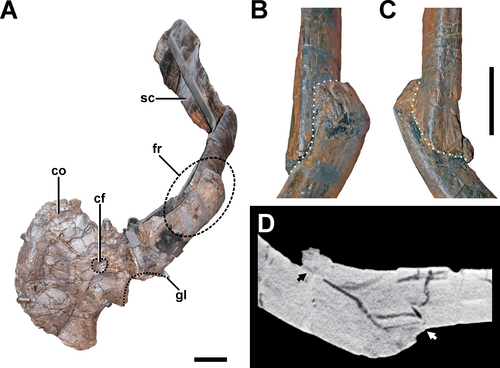
古病理学(palaeopathologyとも綴られる)は、化石、ミイラ化した組織、骨格遺物、糞石の分析を通して、生物の古代の病気や怪我を研究する学問である。古代の人間の病気の研究における具体的な資料としては、初期の文書、初期の書籍の挿絵、過去の絵画や彫刻などが挙げられる。これらの資料はすべて、病気の進化や、過去の文明がどのように病気を治療していたかについての情報を提供する。研究は歴史的に人間に焦点を当ててきたが、人間が他の動物よりも病理にかかりやすいという証拠はない。[ 1 ]
古病理学という言葉は、古代ギリシャ語のpalaios (παλαιός)「古い」、pathos(πάθος)「経験」または「苦しみ」、-logia(-λογία)「研究」という語根に由来する。[ 2 ]
古病理学は学際的な科学であり、臨床病理学、人骨学、疫学、社会人類学、考古学など(ただしこれらに限定されない)多くの分野の知識を必要とします。[ 3 ]一人の人間がすべての必要な科学に精通することはまずありません。そのため、それぞれの分野で訓練を受けた人々が重要であり、集団研究を構成します。人類学と考古学の訓練は、おそらく最も重要です。なぜなら、人骨や古代の遺物の分析は、初期の病気の発見に最も重要だからです。
歴史的証拠は、健康状態からの逸脱が長い間人類の関心事であったことを示している。この研究を構成する内容は古代の文献に遡ることができるが、「古病理学」という用語は20世紀まであまり普及しなかった。この時期には、症例研究や「古代の病気に関する発表された報告書」が増加した。[ 4 ]数千年前の古代の文献には、ハンセン病などの病気の事例が記録されている。
From the Renaissance to the mid-nineteenth century, there was increasing reference to ancient disease, initially within prehistoric animals although later the importance of studying the antiquity of human disease began to be emphasized. Some historians and anthropologists theorize that "Johann Friederich Esper, a German naturalist...heralds the birth of paleopathology."[5] Although it wasn't until between the mid nineteenth century and World War I that the field of human paleopathology is generally considered to have come about. During this period, a number of pioneering physicians and anthropologists, such as Marc Armand Ruffer, G. Elliot Smith, Frederic Wood Jones, Douglas E. Derry, and Samuel George Shattock, clarified the medical nature of ancient skeletal pathologies.[6] This work was consolidated between the world wars with methods such as radiology, histology and serology being applied more frequently, improving diagnosis and accuracy with the introduction of statistical analysis. It was at this point that paleopathology can truly be considered to have become a scientific discipline.[7] Today, the use of biomedical technology like DNA and isotopic analysis are major developments for pathological knowledge.[8]
After World War II paleopathology began to be viewed in a different way: as an important tool for the understanding of past populations, and it was at this stage that the discipline began to be related to epidemiology and demography.
New techniques in molecular biology also began to add new information to what was already known about ancient disease,[7] as it became possible to retrieve DNA from samples that were centuries or millennia old.
過去の人骨を分析するには、発見された遺物の種類に応じてさまざまな手法が用いられます。例えば、「古病理学的試料へのアプローチは、試料自体の性質(骨、軟組織、毛髪など)、その大きさ(最小限の断片から全身まで)、保存状態、そして非常に重要な操作範囲(展示可能な完全な試料から、完全な解剖研究を含むあらゆる種類の貴重な破壊的分析を行うための絶対的なアクセスと自由まで)によって異なります。」[ 9 ]考古学者や古病理学者が行う研究の多くは骨に関するものです。骨の基本的な性質により、他の人骨のように時間の経過とともに劣化しないため、骨病理学は古代の病気を研究する上で重要となります。人間の骨病理学は、いくつかの一般的なグループに分類されます。
骨折や骨の変形といった外傷は容易に発見できるが、結核や梅毒などの感染症といった他の疾患の痕跡も骨に見られることがある。変形性関節症や痛風などの関節疾患、すなわち関節症も珍しくない。

骨格組織における人類古病理学の証拠に関する最初の包括的な文献は、1976 年に Ortner と Putschar によって出版されました。[ 10 ]病理を特定する際、形質人類学者は、場所、遺跡の年代、その他の環境要因に関する優れた考古学的文書に大きく依存しています。これらは、さらなる分析の基礎となり、正確な集団研究に必要です。そこから、古病理学の研究者は、年齢や性別など、標本に関するいくつかの重要な生物学的指標を決定します。これらは、骨材料のさらなる分析と、特定された病変やその他の異常の評価の基礎となります。
考古学者は、古代人の生活を理解するための重要な主要ツールとして、古病理学をますます活用している。例えば、マヤ人の頭蓋骨には頭蓋変形が顕著に見られ、鼻と額の間の直線が角度や傾斜よりも好まれていた可能性がある。また、 1人の個人に1回または複数回、頭蓋骨に穴を開ける穿頭術の証拠もある。部分的にまたは完全に治癒した穿頭術は、この処置がしばしば生存していたことを示している。ケニアのトゥルカナにあるナタルク遺跡で発見された1万年前の人骨には、頭、首、肋骨、膝、手に極めて重度の外傷性病変が見られ、埋め込まれた石の投射物も含まれており、過去の狩猟採集民間の集団間紛争の最古の証拠である可能性がある。[ 11 ] [ 12 ]
骨格遺物に痕跡を残す病気は少ないが、遺物の骨学的分析には、軟組織が存在しない場合でも骨格遺物を記述および診断できるという利点がある。[ 13 ]古病理学は、分析のために提案された 7 つのカテゴリーに分けられる。[ 14 ]
これらの主要なカテゴリーの 1 つですが、外傷修復の骨格分析は、存在する外傷の種類によってさらに細分化されます。[ 15 ]
これら様々な種類のトラウマは、事故、対人暴力、文化的慣習、あるいは治療的処置の結果として生じる可能性がある。
骨折は、骨に機械的に変形させるのに十分な力が加わった結果生じる。張力、圧縮、ねじり、曲げ、せん断はそれぞれ骨格に独自の特徴を残す。骨折の種類、重症度、数、時期、位置は、偶発的な外傷と暴力的な外傷を区別する上で重要であり、分析から得られたデータは、その暴力の意味を明らかにする。[ 16 ]骨折は、最初の外傷点の周囲の骨格領域に大きな問題をもたらし、組織壊死、変形、関節炎による二次的な病理学的証拠を伴う可能性がある。[ 17 ]
Types of trauma encountered during analysis might include blunt force trauma (BFT), sharp force trauma (SFT), projectile, heat, and chemical. Evidence of trauma in skeletal remains can vary depending on the type of bone affected; for example, blunt force trauma from a club will present differently than sharp force trauma inflicted by a sword.[13]
During analysis, evidence of antemortem (before death) healing of a fracture allows it to be compared with both perimortem (around time of death) and postmortem (after death) trauma. Antemortem healing will present as a callus at the location of the fracture. As White notes, “The rate of fracture repair depends on alignment, amount of movement at the site of fracture and the health, age, diet, and blood supply of the individual.”[13]

Differentiating skeletal trauma as the result of violence compared to that caused by accidental or other causes is achieved by integrating the skeletal analysis of mechanical injury to bone with the sociocultural context.[18] Intertwining the biological analysis with the sociocultural factors presented by not just the individual but also the larger group context has allowed bioarchaeology to identify numerous types of violence including, as The Routledge Handbook of Paleopathology notes,“warfare, ritualized combat, hand to hand fighting, raids and ransacking, massacres, torture, executions, witchcraft, captive taking, slavery, anthropophagy, intimate partner and child abuse, scalping and human sacrifice."[16] Without this synthesis of the biological analysis and social theory, Klaus notes that trauma studies are reduced to “simply descriptions of trauma found on bone.”[19]
Several diseases are present in the archaeological record. Through archaeological evaluation these diseases can be identified and sometimes can explain the cause of death for certain individuals. Aside from looking at sex, age, etc. of a skeleton, a paleopathologist may analyze the condition of the bones to determine what sort of diseases the individual may have had. The goal of a forensic anthropologist looking at the paleopathology of certain diseases is to determine if the disease they are researching are still present over time, with the occurrence of certain events, or if this disease still exists today and why this disease may not exist today.[20] Diseases identifiable from changes in bone include:
骨以外にも、分子生物学はここ数十年の間に古病理学のツールとして利用されてきた。数百年前の人骨からDNAを採取できるからである。PCRなどの技術は汚染に非常に敏感であるため、実験室内の他の物質による偽陽性結果が生じないように、「自殺PCR」などの綿密な実験室設備とプロトコルが必要となる。
例えば、ペストがユスティニアヌス帝のペストと黒死病の原因であるという長年の仮説は、集団墓地からペスト菌のDNAが発見されたことで強く裏付けられているが[ 21 ] [ 22 ] 、別の原因として提案された炭疽菌は見つかっていない[ 21 ] 。

黒死病のパンデミックは1347年から1351年の間に発生しました。[ 23 ]黒死病の原因は腺ペストであると考えられており、[ 23 ]その症状にはリンパ節の腫れ、発熱、頭痛、倦怠感、筋肉痛[ 24 ]、そして場合によっては血液や膿が滲み出る腫れ[ 25 ]が含まれます。黒死病は中国で発生し、貿易ルートや港に沿って広がり、北アフリカやイタリア、スペイン、フランス、ドイツ、スイス、ハンガリーなどの多くのヨーロッパ諸国を含む多くの国に影響を与えました。[ 23 ]黒死病により最大2億人が死亡したと推定されています。[ 26 ]
In 2013 an excavation at Thornton Abbey in North Lincolnshire uncovered a mass grave of 48 people, including 27 children.[27] Radiocarbon dating and artifacts found in the mass grave showed that the bodies were from the time of the Black Death.[27] The wide range of ages of the remains, from one to 45 years, led archaeologists to infer that something devastating most likely caused their deaths.[27] Typically, mass graves contain remains from either the very young or the very old; this was not the case here. Because all ages were being buried here, archaeologists inferred that, although Thornton Abbey was adjacent to a small town, it was consumed by the plague to the extent in which a mass grave was needed. Until this discovery, known mass graves were very rare because small towns seemed to bury their dead in usual ways.[28] It is believed that mass burials were used in Europe during this time because of the overwhelming number of deaths caused by the Black Plague.[26]
Teeth samples from the remains revealed the presence of plague bacteria.[27] These samples showed the presence of Y. pestis DNA, the bacterial cause of the plague. "Molecular identification by 'suicide PCR' of Yersinia pestis in the pulp tissue of teeth" and other forms of analysis on ancient DNA has become progressively more common with modern advancements.[29]
Some diseases are difficult to evaluate in the archaeology, however, tuberculosis can be found and dates as far back as the Neolithic period. Tuberculosis is presumed to have been transmitted from domesticated cattle to humans through ingestion of contaminated meats and the drinking of contaminated milk.[30] It is also possible to contract tuberculosis through contact with infected persons. When an infected person coughs, they eject infected mucus from their body which can possibly infect those close by.[31] There are several types of tuberculosis: the kind that affects cold-blooded animals, the kind that affects birds, and the bovine type that causes disease in humans. Because bovine tuberculosis is often found in children, it may be that the disease is spread through the consumption of contaminated milk.[32]
結核は、人々の骨格からDNAを抽出することによって考古学的記録に現れます。結核は個人の骨格に現れることはまれで、現れる場合でも通常は病気の進行した段階に限られます。 [ 33 ]結核菌は骨の成長中心と海綿骨領域に留まります。[ 32 ]結核は長期間休眠状態になることがあります。体内で長期間進行するため、結核は体にダメージを与え、その後、体が自己修復する時間があります。骨における病気の証拠は、特に関節における骨構造の破壊と治癒に見られます。したがって、結核は膝関節と股関節、そして脊椎の考古学的記録に現れます。[ 31 ]
ヨーロッパ人が到来する以前の北アメリカには結核感染はなかったと考えられていたが、1980年代と1990年代の発見によってその考えは覆された。[ 34 ]骨からDNAを抽出することで、結核が発見されただけでなく、紀元前800年からアメリカ大陸に存在していたことも判明した。結核は人口密度の高い地域で蔓延する病気であり、コロンブス以前の社会で結核が発見されたということは、当時、大規模で繁栄したコミュニティが存在していたことを意味する。[ 35 ]結核の最古の証拠は、紀元前4千年紀に遡るイタリアで発見されている。同じ時期に遡る古代エジプトのミイラからも結核の証拠が見つかっている。しかし、古代ヨーロッパや地中海地域の医学文献には、結核と特定できる病気を記述したものは不足しているが、骨からはこの種の病気が存在していたことがわかる。[ 36 ]
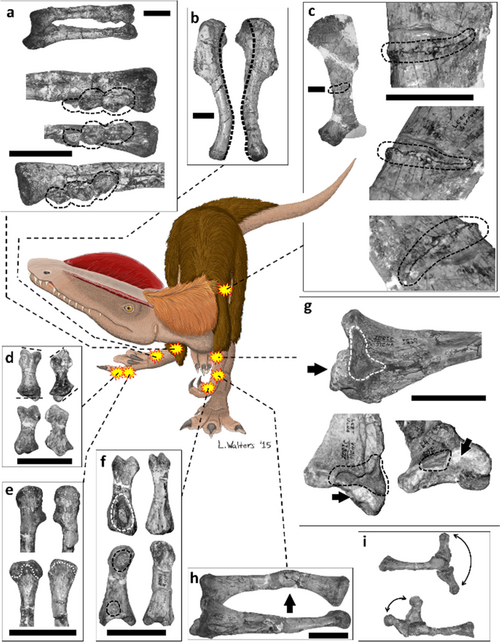
梅毒はトレポネーマ疾患に分類される病気です。このグループには、ピンタ、ヨー、風土病梅毒、性病梅毒などの病気が含まれます。これらの病気には、全身の組織の炎症性変化などの症状があります。感染した人は、最初は細菌が体内に入った部位に炎症の領域があることに気づくかもしれません。その後、個人はより広範囲の軟部組織の変化を予想し、最後に病気は骨に影響を与え始めます。ただし、性病梅毒に感染した人のうち、骨の変化を示すのはわずか 10 ~ 20 パーセントです。[ 37 ]性病梅毒は、他のタイプのトレポネーマ疾患よりも重篤な症状を示します。神経系と循環器系の障害は性病梅毒に特有のものであり、ヨー、風土病梅毒、ピンタでは見られません。
骨の変化は、骨の表面の病変を通して考古学的記録に見ることができます。性病梅毒では、骨の変化は膝と関節の損傷によって特徴付けられます。損傷した関節は感染源である可能性があり、神経系と感覚機能の障害によって損傷している可能性があります。[ 38 ]病気の初期段階では、骨は頭蓋骨と脛骨に小さな病変を形成します。これらの病変は主に骨髄の炎症によって引き起こされます。病気の最終段階では、骨が破壊され始めます。形成される病変は骨の「虫の穴」に似ており、頭蓋骨だけでなく体内の大きな骨にも見られます。[ 32 ]破壊される骨のほとんどは二次感染によるものです。
梅毒はアメリカ大陸とヨーロッパの両方で見られましたが、この病気の起源については議論があります。コロンブスとその船員がアメリカ大陸に持ち込んだと言われていますが、ヨーロッパ人はコロンブスがヨーロッパに病気を持ち込んだと非難しています。コロンブスとヨーロッパ人が記述した病気に関連する骨病変の証拠はありません。[ 39 ]性病梅毒の起源に関する議論は、何百年にもわたって科学的な議論の対象となっており、最近も議論されています。進化と古疫学に関する第1回国際会議では、世界中から集まった学者によってこのテーマが検討され、議論されました。性病梅毒の起源については決定的な決定は下されませんでした。