In the absence of hypoxic conditions (i.e. physiological levels of oxygen), cancer cells preferentially convert glucose to lactate, according to Otto H. Warburg, who believed that aerobic glycolysis was the key metabolic change in cancer cell malignancy. The "Warburg effect" was later coined to describe this metabolic shift.[6] Warburg thought this change in metabolism was due to mitochondrial "respiration injury", but this interpretation was questioned by other researchers in 1956 showing that intact and functional cytochromes detected in most tumor cells clearly speak against a general mitochondrial dysfunction.[7] Furthermore, Potter et al. and several other authors provided significant evidence that oxidative phosphorylation and a normal Krebs cycle persist in the vast majority malignant tumors, adding to the growing body of evidence that most cancers exhibit the Warburg effect while maintaining a proper mitochondrial respiration.[6][8] Dang et al.[9] in 2008 provided evidence that the tumor tissue sections used in Warburg's experiments should have been thinner for the oxygen diffusion constants employed, implying that the tissue slices studied were partially hypoxic and the calculated critical diffusion distance was of 470 micrometers.[6] As a result, endless debates and discussions about Warburg's discovery took place and have piqued the interest of scientists all over the world, which has helped bring attention to cell metabolism in cancer and immune cells and the use of modern technology to discover what these pathways are and how they are modified as well as potential therapeutic targets.
Metabolic reprogramming
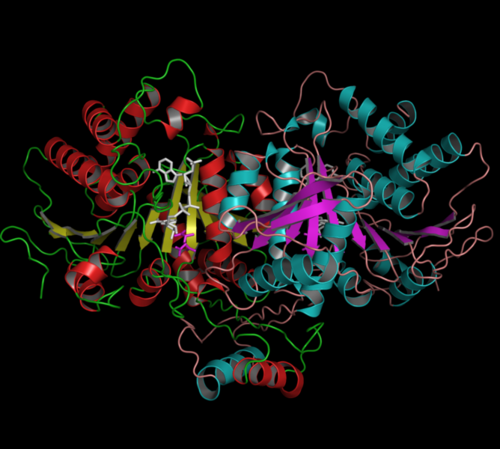
Simplified view of the aerobic glycolysis (Warburg's effect).
↑ Van Dang C (2015年10月). 「抄録IA05:MYCを介した癌代謝の標的化」. Molecular Cancer Research . 13 (10_Supplement). American Association for Cancer Research: IA05. doi : 10.1158/1557-3125.myc15-ia05 .
1 2 Yang M, Soga T, Pollard PJ, Adam J (2012). "腫瘍代謝物としてのフマル酸の新たな役割" . Frontiers in Oncology . 2 : 85. doi : 10.3389/fonc.2012.00085 . PMC 3408580 . PMID 22866264 .
↑ Garber K (2010年7月) 「腫瘍代謝物?IDH1の発見により、脳腫瘍と白血病における新たな代謝標的の可能性が高まる」 . Journal of the National Cancer Institute . 102 (13): 926–928 . doi : 10.1093/jnci/djq262 . PMID 20576929 .
1 2 Chiu M、Taurino G、Bianchi MG、Kilberg MS、Bussolati O (2020-01-09)。 「がんにおけるアスパラギン合成酵素:急性リンパ性白血病を超えて」。Frontiers in Oncology。9 : 1480。doi :10.3389 / fonc.2019.01480。PMC 6962308。PMID 31998641。
↑ Feng Y, Xiong Y, Qiao T, Li X, Jia L, Han Y (2018年12月). "乳酸脱水素酵素A:発癌における重要な役割と癌治療における潜在的な標的" . Cancer Medicine . 7 (12): 6124– 6136. doi : 10.1002/cam4.1820 . PMC 6308051 . PMID 30403008 .
1 2 Yang M 、 Soga T 、Pollard PJ (2013 年 9月)。「オンコメタボライト:代謝異常と癌の関連性」。The Journal of Clinical Investigation。123 ( 9): 3652–3658。doi : 10.1172 / jci67228。PMC 3754247。PMID 23999438。
↑Turcan S, Rohle D, Goenka A, Walsh LA, Fang F, Yilmaz E, etal. (February 2012). "IDH1 mutation is sufficient to establish the glioma hypermethylator phenotype". Nature. 483 (7390): 479–483. Bibcode:2012Natur.483..479T. doi:10.1038/nature10866. PMC3351699. PMID22343889.
↑Jones PA, Baylin SB (February 2007). "The epigenomics of cancer". Cell. 128 (4): 683–692. doi:10.1016/j.cell.2007.01.029. PMC3894624. PMID17320506.
12Letouzé E, Martinelli C, Loriot C, Burnichon N, Abermil N, Ottolenghi C, etal. (June 2013). "SDH mutations establish a hypermethylator phenotype in paraganglioma". Cancer Cell. 23 (6): 739–752. doi:10.1016/j.ccr.2013.04.018. PMID23707781.
↑Choi C, Ganji SK, DeBerardinis RJ, Hatanpaa KJ, Rakheja D, Kovacs Z, etal. (January 2012). "2-hydroxyglutarate detection by magnetic resonance spectroscopy in IDH-mutated patients with gliomas". Nature Medicine. 18 (4): 624–629. doi:10.1038/nm.2682. PMC3615719. PMID22281806.
↑Ye D, Guan KL, Xiong Y (February 2018). "Metabolism, Activity, and Targeting of D- and L-2-Hydroxyglutarates". Trends in Cancer. 4 (2): 151–165. doi:10.1016/j.trecan.2017.12.005. PMC5884165. PMID29458964.
↑ Koo I, Wei X, Zhang X (2014). "GC-MSで取得したメタボロミクスプロファイリングデータの解析".悪性腫瘍に関連する細胞全体の代謝変化. Methods in Enzymology. Vol. 543. Elsevier. pp. 315–324 . doi : 10.1016/B978-0-12-801329-8.00016-7 . ISBN978-0-12-801329-8PMID 24924140
↑ Liu L, Hu K, Feng J, Wang H, Fu S, Wang B, et al. (2021年1月). "腫瘍代謝物R-2-ヒドロキシグルタル酸はDNA過剰メチル化を誘導することによりヒト間葉系間質細胞の分化を調節不全にする" . BMC Cancer . 21 (1): 36. doi : 10.1186/s12885-020-07744-x . PMC 7791852 . PMID 33413208 .