
Loading article…
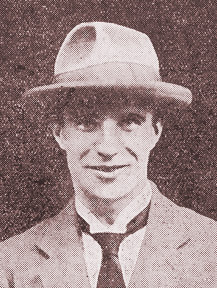
The Campbell Case of 1924 involved charges against a British communist newspaper editor, J. R. Campbell, for alleged "incitement to mutiny" caused by his publication of a provocative open letter to members of the military. The decision of the government of British Prime MinisterRamsay MacDonald, who later suspended prosecution of the case ostensibly because of pressure from backbenchers in his Labour Party, proved to be instrumental in bringing down the short-lived first Labour government.
In October 1925, after a number of posters had appeared that advocated the formation of soldiers' and sailors' committees and denounced the use of troops against workers, further articles in issues of the Workers' Weekly, dated 7 and 14 August 1925, called for members of the military to resist orders ("If you must shoot, don't shoot the workers"). That caused the newly appointed Attorney General Douglas Hogg, with the overt encouragement of the Home Secretary, William Joynson Hicks, to authorise a fresh prosecution under the Incitement to Mutiny Act 1797. The new round of prosecutions embroiled not only Campbell but also eleven other members of the Communist Party, Willie Gallacher, Wal Hannington, Albert Inkpin, Harry Pollitt, William Rust, R. Page Arnot, Tom Bell, Ernest Cant, Arthur MacManus, J. T. Murphy and Tom Wintringham.
J. R. Campbell was the acting editor of Workers Weekly, a newspaper of the Communist Party of Great Britain (CPGB). In its 25 July 1924 edition, the paper contained a provocative article for the "Anti-War Week Campaign" being conducted by the party, "An Open Letter to the Fighting Forces." The article read in part:
Comrades:
You never joined the Army or Navy because you were in love with warfare, or because you were attracted to the glamour of the uniform. In nine cases out of ten you were compelled to join the services after a long fight against poverty and misery caused by prolonged unemployment…
Repressive regulations and irksome restrictions are intentionally imposed upon you. And when war is declared you are supposed to be filled with a longing to "beat the enemy." The enemy consists of working men like yourselves, living under the same slave conditions…
兵士、水兵、空軍兵、我々の血肉であり骨肉である諸君、共産党は、戦争が宣言された時や労働争議が起こった時に消極的抵抗運動を組織するだけでなく、階級闘争においても軍事戦争においても、決して同僚労働者に銃を向けず、搾取者や資本家への攻撃において同僚労働者と共に立ち上がり、自らの階級のために武器を取ることを、明確かつ断固として表明するよう、君たちに呼びかける。
同僚を撃ち殺すことを拒否せよ!
利益のために戦うことを拒否せよ!
抑圧者たちに武器を向けよ![ 1 ]
—ワーカーズ・ウィークリー
8月6日、英国下院で、イングランドおよびウェールズの司法長官であるパトリック・ヘイスティングス卿が、 1797年反乱扇動法に基づきキャンベルを起訴するよう勧告したが、労働党の 多数の平議員からの圧力により、政府は8月13日に起訴を取り下げざるを得なくなったと発表された。ソ連寄りの活動の疑惑と相まって、自由党と保守党は労働党が過激な左翼グループの支配下にあるとレッテルを貼ることができた。
ロバート・ホーン議員が提出した「『ワーカーズ・ウィークリー』の編集者に対する刑事訴訟の開始とその後の取り下げに関する国王陛下の政府の行動は、本院の非難に値する」という実際の非難動議は、198対359で明確に否決されたが、ジョン・サイモン議員が提案した代替動議「検察局長が最近キャンベル氏に対して開始した訴訟の取り下げに至る状況を調査し報告するための特別委員会を任命する」は、364対198で可決された。[ 2 ]
しかし、政府は両方の動議を信任投票とみなしていることを明確にしていた[ 3 ]ため、英国のラムゼイ・マクドナルド首相は翌日、議会の解散を要請し、承認された。これは、 2019年1月16日のブレグジット投票まで、下院における政府最大の敗北となった[ 4 ] 。その後、1924年の総選挙が実施され、労働党は保守党の過半数政権に敗れた。
In a pamphlet published after the fall of the MacDonald government, the Communist Party published a message by Campbell defending his decision to publish the aggressive anti-militarist articles that he did in the Workers Weekly:
...[T]he Communist Party of Great Britain had to call attention to the fact that the Labour Government, while talking of its attachment to the cause of peace, was continuing the policy of previous imperialist governments. We had to expose to the Labour movement the true nature of this policy and to ask the Labour movement, if it was sincerely opposed to war, to fight war by all the means in its power.
On the question of armaments, we advocated the policy of no credits for capitalist armaments.
On the question of empire, we advocated that the Labour movement should force the government to abandon the brutal and cowardly repression of the struggling colonial peoples.
We asserted that the Labour Government could prove its attachment to peace in a practical fashion, by publishing the secret treaties and the secret war plans in the archives of the Foreign and War Offices.[5]
A year later, in October 1925, after a number of posters had appeared that advocated the formation of soldiers' and sailors' committees and denounced the use of troops against workers, further articles in issues of the Workers' Weekly, dated 7 and 14 August 1925, called for members of the military to resist orders ("If you must shoot, don't shoot the workers"). That caused the newly appointed Attorney General Douglas Hogg, with the overt encouragement of the Home Secretary, William Joynson Hicks, to authorise a fresh prosecution under the Incitement to Mutiny Act 1797.
The new round of prosecutions embroiled not only Campbell but also eleven other members of the Communist Party, Willie Gallacher, Wal Hannington, Albert Inkpin, Harry Pollitt, William Rust, R. Page Arnot, Tom Bell, Ernest Cant, Arthur MacManus, J. T. Murphy and Tom Wintringham. The defendants were charged with "conspiring between 1st January 1924 and 21st October 1925 to
オールド・ベイリー刑事裁判所での8日間にわたる裁判の後、被告人全員が有罪判決を受けた。前科のあるギャラハー、ハニングトン、インクピン、ポリット、ラストには12か月の禁錮刑が言い渡され、キャンベルらは6か月の禁錮刑となった。より軽い刑を受けた被告人全員は、起訴の根拠となったような政治活動を今後行わないことを宣言する代わりに、裁判官から禁錮刑を免除するという申し出を拒否していた。