
Loading article…
The John and Nell Commons House is a large hilltop bungalow built in 1913 in Madison, Wisconsin, from which UW professor John R. Commons wrote influential books on economics, helped craft Progressive public policy, and mentored a generation of economists.[1] The house itself was designed by Cora Tuttle - not a formally trained architect, but the first woman to practice architecture in Madison.[2] In 1985 the house was added to the National Register of Historic Places.[1]
John R. Commons was born in 1863 in Hollansburg, Ohio. Richard T. Ely brought him to the UW in 1904 to teach and to edit the 11-volume Documentary History of American Industrial Society. "He was among the first economists to move away from the traditional laissez-faire economic thinking; and he pioneered in the progressive era concept that government should assume a positive role in furthering the cause of reform..."[3]
This was the era of Progressive social legislation, in which Wisconsin under Governor LaFollette was a leader. John Commons contributed to that legislation, helping draft the 1905 Wisconsin Civil Service Law, which specified uniform civil service exams; the 1907 Public Utilities Law; the 1911 Industrial Commission Law which effected changes in worker safety, child labor, minimum wages, and labor disputes; and the 1924 Unemployment Insurance Plan for the Chicago clothing market. During the Great Depression, Common's grad students helped plan and administer New Deal legislation like the Social Security Act. Commons is one of several people credited with originating the "Wisconsin Idea," in which university faculty serve as advisors to state government. At one point a representative of business called Dr. Commons "the most dangerous man in Wisconsin," but Commons himself later observed, "Yet what I was always trying to do in my academic way, was to save Wisconsin and the nation from politics, socialism, or anarchism, in dealing with the momentous conflict of 'capital and labor.'"[3]
In 1909 and 1910 John and his wife Ella bought about seven acres of farmland on a hilltop west of Madison. They had Cora Tuttle design a large bungalow for the hilltop.[3][1]
The designer Cora Tuttle had been born in 1864 in Evansville, Wisconsin. Widowed in 1906, she moved with her sons to Prescott, Arizona. There in the southwest she was exposed to the bungalow, a then-modern and convenient style of house that had developed in California. The bungalow didn't reach Madison until Cora and her family returned with the idea in 1908. Cora had not formally studied architecture, but she had absorbed the ideas, and she designed a bungalow for her family, with help from her son Ray, then an engineering student at the UW. Their house was built in 1909, and still stands at 1206 Grant Street. She went on to design other bungalows around Madison. Though unlicensed and not formally trained in architecture, Cora Tuttle is the first woman known to practice architectural design in Wisconsin.[4]
The house is two stories tall, wood-framed, clad in stucco on the first story and wood shingles on the second. The roof is low-pitched, with exposed rafter tails showing Craftsman influence. Vergeboards decorate the gable ends and the ends of the joists that support the second story floor protrude from the wall as decoration. A balcony opens from the second-story bedroom on the southeast end. A porch spans the northeast side, with the wall on that side pierced by pentagonal window openings. Inside, the first story contains the living-dining room, the kitchen, two hallways, a coatroom, and the study where John wrote, with oak shelves and brick fireplace. The second story contains four bedrooms, two linen closets, and a full bathroom. The couple named the house Hocheera, the Ho-Chunk word for 'welcome.'[3]
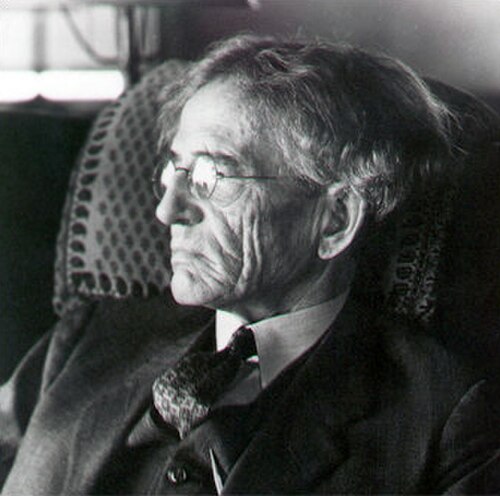
Professor Commons mentored many talented economics graduate students, including labor historian Selig Perlman, Edwin E. Witte who is sometimes called "the father of U.S. Social Security," Arthur J. Altmeyer, Paul Raushenbush, Elizabeth Brandeis Raushenbush, and Wayne Morse. John and his wife Ella invited students out to the house on Friday nights for meetings that Selig Perlman described:
コモンズ教授夫妻の絶え間ない温かい励ましのおかげで、この国の学術界や公共サービスにおいて最も著名な人物を含む数百人のコモンズ教授の教え子がキャリアを築いてきた。メンドータビーチにあるコモンズ夫妻の自宅で毎週金曜日に開かれる「金曜の夜」には、しばしば60人もの学生が集まり、世界で最も著名な経済学者や政治家と出会い、その場で自らの見解を発表する機会を得た。今日、多くの政治家がコモンズ教授の「金曜の夜」を、自らの「初演説」を聞いた非公式で友好的な「議会」として回想している。[ 3 ]
コモンズはウィスコンシン州の進歩主義運動のブレーントラストと見なされていたが、ウィスコンシン州以外の著名な人物とも協力していた。「アメリカ労働総同盟のサミュエル・ゴンパース、鉱山労働者のジョン・A・ミッチェル、全国市民連盟のラルフ・イーズリー、アメリカ大統領選の社会民主党候補ユージン・V・デブス、社会民主党の創設者ビクター・バーガー、中国駐在の億万長者大使チャールズ・R・クレーン、ヘンリー・フォード、トーマス・エジソン、ウィルソン大統領など」[ 3 ]
ジョン・コモンズは1937年にフロリダに移住するまでこの家に住み、そこで仕事をしていました。その後、フレデリックとマーガレット・バークハート、ジョンとマーサ・リピット、そして現在はリチャードとドリス・デュビエルジグが所有しています。元々の7エーカーの土地は区画に分割され、ホチェーラは現在住宅街の中に建っています。[ 3 ]この家は1984年にマディソンのランドマークに指定され[ 5 ]、主に全国的に著名な経済学者との関連から1985年に国家歴史登録財に追加されました。[ 3 ]
 ウィキメディア・コモンズにあるジョン・R・アンド・ネル・コモンズ邸に関するメディア