
Loading article…
Frey Nicolás de Ovando (c. 1460 – 29 May 1511[1][Note 1]) was a Spanish imperial soldier from a noble family and a Knight of the Order of Alcántara, a military order of Spain. He was Governor of the Indies in the Columbian Viceroyalty (seated in Hispaniola) from 1502 until 1509, sent by the Spanish crown to investigate the administration of Francisco de Bobadilla and re-establish order. Ovando "pacified" the island of Hispaniola by force, subduing Indigenous people and rebellious Spaniards, with disorderly colonists being sent back to Spain in chains.[2] He implemented the encomienda system with the Indigenous population.[3]
Nicolás de Ovando was born around 1460 in Extremadura. Some place his birth in Brozas but Gonzalo Fernández de Oviedo knew him well and said he was a native of the city of Cáceres. Belonging to a distinguished family, he was the second son of Captain Diego de Cáceres Ovando and his wife Isabel de Flores Gutierrez , a native of the town of Brozas.[1]
Ovando entered the military Order of Alcántara, where he became a Master (Mestre or Maitre) or a Commander-Major (Comendador-Mayor). This Spanish military order, founded in 1156, resembled the Order of Templars, with whom it fought the Moors during the Reconquista. His elder brother was Diego de Cáceres y Ovando.
As Commander of Lares, Ovando became a favourite of the Spanish Catholic Monarchs, particularly pious Queen Isabella I of Castile. Thus, on 3 September 1501, in response to complaints from Christopher Columbus and others about Francisco de Bobadilla, Isabella appointed Ovando to replace Bobadilla. Ovando became the third Governor of the Indies, the Islands, and the Province of Tierra Firme.
On 13 February 1502, he sailed from Spain with a fleet of thirty ships.[4] It was the largest fleet that had ever sailed to the New World.
30隻の船には約2,500人の入植者が乗っていた。[ 5 ]コロンブスの以前の航海とは異なり、この入植者グループはスペイン社会の組織的な断面を代表するように意図的に選ばれた。スペイン王室は西インド諸島を経済的に発展させ、それによってこの地域におけるスペインの政治的、宗教的、行政的影響力を拡大しようとしていた。彼とともに、後に南米西部を探検し、インカ帝国を征服するフランシスコ・ピサロも乗船していた。別の船には、オバンドとその部下による残虐行為を暴露したことで「インディオの保護者」として知られるようになったバルトロメ・デ・ラス・カサスが乗っていた。家族の知人で遠い親戚であるエルナン・コルテスはこの遠征でアメリカ大陸へ航海する予定だったが、メデジンの既婚女性の寝室から急いで逃げる際に負傷したため、航海を断念せざるを得なかった。[注2 ]
探検隊は1502年4月にサントドミンゴに到着し、ディエゴ・デ・ニクエサとルーカス・バスケス・デ・アイヨンも同行していた。また、アロンソ・デ・エスピナル修道士率いる13人のフランシスコ会修道士も乗船しており、島にいる修道士の総数は25人となった。[ 6 ]
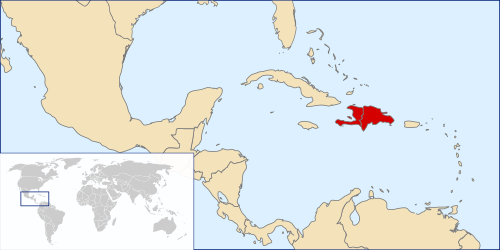
1502年にオバンドがイスパニョーラ島に到着したとき、かつて平和だった先住民が反乱を起こしているのを発見した。オバンドと部下たちは、ハラグア虐殺やイグエイ虐殺を含む一連の血なまぐさい作戦によって、この反乱を容赦なく鎮圧した。イスパニョーラ島におけるオバンドの統治は、先住民に対する残虐行為で悪名高くなった。1492年にスペイン人が到着した時点での先住民の人口推定値は様々で、アンダーソン・コルドバは 島に住んでいた人口を最大50万人とした。[ 7 ] 2020年の遺伝子分析では、人口はせいぜい数万人と推定されている。[ 8 ]バルトロメ・デ・ラス・カサスによれば、1507年の国勢調査までに、戦場での虐殺、奴隷化、疫病によって先住民の人口は6万人まで減少しており、減少は続いていた。1501年、オバンドはスペイン語を話す黒人奴隷をアメリカ大陸に初めて輸入するよう命じた。多くのスペイン貴族は、奴隷を家の使用人として働かせた。
After the conquests made by his lieutenants including Juan Ponce de León and Juan de Esquivel, Ovando founded several cities on Hispaniola. He also developed the mining industry, introduced the cultivation of sugar cane with plants imported from the Canary Islands, and commissioned expeditions of discovery and conquest throughout the Caribbean. Ovando allowed Spanish settlers to use the natives in forced labour, a system known as encomienda,[3] to provide food for the colonists and for ships returning to Spain. Hundreds of thousands of Indigenous people died while forced to extract gold from the nearby mines.
Pursuant to a deathbed promise he made to his wife Queen Isabella I, King Ferdinand II of Aragon recalled Ovando to Spain in 1509 to answer for his treatment of the native people. Diego Columbus was appointed his successor as governor, but the Spanish Crown permitted Ovando to retain possession of the property he brought back from the Americas.
Little is known of Ovando's activities after his return to Spain in 1509. He probably spent much of his time in the town of Brozas, the headquarters of the Order of Alcántara. In February 1511, Ferdinand ordered Ovando to accompany him on a campaign against Oran, in North Africa. The expedition never took place but Ovando was present at a general meeting of his order in Seville at the beginning of May. On 29 May 1511, Ovando died in Seville. His body was transferred to the monastery of San Benito de Alcántara. In his will, he founded a chapel and requested that the friars say a requiem mass every week.[1]