Loading article…
サンタ・マリア・デッラ・コンチェツィオーネ・デイ・カプッチーニ(文字通り「カプチン会の聖母マリア」)は、イタリアのローマ、バルベリーニ広場のすぐ北、ヴィットリオ・ヴェネト通り27番地にあるローマ・カトリック教会です。無原罪の御宿りに捧げられたローマ初の教会です。[ 1 ]
この教会は、建築家フェリーチェ・アントニオ・カソーニ(1559年 - 1634年)と建築家ミケーレ・ダ・ベルガモ(? - 1641年)によって設計されました。 1626年10月4日に教皇ウルバヌス8世が礎石を祝福し、その後、彼のカプチン会修道士の兄弟であるアントニオ・マルチェッロ・バルベリーニ枢機卿が建設を開始しました。最初のミサは1630年9月8日に行われ、建設は1631年に完了しました。小さな身廊と10の側廊礼拝堂から構成されています。[ 2 ]

教会へは、白い石の柱が並ぶレンガ造りのファサードがそびえ立つ折り返し階段を通って入る。内部は単一の身廊で、両側に5つの礼拝堂がある。[ 3 ]リボリオ・コチェッティは、樽型ヴォールトの天井に聖母被昇天の絵を描いた。
主祭壇は教皇ウルバヌス8世の命により大理石で造られ、2本の柱の基部には彼の紋章が見られる。祭壇画「受胎告知」はジョアッキーノ・ボンベッリによるもので、ランフランコのオリジナルは火災で焼失した。[ 1 ]


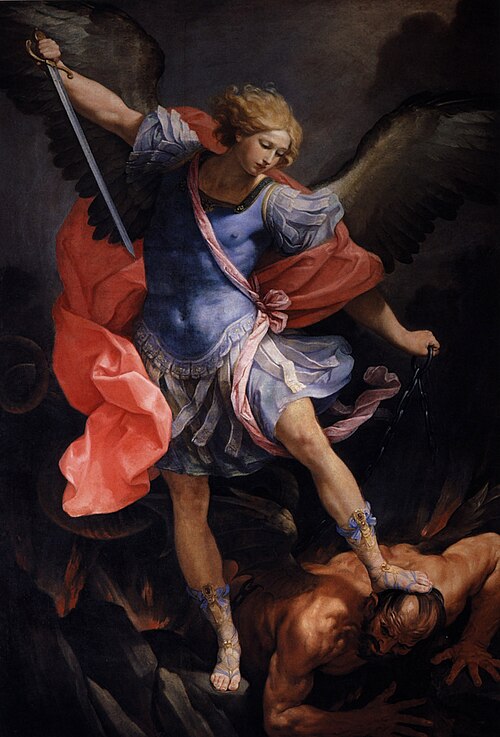
右側の最初の礼拝堂には、グイド・レーニ作の劇的な祭壇画「大天使ミカエルがサタンを打ち負かす」(1635年頃)と、ジェラール・ファン・ホントホルスト作の「嘲笑されるキリスト」がある。ローマで最も重要で高貴な家系は、ライバル関係にあったバルベリーニ家とパンフィーリ家だった。1630年、アントニオ・バルベリーニはカプチン会の教会のためにレーニに大天使ミカエルの絵を依頼した。伝説によると、レーニはジョヴァンニ・バッティスタ・パンフィーリ枢機卿が自分を中傷した、あるいは何らかの形で自分の評判を傷つけたと聞いていた。1636年に完成したこの絵は、レーニが侮辱への復讐として、聖ミカエルの足の下で踏み潰されたサタンをパンフィーリ枢機卿の顔の特徴で描いたという話を生み出した。[ 4 ]
右側の2番目の礼拝堂には、タッデオ・バルベリーニの依頼でマリオ・バラッシが制作した「キリストの変容」と、ジョヴァンニ・ランフランコによる「キリスト降誕」(1632年頃)があります。右側の3番目の礼拝堂には、ドメニキーノによる「聖フランチェスコの聖痕」があります。右側の4番目の礼拝堂には、バッチョ・チャルピによる「ゲッセマネでの祈り」(1632年頃)があります。右側の5番目の礼拝堂には、アンドレア・サッキによる「聖アントニウス」があります。
左側の5番目の礼拝堂には、アンドレア・サッキ作「聖母の聖ボナヴェントゥラへの出現」(1645年)があります。左側の3番目の礼拝堂には、アンドレア・カマッセイ作「聖母の降架(ラ・ピエタ)」と、ジローラモ・ムツィアーノ作「聖フランチェスコの聖痕」 (1570年頃)があります。左側の2番目の礼拝堂には、アレッサンドロ・トゥルキ作「サンタ・フェリーチェ・ダ・カンタリーチェ」があります。左側の1番目の礼拝堂には、ピエトロ・ダ・コルトーナ作「アナニアスによるパウロの失明の治癒」(1631年頃)があります。


The crypt is located just under the church. Cardinal Antonio Barberini, who was a member of the Capuchin order, in 1631 ordered the remains of thousands of Capuchin friars exhumed and transferred from the friary Via dei Lucchesi to the crypt.
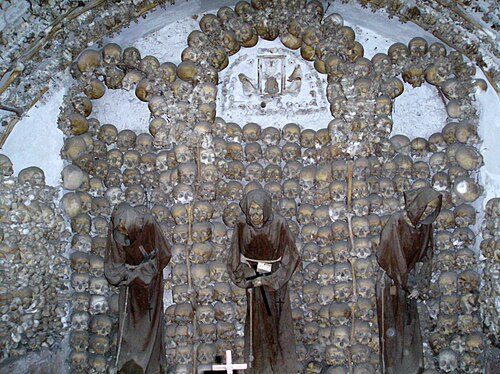
The underground crypt is divided into five chapels, lit only by dim natural light seeping in through cracks, and small fluorescent lamps. The crypt walls are decorated with the remains in elaborate fashion, making this crypt a macabre work of art. Some of the skeletons are intact and draped with Franciscan habits, but for the most part, individual bones are used to create elaborate ornamental designs.
The crypt originated at a period of a rich and creative cult for their dead; great spiritual masters meditated and preached with a skull in hand. A plaque in one of the chapels reads, in three languages, "What you are now, we once were; what we are now, you shall be." This is a memento mori.[6]
The popularity of the crypt as a tourist attraction once rivalled the Catacombs. The Sedlec ossuary (1870) in the Czech Republic and the Skull Chapel in Poland are said to have been inspired by it.



Inside the convent there is the Museum of the Capuchin Friars Minor of the Province of Rome : eight rooms that house works of art, volumes, documents, liturgical objects and Capuchin artifacts in common use.[3]