
Loading article…
Gunlā (Nepal Bhasa: गुँला) (also spelt Gumlā) is the tenth month in the Nepal Sambat lunar calendar, the national lunar calendar of Nepal.[1] It corresponds to August of the Gregorian Calendar.
Gunla is a holy month for Newar Buddhists when they recite the scriptures, observe fasts and visit places of worship playing devotional music. It is one of the most important events in Newar Buddhism.[2][3] The practice of observing the sacred month is descended from the rains retreat dating from the Buddha's time when monks are to stay in one place and taught the Dhamma to the locals during this period.[4][5]
According to traditional beliefs, during primitive times, too much rain would fall. Due to this rain, the mud houses during the time would get devastated, moreover floods and landslides would add melancholy in people's lives. So, in order to downturn the melancholy, and be safe from floods and landslides, people would go to Swayambhu playing the devotional music as it was in an elevation.[6]
Devotees mark the holy month by making daily early morning pilgrimages to Swayambhu in Kathmandu and other Buddhist temples playing Gunla Bajan music. The musical bands represent various localities of the city.
The devout recite the scriptures at home and sacred courtyards. Some undergo fasting. Another devotional activity during Gunla is Dyah Thāyegu (द्यः थायेगु) when devotees make little stupas out of black clay using a mold.[7]
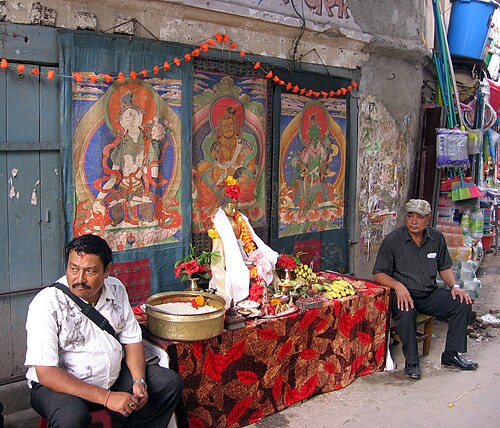
Panjaran (पन्जरां) is the alms giving festival. Males of the Bajracharya and Shakya castes make an alms round of the city and devotees give them rice and money. Shrines are set up with Buddha statues and paubha scroll paintings at private homes, courtyards and on the roadsides from where the gifts are distributed. The event is held on different dates in Kathmandu valley and Lalitpur.[8]
グンラ月の2週目の初日には、ディパンカラ仏の大きな像とパウバ絵画が聖なる中庭に展示されます。この儀式はバヒディヤ・ブワエグ(बहीद्यः ब्वयेगु)として知られています。[ 9 ] [ 10 ]
この日は、バヒディヤ・スワハネグ(बहीद्यः स्वःवनेगु)と呼ばれる祭りで、音楽隊に続いて地元の住民が行列を組んで聖なる中庭を訪れ、展示品を見学します。この祭りは満月の翌日に行われ、ガイ・ジャトラ祭りと重なります。[ 11 ]
グンラ・バジャン協会にとってもう一つの重要な日は、ニサラ・チャワネグ(निसला छाःवनेगु)の儀式で、この日、彼らはスワヤンブーに供物を捧げ、近所でグンラ・バジャンのコンサートを開催します。[ 12 ]
また、ラリトプルのグンラ初日には、神聖な早朝の巡礼「ブウォギ」が通常午前 1 時 30 分から始まり、日の出まで仏教寺院や仏塔の周りを歩きます。一般的に、信者が仏塔 (チャイティヤ) や仏像の影さえ踏まないように、日の出前にその日の巡礼は中断されると信じられています。同様に、通常 4 日で完了しますが、必要に応じて 1 日追加されます。ラリトプル周辺の 4 つの仏塔、すなわちラガンケルのラガンキヤ トゥール、プルチョークのプチャ トゥール、バングラムキのバグマティ トゥール、グワルコのテタ トゥールを 4 日間かけて順番に訪れます。巡礼には、ダ、キン、ダモキン、ディメ バジャの 4 種類の音楽バンドが順番に付き添います。各仏塔は一日かけて巡礼され、小仏塔や寺院、そして多くのマハービハールやバハル(聖なる中庭)を訪れます。巡礼者は、巡礼の途中でチョコレート、硬貨、樟脳など様々な供物を捧げます。この聖なる巡礼には約400~500人が参加し、その中には先祖の子孫の家族や親戚も含まれています。
今年(2024年|2081年)の組織委員会/トーレ:Chhyetra No. 1 Nakabahil
マタヤ(मतया:)(ネパール語で「光の行列」を意味する)は、ラリトプルで最も重要な宗教的祭典の1つで、バギにあるすべての仏塔を1日で巡礼するものです。この祭りは、ブッダがマーラ(誘惑)を克服し、智慧の光を得た出来事を祝うものです。 [ 13 ]
信者たちは曲がりくねった列をなして市内の仏教寺院や聖なる中庭を訪れ、仏像に礼拝を捧げる。参加者には音楽隊や色鮮やかな衣装を着た役者も含まれる。この曲がりくねった祭りのルートを一周するには丸一日かかる。[ 14 ]
今年(2024年|2081年)の組織委員会/トーレ:Chhyetra No. 1 Nakabahil
明るい半月の5日目は、蛇に捧げられた日であるナグ・パンチャミです。暗い半月の1日目は、サパールまたはガイ・ジャトラと呼ばれ、過去1年間に亡くなった家族を偲んで行列が行われます。参加者は牛の衣装を身に着け、市内を巡ります。
暗黒の半月の8日目は、ヒンドゥー教の神クリシュナの誕生を祝うクリシュナ・ジャンマシュタミ祭です。ゴカルナ・アウンシは暗黒の半月の15日目、つまりアーマイに当たります。これは父の日であり、バウヤ・クワー・スワエグ(「父の顔を見つめる」)としても知られています。[ 15 ]