
Loading article…
The second battle of Dongola or siege of Dongola was a military engagement between early Arab forces of the Rashidun Caliphate and the Nubian-Christian forces of the kingdom of Makuria in 652. The battle ended Muslim expansion into Nubia, establishing trade and a historic peace between the Muslim world and a Christian nation. As a result, Makuria was able to grow into a regional power that would dominate Nubia for over the next 500 years.
Relations between the kingdom of Makuria and Rashidun Egypt had gotten off to a rocky start in 642 with the first battle of Dongola. After their defeat, the Arabs withdrew from Nubia and something of a peace had been established by 645.[1] According to the 14th-century Arab-Egyptian historian al-Maqrizi, Makuria did something to violate the truce.[1] It was then that Abdallah ibn Sa'd, the successor of the first governor of Arab Egypt, invaded Makuria in an attempt to bring the Makurians to heel.[1] At this time, northern and central Nubia were united under the Makurian king Qalidurut.[2]
Archaeological discoveries show that Dongola was a well fortified city in the seventh century. It had walls at least 6 metres (20 ft) high and 4 metres (13 ft) wide at the base with towers. These were constructed of mudbricks in mortar and faced with stone. The round corner towers were 6 metres wide and projected 8 metres (26 ft) out from the wall. There were another two towers on the north wall. The towers, however, may have been added after, and possibly in response to, the siege of 652.[3]
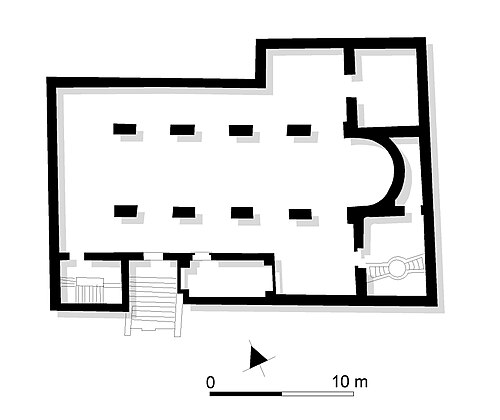
アブダラは651年に5,000人の兵を率いてマクリアンの首都ドンゴラに進軍した。[ 1 ]彼は重騎兵とカタパルト(マンジャニク)、おそらく牽引式トレビュシェットを装備していたが、[ 5 ]アル=マクリージーによれば、マクリアンはそれまでカタパルトを見たことがなかったという。[ 3 ]その後、彼は都市を包囲し、[ 6 ]悪名高いヌビアの弓兵によって守られた城壁都市を襲撃するという危険な状況に騎兵を置いた。[ 7 ]包囲中に、町のカテドラルはカタパルトの砲撃で損傷を受けた。[ 1 ](損傷した教会は、7世紀半ばに遡る城壁の遺跡の外側で発見されている。[ 3 ])
包囲戦は激戦で終わった。[ 8 ]アブドゥッラー軍の死傷者は多く、[ 7 ]カリドゥルートは和平を求めなかった。[ 1 ]結局、アブドゥッラーは協定(バクト)の交渉と引き換えに包囲を解いた。[ 2 ] 9世紀のエジプトの歴史家イブン・アブド・アル=ハカムによれば、これは「彼が彼らを打ち負かすことができなかった」ためである。カリフ軍に同情しなかった10世紀のシーア派の歴史家アフマド・アル=クーフィーはさらに強い意見を持っていた。「イスラム教徒はヌビアで被ったような損失を(それまで)被ったことはなかった。」[ 8 ]戦いを描写したアラブの詩人は次のように書いている。 [ 9 ]
「ダンクーラ(ドンゴラ)の戦いのような戦いは、私の目には二度と現れなかった。 鎧を身にまとった馬たちが突進する光景は。」
しかし、その後の数世紀で、ドンゴラの包囲戦と第二次戦闘は、イスラムの歴史家によって勝利へと変貌した。アル=マクリージーによれば、カリドゥルートは条件を求めて服従的に都市から出てきたとされている。[ 8 ]この出来事の解釈は、652年の出来事と13世紀後半のヌビアとマムルーク朝の間の紛争を混同したことに由来する可能性がある。[ 3 ]
ドンゴラの第二次戦闘の詳細は不明だが、カリフ国の軍が甚大な損害を被り、目標であるドンゴラ市を占領することが不可能になったことは分かっている。[ 7 ]両者はバクトと呼ばれる交渉による休戦に合意し、それは6世紀にわたって続いた。 [ 10 ]この休戦協定は、イスラム教徒のエジプトとキリスト教徒のヌビアの間に貿易関係を確立した。エジプトからの小麦、大麦、ワイン、馬、リネンとヌビアからの年間360人の奴隷の交換が行われた。
バクトはイスラム教の初期の歴史において前例のない出来事でした。また、イスラム教徒と非イスラム教徒の関係のパラダイムにおいて、ヌビアが征服されない土地であるという地位も新しいものでした。伝統的に、ヌビアは例外とされていました。[ 1 ]ヌビアはキリスト教徒の地域であり、その支配者は12世紀にヌビアの力が衰え始めるまで、イスラム教徒の支配者と対等な立場で取引を行っていました。この戦いとバクトの結果、キリスト教徒のヌビアはその後600年間繁栄する余地を得ました。[ 1 ]