
Loading article…
The goa (Procapra picticaudata), also known as the Tibetan gazelle, is a species of antelope that inhabits the Tibetan Plateau.
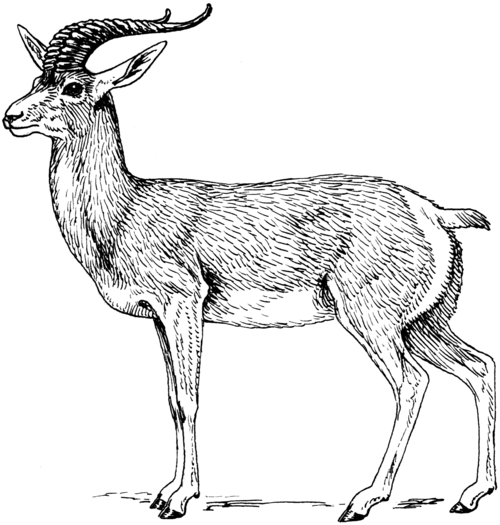
The goa is a relatively small antelope, with slender and graceful bodies. Both males and females stand 54 to 65 centimetres (21 to 26 in) tall at the shoulder, measure 91 to 105 cm (36 to 41 in) in head-body length and weigh 13 to 16 kg (29 to 35 lb). Males have long, tapering, ridged horns, reaching lengths of 26 to 32 cm (10 to 13 in). The horns are positioned close together on the forehead, and rise more or less vertically until they suddenly diverge towards the tips. Females have no horns, and neither sex has distinct facial markings.[2]

The goa is grayish brown over most of its body, with its summer coat being noticeably greyer in colour than its winter one. It has a short, black-tipped tail in the center of its heart-shaped white rump patches. Its fur lacks an undercoat, consisting of long guard hairs only, and is notably thicker in winter. It appears to have excellent senses, including keen eyesight and hearing.[2] Its thin and long legs enhance its running skills, which are required to escape from predators.
The goa is native to the Tibetan Plateau, and is widespread throughout the region, inhabiting terrain between 3,000 and 5,750 m (9,840 and 18,860 ft) in elevation. It is almost restricted to the Chinese provinces of Gansu, Xinjiang, Tibet, Qinghai, and Sichuan, with tiny populations in the Ladakh and Sikkim regions of India. No distinct subspecies of goa have been reported.[2]
Alpine meadow and high elevation steppe are the primary habitats of the goa. It is scattered widely across its range, being present in numerous small herds spread wide apart; estimates of population density vary from 2.8 individuals per sq km to less than 0.1, depending on the local environment.[2]
他の有蹄類とは異なり、ゴアは大きな群れを形成せず、通常は小さな家族グループで見られます。時折、より大きな集団に集まることもありますが、ほとんどのゴアのグループは10頭以下で、多くは単独で行動します。捕食者やその他の脅威が近づくと、群れに警告するために短い鳴き声や叫び声を発することが知られています。[ 2 ]
ゴアは主に草本植物やマメ科植物など、さまざまな地元の植物を食べ、比較的少量のイネ科植物やスゲ類も食べます。主な地元の捕食者はヒマラヤオオカミ[ 3 ]とユキヒョウ[ 4 ]です。
年間を通して雌雄は別々に生活し、雌は雄よりも標高の高い場所で草を食む。雌は12月の繁殖期に先立ち、9月頃に高地の牧草地から下山する。繁殖期の間、雄は概ね単独で行動し、縄張りを匂いでマーキングしたり、時には角でライバルの雄と頭突きをしたり、取っ組み合いをしたりする。
妊娠期間は約6ヶ月で、7月から8月の間に1頭の子が生まれる。子は生後最初の2週間は母親と一緒に隠れて過ごし、その後群れに戻る。ゴアの性成熟年齢は不明だが、おそらく18ヶ月頃である。ゴアは飼育下で最長5年7ヶ月生きたことがある。[ 2 ]

近年、ゴアの個体数は減少しているものの、生息域の大部分は人口密度の高い地域には生息しておらず、地元の家畜と大きな競合関係にはありません。体が小さいため狩猟の対象として人気がなく、中国では第二級保護種に分類されています。中国におけるゴアへの主な脅威は、牧畜民による自然生息域への侵入と西部省での農業の拡大による生息地の喪失です。[ 2 ]
ラダックでは、標高の高い場所(4,750~5,050メートルまたは15,580~16,570 フィート)に生息していますが、比較的平坦な地域を好み、温暖な南向きの斜面を好みます。家畜のヤクやキアンと共存していますが、家畜のヤギやヒツジとは競合し、牧畜民とその犬を避けます。[ 5 ]ラダックの個体数は100頭未満で、減少し続けています。ラダック内では、20世紀初頭には西はツォカル盆地まで分布していましたが、現在ではハンレ渓谷とチュムールなどの近隣地域に限られています。現在、ガゼルは牧草地の状態が悪いだけでなく、個体数が少ないことによる遺伝的多様性の欠如など、病気に対する抵抗力の低下といった問題にも苦しんでいます。[ 6 ]
ラダックとチベットの両方でゴアの個体数は急激に減少しており、少なくとも一部の地域では絶滅の危機に瀕している。[ 6 ] [ 7 ]また、インドと中国支配地域の国境に位置する北シッキムにも少数の個体群が存在し、両国間を行き来しているようだ。
{{cite journal}}: CS1 maint: 複数の名前: 著者リスト (リンク)