
Loading article…
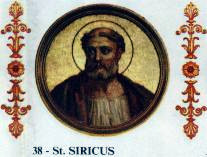
教令「ディレクタ」は、西暦385年2月に教皇シリキウスによって書かれた。これは、数ヶ月前に教皇ダマスス1世に送られた様々な主題に関するディレクタの要請に対する、スペインのタラゴナの司教ヒメリウスへの長い手紙の形式をとった。[ 1 ]これは、聖職者の独身制の使徒的起源を主張し、祭壇の奉仕者に求められる永続的な禁欲を思い出させる、教導権によって公表された一連の文書の最初のものとなった。
ニカイアで開催された第1回公会議では、聖職者の「禁欲」または独身制として知られる聖職者の規律が法制に盛り込まれたことが知られています。 [ 2 ]これは、すべての司祭と司教が妻や他の女性との性的な接触を控えるという要件でした。したがって、既婚男性が司祭になるには、妻がすべての性的な関係を控えることに同意する必要がありました。この規律は、さまざまな公会議、特に正確な日付を特定することはできませんが、4世紀の第1四半期にスペインで開催されたと考えられているエルビラ公会議の法制に追加されました。[ 3 ] [ 4 ]
東方と西方の祭司は、犠牲の儀式を司るという理由で全ての性的接触を控えることが求められていたが、これは維持するのが非常に難しい規律であった。エルサレムのユダヤ神殿のレビ族の祭司が、神殿の定期的な犠牲の儀式を行う前の長期間、儀式的清浄を達成するために性的接触を控えることが求められていたのと同様に、初期教会の祭司も教会法によって性的接触を控えることが求められていた。 [ 5 ]しかし、キリスト教の祭司は毎週日曜日に聖餐の犠牲を司るだけでなく、毎年様々な殉教者の祝祭も司っていた。そのため、キリスト教の暦では、キリスト教の祭司が妻と性的に活発になる期間はなかった。
In the Directa, the Pope dealt with the fact that clerics (deacons, priests, and bishops) were still living with their wives and having children, thus contravening the Council of Elvira and the First Ecumenical Council. Priests were justifying this by referring to the traditions of the Levitical priesthood of the Old Testament. Siricius was emphatic that clerical continence belonged to immemorial, even apostolic, tradition.[6] He declared that priests had been under a duty to observe temporary continence when serving in the Temple, but that the coming of Christ had brought the old priesthood to completion, and by this fact the duty of temporary continence had become an obligation to perpetual continence.[7] Fifteen points are studied in the decretal,[8] but the key passage is:
The Lord Jesus formally stipulated in the Gospel that he had not come to abolish the law, but to bring it to perfection; this is also why he wanted the beauty of the Church whose Bridegroom he is to shine with the splendor of chastity so that when he returns, on the Day of Judgment, he will find her without stain or wrinkle, as his Apostle taught. It is through the indissoluble law of these decisions that all of us, priests and deacons, are bound together from the day of our ordination, and [held to] put our hearts and our bodies to the service of sobriety and purity; may we be pleasing to our God in all things, in the sacrifice we offer daily.[9]
Continence is still required of Catholic priests today;[10] many Eastern Catholic Churches do not require celibacy of their priests.