
Loading article…

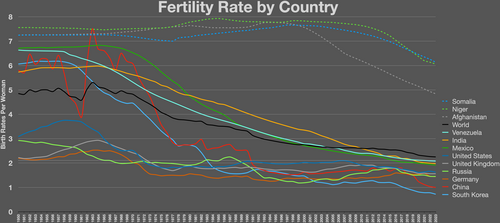

これは、合計特殊出生率(TFR)に基づいて、すべての主権国家および属領を一覧にしたものです。合計特殊出生率とは、出産可能年齢の女性一人当たりが生まれると予想される子供の数です。
最初のリストは、主権国家および属領別にランク付けされた、合計特殊出生率(TFR)データが公表されている最新の年を示しており、データの調査、整理、公表を行った組織の種類(政府間組織、政府機関、非政府組織)別に順序付けられています。
国連のランキングリストは、国連経済社会局(UNDESA)人口部が発行する世界人口予測(WPP)の推計値に基づいています。 [ 3 ]世界人口予測は、世界のすべての国と地域について、合計特殊出生率(TFR)を含む、国連の公式な人口統計推計値と予測値を提供しています。これらの推計値は、国際機関、政府、研究者によって標準的な参照値として広く使用されており、国勢調査、調査、生命登録システムなどの国のデータソースの分析から導き出されています。
The World Bank ranking list is based on the data for the year 2020 published online.[4] The World Bank is a United Nationsinternational financial institution, a component of the World Bank Group, and a member of the United Nations Development Group, but it also collects and analyses information on demography issues based on international and national sources: (1) United Nations Population Division: World Population Prospects, (2) United Nations Statistics Division: Population and Vital Statistics Report (various years), (3) Census reports and other statistical publications from national statistical offices, (4) Eurostat: Demographic Statistics, (5) Secretariat of the Pacific Community: Statistics and Demography Programme, and (6) U.S. Census Bureau International Database.
Note: Sometimes the World Bank changes its figures of fertility rates for a certain year due to more accurate and updated information from sources. Because of that, sometimes it is necessary to update World Bank figures for fertility rates more than once for the same year.
Governmental organizations ranking lists
The CIA ranking list is sourced from the CIA World Factbook for the most recent year[5][6] unless otherwise specified. Sovereign states and countries are ranked. Some countries might not be listed because they are not fully recognized as countries at the time of this census.
The INED - Institut National d'Études Démographiques is based on the online publication Population & Sociétés - Tous les pays du monde (2019), number 569, September 2019.[7]
Non-governmental organizations ranking lists
The Population Reference Bureau (PRB) ranking list is based on the data of the 2024 World Population Data Sheet[8] published online. The PRB[9] is a private, nonprofit organization which informs people around the world about population, health and the environment for research or academic purposes. It was founded in 1929. World Population Data Sheets are double-sided wallcharts (now published online) that present detailed information on demographic, health and environment indicators for more than 200 countries.
Our World in Data (OWID) の「合計特殊出生率:女性一人当たりの出生数、2023年」リストは、OWID のウェブサイト[ 10 ]から引用・作成されており、表や地図も含まれています。[ 11 ]
注記:
1-国別の出生率の数値が年ごとに変化しても、必ずしも特定の国の実際の出生率の増加や減少を反映しているわけではなく、情報源からのより正確で最新の情報に基づいて行われた変更を反映している。
2.国別の出生率とその順位は、人口問題を調査する組織からの単一の参照情報源に基づいています。場合によっては、これらの数値は、国名をクリックしてアクセスできる国別の人口統計で参照されている他の組織や情報源など、他の情報源と一致しないことがあります。これらの差異は、一次情報源、データの質、方法論など、いくつかの要因による可能性があります。
交換率
置換出生率とは、死亡率が一定で純移動がゼロであると仮定した場合に、女性が人口レベルを維持するのに十分な数の子供を産む合計出生率のことです。[ 12 ]置換レベルの出生率が十分に長い期間維持されれば、各世代は正確に自身を置き換えることになります。[ 12 ]置換出生率は、ほとんどの先進国(例えば英国)では女性1人あたり2.1人ですが、特に乳幼児死亡率が高い発展途上国では3.5人にも達することがあります。[ 13 ]最終的に安定した世界人口につながる置換合計出生率の世界平均は、2010年から2015年の期間で女性1人あたり2.3人です。[ 13 ] [ 14 ]
注記:
(-)データが入手できない、該当しない、収集されていない、または国や属領が含まれていない。主権国家および属領はアルファベット順に記載されており、順位付けはされていません。