Loading article…
アタプエルカ山脈(スペイン語: Sierra de Atapuerca)は、スペイン北部、ブルゴス県(カスティーリャ・イ・レオン州)のアタプエルカ村近郊にあるカルスト地形の丘陵地帯である。
現在も発掘調査が続けられているこの地では、西ヨーロッパで知られている最古の人類居住者とされる豊富な化石層と石器群が発見されている。[ 1 ]この「類まれなデータ群」は、アタプエルカ山脈がホモ・エレクトス、ホモ・アンテセッサー、ホモ・ハイデルベルゲンシス、ホモ・ネアンデルターレンシス[ 2 ]の集団にとって好ましい居住地であったため、旧石器時代前期の広範囲にわたって堆積したものである。これまでに発掘され、年代が確実に特定された最古の標本は、120万年前から63万年前のものである。発見物の一部は、近くのブルゴスにある人類進化博物館に展示されている。
Encompassing 284,119 hectares (702,070 acres), the Atapuerca Mountains are a mid-altitudekarstic range of small foothills around 1,080 m (3,540 ft) above sea level. They are located at the north-east corner of the Douro basin, to the south of the Cantabrian Mountains that run across northern Spain,[3] and stretch alongside the Bureba corridor, a mountain pass that connects the Ebro river valley with the Mediterranean Sea and the Duero basin. This conjunction constitutes an ecotone, which is rich in species of both ecosystems. The mountain pass was part of a causeway built by the Romans, as well as part of the pilgrimage route of Saint James; it is now traversed by the N-1 road and AP-1 highways. The mountains are strategically located between two major drainage divides and near the mountain pass; this location is assumed to have been a factor in the area's successful and prolonged hominid habitation.[4][5]
In 2008 scholars identified a new genus and species of red-toothed shrew from the Pleistocene layers of the Gran Dolina cave. Until this discovery, researchers had believed that the fossils found in this area were of the Beremendia fissidens type, but recent research has been published to support an Asiatic type called Dolinasorex glyphodon that might be endemic and is the earliest known type of soricid in the Iberian peninsula.[6]
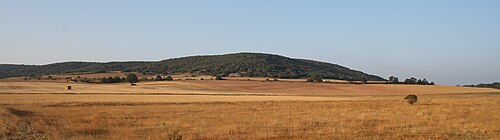
Piedrahita ("standing stone") in the Atapuerca valley is according to records site of the Battle of Atapuerca, which took place in 1054 between the forces of Ferdinand I of Castile and his brother García V of Navarre.
この地域の典型的な乾燥地農業とは別に、この自治体は遺跡とその関連サービスの存在によって生み出された影響により、経済、人口、社会レベルで著しく成長しました。活動人口の15%が観光関連の仕事に就いています。この経済の「第三次産業化」は、人口減少を逆転させ、人口を成長させ若返らせました(平均年齢は42歳)。[ 9 ]