
Loading article…

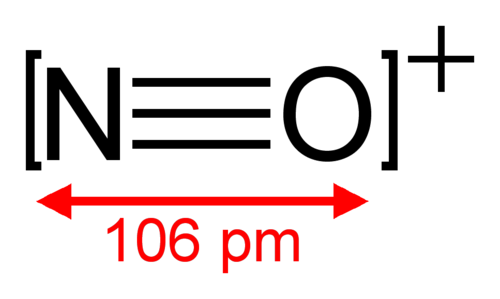
Isoelectronicity is a phenomenon observed when two or more molecules have the same structure (positions and connectivities among atoms) and the same electronic configurations, but differ by what specific elements are at certain locations in the structure. For example, CO, NO+, and N2 are isoelectronic, while CH3COCH3 and CH3N=NCH3 are not.[1]
This definition is sometimes termed valence isoelectronicity. Definitions can sometimes be not as strict, sometimes requiring identity of the total electron count and with it the entire electronic configuration.[2] More usually, definitions are broader, and may extend to allowing different numbers of atoms in the species being compared.[3]
The importance of the concept lies in identifying significantly related species, as pairs or series. Isoelectronic species can be expected to show useful consistency and predictability in their properties, so identifying a compound as isoelectronic with one already characterised offers clues to possible properties and reactions. Differences in properties such as electronegativity of the atoms in isolelectronic species can affect reactivity.
In quantum mechanics, hydrogen-like atoms are ions with only one electron such as Li2+. These ions would be described as being isoelectronic with hydrogen.


The N atom and the O+ ion are isoelectronic because each has five valence electrons, or more accurately an electronic configuration of [He] 2s2 2p3.
Similarly, the cationsK+, Ca2+, and Sc3+ and the anionsCl−, S2−, and P3−これらはすべてAr原子と等電子構造である。
CO、CN−、N2、およびNO +それぞれが2つの原子が三重結合しているため等電子であり、電荷により類似の電子配置(N −COは電子配置がOと同一であるため、COは電子的にCN−と同一である。)
分子軌道図は、二原子分子における等電子性を最もよく示しており、等電子種における原子軌道の混合が同一の軌道組み合わせをもたらし、ひいては結合をもたらすことを示している。
より複雑な分子でも等電子構造を持つ場合がある。例えば、アミノ酸のセリン、システイン、セレノシステインはすべて互いに価電子的に等電子である。これらの違いは、側鎖の特定の位置に存在するカルコゲン元素の種類にある。
CH3 COCH3(アセトン)とCH3N2 CH3(アゾメタン)は等電子ではありません。電子の数は同じですが、構造が異なります。


