
Loading article…
ジョグジャカルタ ベンテン フレデブルク博物館 ꦩꦸꦱꦶꦪꦸꦩ꧀ꦧꦺꦠꦺꦁꦮ꦳ꦽꦢꦼꦧꦸꦂꦒ꧀ | |
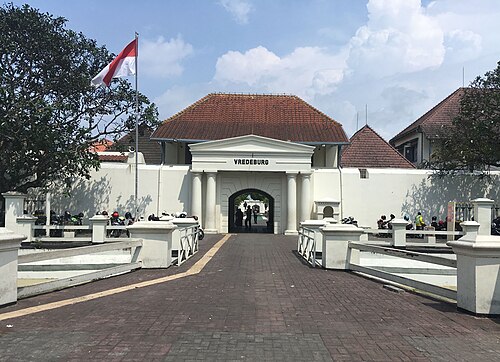 フレデブルク要塞への入り口 | |
  ジョグジャカルタの場所 | |
| 設立 | 1987年3月11日 |
|---|---|
| 位置 | Jalan Ahmad Yani No. 6、ジョグジャカルタ、ジョグジャカルタ特別地域、インドネシア |
| 座標 | 南緯7°48′01″ 東経110°21′59″ / 南緯7.800375° 東経110.366378° / -7.800375; 110.366378 |
| タイプ | 歴史博物館 |
| コレクションのサイズ | ジオラマ、歴史的品、レプリカ |
| 建築家 | フランス・ハーク |
| 所有者 | ジョグジャカルタ国 |
| 公共交通機関へのアクセス |  トランス・ジョグジャ: トランス・ジョグジャ: 1A , 2A , 3A , 8 (アフマド・ヤニ) |
| Webサイト | フリーダムバーグ |
フレデブルク要塞博物館(インドネシア語:Museum Benteng Vredeburg、ジャワ語:ꦩꦸꦱꦶꦪꦸꦩ꧀ꦧꦺꦠꦺꦁꦮ꦳ꦽꦢꦼꦧꦸꦂꦒ꧀、ローマ字: Musiyum Bètèng Vredeburg)は、インドネシアのジョグジャカルタ特別州ジョグジャカルタ市にあった元植民地時代の要塞である。ジョグジャカルタ・スルタン国が所有していたが、中央政府に貸し出され、中央政府の機関によって管理されていたこの軍事施設は、1992年にインドネシア独立運動の博物館に改装され、オープンした。この博物館は、ゲドゥン・アグン山の正面、クラトン・ジョグジャカルタ(スルタンの宮殿)の近くに位置している。 [1]
歴史
要塞

1760年、新しいクラトン・ンガヨグヤカルタ・ハディニングラトが設立された後、北ジャワ海岸のオランダ人総督ニコラス・ハーティングは、ジョグジャカルタに砦を建設するよう要請した。兵舎はスルタン・ハメンクブウォノ1世が提供した土地に建てられ、最初の砦は4つの稜堡を備えた単純な木造の砦だった。[2]その後1767年に、要塞はオランダ人建築家フランス・ハークの監督の下、拡張され、より恒久的な構造に改築された。1787年に完成した後、砦はフォート・ルステンバーグ(オランダ語で「休息の砦」)と名付けられた。 [3]
1867年、古い砦は地震で破壊されました。砦は再建され、砦とスルタンの城塞が平和的に共存していたことから、オランダ語で「平和の砦」を意味するフレーデブルク砦と改名されました。[3]
Later in 1942, during the Japanese occupation of the Dutch East Indies, the fortress was taken over by the Japanese army and made into the army's headquarters and war prison. After the Japanese left in 1945, Fort Vredeburg served the Indonesian Army as a military command post, barracks and prison for suspected members of the communist party.[2]
The museum
In 1947 the ceremonies on honoring Budi Utomo's 40th founding anniversary was held in the fort. At the occasion, Ki Hadjar Dewantara expressed the idea of converting the fortress into a cultural institution. To realize this, a newly set up foundation took charge of the gradual restoration of the former fort.
An agreement was concluded to have a cultural institution in the fort, between Daoed Joesoef, the Minister of Education and Culture and Sultan Hamengkubuwono IX in 1980. As a result, major renovation of the building took place in 1982.[4] In 1984 Nugroho Notosusanto, the new Minister, changed the original plans and instead, created a museum intended to showcase Indonesia's struggle for independence. The museum was officially opened on 23 November 1992.[3]
Yogyakarta was devastated by an event that damaged a large number of buildings and cultural properties in the region, including the fort. It was repaired later afterwards.[5]
Exhibition

The museum includes collections of old photographs, historical objects and replicas. A diorama portraying Indonesia's journey for independence is also displayed in the museum. The original design included 93 of these diorama showcases, however when the museum opened in 1992, only 30 of them were finished. Another 18 showcases have been added as of March 1996.[2]
All events depicted in the diorama's showcases took place in Yogyakarta and its surrounding region. The dioramas cover various events from the capture of Pangeran Diponegoro in 1830 to Sukarno's return to Jakarta in 1949. The dioramas are divided into 2 sections: one depicts remarkable events (33), such as the founding of Muhammadiyah or Taman Siswa; and another focusing on war and struggle (15) such as guerrilla warfare during the independence war.[2]
Architecture
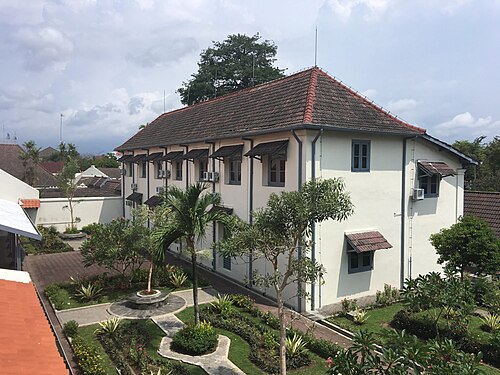
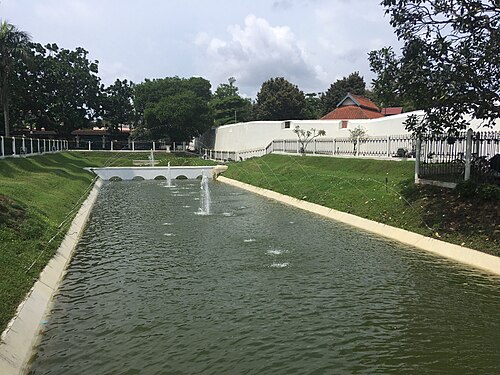
この砦は、当時のオランダ人居住者の政治と防衛の中心として建設され、周囲を堀(ジャガン)で囲まれていました。その遺跡の一部は再建され、現在も見ることができます。この四角い砦には、各隅に 4つの稜堡(監視塔)があります。
ギャラリー


注記
- ^ 「ベンテン博物館はRIの独立闘争をマーク」、ジャカルタ・ポスト、フィナンシャル・タイムズ社:JAPO12586293、2000-08-29、ISSN 0215-3432
- ^ abcd Sri Kuhnt-Saptodewo (1997). 東南アジアにおけるナショナリズムと文化復興:中央と地域からの視点。Otto Harrassowitz Verlag. pp. 99– 118. ISBN 9783447039581. 2013年5月26日閲覧。
- ^ abc Benteng Vredeburg 2018-06-04 に Wayback Machineでアーカイブ、 jogjatrip.com
- ^ インドネシア。ディレクトラット・ペルリンドゥガンとペンビナーン・ペニンガラン・セジャラー・ダン・プルバカラ(1989年)、ラポラン・ペムガラン・ベングナン・ピントゥ・ゲルバン・ベラカン・ダン・リングクンガン・セキタルニャ・ベンテン・フレデブルク・タフン・アンガラン1981/1982年、プロエク・ペムガランとペメリハラーン・ペニンガラン・セジャラーンPurbakala DIY 、 2013 年2 月 19 日取得
- ^ 「インドネシア地震、古代遺跡に「甚大な」被害」、BBCモニタリング・インターナショナル・レポート、ファイナンシャル・タイムズ、2006年5月28日、 2013年2月19日閲覧
外部リンク
- (英語)フレデブルク要塞博物館
- (インドネシア語)ベンテン・フレデブルク博物館
南緯7°48′01″ 東経110°21′59″ / 南緯7.800375° 東経110.366378° / -7.800375; 110.366378