
Loading article…

連邦議会(ドイツ語: Bundesversammlung または Bundestag )は、1815年から1848年まで、そして1851年から1866年まで、ドイツ連邦(ドイツ語: Deutscher Bund )唯一の総合的な共同機関でした。連邦議会はフランクフルトのトゥルン・ウント・タクシス宮殿に本部を置き、加盟国の使節による常設会議として組織されました。
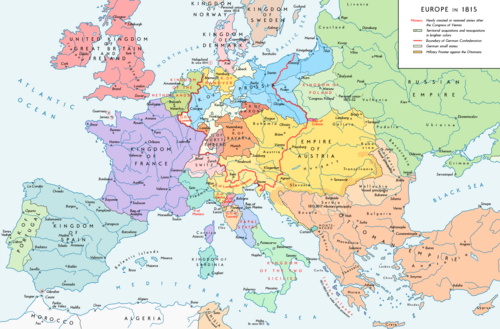
ドイツ連邦とその議会は、ナポレオンの敗北後の1815年のウィーン会議の結果として誕生した。当初の目的は、 8年前に神聖ローマ帝国が崩壊した後、ドイツに新たな憲法構造を創設することであった。ドイツ諸邦の諸侯は主権を維持することを望んだため、ドイツ連邦は独立した君主制国家の緩やかな連合体として創設されたが、4つの自由都市も含まれていた。創設法は、ウィーン会議条約の一部であった1815年6月8日のドイツ連邦法(ドイツ語:Deutsche Bundesakte [ 1 ] )である。
連邦国民公会は、加盟国すべての使節による常設会議として設立され、かつての神聖ローマ帝国の中央集権的な権力に取って代わった。 1816年11月5日以降、フランクフルトのトゥルン・ウント・タクシス宮殿に本部を置き、週1回会合を開いた。
この会議はオーストリア代表が議長を務め、内閣と本会議という2つの執行機関から構成されていた。そのメンバーは、国民投票や州議会(一部の加盟国には州議会さえ存在しなかった)によって選出されたのではなく、州政府または州の君主によって任命された。
内閣は 17 の議院(11 の大きな州にそれぞれ 1 議席、24 の小さな州にそれぞれ 5 議席、4 つの自由都市にそれぞれ 1 議席) で構成されていた。内閣は立法課題を決定し、どの問題を本会議で議論すべきかを決定した。内閣の決定は当初絶対多数決を必要としたが、1822 年にすべての決定が効力を持つためには全会一致の同意が必要となった。[ 2 ]本会議は、おおよそ州の規模に応じて 69 議席を有していた。本会議は特に憲法改正に関する決定に関与しており、当初は投票の 3 分の 2 の多数決が必要であったが、これも全会一致の同意に変更された。議会のメンバーの投票は次のように分配された。[ 3 ] [ 4 ]
条約の決定事項は加盟国にとって拘束力を持つものであったが、その実施は各加盟国の裁量に委ねられていた。また、加盟国は関税、警察、軍事に関して完全な主権を保持していた。
Until the March Revolution of 1848 and again after 1851 the Federal Convention of the German Confederation was the main instrument of the reactionary forces of Germany to suppress democracy, liberalism and nationalism. For example, during 1835/36, the Federal Assembly decreed rules for censorship, which banned the works of Heinrich Heine and other authors in all states of the German Confederation.
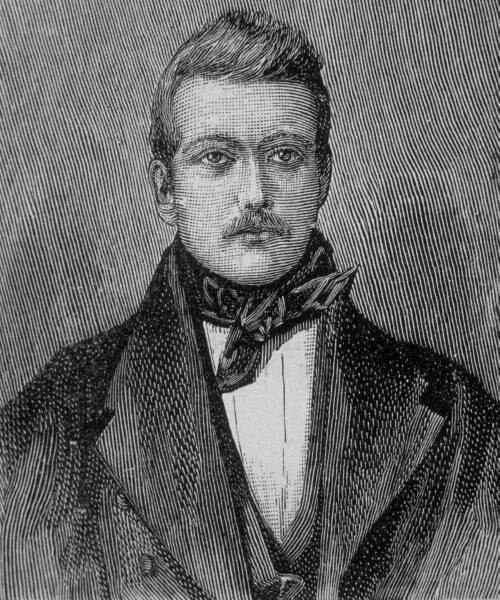
After the March Revolution of 1848, the Convention was challenged by the newly formed National Assembly, which began its sittings in Frankfurt on 18 May 1848. On 28 June, the National Assembly decided to create a provisional government for all of Germany prior to the creation of a Constitution. On 29 June, they elected Archduke John of Austria to be the Regent of the Provisional Central Power.
At noon on 12 July 1848, the Convention handed over its responsibilities to the Regent and formally dissolved itself. The act lent legitimacy and, at least in theory, legally binding authority to the new office. However, the Regent refused to employ his powers and remained passive during this period. The National Assembly lost prestige and was closed on 19 June 1849. The Regent resigned his office on 20 December 1849, though not before transferring all responsibilities of the provisional government to Austria and Prussia on 30 September.
Prussia spent the next year challenging Austria's claims to supremacy in Germany, but on 30 November 1850 the Punctuation of Olmütz forced Prussia to abandon its proposal to alter Germany's political composition in its favor. By that time, all of the states in Germany had suppressed their Constitutions, popularly elected parliaments, and democratic clubs, thus erasing all work of the revolution.[5] On 30 May 1851, the old Confederate Diet was reopened in the Thurn and Taxis Palace.[6]
The Federal Convention was dissolved after the Austro-Prussian War of 1866, the terms being laid down by the Peace of Prague (and preliminary peace treaty before) on 23 August 1866. Although the North German Confederation was legally not the successor of the German Confederation, the new Federal Council (or Bundesrat in German) could be seen as a kind of replacement for the Convention.