
Loading article…
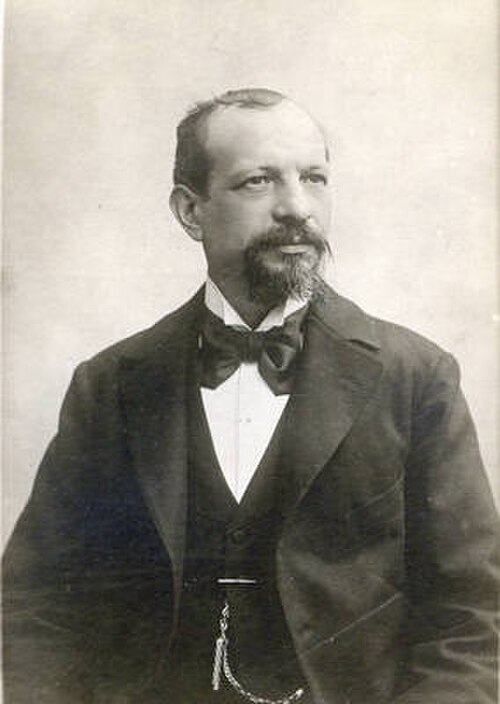
ウジェーヌ・オーギュスタン・ロースト(1857年1月17日、フランス、モンマルトル生まれ- 1935年6月27日、ニュージャージー州モントクレア没)は、映画史における技術発展に貢献したフランスの発明家である。
23歳までに、ラウステは53件のフランス特許を出願した。1886年にアメリカに移住し、エジソン研究所で働き始め、そこでフランス生まれのウィリアム・ケネディ・ローリー・ディクソンと出会った。ラウステは、映画映写機の主要な前身であるキネトスコープの開発に時折貢献したが、ディクソンの主任助手になることはなかった。[ 1 ]ラウステは1892年にエジソンを去った。[ 1 ] [ 2 ]
ラウステは、燃焼式ガソリンエンジンのアイデアにも取り組んでいました。1890年代には実際に動作するモデルを開発しましたが、騒音の大きい装置が広く使われることはないだろうと言われ、開発を断念しました。その後、ウッドビル・レイサム少佐と協力し、彼のためにエイドロスコープ[ 2 ]を設計し、レイサムループ[ 3 ]の設計を支援しました。(後にディクソンは、ループの発明者としてラウステの名前を挙げています。)
エイドロスコープは1895年4月21日に報道関係者向けに実演され、5月20日にブロードウェイ下町の店舗で有料で一般公開された[ 4 ] 。上映されたのは、5月4日にマディソン・スクエア・ガーデンの屋上から撮影されたグリフォ対バーネットのボクシング試合の映像だった[ 5 ] 。 カメラ内部のラサム・ループのおかげで、試合全体を1本のフィルムリールに連続して撮影することができた。彼はその夏、コニーアイランドのテントで定期的にその映像を上映した。
He joined the American Biograph Company in 1896 and remained there for four years before moving to Brixton, England. In 1904 he prepared his first sound-on-film model. On 11 August 1906 he (along with Australian Robert R. Haines and Briton John S. Pletts) applied for a British patent;[6] their application was granted patent No. 18057 in 1907 for "a process for recording and reproducing simultaneously the movements or motions of persons or objects and the sounds produced by them," i.e., a strip of 35 mmcelluloid film containing both image frames and a sound strip. In 1911 he exhibited a sound film in the United States, possibly the first-ever American showing of a movie using sound-on-film technology. Before he could market his system more widely, though, World War I intervened.
From 1928 until his death, Lauste was a consultant for Bell Telephone Laboratories. With his wife, Melanie, he had a son, Emile, and two stepsons, Clement and Harry E. LeRoy.