
Loading article…
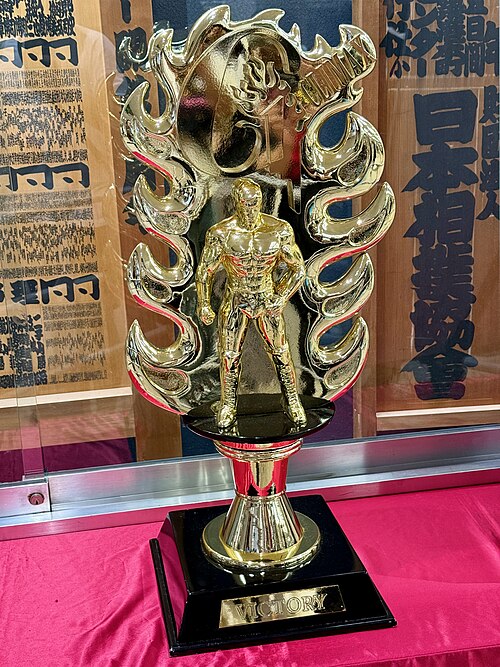
G1 (グレードワン)クライマックス(G1(グレードワン)クライマックス)は、新日本プロレス(NJPW)が毎年8月に開催するプロレスのトーナメントです。過去にはシングルエリミネーション方式で開催されたこともありますが、現在も通常通り総当たり戦が行われ、各プールで最多勝利を挙げた選手たちが短いトーナメントで対戦し、その年の優勝者を決定します。2012年以降、このトーナメントの優勝者は、翌年1月のレッスルキングダム大会でIWGP世界ヘビー級王座に挑戦する権利を獲得します。
現在の形式では、トーナメントは4週間続きます。各プールの勝者はポイント制で決定され、勝利には2ポイント、引き分けには1ポイント、敗北または無効試合には0ポイントが与えられます。現在の形式では、ダブル判定(両者カウントアウトや両者失格など)は引き分けとして扱われます。

新日本プロレスは1974年からさまざまな名称で毎年トーナメントを開催していた。ワールドリーグ(ワールドリーグ戦、ワルドリーグ戦) (1974年から1977年、1959年から1972年に開催された旧日本レスリング協会のワールド(ビッグ)リーグトーナメントに基づく)。[ 1 ] [ 2 ] [ 3 ] [ 4 ] [ 5 ] MSGリーグ( MSG シリーズ、MSG シリーズ) (1978 ~ 1982 年)。[ 6 ] [ 7 ] [ 8 ] [ 9 ] [ 10 ] IWGPリーグ(IWGPリーグ戦、IWGPリーグ戦)(1983年 - 1988年)における「IWGP」は、新日本プロレスの統括団体であるインターナショナル・レスリング・グランプリ(インターナショナル・レスリング・グラン・プリ、インターナショナル・レスリング・グラン・プリ)の略称である。これらのトーナメントのほとんどは、新日本プロレス創設のトップスター、アントニオ猪木によって支配されました。
1983年の優勝者であるハルク・ホーガンはチャンピオンベルトを授与されたが、これはIWGPヘビー級王座の始まりではなく、 IWGPリーグ・オブ・ザ・イヤーの優勝者と毎年防衛戦を行う初期のバージョンである。現在のIWGPヘビー級王座は1987年に登場し、旧バージョンに取って代わった。[ 11 ]
1989年にはワールドカップトーナメント(ワールドカップ争奪リーグ戦、ワールドカップ争奪戦)が開催され、当時のソ連からのレスラーも参加した。[ 5 ] [ 12 ] 1990年にはトーナメントは開催されなかった。
猪木が新日本プロレスを支配していた時代が終わったことで、同団体は1991年にG1クライマックストーナメントを設立し、団体のトップヘビー級選手を披露し、総当たり戦で2つの部門の勝者がトーナメント決勝で対戦する場とした。新日本プロレス社長の坂口誠司は、競馬の最高位のグループレース(北米ではグレードステークスレースとして知られる)であるグレード1(「G1」)にちなんでこのトーナメントを命名した。G1にはジャパンカップや北米のグランドスラムを構成する4つのレースなどがある。[ 13 ]以前のトーナメントの継続と見なされているものの、[ 5 ]新日本プロレスは公式には以前のトーナメントをG1クライマックスの系譜の一部として認めていない。[ 14 ]最初のG1は1991年8月7日から8月11日まで東京の両国国技館で開催された。トーナメントの優勝者は、すでにチャンピオンでない限り、伝統的にIWGPヘビー級王座への挑戦権を獲得してきた。2012年以来、優勝者は「東京ドームIWGPヘビー級王座挑戦権証明書」を獲得しており、これは毎年1月4日に開催される新日本プロレス最大のイベント、レッスルキングダム・イン・東京ドームでのタイトル挑戦権の契約書である。WWEのマネー・イン・ザ・バンク契約書と同様に、証明書はブリーフケースに保管され、レスラーは年末までそれを防衛しなければならない。[ 15 ] [ 16 ]契約開始以来、契約書が所有者を変えたのは2020年11月7日のパワーストラグルでジェイ・ホワイトが飯伏幸太を破った時の1回だけである。2021年には、現在は廃止されたIWGPヘビー級王座ベルトが、ブリーフケースの代わりにG1優勝者のオカダ・カズチカに贈られた。 2015年、NJPWは大会形式を変更し、1回の興行あたりのG1クライマックスの試合数を減らし、参加レスラーが試合の合間に休息する時間を増やせるようにした。これにより大会の期間は4週間に延長された。[ 17 ] 2016年、ケニー・オメガは日本人以外のレスラーとして初めてこの大会で優勝した。
G1クライマックストーナメントは、新日本プロレスが新進気鋭のスター選手を売り出すためのプラットフォームとしてよく利用されてきた。若手有望選手が日本のレジェンド選手に勝利すれば、通常はそれぞれのキャリアを新たな高みへと押し上げることになる。最初のトーナメントは、海外研修から新日本プロレスに復帰したばかりの武藤敬司、蝶野正洋、橋本真也の3選手をスターにするために特別に作られた。 [ 13 ]過去の優勝者には、武藤、蝶野、橋本、永田裕志、棚橋弘至など、その後プロレス界のスーパースターとなった選手がいる。
新日本カップとは異なり、G1クライマックスでは、当時のIWGPヘビー級王者が参加者の1人として出場するが、1992年、2001年、2004年、2008年は例外で、それぞれ当時の王者であった長州力(1992年)、藤田和幸(2001年と2004年)、武藤敬司(2008年)はトーナメントに出場しなかった。IWGPヘビー級王者は、トーナメントの優勝候補としてよく挙げられ、決勝に5回進出している。最初の決勝進出は1995年で、武藤敬司が優勝した。武藤は1999年にもこの偉業を再び成し遂げたが、決勝で中西学に敗れた。決勝に進出した他の当時の王者には、2000年の佐々木健介、 2005年の藤田和幸、 2007年の永田裕志などがいる。武藤と佐々木は、IWGPヘビー級王座を保持したままG1クライマックスを制覇した唯一の2人のレスラーである。[ 18 ] 2026年現在、G1クライマックスの優勝者は全員、IWGPヘビー級王座またはIWGP世界ヘビー級王座を保持しており、竹下幸之介が2025年10月13日のキング・オブ・プロレスリングでザック・セイバーJr.を破りIWGP世界ヘビー級王座を獲得してこれを達成した最後の選手である。全体として、アントニオ猪木はトーナメント最多優勝記録を10回保持しており、蝶野正弘はG1クライマックス名義でのトーナメント最多優勝記録を5回保持している。天山広吉はG1クライマックストーナメントに記録的な21回出場している。
2019年のG1クライマックスの開幕戦はテキサス州ダラスで開催され、開幕戦が日本国外で開催されるのはこれが初めてとなった。[ 19 ]
2020年のG1クライマックスの決勝は、通常大会が開催される時期に東京で夏季オリンピックが開催される予定だったため、10月に開催され、大会が秋に開催されるのは今回が初めてとなった。[ 20 ]
大会史上最長の試合は、2020年決勝の飯伏幸太対SANADA戦で、35分12秒だった。ブロック戦で勝敗が確定した最長試合は、2019年大会のSANADA対オカダ・カズチカ戦で、29分47秒、制限時間30分まであと13秒だった。逆に、最短試合は2020年大会の後藤洋央紀対矢野通戦で、わずか18秒だった。
G1クライマックスの優勝者がIWGPヘビー級王座に挑戦できるという伝統は、大会開始以来続いており、例外は1992年(蝶野正洋が大会優勝の賞品としてNWA世界ヘビー級王座を獲得した年)、1993年と2001年(当時IWGPヘビー級王座が空位だったため永田裕志がGHCヘビー級王座に挑戦した年)、そして1995年と2000年(優勝者が大会で優勝した年)である。この伝統はIWGPリーグの時代にまで遡り、1983年から1986年までは規定により選手権自体にタイトルが授与され、1987年の大会で初代正式フルタイムIWGPヘビー級王者が決定した。優勝者にタイトル挑戦権が与えられたのは1988年が初めてだった。
2012年のG1クライマックスで優勝したオカダ・カズチカは、レッスルキングダム7で棚橋弘至に挑戦するという衝撃的な声明を発表した。これがきっかけとなり、2024年にザック・セイバーJr.がキング・オブ・プロレスリングで内藤哲也に挑戦するまで毎年恒例の対戦が実現し、2025年には竹下幸之助が同じ大会でセイバーJr.に挑戦するという形で再び対戦することになった。
1974年の世界リーグは1974年4月5日から5月8日まで開催された。大会は日本人8名と外国人8名の計16名のレスラーで始まり、それぞれグループ分けされた。第1ラウンドの試合はすべて日本人対外国人の対戦だった。両グループの上位4名が第2ラウンドの総当たり戦に進出した。[ 1 ] [ 27 ]
1975年のワールドリーグは1975年4月4日から5月16日まで開催された。このトーナメントには16人のレスラーが出場したが、地元選手対海外選手の形式は廃止された。上位5名がノックアウトラウンドに進出し、1位の選手は決勝へのシード権を得た。[ 2 ] [ 27 ]
1976年のワールドリーグは1976年4月2日から5月11日まで開催された。このトーナメントには14人のレスラーが出場した。上位入賞者はトーナメントの決勝戦に進出し、3人のレスラーによる総当たり準決勝の勝者と対戦した。[ 3 ] [ 27 ]
1977年のワールドリーグは1977年4月21日から5月30日まで開催された。このトーナメントには11人のレスラーが出場した。[ 4 ] [ 27 ]
1978年のMSGシリーズは1978年4月21日から5月30日まで開催されました。このトーナメントには9人のレスラーが参加し、総当たり戦が行われ、今日のトーナメントとは異なる採点システムが採用されていました。ピンフォールまたはサブミッションによる勝利は5ポイント、反則勝ちまたはカウントアウトによる勝利は4ポイント、時間切れ、両者反則、または両者カウントアウトによる引き分けは2ポイント、敗北または棄権は0ポイントでした。アンドレ・ザ・ジャイアントには追加で5ポイントが与えられましたが、その理由は不明です。[ 6 ] [ 27 ] [ 82 ]
1979年のMSGシリーズは1979年4月27日から6月7日まで開催された。このトーナメントには10人のレスラーが出場した。[ 7 ] [ 27 ] [ 83 ]
1980年のMSGシリーズは1980年4月25日から6月5日まで開催された。このトーナメントには10人のレスラーが出場した。[ 8 ] [ 27 ] [ 84 ]
1981年のMSGシリーズは1981年5月8日から6月4日まで開催された。このトーナメントには11人のレスラーが出場した。[ 9 ] [ 27 ] [ 85 ]
1982年のMSGシリーズは1982年3月4日から4月1日まで開催された。このトーナメントには14人のレスラーが出場した。[ 10 ] [ 27 ] [ 86 ]
1983年のインターナショナル・レスリング・グランプリ・チャンピオンシップ・リーグは、1983年5月6日から6月2日まで開催されました。このトーナメントには10人のレスラーが出場しました。[ 21 ] [ 27 ]優勝者にはチャンピオンベルト(初代IWGPヘビー級王座)が授与され、毎年IWGPリーグ・オブ・ザ・イヤーの優勝者と防衛戦が行われました。[ 11 ]
1984年のインターナショナル・レスリング・グランプリ・チャンピオンリーグは、1984年5月11日から6月14日まで開催された。このトーナメントには12人のレスラーが出場し、決勝ラウンドが設けられなかったのはこれが初めてだった。[ 22 ] [ 27 ]優勝したアントニオ猪木は、トーナメント最終日にハルク・ホーガンに挑戦し、初代IWGPヘビー級王座を獲得した。[ 87 ]
IWGPチャンピオンシリーズは1985年5月10日から6月15日まで開催された。このトーナメントには13人のレスラーが出場し、シングルエリミネーション方式で行われた。このトーナメントでポイント制が採用されなかったのは今回が初めてだった。[ 23 ] [ 27 ]アンドレ・ザ・ジャイアントは6月7日の決勝で優勝したが、 6月11日のアントニオ猪木とのタイトルマッチで敗れた。猪木は2日後の6月13日、元チャンピオンのハルク・ホーガンを相手に防衛戦を行い、タイトルを防衛した。
1986年のインターナショナル・レスリング・グランプリは、1986年5月16日から6月19日まで開催された。このトーナメントではポイント制が復活し、14人のレスラーが7人ずつの2つのブロックに分かれて競い合った。各ブロックの上位2人がノックアウトステージに進出した。[ 24 ] [ 27 ]優勝者は空位となっていたIWGPヘビー級王座(オリジナル版)を獲得した。[ 11 ]
1987年のインターナショナル・レスリング・グランプリは、1987年5月11日から6月12日まで開催された。このトーナメントには、7人ずつ2つのブロックに分かれた14人のレスラーが出場した。各ブロックの上位入賞者が決勝に進出し、優勝者が初代IWGPヘビー級王者となった。藤波辰巳は、 IWGPチャンピオンシリーズツアーで負った怪我のためトーナメントを欠場したが、決勝戦の解説を務めた。[ 25 ] [ 27 ]
1988年のインターナショナル・レスリング・グランプリは、1988年7月15日から7月29日まで開催された。このトーナメントは、1つのブロックに5人のレスラーが参加し、優勝者が8月8日にIWGPヘビー級王者藤波辰巳への挑戦権を獲得するというものだった。 [ 26 ]アントニオ猪木はリーグ戦で最後の勝利を挙げ、8月8日に藤波と60分時間切れ引き分けとなった。
1989年のワールドカップトーナメントは、1989年11月24日から12月7日まで開催されました。このトーナメントには、5人ずつの4つのブロックに分かれた20人のレスラーが出場しました。[ 5 ] [ 12 ]優勝者の長州力は、8か月後の8月19日までタイトルマッチの機会を得られませんでしたが、それでもビッグバン・ベイダーを破ってチャンピオンになりました。
1990年は、理由は不明だが、新日本プロレスで大規模なヘビー級トーナメントが開催されなかった唯一の年だった。[ a ]しかし、1990年6月12日には、一夜限りの4人制九州カップが開催され、偶然にも、その後の10年間で最も輝かしい実績を残したメインイベント級の選手4人が出場した。[ 88 ]
第1回G1クライマックスは、4人ずつの2つのブロックに分かれた総当たり戦で、1991年8月7日から8月11日まで開催された。[ 27 ] [ 28 ]蝶野正弘は、5回のG1クライマックスのうち最初の優勝を果たした。蝶野はG1の前に王者藤波辰巳の最後の挑戦者であり、11月5日に再びタイトル獲得に失敗した。
1992年のG1クライマックスは16人によるシングルエリミネーション方式のトーナメントで、空位となっていたNWA世界ヘビー級王座も争われた。大会は1992年8月6日から8月12日まで開催された。[ 27 ] [ 30 ]テリー・テイラーは、 8月3日に予定されていた対戦相手の長谷浩史が肩を負傷したため、準々決勝に進出した。[ 89 ]
1993年のG1クライマックスは、1993年8月3日から8月7日にかけて開催された16人制のシングルエリミネーション方式のトーナメントだった。新日本プロレスは、1993年のトーナメントに、WARの冬木弘道、阿修羅原、石川隆、ザ・グレート・カブキ、プロレスリング藤原組の藤原喜明など、新日本プロレス以外のレスラーを数名招待した。[ 27 ] [ 31 ] [ 90 ]
1994年のG1クライマックスは総当たり戦に戻り、今回は6人ずつの2ブロックで行われた。大会は1994年8月3日から8月7日まで開催された。ゲスト出場選手にはプロレス藤原組の藤原善明と社会進歩プロレス連盟(SPWF)の八津善明がいた。[ 27 ] [ 32 ]
1995年のG1クライマックスは、8月11日から8月15日にかけて行われた8人制の総当たり戦トーナメントで、各ブロックの上位2名が4人制のミニトーナメントに進出し、優勝者を決定するというルールが追加された。蝶野正洋は、リック・フレアーと同点だったにもかかわらず、越中史朗に対する試合時間の速さでブロックを突破した。[ 27 ] [ 33 ]
1996年のG1クライマックスは1996年8月2日から8月6日まで開催され、5人ずつの2ブロックによる総当たり戦だった。[ 27 ] [ 34 ]平田純二は佐々木健介との試合中に負傷し、残りの試合を棄権した。
1997年のG1クライマックスは14人によるシングルエリミネーション方式のトーナメントで、佐々木健介とバフ・バグウェルは準々決勝までシードされた。トーナメントは8月1日から8月3日まで開催された。[ 27 ] [ 35 ]
1998年のG1クライマックスは、7月31日から8月2日にかけて開催された、16人によるシングルエリミネーション方式のトーナメントだった。年初から自身のWARプロモーションを離れ、フリーランスとして活動していた天龍源一郎が招待された。 [ 27 ] [ 36 ]
1999年のG1クライマックスは、8月10日から8月15日まで開催された12人制の総当たり戦トーナメントでした。これは、直接対決のタイブレークで順位が同点になった場合の決定が行われなかった2年間(2000年と同)の最初の年でした。ブロックAの勝者は、2人の参加者のリーグ戦で明確な勝者がいたにもかかわらず、タイブレークマッチで決定されました。[ 27 ] [ 37 ]
2000年のG1クライマックスは、5人ずつ4つのブロックに分かれた総当たり戦で、各ブロックの優勝者が4人トーナメントに進出し、その年の優勝者を決定する大会で、8月7日から8月13日まで開催されました。また、ポイントシステムは従来から変更されており、勝利は1ポイント、引き分けまたは敗北は0ポイントとなっています。さらに、直接対決のタイブレークでは同点の選手は決定されず、ブロックAとブロックCの優勝者は、リーグ戦で明確な勝者がいたにもかかわらず、タイブレークマッチで決定されました。この大会は、IWGP王者高岩竜人選手と前王者獣神サンダー・ライガー選手という、 2人の著名なジュニアヘビー級選手がヘビー級トーナメントに招待された初めての大会でした。[ 38 ]
2001年のG1クライマックスは、8月4日から8月12日まで開催された2ブロック12人制の総当たり戦トーナメントだった。採点方式は元の方式に戻り、1995年のG1の形式である各ブロックの上位2名が決勝4名に進出する方式も復活した。ジュニアヘビー級の招待選手は獣神サンダー・ライガーと田中稔だった。[ 39 ]
2002年のG1クライマックスは前年と同じ形式で、8月3日から8月11日まで開催された。[ 38 ]
2003年のG1クライマックスは、8月10日から8月17日にかけて行われた12人制の総当たりトーナメントだった。プロレスリング・ノアの秋山準とフリーランスの高山善弘が招待選手として出場した。[ 41 ]
2004年のG1クライマックスは、8月7日から8月15日まで開催された2ブロック、16人制のトーナメントでした。参加者数の増加に加え、各ブロックの2位と3位が4人制トーナメントに進出し、その決勝進出者2名が各ブロックの勝者も参加する2回目の4人制トーナメントに進出するという形式が導入されました。このトーナメントの最終的な勝者がG1クライマックスの優勝者となります。また、この年は、両者カウントアウトまたは両者失格で終了した試合は、両選手に0ポイントが与えられるようです。[ 42 ]
1これは両者リングアウトだったため、蝶野も中村もポイントを獲得できなかった。
2005年のG1クライマックスは、8月4日から8月14日まで開催された16人による総当たり戦トーナメントでした。2004年に見られた「準々決勝」を廃止し、各ブロックの上位2名の得点者を決勝の4人に選出するという、2003年の形式に戻りました。[ 43 ]
2006年のG1クライマックスは、8月6日から8月13日まで開催された10頭による総当たり戦トーナメントだった。[ 44 ]
2007年のG1クライマックスは、2つのブロックに分かれた12頭の男馬が出走し、8月5日から8月12日まで開催された。[ 45 ]
2008年のG1クライマックスは、2つのブロックに分かれた14頭の男馬が出走し、8月9日から8月17日まで7回の公演で行われた。[ 46 ]
2009年のG1クライマックスは、2つのブロックに分かれた14人の選手が出場し、8月7日から8月16日まで8公演にわたって開催された。大会史上初めて、ブロックAの1位を争った真壁刀義と棚橋弘至が同点で、コイントスで勝敗が決定した。[ 47 ]
The 2010 version of the G1 Climax tournament was announced in late May 2010 and was the 20th anniversary of the G1 Climax tournament. The tournament took place over eight shows between August 6 and August 15, 2010.[91][92][93]Naomichi Marufuji was scheduled to participate in the tournament, but was forced to pull out after suffering an arm injury on July 25.[94] On August 5, NJPW announced that Prince Devitt would replace Marufuji in the tournament.[95] With his victory, freelancer Satoshi Kojima became the third man to have won both the G1 Climax and All Japan Pro Wrestling's Champion Carnival.
The 2011 version of the G1 Climax tournament was announced on May 3, 2011. It took place over ten shows between August 1 and August 14 and included 20 participants, making it at the time the largest G1 Climax in history.[103][104]
The 2012 version of the G1 Climax tournament took place over nine shows between August 1 and August 12 and included 18 participants.[114][115] The 24-year-old Kazuchika Okada went on to become the youngest G1 Climax winner in history, breaking the previous record held by the then 27-year-old Masahiro Chono.[50] Okada also became the first winner since Hirooki Goto to win the tournament in his first attempt.[50]Karl Anderson became the first foreigner to make it to the final of the tournament since Rick Rude in 1992.[116]
The 2013 version of the G1 Climax tournament took place over nine shows between August 1 and August 11 and included 20 participants.[125][126] In an unprecedented move, NJPW broadcast all nine events live on internetpay-per-view (iPPV) through Niconico and Ustream.[127] On August 8, NJPW announced that Hirooki Goto and Hiroyoshi Tenzan had suffered jaw and rib fractures respectively and would both miss the rest of the tournament.[128]
The 2014 version of the G1 Climax tournament took place between July 21 and August 10 with the final taking place in Tokorozawa, Saitama at the Seibu Dome for the first time departing Ryōgoku Kokugikan, which housed the final from every year since the tournament began.[137] With 22 participants, the tournament marked the largest G1 Climax in history. Like the previous year, all events in the tournament were made available on iPPV through Niconico and Ustream.[138]Kota Ibushi was scheduled to take part in the tournament, but on July 18 NJPW announced that he would have to pull out due to a concussion suffered at the beginning of the month.[139] The following day, Tomoaki Honma was named Ibushi's replacement in the tournament.[140]
The 2015 version of the G1 Climax tournament took place between July 20 and August 16. Taking place over 19 shows, it was the longest G1 Climax in history.[152] The final three days took place back at Ryōgoku Kokugikan.[153] Participants in the tournament were announced on June 7.[154] For the tournament, NJPW introduced a new format, where each show would only include five tournament matches all from the same block, giving the other participants more time to rest.[17]Shinsuke Nakamura injured his left elbow in his second match, forcing him to forfeit his third match against Michael Elgin.[155]
The 2016 version of the G1 Climax tournament took place between July 18 and August 14.[174] On June 27, NJPW announced the participants, which included two outsiders; Pro Wrestling Noah's Katsuhiko Nakajima and Naomichi Marufuji.[175] Originally, former three-time G1 Climax winner and the wrestler with the most G1 Climax appearances, Hiroyoshi Tenzan, was left out of the tournament. However, on July 3, Tenzan's longtime tag team partner Satoshi Kojima gave him his spot in the tournament.[176] Afterwards, Tenzan confirmed this would be his last G1 Climax.[177] In the final, Canadian Kenny Omega made history, becoming the first non-Japanese winner of the tournament under its G1 Climax name as well as the first man in four years to win the tournament in his first attempt.[54]
The 2017 version of the G1 Climax tournament took place between July 17 and August 13. Prior to the tournament, NJPW held two "G1 Special" shows in Long Beach, California on July 1 and 2.[196] On June 20, NJPW announced the participants in the tournament, which included one outsider: freelancer Kota Ibushi, competing in his third G1. Juice Robinson and Zack Sabre Jr. took part in their first G1 Climax tournament, while Yuji Nagata took part in his 19th and final tournament.[197] The final match between Kenny Omega and Tetsuya Naito became the longest match in G1 Climax history,[198] breaking the previous record from 2015.[199]
The 2018 version of the G1 Climax took place from July 14 until August 12.[218] Due to renovations at Ryōgoku Kokugikan, the final three shows for the tournament took place at Nippon Budokan, representing New Japan's first shows at that arena since 2003. The announcement of the participants, blocks and schedule took place during the 2018 Kizuna Road shows.[219] Hiroshi Tanahashi set a then record for most points set by a wrestler in a 20-man G1 Climax with 15 points. The final match was the longest match in G1 history until it was beaten in 2020.
The 2019 edition of the G1 Climax took place from July 6 to August 12 with the finals taking place at Nippon Budokan. For the first time in NJPW history, the opening night of the tournament took place outside Japan, at the American Airlines Center in Dallas, Texas.[19]Kota Ibushi won the G1, defeating Jay White in the final.
The 2020 edition of the G1 Climax took place from September 19 until October 18 with the final three days being held at Ryōgoku Kokugikan. This was the first time that the tournament was not held in the summer but in the autumn. This was due to the 2020 Summer Olympics in Tokyo originally being scheduled to be held when the tournament is usually held. Later, the Olympics were postponed due to the COVID-19 pandemic.[20][257] The final match became the longest match in G1 Climax history, surpassing the previous record in 2018. Kota Ibushi became the third wrestler along with Masahiro Chono and Hiroyoshi Tenzan to win two consecutive G1 Climax tournaments and the first wrestler to reach the finals for the third time in a row.
The 2021 edition of the G1 Climax was announced on July 8 and took place from September 18 until October 21 with the finals taking place at Nippon Budokan.[275]Kazuchika Okada and Jeff Cobb set the record for the most points in a 20-man G1 with 16 points each; Cobb also set the record for most consecutive wins in a single G1 Climax with 8 wins in a row. Kota Ibushi also made his fourth consecutive appearance in a G1 final.[276][277] Okada was awarded the G1 win in the tournament final by referee stoppage, after Kota suffered an unplanned injury.[278]
The 2022 edition of the G1 Climax was announced on April 9 at Hyper Battle and took place from July 16 until August 18, returning the G1 to the summer. This edition consisted of 28 participants across 4 blocks.[284] The Final match was between Kazuchika Okada and Will Ospreay, which Okada won by pinfall, marking Okada's 4th G1 Climax victory and becoming the 4th wrestler to win two consecutive G1 Climax tournaments, alongside Masahiro Chono, Hiroyoshi Tenzan and Kota Ibushi.[285]
[286] The 2023 edition of the G1 Climax was announced on April 8 at Sakura Genesis and took place from July 15 until August 13.[287] The tournament featured 32 participants, making it the largest G1 to date.[288] The 2023 G1 Climax also featured the tournament debuts of Shota Umino, Hikuleo, Eddie Kingston, Ren Narita, Gabriel Kidd, Alex Coughlin, Shane Haste, Mikey Nicholls, Yota Tsuji and Kaito Kiyomiya with Kingston and Kiyomiya being outsiders from All Elite Wrestling and Pro Wrestling Noah respectively. In the finals, Tetsuya Naito defeated Kazuchika Okada to win his third G1 Climax.
The 2024 edition of the G1 Climax was announced on June 9 at Dominion 6.9 in Osaka-jo Hall and took place from July 20 until August 18.[289] The tournament saw a return to 20 participants split into two 10-man blocks for the first time since 2021. Only the top 3 wrestlers in each block advanced, with the block winners earning a bye into the semifinals. The tournament marked the tournament debuts of Callum Newman, Boltin Oleg, Jake Lee, Yuya Uemura, and AEW–DDT representative Konosuke Takeshita.In the finals, Zack Sabre Jr defeated Yota Tsuji to win his first G1 Climax. This would mark the second time a non-Japanese wrestler had won the tournament under that banner.
The 2025 edition of the G1 Climax was announced on April 7 and took place from July 19 until August 17.[295] Only the top 3 wrestlers in each block advanced, with the block winners earning a bye into the semifinals, this tournament would mark the last G1 Climax of Hiroshi Tanahashi who was on his retirement tour and would go on to retire at Wrestle Kingdom 20. In the finals, Konosuke Takeshita defeated EVIL to win his first G1 Climax
The 2026 edition of the G1 Climax was announced on January 4 at Wrestle Kingdom 20 and will take place from July 11 until August 16. For the second time in NJPW history (and first time in 7 years), the opening night of the tournament took place outside Japan, at the NOW Arena in Hoffman Estates, Illinois.[296][297] On July 15, 2026, Shota Umino withdrew because of concussion protocols, with all opponents receiving walkover wins.[298]
{{cite news}}: CS1 maint: deprecated archival service (link)