
Loading article…

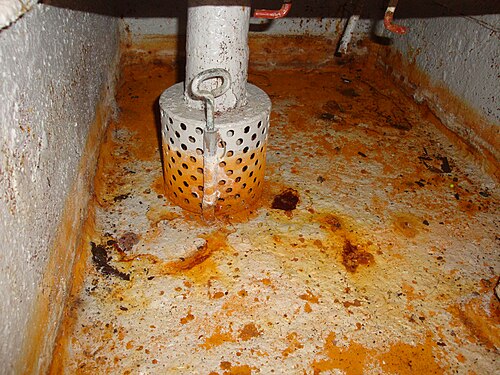
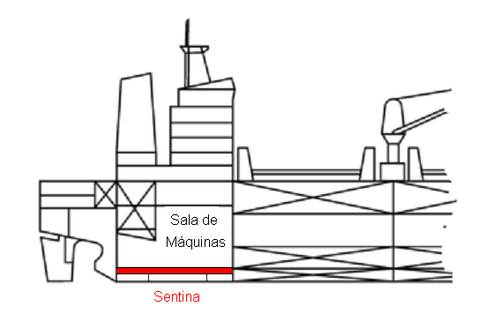
The bilge (pronounced as /bɪldʒ/) of a ship or boat is the part of the hull that would rest on the ground if the vessel were unsupported by water. The "turn of the bilge" is the transition from the bottom of a hull to the sides of a hull.
Internally, the bilges (usually used in the plural in this context) is the lowest compartment on a ship or seaplane, on either side of the keel and (in a traditional wooden vessel) between the floors.[a][1]
The first known use of the word is from 1513.[2]
The word is sometimes also used to describe the water that collects in this area. Water that does not drain off the side of the deck or through a hole in the hull, which it would typically do via a scupper, instead drains down into the ship into the bilge. This water may be from rough seas, rain, leaks in the hull or stuffing box, or other interior spillage. The collected water must be pumped out to prevent the bilge from becoming too full and threatening to sink the ship.
Bilge water can be found aboard almost every vessel. Depending on the ship's design and function, bilge water may contain water, oil, urine, detergents, solvents, chemicals, pitch, particles, and other materials.
By housing water in a compartment, the bilge keeps these liquids below decks, making it safer for the crew to operate the vessel and for people to move around in heavy weather.
Discharge of bilge liquids is regulated for commercial vessels under Marpol Annex I as it can lead to bilge pollution.
Princess Cruises' Caribbean Princess was fined $40 million USD for dumping bilge into the ocean in 2016.[3] Bilge water can be offloaded at a port, or treated to remove pollutants.[4] Even treated bilge water is harmful to the environment,[5] all the way up the food chain.[6] The European Maritime Safety Agency tracks bilge dumping by satellite.[4] There are an estimated 3000 cases of illegal bilge dumping per year in Europe.[4]
船底から水を排出する方法としては、バケツやポンプなどが用いられてきた。現代の船舶では、通常、自動ビルジスイッチで制御される電動ビルジポンプが使用されている。船底表面を保護するために、ビルジコーティングが施される。溜まった水はしばしば有害であるため、「ビルジ水」あるいは単に「ビルジ」は、悪いもの、汚れたもの、その他不快なものを指す蔑称として使われるようになった。
ビルジには、自由表面効果による船体の不安定化を防ぐため、左右および前後方向への水の勢いを弱めるための隔壁が設けられている場合がある。隔壁には、制御された速度で水が下部区画に流れ込むようにするための排水孔が設けられている場合がある。 [ 7 ]
ビルジとビルジ水の浄化は、細菌や古細菌を用いてビルジ水中の炭化水素を無害な副産物に分解するバイオレメディエーションなどの「受動的」な方法によっても可能である。 [ 8 ]バイオレメディエーションに関する2つの一般的な考え方のうち、ビルジに生息する有益な微生物を用いる方法は、船舶が停泊または航行する水域に外来の細菌を持ち込まないため、より「環境に優しい」と考えられている。しかし、非在来の古細菌も使用して排出することができる。なぜなら、古細菌はいずれ死滅し、在来の微生物だけが残るからである。[ 9 ]
大型商船には、ビルジ水がどれだけ上昇しているか、またどこで上昇しているかを乗組員に知らせるためのビルジ警報器が必要です。[ 10 ]これらのビルジ警報器は電気装置であり、船に大きな損傷が生じる前に船内の漏洩を早期に検知するようにも設計されています。 油分計は、ビルジ警報器と呼ばれることもあります。
「ビルジラット」という用語は、通常、船底で働く船員を指し、そこではネズミが繁殖することもあった。[ 11 ]この用語は、イギリス海軍では蒸気機関を搭載した軍艦のボイラーに石炭をくべる機関員を指すのに使われることもあった。 [ 11 ]これは侮辱として使われることもあり、[ 12 ]海賊小説の作家によってしばしばそのように用いられる。[ 11 ]
「ビルジウォーター」という言葉は、一般的にナンセンスという意味で使われる。