
Loading article…
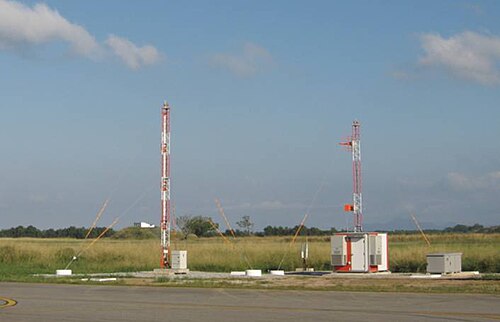

A transponder landing system (TLS) is an all-weather, precision landing system that uses existing airborne transponder and instrument landing system (ILS) equipment to create a precision approach at a location where an ILS would normally not be available.

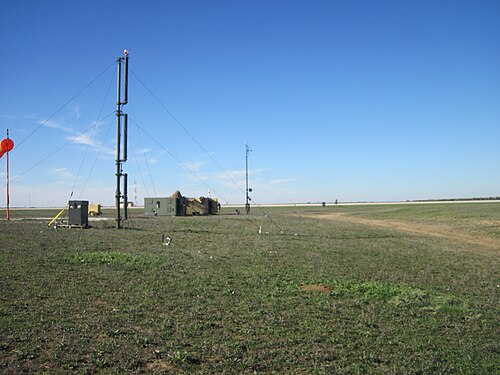

Conventional ILS systems broadcast using a number of "single purpose" antennas. The localizer array consists of 8 to 14 or more antenna elements and is typically located 2000+ feet from the runway approach threshold, which is often beyond the departure end of the runway and provides a fan-shaped signal for azimuth direction (side to side). The other antenna array is located beside the runway and provides elevation to indicate a standard glideslope. This complex set of antennas is expensive to install and maintain and is often difficult to site in areas with uneven terrain or obstacles that could interfere with its guidance signals.
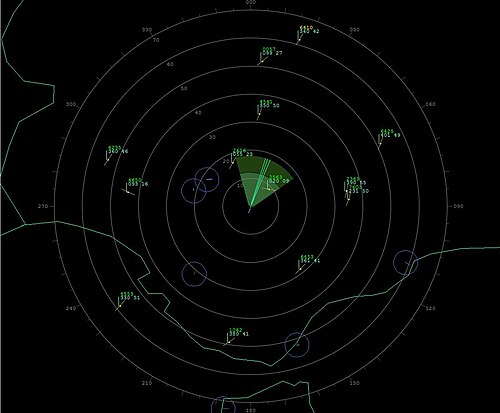
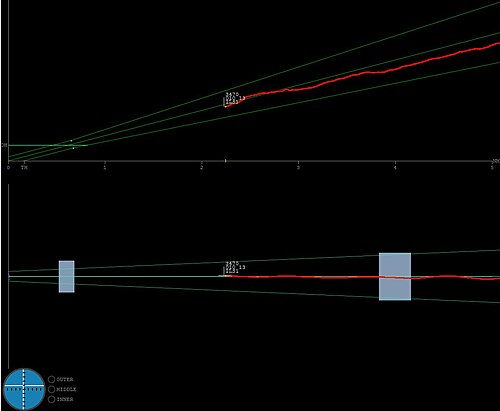
TLS施設は、100海里(190km )以内のすべての航空機のトランスポンダに問い合わせを行います。応答を受信すると、TLSは3組のアンテナアレイを使用して航空機の位置を特定します。1組はモノパルス技術を使用した水平位置用、もう1組は垂直モノパルス用[ 1 ]、そして3組目は三辺測量用です。次に、TLSはトランスポンダの応答を使用してすべての航空機の位置を計算し、それを目標進入経路に対する位置に基づいて進入許可を受けた航空機へのリアルタイムガイダンスに変換します。TLSサービス領域内のすべての航空機の位置トラックは、二次監視レーダーに似ていますが、更新レートが高く精度が高いATCモニターに表示されます。計器進入を行う航空機の場合、TLSはILSと同じ水平および垂直ガイダンス信号をILS受信機とコックピットアビオニクスに送信します。したがって、信号は通常ILSアンテナが設置されている固定位置から発信されているように見えます。しかし、TLS ガイダンスはアンテナの位置に依存しません。TLS は計器進入手順で必要とされる任意の場所に設置できる「仮想発信点」からガイダンスを提供できますが、これらの発信点は TLS ソフトウェアで設定されています。これにより、TLS は滑走路のしきい値に隣接して設置された単一のシステムで、回転翼航空機のより急な降下角や障害物回避の増加など、特定の空港で複数の進入手順をサポートできます。TLS はまた、物理的な機器を必要とせずに、滑走路からの距離を示すマーカービーコンのような音声を生成します。パイロットは、従来の ILS 進入に必要な ATC プロトコルに従うだけで済みます。PAR タイプの進入を行っている航空機は、方位角と仰角を表示する TLS PAR フォーマット コンソールで確認できます。PAR 管制官がトークダウン進入を行う際に役立つように、最大 4 機の航空機を 4 つの別々のコンソールで個別に表示できます。
TLSは、従来のILSが物理的または現実的に運用できない、あるいは衛星航法が信頼できない飛行場に設置するように設計されています。これには、滑走路が短い飛行場、進入経路に沿ってまたは隣接して障害物や不整地がある飛行場、あるいは両端に水域や土地の制約がある飛行場などが含まれます。また、北極圏や赤道付近の飛行場など、電離層の状態により衛星航法が損なわれる飛行場も含まれます。TLSは衛星航法に依存しないため、衛星通信の意図的または偶発的な中断や障害の影響を受けません。TLSはアクティブ監視および追跡システムであり、進入手順は物理的なアンテナの位置に依存するのではなくソフトウェアで構成されるため、設置基準は柔軟で、システム全体を滑走路の末端に隣接する小さなスペースに併設でき、単一の電源で動作します。TLSの進入方式は、ILS、GLS、RNPの基準、またはそれらの任意の組み合わせを使用して設計できるため、従来のILSでは不可能な曲線進入やセグメント進入にも対応できます。
TLSは1998年以来、FAA(連邦航空局)のカテゴリーI ILS認証を取得しており、FAA命令8200.27ではTLS設置時の飛行検査手順が規定されています。また、TLSはカテゴリーI ILSに関するICAO(国際民間航空機関)の性能仕様もすべて満たしています。
TLSの主な利点の1つは、地形が傾斜していたり不均一な場合でも、高精度なILS誘導を提供できることです。反射によってILSのグライドパスが不均一になり、望ましくない針の偏向を引き起こす可能性があります。さらに、ILS信号はアレイの配置によって一方向に向けられているため、ILSは直線進入のみに対応しています。TLSは不整地での進入に対応し、進入中心線をオフセットする機能を提供します。
TLSでは、滑走路の長さに関わらず、ローカライザーコースの幅を滑走路端で個別に設定できます(通常は700フィート、5度)。ローカライザーの幅はアプローチ設計者が選択できますが、ILSではローカライザーの幅はローカライザーアンテナの配置によって決まり、これは通常、滑走路の長さに左右されます。
軍事ユーザー向けには、TLSは精密進入レーダー(PAR)グラフィック表示も提供し、PARオペレーターがパイロットにトークダウンガイダンスを提供できるように、航空機の位置を希望の進入コースと比較します。[ 2 ] TLSはSSRの長距離帯域(1030/1090 MHz )を使用して動作するため、プライマリレーダーを使用する従来のPARで経験されるような降雨による減衰はありません。従来のPARでは、航空機の位置を追跡する能力は航空機のレーダー断面積に依存します。
TLS is based on transponder multilateration and trilateration and consequently tracks all aircraft that respond to the interrogations. Omnidirectional antenna surveillance coverage of the TLS extends to 100 nautical miles.[2]
The TLS functions using airborne equipment that is currently widely used by the aviation industry. TLS uses the existing Mode 3/A/C/S transponder equipment to determine the aircraft's position. It then transmits the correct signal on the same frequencies used for the current ILS system. All the pilot is required to do is wait for clearance from ATC for the TLS approach and then tune an ILS receiver to the appropriate frequency. TLS uses equipment most airplanes already have.
The TLS simulates an ILS signal that is specific to one aircraft's location on a given ILS frequency. The system can provide guidance to 4 aircraft simultaneously on discrete frequencies, but only those aircraft properly cleared for a TLS approach will receive proper guidance. Other aircraft that erroneously tune to a TLS frequency without proper clearance will not receive correct guidance. Operationally from the pilot's perspective, this is no different from conventional ILS systems. The TLS does require a human operator to acquire the aircraft at the system display console and instruct the system to provide guidance based on its transponder code, so there is an operational difference from an ATC perspective.
The TLS is available in several transportable configurations for rapid deployment in defense or other temporary applications. The entire system can be transported in a standard 20' Conex container which can also be used as the center of operations, or on a single 463L master pallet. The system can be transported by truck, ship, or any suitable transport aircraft such as a C-130 or C-17, and can also be airlifted by helicopter. The transportable systems can be unpacked and installed to full operational capacity in several hours by 2 trained technicians.