
Loading article…
サムダ・チュン | |
|---|---|
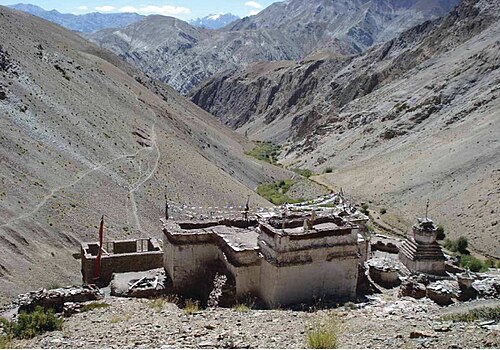 スムダチュンの寺院 - 裏面 | |
  | |
| 座標:北緯34度8分0.93秒、東経77度9分2.73秒/北緯34.1335917度、東経77.1507583度/北緯34.1335917度、東経77.1507583度 |
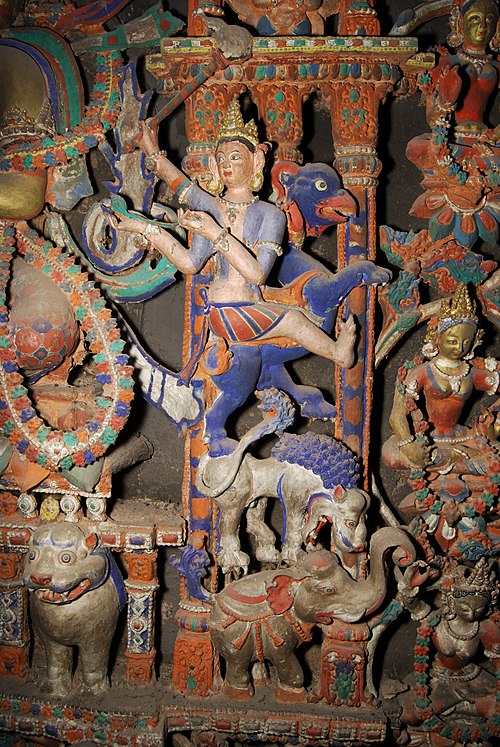
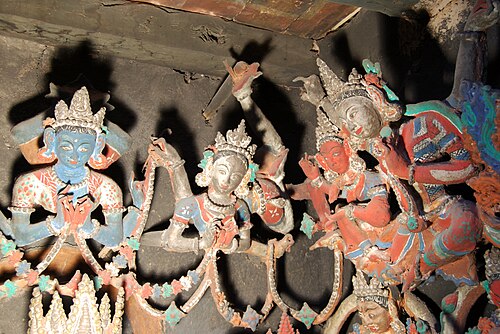
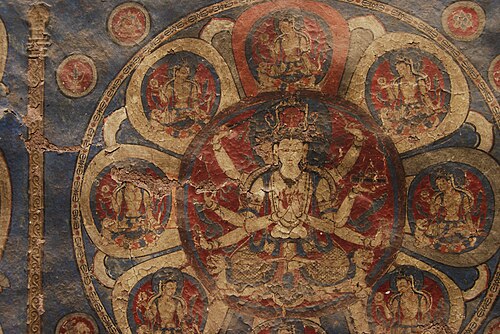
スムダチュン寺院は、初期チベット仏教の寺院および僧院であり、インドのラダック地方レー地区のスムダチュン村に位置しています。
スムダチュンの寺院はヘミス僧院の管理下にあり、ヘミス僧院は僧侶を任命して日々の儀式を執り行わせ、寺院への大きな介入にも対応しています。元々スムダチュンにあったゴンパの一部であったこの寺院は、ロツァワ・リンチェン・ザンポ(957-1055)の時代に建てられたとされており[ 1 ] 、アルチ僧院とマンギュの寺院とともに、彼が一夜にして建立した3つの寺院の1つだと考えられています。仏教徒のこの信仰により、この寺院は非常に重要な地位を占め、巡礼者が1日で巡ろうとするスムダ-マンギュ-アルチ巡礼ルートに位置づけられています。[ 2 ] スムダチュン村は海抜3500メートルの高さにあり、2019年から道路でアクセス可能です。スムダチュン村は2017年8月まで電気のない暗闇の中で暮らしていましたが、2017年8月にグローバル・ヒマラヤン・エクスペディション・チームによって村と僧院に電化されました。 [ 3 ]村に住む約120人の住民は、寺院への供物や維持管理のための労働力という形で、寺院の日々の活動に積極的に貢献しています。寺院の芸術作品は精巧で、集会ホールの聖堂には粘土彫刻で作られたヴァジュラダトゥマハマンダラがあり、西ヒマラヤで最も優れたものの1つと考えられています。[ 4 ]
この寺院は、保存修復が行われる以前、世界記念物基金の2006年版「最も危機に瀕している遺跡100選」の一つに挙げられていた。
Sumda Chun Monastery is around 65 km to the southwest of Leh, which is connected by a motorable road, up to Sumdo. The track starts ascending to the west, through a gorge from the left bank of the stream. At one point, the track crosses to the right bank and ascent becomes little more difficult. One or two houses come in the way before another gorge appears on the right which leads to the Sumda chon Monastery and towards the left leads to Sumda Chenmo. This track goes along the stream with plantations of Willow. After walking for an hour the monastery appears above the village houses. There is another short track from Alchi village through Stakspila, the ascent from Alchi is more difficult and long compare to Sumda side.
5 year program of architectural conservation and conservation of artworks in the temple that include paintings and sculptures in the shrine was carried out by Namgyal Institute for Research on Ladakhi Art and Culture and the conservation. The conservation program was funded by the World Monuments Fund.[5][6] A technical study of the wall paintings inside the temple is also published.[7] The conservation project of Sumda Chun was awarded "Award of excellence" by UNESCO Asia-Pacific Awards for Cultural Heritage Conservation in the year 2011.
A unique painted chorten within the temple complex, dating to the 13th century, was conserved in collaboration with the Himalayan Cultural Heritage Foundation. The conservation project was funded by World Monuments Fund in August 2013.[8]
北緯34度08分01秒、東経77度09分03秒/北緯34.13359度、東経77.150758度/北緯34度08分01秒、東経77度09分03秒